






Andrew Beggs, Professor of Cancer Genetics and Surgery at University of Birmingham and Deputy Director at Birmingham CRUK Experimental Cancer Centre, shared on LinkedIn:
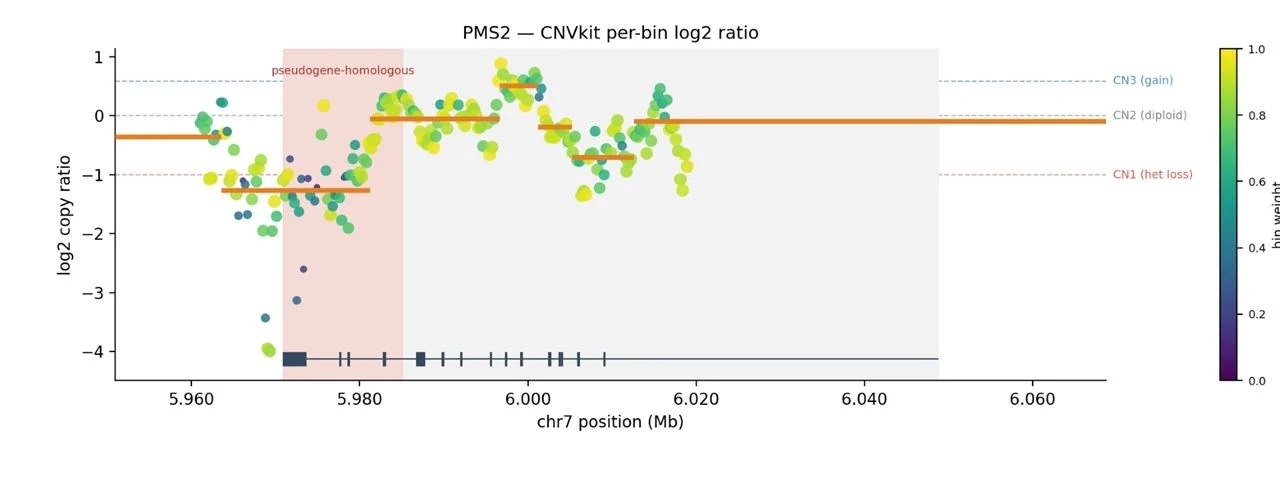
“Another benefit of Oxford Nanopore Technologies sequencing – we were set a challenge to diagnose a potential heterozygous deletion in PMS2, a cause of Lynch Syndrome where state of the art short read technologies couldn’t distinguish between PMS2 and its pseudogene PMS2CL.
This critically impacts patients with PMS2 loss on immunohistochemistry as the 3′ end of the gene can be notoriously difficult to align correctly meaning we may be underdiagnosing patients with Lynch Syndrome caused by PMS2. Using a Nanopore adaptive sampling panel (which can pool up to 6 samples on a single flow cell), covering all hereditary cancer genes known we succesfully demonstrated this deletion.
The plot below is a little noisy but you get the idea – one of challenges with adaptive sampling data is the wandering baseline of read depth which makes RD based CNV calling a challenge – using multiple techniques it is possible to reliably pull out a solid CNV call from these datasets.
The advantage here is turn around time is ~1 day from receipt of DNA and batching means approximately £150/test – considerably cheaper than current R210 panel approaches from most providers.”
Other articles about Lynch Syndrome on OncoDaily.