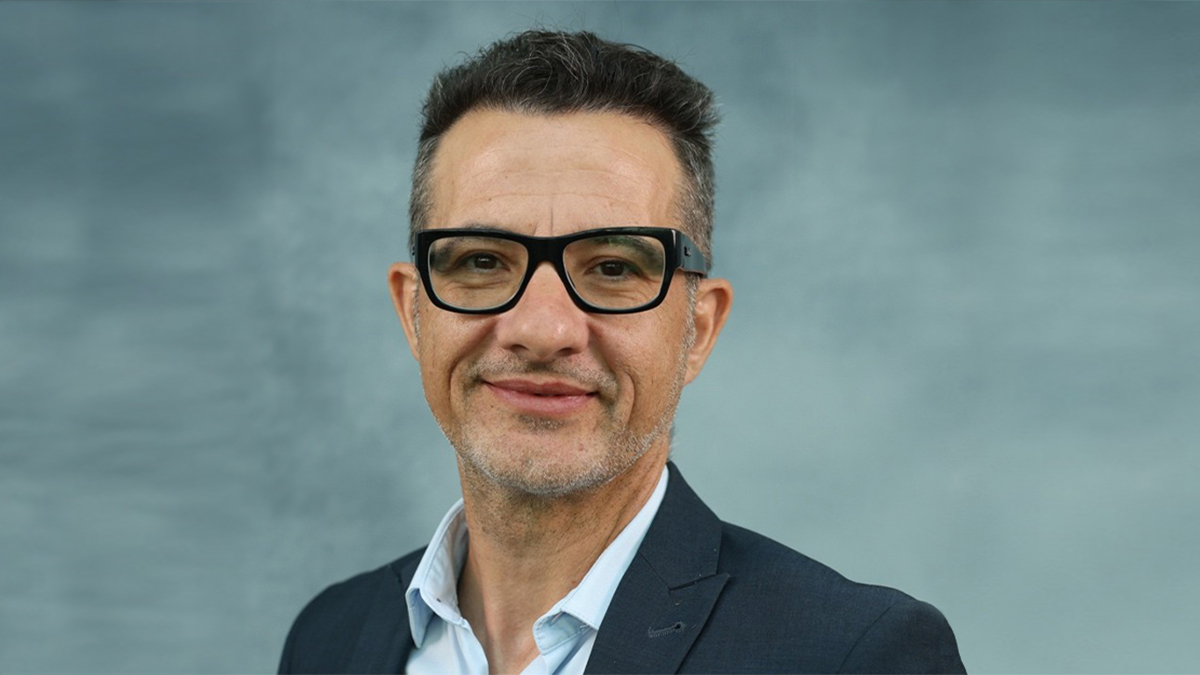
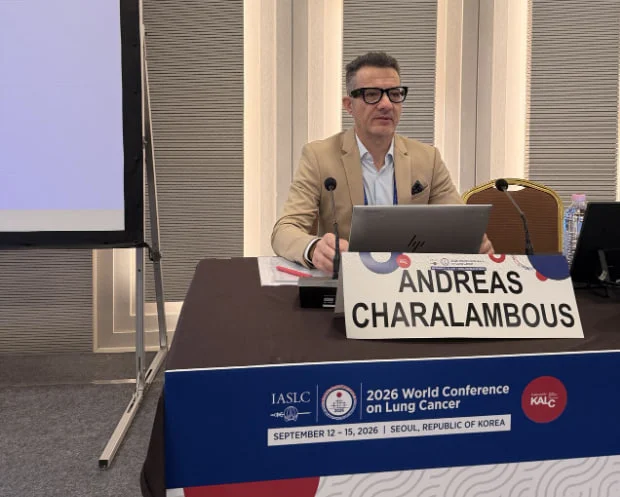
Andreas Charalambous, Chair Department of Nursing at Cyprus University of Technology, shared on LinkedIn:
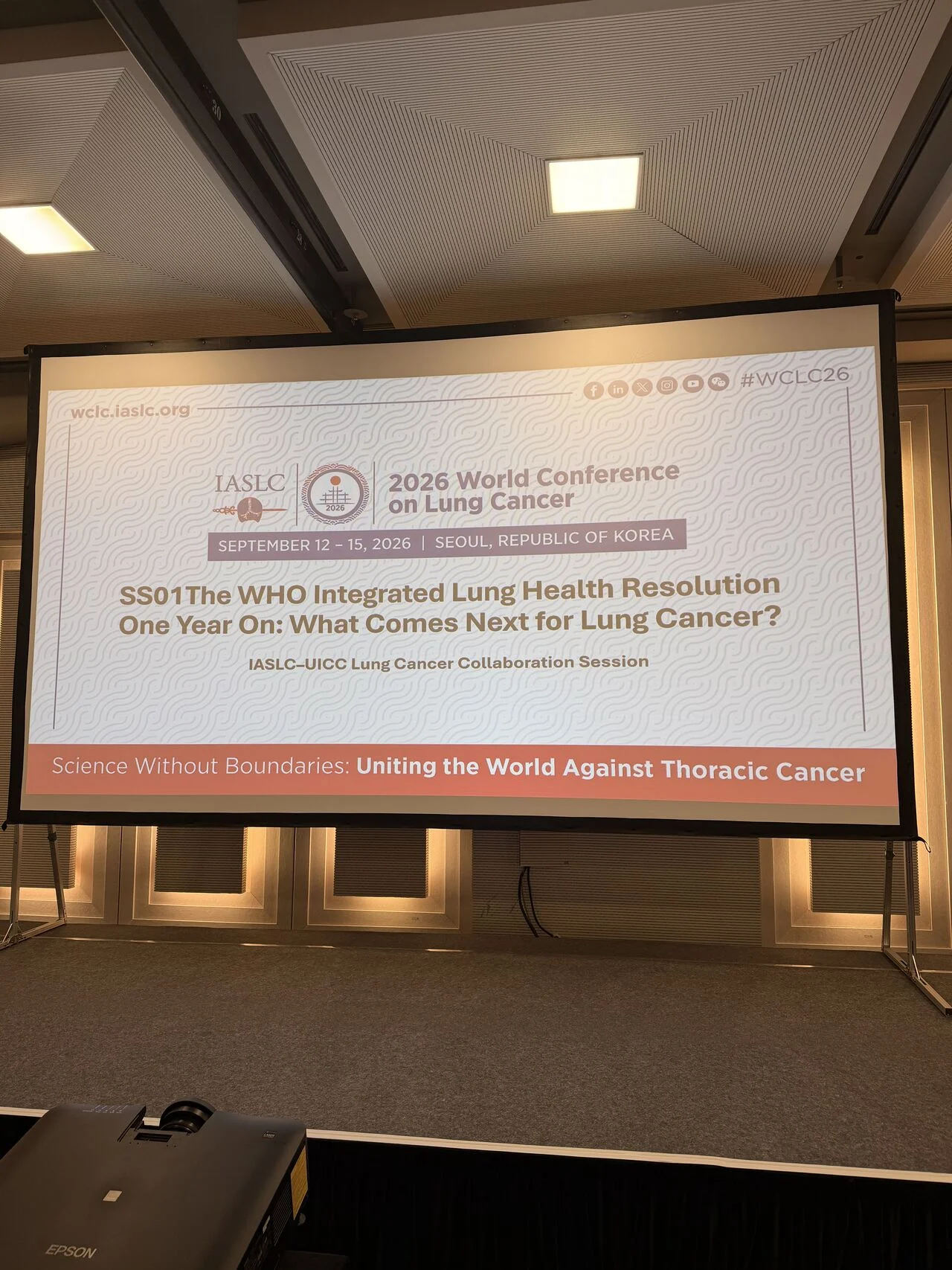
“The WHO Integrated Lung Health Resolution one year on: what comes next for lung cancer?
It is a great pleasure to address this session, reflecting on the first year since the adoption of the WHO Integrated Lung Health Resolution and, importantly, considering what comes next for lung cancer.
Today, I would like to bring to the forefront the ways in which the IASLC Global Policy and Partnership Committee can contribute to translating the commitments of the Resolution into meaningful implementation and action.
The adoption of the Resolution was an important milestone, but its true impact will ultimately depend on how effectively we can translate policy into practice and ensure that its ambitions are realized across countries and health systems.
The Committee has a unique role to play in this effort.
‘By bringing together healthcare professionals, researchers, policymakers, patient representatives, advocates, and other key stakeholders, we can help bridge the gap between evidence, policy, and implementation.’
This multidisciplinary and multisectoral approach is essential if we are to develop solutions that are both evidence-based and responsive to the diverse needs of populations around the world.
The Committee’s instrumental role within the IASLC-Lancet Commission provides an additional and important opportunity to strengthen this work. By bringing together global expertise and generating evidence and recommendations, the Commission can help shape the policy agenda and, importantly, support concrete implementation actions at national, regional, and global levels.
As we look beyond the first year of the Resolution, our focus therefore needs to shift from commitment to implementation – from what has been agreed to what can be delivered.
For lung cancer, this means accelerating progress in prevention, early detection, equitable access to diagnosis and treatment, survivorship, and palliative care, while ensuring that no patient or population is left behind.
The IASLC Global Policy and Partnership Committee is well positioned to help drive this transition and to ensure that the momentum created by the WHO Resolution translates into measurable improvements in lung cancer outcomes worldwide.”
Other articles about Andreas Charalambous on OncoDaily.