






Amar Rewari, Chief of Radiation Oncology at Luminis Health, shared a post on LinkedIn:
“When should “heartburn” stop being just heartburn?
Over the past week, I was quoted in two separate Daily Mail articles discussing an important trend we’re seeing in oncology: more younger adults are being diagnosed with stomach cancer.
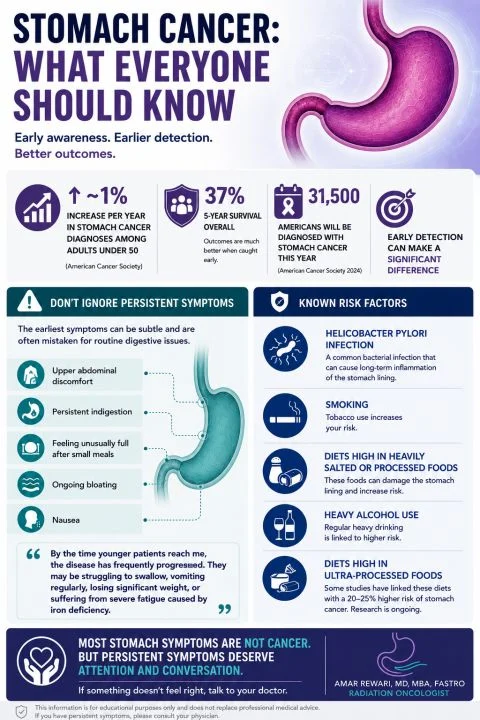
Stomach cancer remains much more common in older adults, and most people with indigestion or bloating do not have cancer. The challenge is that the earliest symptoms are often subtle and easily mistaken for routine digestive issues.
Persistent indigestion. Feeling unusually full after small meals. Ongoing bloating. Nausea. Upper abdominal discomfort.
One of the observations I shared was:
“By the time younger patients reach me, the disease has frequently progressed. They may be struggling to swallow, vomiting regularly, losing significant weight, or suffering from severe fatigue caused by iron deficiency.”
Here are four facts everyone should know:
- Approximately 31,500 Americans will be diagnosed with stomach cancer this year.
- Overall 5-year survival is about 37%, but outcomes are substantially better when the disease is detected early.
- Researchers are seeing a gradual increase in diagnoses among adults under 50, although the reasons remain an active area of investigation.
- Known risk factors include Helicobacter pylori infection, smoking, diets high in heavily salted or processed foods, and heavy alcohol use.
The encouraging news is that treatment has changed dramatically over the past decade. In addition to surgery, radiation therapy, and chemotherapy, we now have targeted therapies and immunotherapy that have improved outcomes for many patients, particularly when the disease is diagnosed early.”
Other articles about GI Oncology on OncoDaily.