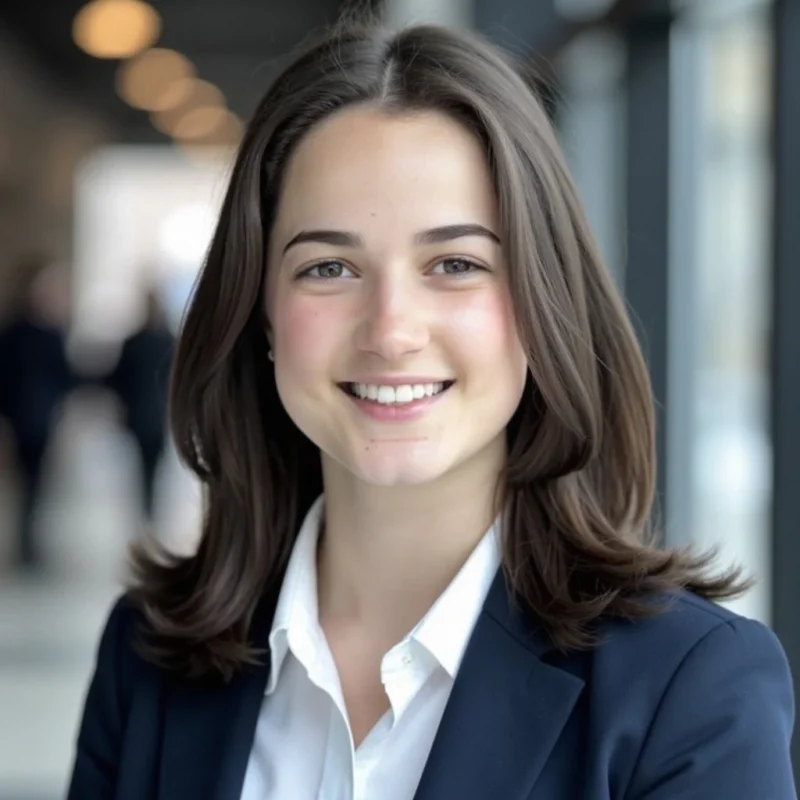
Stephen Francis spends a lot of his time on a problem that doesn’t make headlines: figuring out how thousands of small-effect genetic variants add up to shape a person’s risk of glioma, one of the deadliest primary brain tumors. It is careful, unglamorous molecular epidemiology. His lab has done this kind of germline workup before, and it takes a while.
Using Anthropic’s newly released Claude Science, Francis’s group ran a comprehensive germline analysis in roughly a tenth of the time it used to take. Then they did the part that matters most: they validated the results independently, by hand. No new tumor biology was discovered. What changed was how much of the drudgery got compressed.
That distinction, compression of the tedious majority, not a leap to discovery, is the most honest way to understand what Anthropic shipped at the end of June, and why oncology researchers should pay attention without losing their heads.
What it is
Claude Science, which Anthropic unveiled on June 30 at an event aimed squarely at pharma and biotech, is best described as a research “workbench.” Anthropic is positioning it as the scientific counterpart to Claude Code, its coding tool: give it a high-level instruction, and it can carry out multi-step work on its own.
The pitch addresses a genuinely annoying reality. A working computational biologist bounces between PubMed, Jupyter notebooks, R, a cluster terminal, half a dozen databases with incompatible schemas, and file formats that each demand their own viewer. Claude Science pulls that mess into one environment. It ships pre-wired to more than 60 scientific databases and tools spanning genomics, single-cell, proteomics, structural biology, and cheminformatics, and it renders the things biologists actually look at, 3D protein structures, genome browser tracks, chemical drawings, natively, rather than kicking you out to another program.
Worth stressing, because Anthropic itself is unusually blunt about it: this is not a new model, and not a model specially tuned for biology. It runs on the existing Claude lineup, including Opus 4.8, that has gone through the company’s standard safety and biosecurity evaluations. The bet here is on plumbing and orchestration, not on a specialized brain.
That’s a deliberate contrast with the competition. OpenAI’s GPT-Rosalind, released in April, took the opposite route, a model fine-tuned for biological reasoning, gated behind an enterprise qualification process. Google DeepMind, the longtime leader in this space, bundles proprietary models like AlphaFold and AlphaGenome into its Gemini for Science platform. Anthropic’s differentiator is access: Claude Science went live in beta for anyone on a Pro, Max, Team, or Enterprise subscription. No vetting, no waitlist.
What it does day to day
Three features distinguish it from “a chatbot that knows biology.”
First, it manages compute. Folding a protein or running a genomics pipeline over a large dataset usually means setting up a cluster job, submitting it, waiting, checking whether it failed, and hauling the results back. Claude Science drafts the plan, asks permission before it touches new resources, and can write and submit the job to the infrastructure a lab already uses, your own HPC cluster over SSH, or an on-demand GPU account. It runs on your machines, not Anthropic’s servers, which matters for labs sitting on sensitive patient-derived data.
Second, it produces auditable artifacts. When it generates a figure, it hands over the exact code, the computing environment, a plain-language account of how the figure was made, and the full message history. Months later, you can reconstruct precisely how a result came to be. You can also annotate figures and draft manuscripts in plain English, “make that axis log scale,” “drop the gridlines”, and the agent rewrites its own code to comply.
Third, it coordinates. A generalist agent acts as a project manager, spinning up specialist sub-agents and calling on a library of curated skills and connectors.
What it has actually shown so far
The early case studies, beyond Dr. Francis’ glioma work, sketch where the near-term value sits.
Manifold Bio, which designs medicines engineered to home in on specific tissues, used Claude Science to nominate targets for its latest experiments, scoring candidates on surface expression, trafficking, and safety across tissues while folding in proprietary criteria the company had accumulated from earlier programs. That’s a recognizably oncology-adjacent task: stitching internal data to external databases in a single analytical thread to decide what’s worth putting in front of a bench.
At the Allen Institute, neuroscientist Jérôme Lecoq built a multi-agent pipeline that reads through thousands of papers and assembles narrative reviews with quantitative cross-study figures, the kind of literature synthesis that eats weeks.
Notice the common thread. These are wins in target triage, molecular epidemiology, and literature synthesis. They are not discoveries.
The part the launch page doesn’t oversell
Here is the sentence oncology researchers should keep taped to the monitor: zero AI-discovered drugs have FDA approval, and the roughly 90% clinical failure rate in drug development has not budged. The biomolecular models sitting underneath tools like this are strong at structure prediction and early screening, and improving fast, but they are not yet where you’d want them for the decision that gates a program, the go/no-go call that commits millions of dollars and years of work.
Scientists testing it are candid about the same tension. Northeastern’s Jared Auclair, who thinks AI could compress drug timelines from over a decade to a handful of years, still calls it a co-pilot that needs a skilled pilot. Biophysicist Bryan Spring, enthusiastic about the manuscript and literature help, worries that a general-purpose system can hallucinate or miss the nuance in regulatory guidance and assay design, errors that carry real consequences in a regulated field. Anthropic’s own verification step, meant to catch fabricated citations, still leans on the same underlying model to do the checking.
What it means for biotech and oncology
The honest read is that Claude Science attacks the boring 80% of research, data wrangling, pipeline setup, compute babysitting, literature review, figure and manuscript prep, the regulatory paperwork that keeps faculty up at night, and mostly leaves the hard 20% where it was. For an oncology lab, that is not a small thing. Germline and molecular-epidemiology workups, target nomination, cross-study synthesis: these are exactly the time sinks that stand between a hypothesis and an experiment.
Anthropic is putting its own skin in the game, launching internal pre-clinical drug programs aimed at neglected diseases, targets the traditional pharma calculus tends to skip. It’s also seeding the field, offering up to $30,000 in credits to as many as 50 research projects, with applications open through July 15. Both moves double as real-world stress tests of whether the workbench holds up outside a demo.
The realistic near-term picture, then, isn’t the AI oncologist. It’s the graduate student who no longer loses a week to a finicky cluster job or a literature dragnet, and who gets an audit trail for free. Whether that compounds into faster discovery, or just faster paperwork, is the question the next year of glioma workups and target nominations will answer. For now, the useful posture is the one Francis’s lab modeled: let it do the tedious majority, then check the work yourself.
Read more biotech insights on OncoDaily Biotech.
Written by: Semiramida Nina Markosyan, Editor, OncoDaily Canada