Cureety announced on September 2, 2026 the acquisition of Reimagine Care, a Nashville-based virtual oncology company, creating an organization the companies say supports more than 250 cancer centers and 100,000 patients across five countries with roughly 150 employees. Financial terms were not disclosed. The companies describe the combined business as immediately profitable, without giving revenue.
A triage engine meets a conversational front end
Cureety, based in Paris, sells therapy-specific remote monitoring with algorithmic triage tuned to regimen, tumor profile and comorbidities. Deployments include Montpellier University Hospital in France, the European Institute of Oncology in Italy and Lusíadas Saúde in Portugal, plus a U.S. partnership with the National Community Oncology Dispensing Association.
Reimagine Care operates Remi, a large language model-based conversational assistant backed by a 24-hour virtual care center staffed by oncology-certified nurses. Partners include Moffitt Cancer Center, Tampa General Hospital Cancer Institute, MedStar Health and City of Hope. The company reports 95% of patient needs resolved virtually, and that at Moffitt 97% of nearly 7,000 interactions were resolved without provider escalation, with 2.4% ending in emergency department referrals.
What sits behind the 95%
Reimagine Care says 95% of patient needs are resolved virtually. These are its own program numbers, not a comparison against anything. Its May 2026 Moffitt report counts nearly 7,000 patient interactions, 97% of encounters resolved without escalating to a Moffitt provider, and 2.4% of interactions sent to the emergency department. Interactions and encounters are different units, and neither is defined.
Randomized trials have tested the question, and split.
Two found longer survival: a single-center study at Memorial Sloan Kettering and a five-hospital French lung cancer trial, stopped early at 19.0 months against 12.0 among 121 patients.
The largest did not. PRO-TECT, with 1,191 metastatic patients at 52 U.S. practices, found survival unchanged (HR 0.99; P = 0.86). Everything else improved: patients hit a first emergency department visit later and less often (HR 0.84; P = 0.03), and physical function, symptom control and quality of life each held up three to four months longer (12.6 versus 8.5, 12.7 versus 9.9, 15.6 versus 12.2 months). Its authors said monitoring belongs in standard care and that future trials should drop survival as the main measure.
So: it makes patients feel better and keeps them out of the ER. Whether it extends life is unsettled.
Cureety’s platform has one randomized trial, OPTIMACURE, sponsored by Centre François Baclesse. It gave 192 patients at three French hospitals the platform or usual care, and primarily measured whether staff made fewer outgoing phone calls. Results went to ASCO 2025; the protocol ran in BMC Health Services Research in December 2025.
The constraint has moved
In comments provided to OncoDaily, Misha Kaur, COO of Cureety, framed the deal around what happens after data is collected.
One of the biggest lessons from scaling across Europe, and one we see as highly relevant in the U.S., is that the hard part is not collecting more patient data. It is designing what happens next, without adding burden for patients or care teams. If you cannot answer those questions, remote monitoring simply becomes another inbox.
On AI, Kaur set a deliberately narrow test.
I think we should be careful about equating more AI with less human care. In oncology, some of the highest-value uses of AI may actually be quite unglamorous, The test is not whether AI can have an impressive conversation. It is whether the right human enters the conversation at the right moment with enough context to do something useful.
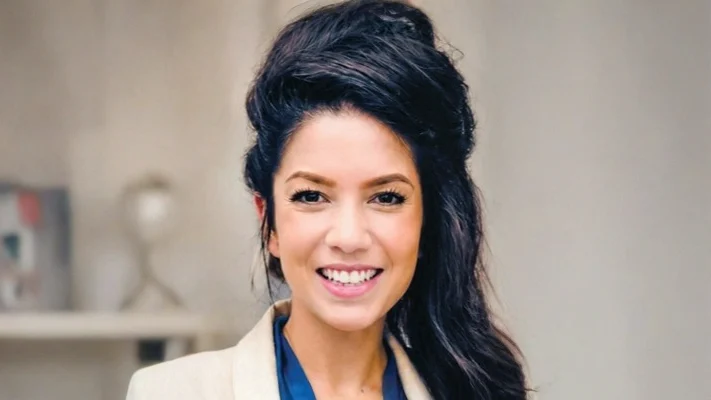
Kaur Misha/LinkedIn
Dan Nardi, CEO of Reimagine Care, made the same point from the U.S. side.
The increasing constraint in oncology isn’t just the availability of a therapy. It’s whether organizations have enough specialized capacity to safely support more patients receiving these extremely complex therapies. Cancer centers can’t solve that by continually adding people. We must use technology to determine where clinical expertise is actually needed, handle more routine needs without unnecessarily consuming that expertise, and give clinicians better visibility into patients between visits.
He tied the thesis to therapy migration:
As therapies such as bispecifics, CAR-T and antibody-drug conjugates move into more settings, community practices need infrastructure that helps them monitor patients with the same level of specificity those therapies demand.
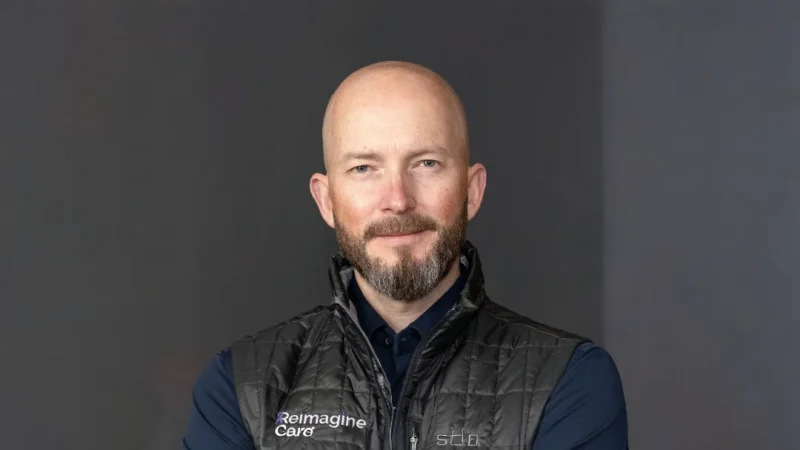
Dan Nardi/LinkedIn
How both companies got here
Cureety raised €8.5 million ($9.7 million) in a Series A in 2025, following an earlier €5 million round, and acquired French home-care provider Continuum Plus Santé in June 2025. Reimagine Care closed a $25 million Series A, counts TGH Ventures among its investors, and was named to the 2025 Fierce 15.
The announcement landed the same day Thyme Care closed a Series E of more than $125 million at a valuation above $2 billion, backed by Morgan Health, Humana and CVS Health. Two different bets on the same thesis, one buying capability and one buying scale, were made on September 2.
The untested part
Nothing has been disclosed about integration: whether Remi will run on Cureety’s European installed base, whether Cureety’s triage logic will sit behind Remi, or on what timeline. The companies have also not said whether the combined product will be sold as software, as a staffed clinical service, or under risk.
The clinical question is narrower than the announcement implies. Symptom monitoring already produces a measurable benefit in randomized trials. What has not been tested is whether a conversational AI front end changes the size of that benefit, or only the cost of producing it.
Read more biotech insights on OncoDaily Biotech.