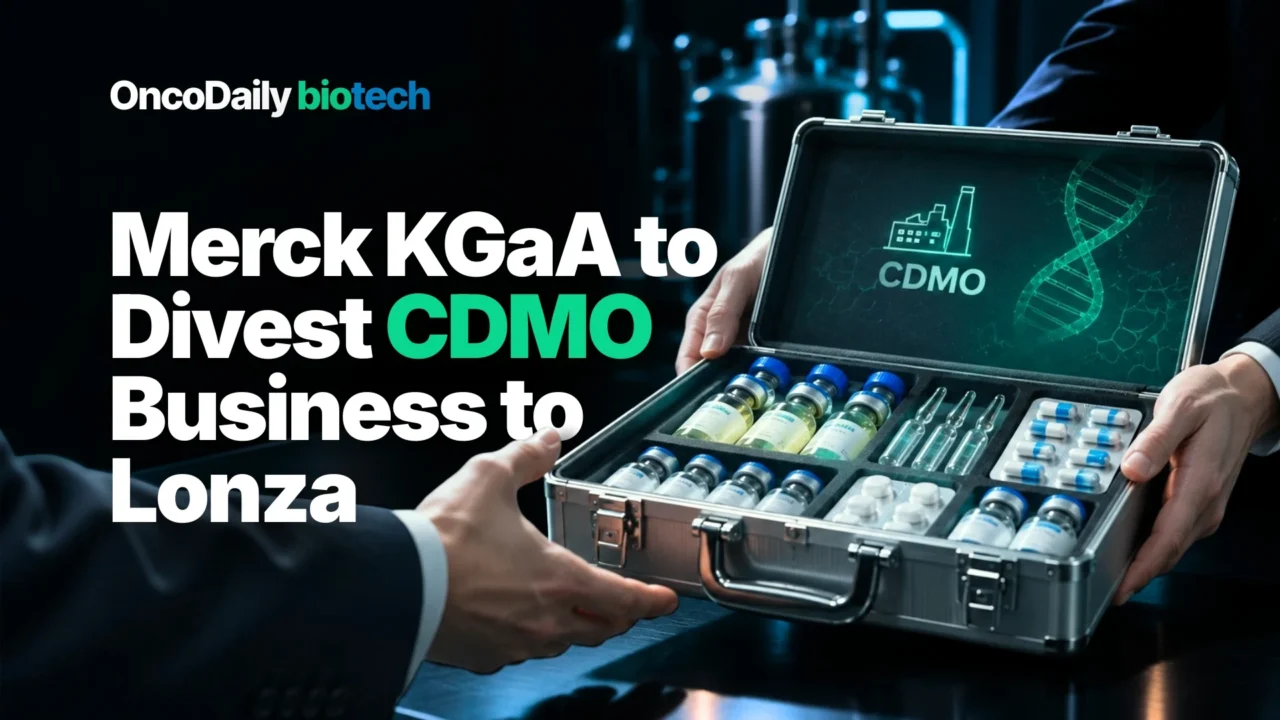
Merck KGaA, Darmstadt, Germany, has agreed to sell its contract development and manufacturing organization (CDMO) business to Lonza. The Swiss CDMO will pay a mid-triple-digit million-euro amount, and the deal is expected to close in mid-2027, subject to regulatory approvals and customary conditions.
The transaction covers five US sites and about 1,100 employees, and would take Lonza’s US CDMO network from four sites to nine. The sites make antibody-drug conjugates (ADCs) and their highly potent payloads, viral vectors for cell and gene therapies, and lipid nanoparticle (LNP) formulations. By Merck’s 2024 count, its ADC operations had supported about half of commercially approved ADCs.
Deal at a Glance
| Term | Detail |
|---|---|
| Seller | Merck KGaA, Darmstadt, Germany (Life Science sector) |
| Buyer | Lonza Group, Basel, Switzerland |
| Price | A mid-triple-digit million-euro amount, per Merck; Lonza puts the enterprise value in the low- to mid-triple-digit millions of Swiss francs |
| Sites | St. Louis, Missouri; Madison and Verona, Wisconsin; Carlsbad, California; Indianapolis, Indiana |
| Employees | About 1,100 |
| Expected sales | About CHF 250 million in 2028, at a core EBITDA margin below Lonza’s group level |
| Funding | Cash, from Lonza’s cash on hand and existing credit facilities |
| Not included | BioReliance® Contract Testing Services, which stays with Merck |
| Closing | Expected mid-2027, subject to regulatory approvals |
Why Merck Is Selling
Merck presents the sale as a matter of portfolio focus. It wants Life Science concentrated on innovation-driven businesses where its science and technology give it the best chance to lead. It also says the CDMO unit’s next phase belongs with an owner dedicated to contract development and manufacturing.
The move follows the strategy update Merck presented in May alongside its first-quarter results. Group CEO Kai Beckmann pledged then to sharpen portfolio focus, make the operating model more scalable and source outside innovation through partnerships, in-licensing and selective acquisitions. In June, Merck agreed to buy Minneapolis-based life science tools maker Bio-Techne for about $11.3 billion in cash, its largest deal since the $17 billion Sigma-Aldrich purchase in 2015.
“Today’s announcement is another important step in advancing our mid- to long-term strategic agenda,” said Beckmann, Chairman of the Executive Board and Group CEO of Merck. “We continue to focus our portfolio on innovation-driven businesses that build on our core capabilities and strengthen our long-term competitive position within Life Science and across the entire Merck portfolio.”
Jean-Charles Wirth, Member of the Executive Board and CEO Life Science, said the narrower portfolio lets Merck invest where it leads. “A more concentrated Life Science portfolio will allow us to focus our investments on technologies and capabilities that build on our scientific leadership and make us an even stronger partner for our pharmaceutical, biotechnology and CDMO customers,” he said.
Merck is not leaving the biomanufacturing supply chain. After closing, it will keep selling consumables, technologies and services to drugmakers and CDMOs, Lonza included. Its BioReliance® Contract Testing Services business is not part of the sale.
What Lonza Is Buying
Lonza gets a ready-built US network covering ADCs, viral vectors and advanced drug delivery, built by Merck over more than 35 years. The sites operate today under MilliporeSigma, the name Merck’s Life Science business uses in the US and Canada.
| Site | Focus | Background |
|---|---|---|
| St. Louis, Missouri | ADC bioconjugation, clinical to commercial | Merck calls it North America’s first commercially approved ADC CDMO; a $76 million expansion announced in 2024 was set to triple capacity |
| Madison and Verona, Wisconsin | Highly potent APIs, payloads and linkers | A $65 million Verona expansion opened in 2022 and doubled HPAPI capacity |
| Carlsbad, California | Viral vectors, including aseptic fill-finish | Gene therapy work since 1997; a $110 million second facility opened in 2021 to more than double capacity |
| Indianapolis, Indiana | Lipid nanoparticles, liposomes and PEGylated proteins, including aseptic fill-finish | Formerly Exelead, which Merck bought for about $780 million in cash in 2022 |
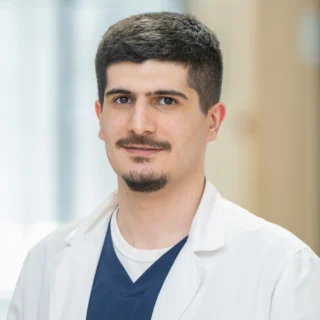
Our customers are looking for partners who combine deep scientific expertise with the capabilities and scale to support increasingly complex medicines from innovation through to commercial supply

Wolfgang Wienand/Lonza
said Wolfgang Wienand, CEO of Lonza.
Integrating Merck’s CDMO business into Lonza will give our customers access to broader capabilities and additional manufacturing capacity in the US, a key market for Lonza.
The deal extends Lonza’s US build-out. It bought Genentech’s Vacaville, California, biologics plant from Roche for $1.2 billion in 2024 and recently announced a commercial spray-drying facility in Bend, Oregon.
It also fits Lonza’s push to become a pure-play CDMO. In March, Lonza agreed to sell its Capsules & Health Ingredients business to Lone Star Funds at an enterprise value of CHF 2.3 billion. Part of the proceeds will fund organic investment and acquisitions that fit its One Lonza strategy. Wienand said Lonza is weighing further deals, from new modalities to underused pharma plants, Pharma Manufacturing reported.
Why It Matters for Oncology
For cancer drug developers, the ADC assets are the heart of the deal. Beyond its commercial track record, Merck said in 2024 that its ADC operations had supported more than 60 investigational new drug applications, about 20% of ADCs entering clinical trials.
The Wisconsin and St. Louis sites cover two linked steps of ADC manufacturing: making the highly potent payload-linker, then conjugating it to the antibody. That gives Lonza a US counterpart to its Swiss ADC hub, where it is expanding payload-linker capacity in Visp and adding an ADC filling line in Stein.
Demand for that work is strong. Merck estimated in 2024 that the number of ADCs in the global pipeline was rising by more than 30% a year. Lonza’s Advanced Synthesis platform, which includes its ADC business, grew sales 27.7% at constant exchange rates in the first half of 2026. Wienand called the US bioconjugation market “undersupplied.”
The other sites matter too. Carlsbad’s viral vectors serve cell and gene therapy developers, including CAR T-cell therapy makers, since approved CAR-T products are engineered with viral vectors. Indianapolis adds lipid nanoparticle formulation, the delivery technology behind mRNA medicines such as the cancer vaccines now in development.
What Happens Next
The deal still needs regulatory approvals and is expected to close in mid-2027. Until then, the CDMO business keeps operating inside Merck’s Life Science sector.
Merck and Lonza say they will work closely through the transition to support employees, customers and operations, with a focus on keeping programs and supply on track.
About the Companies
Merck KGaA, Darmstadt, Germany, is a science and technology company working in life science, healthcare and electronics. Founded in 1668, it has more than 62,000 employees and reported sales of €21.1 billion in 2025. In the US and Canada, its businesses operate as MilliporeSigma, EMD Serono and EMD Electronics.
Lonza is a Basel, Switzerland-based CDMO that develops and manufactures medicines for pharmaceutical and biotech companies. It has about 17,000 employees across three continents and reported sales of CHF 3.4 billion in the first half of 2026.
Read more on OncoDaily Biotech.