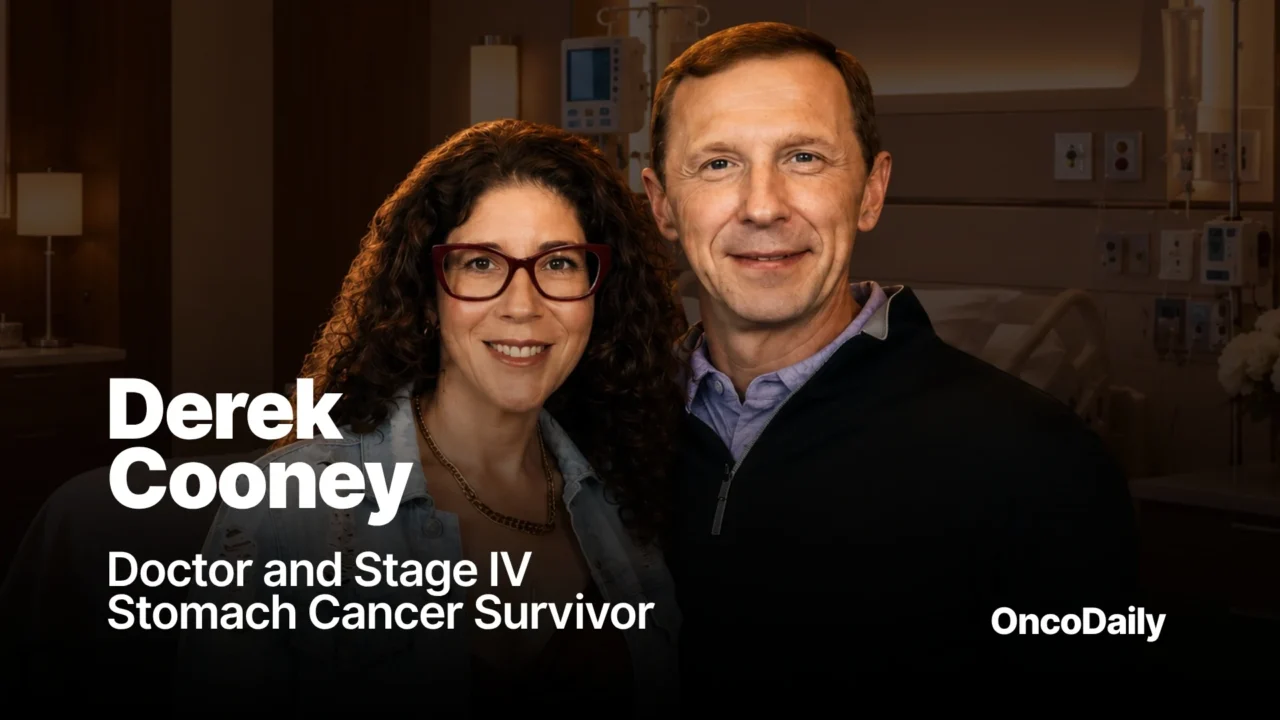
Receiving a stage 4 stomach cancer diagnosis at age 48 was a moment Derek Cooney, M.D., never expected.
An emergency physician from upstate New York and part of a family of health care professionals, Dr. Cooney had spent his career caring for patients in difficult circumstances. But when he learned that he had diffuse gastric adenocarcinoma that had spread to the peritoneum, the experience became deeply personal.
“It was pretty devastating,” he recalled. “After I got over the initial shock, then anger, I immediately thought, ‘Thank God it’s not my wife or kids.’”
After pursuing treatment locally and seeking second opinions at several leading centres, Dr. Cooney enrolled in a clinical trial at UT MD Anderson Cancer Center. Following a personalised treatment approach that included intraperitoneal paclitaxel, cytoreductive surgery, HIPEC, and total gastrectomy, his scans showed no evidence of disease.
When Persistent Symptoms Led to a Diagnosis
Dr. Derek Cooney had long managed gastroesophageal reflux disease and indigestion with medication. However, one day he became unable to eat or drink and went to the emergency department at the hospital where he worked.
Diagnostic testing and a biopsy led to a diagnosis of diffuse gastric adenocarcinoma, an aggressive form of stomach cancer.
He began care at a local cancer centre with a physician he trusted. A laparoscopy later revealed that the cancer had spread to the peritoneum, confirming stage 4 disease.
His treatment plan began with four cycles of FLOT chemotherapy, which combines fluorouracil, leucovorin, oxaliplatin, and docetaxel. The original plan was to proceed with gastrectomy and hyperthermic intraperitoneal chemotherapy, known as HIPEC, followed by four additional cycles of FLOT.
Looking Beyond the First Treatment Plan
Although his local treatment team had recommended an aggressive approach, Dr. Cooney was encouraged to seek second opinions.
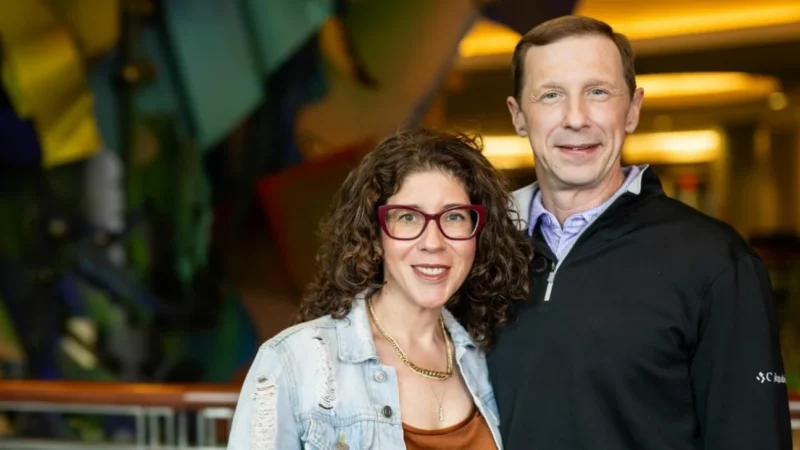
Together with his wife, Norma, who is also an emergency physician, he contacted several cancer centres to ask whether other treatment options or clinical trials were available.
At first, the response was consistent: there were no available trials for his disease, and he was already receiving an intensive treatment regimen.
“The statistics online were disheartening,” he said. “But I explained to my four kids that I’m pretty young for this disease and there have been a lot of medical advances since those numbers were produced.”
Drawing on their medical experience, Derek and Norma remained hopeful.
“As doctors, Norma and I have seen so many patients overcome the odds,” he said. “We believed I could, too.”
A Review That Opened a New Door
Dr. Derek Cooney first visited UT MD Anderson on October 3, 2024. He met with gastrointestinal medical oncologist Jaffer Ajani, M.D., who explained that no specific clinical trial was immediately available but that a multidisciplinary team would review his case.
Derek Cooney returned to New York and completed four more rounds of chemotherapy, as his cancer was responding well to treatment.
Shortly after finishing chemotherapy, however, he developed pneumonia and required intensive care. During that admission, he received a call from Brian Badgwell, M.D., a surgical oncologist at UT MD Anderson specialising in stomach cancer.
Dr. Badgwell explained that Dr. Derek Cooney qualified for a clinical trial that built on his existing treatment strategy.
“The doctors at UT MD Anderson had reviewed my case, and Dr. Badgwell had a clinical trial I qualified for if I was interested,” Dr. Cooney said.
The trial included paclitaxel delivered directly into the peritoneal cavity, along with the opportunity for cytoreductive surgery earlier in the treatment course.
“I knew there had been progress in using intraperitoneal chemotherapy to treat other types of cancer, so I was very interested,” he said. “I was at UT MD Anderson within two weeks.”
Combining Surgery and Intraperitoneal Chemotherapy
Before surgery, pulmonologist Carlos Jimenez, M.D., evaluated Dr. Cooney’s lung function to ensure that he could safely undergo the planned procedure.
Once cleared, Dr. Badgwell implanted an intraperitoneal port and removed superficial lesions in the abdomen. Dr. Cooney then received three cycles of intraperitoneal paclitaxel, administered every two weeks.
On January 28, 2025, he underwent a total gastrectomy, cytoreductive surgery, and HIPEC.
After recovering for one month, he completed three additional cycles of paclitaxel. The intraperitoneal port was removed in April.
At his first follow-up appointment in June, imaging showed no evidence of disease.
“There are some key people in life that you’ll always remember, and Dr. Badgwell is one of those people for me,” Dr. Cooney said. “He’s still taking care of me even after the surgery, and Dr. Ajani supports me on the medical side. That matters to me as a patient.”
Returning to the Career He Had Planned
Before his diagnosis, Dr. Derek Cooney had planned to begin a fellowship in interventional pain management in August 2024. His diagnosis delayed those plans, but he remained determined to continue his professional path.
“I was doing so well with the chemotherapy that I decided to enter the match,” he said. “I had faith that I was going to beat cancer.”
He completed the fellowship in June.
“I knew I was going to become a pain management doctor, and facing cancer was just one more thing I needed to make sure I was going to be a good one,” he said.
The experience also changed how he approaches life outside medicine, including the importance of rest, sleep, and time with family.
The Role of Personalised Care
For Dr. Derek Cooney, the experience reinforced the importance of treating every patient as an individual, particularly in complex cancers such as metastatic gastric cancer.
“As a doctor myself, I understand that medicine is a science, but it’s also an art,” he said. “There’s room to treat every patient as an individual.”
He also credits his wife, Norma, for supporting him throughout diagnosis, treatment, and recovery.
“If you spent 15 minutes with Norma, you’d understand why I did so well during treatment,” he said. “She’s an unstoppable force and exudes positivity.”
Dr. Derek Cooney and his family remain grateful for the care he received throughout his treatment journey.
Written by Nare Hovhannisyan, MD
Explore more oncology news and features on OncoDaily