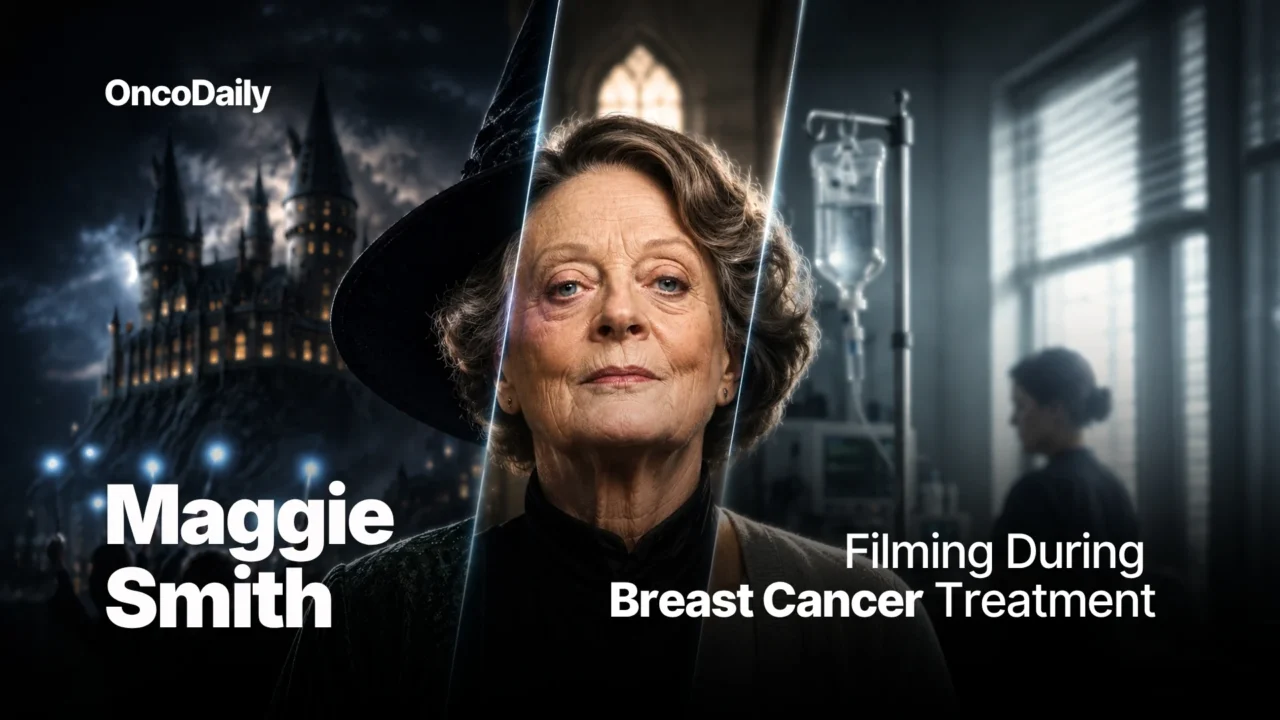
Dame Maggie Smith, the two-time Oscar-winning actress best known worldwide as Professor Minerva McGonagall in the Harry Potter film series, continued working during one of the most challenging periods of her life: undergoing treatment for breast cancer.
In 2008–2009, while receiving chemotherapy and radiotherapy, Smith continued filming Harry Potter and the Half-Blood Prince. In a rare interview with The Times in 2009, she spoke openly about the physical and emotional burden of treatment, describing herself as “hairless,” feeling “horribly sick,” and later explaining that the treatment left her “totally exhausted and depressed.” She described the experience as extremely difficult, saying that the cure felt “worse than the disease.” Her story provides a rare public example of a person continuing professional work during cancer treatment while also highlighting an important reality: every patient’s ability to work during therapy is different and depends on medical, personal, and occupational factors.
Who Was Dame Maggie Smith?
Dame Maggie Smith was one of the most celebrated British actors of her generation, with a remarkable career spanning more than six decades across theatre, television, and film. Known for her extraordinary versatility, sharp wit, and commanding screen presence, she became one of Britain’s most internationally recognized performers.
Smith gained early recognition through her work on stage, becoming a leading figure in British theatre before achieving global fame through cinema and television. Her breakthrough film performances included roles in ** The Prime of Miss Jean Brodie (1969), for which she won the Academy Award for Best Actress, establishing her as one of the world’s most respected actors. She later received another Academy Award for Best Supporting Actress for her performance in ** California Suite (1978).
Over her career, Smith appeared in numerous acclaimed films, including ** A Room with a View (1985), ** Gosford Park (2001), ** The Secret Garden (1993), ** The Best Exotic Marigold Hotel (2011), and its sequel ** The Second Best Exotic Marigold Hotel (2015)**. She also became widely recognized by younger audiences for portraying Professor Minerva McGonagall in the Harry Potter film series (2001–2011), one of her most internationally beloved roles. Another defining role came through television, where she portrayed Violet Crawley, Dowager Countess of Grantham, in the award-winning series Downton Abbey (2010–2015). Her performance earned widespread critical praise and introduced her work to a new generation of viewers.

Photo: Depositphotos
Throughout her career, Smith received some of the highest honors in acting. She won two Academy Awards, received multiple BAFTA Awards, and earned numerous nominations and recognitions from international film, television, and theatre organizations. She was also appointed Dame Commander of the Order of the British Empire (DBE) in 1990 for her contributions to drama.
In addition to her professional achievements, Smith’s career demonstrated remarkable longevity, with major performances continuing well into her later years. Smith continued acting for many years after her cancer treatment, including returning to her iconic role in Downton Abbey and appearing in later film projects. She died in 2024 at the age of 89 from natural causes, not from active breast cancer. Her life and career remain a powerful example of artistic excellence, resilience, and the importance of understanding the person behind a cancer diagnosis.
Maggie Smith’s Breast Cancer Diagnosis and Treatment Journey
Smith was diagnosed with breast cancer in 2008 and received both chemotherapy and radiotherapy as part of her treatment. During this period, she continued working on Harry Potter and the Half-Blood Prince, which was filmed while she was undergoing therapy and released in 2009.
The actress later described the reality of living through cancer treatment while maintaining professional responsibilities. She experienced chemotherapy-related hair loss and severe physical symptoms, explaining that she had no hair during treatment but found that wearing a wig became easier because of it.She also described the broader impact of treatment, including feeling extremely unwell, exhausted, and emotionally affected. Her experience reflects the reality that cancer therapy can influence not only physical health but also confidence, identity, and emotional wellbeing.
What Does It Mean to Continue Working During Chemotherapy?
Continuing to work during chemotherapy is possible for some patients, but it is highly individual. Some people maintain employment throughout treatment, while others need significant reductions in responsibilities or complete time away from work. The ability to continue working depends on multiple factors, including the type of chemotherapy regimen, treatment schedule, side effects, blood counts, infection risk, and the physical and emotional demands of the job.
Chemotherapy can cause fatigue, nausea, hair loss, changes in concentration, neuropathy, and reduced immune function due to lower white blood cell counts. For people working in public-facing professions, such as acting, additional challenges may include long working hours, irregular schedules, repeated physical performance, and exposure to large groups of people. Smith’s situation was also influenced by her professional environment, where scheduling adjustments, production planning, and workplace accommodations likely helped make continued filming possible.
The Global Success of Harry Potter and the Half-Blood Prince
While Dame Maggie Smith was undergoing breast cancer treatment, she was also working on one of the biggest film franchises in cinema history. Released in July 2009, Harry Potter and the Half-Blood Prince became a major international box-office success, earning approximately $926 million worldwide, including more than $302 million in North America and approximately $623 million internationally.
The film ranked among the biggest releases of 2009. In the United States and Canada, it was the third-highest-grossing movie of the year, generating approximately $302 million during its theatrical run. Internationally, it was also the third-highest-grossing 2009 release, behind only Avatar and Ice Age: Dawn of the Dinosaurs. The scale of the production was equally significant. Half-Blood Prince had an estimated $250 million production budget, making it one of the most expensive entries in the franchise. Its opening weekend generated approximately $77.8 million domestically, before the film went on to become another near-billion-dollar chapter in the Harry Potter phenomenon.
Smith’s role as Professor Minerva McGonagall placed her at the center of this global cultural phenomenon. What audiences watching the film may not have known was that behind Professor McGonagall’s familiar costume and appearance, Smith was simultaneously dealing with the physical and emotional effects of chemotherapy and radiotherapy for breast cancer. Her ability to continue contributing to a production of this scale makes this period of her career particularly remarkable.
From Cancer Treatment to Downton Abbey: Maggie Smith’s Remarkable Career After Recovery
Maggie Smith’s story did not end with her breast cancer diagnosis. After completing treatment and recovering from the disease, she entered another remarkable chapter of her career, taking on one of her most celebrated roles as Violet Crawley, Dowager Countess of Grantham, in the television series Downton Abbey. Premiering in 2010, only a short time after Smith’s reported recovery, Downton Abbey became a global television phenomenon. The series followed the aristocratic Crawley family and the staff of their estate, combining historical drama with themes of family, social change, and tradition. Smith’s portrayal of Violet Crawley — a sharp-tongued, intelligent, and often humorous matriarch — quickly became one of the most memorable performances in the series.

Photo: Depositphotos
The role introduced Smith to another generation of viewers and brought her some of the highest recognition of her later career. For her performance as the Dowager Countess, she received multiple major awards, including three Primetime Emmy Awards and a Golden Globe Award. The success of Downton Abbey was international. The series was broadcast around the world and became one of the most successful British television dramas of its era. Smith continued portraying Violet Crawley throughout the original television series from 2010 to 2015, and later returned for the feature films Downton Abbey (2019) and Downton Abbey: A New Era (2022).
Her transition from filming Harry Potter during cancer treatment to becoming one of the defining figures of Downton Abbey reflects the extraordinary continuity of her career. Rather than being remembered only through the lens of illness, Smith’s story is also one of artistic resilience, longevity, and continued contribution to film and television. Her experience also carries an important message for people affected by cancer: recovery does not mean returning to exactly the same life overnight. Many survivors describe a gradual process of rebuilding confidence, energy, and identity after treatment. Smith’s later career demonstrated that life after cancer can continue to include creativity, achievement, and meaningful work.
How Can Cancer Patients Work During Treatment?
For patients who choose to continue working during cancer treatment, careful planning is often essential. Treatment schedules can influence energy levels, and many patients experience periods when symptoms are stronger, particularly around chemotherapy sessions. Adjusting workloads around these periods may help reduce physical strain and allow patients to continue activities that are important to them.
Workplace flexibility can also play an important role. Shorter schedules, additional breaks, quieter rest areas, and modifications to physically demanding tasks may allow some patients to continue professional activities while managing treatment effects. In professions where appearance is important, such as acting, additional support may include wigs, head coverings, and adaptations by makeup and costume teams. Smith’s own experience with wigs became one example of how practical adjustments can help patients continue working despite visible treatment effects.
Why Can Some Cancer Patients Continue Working While Others Cannot?
Cancer treatment affects every person differently. Two patients receiving the same diagnosis may have completely different experiences depending on their treatment plan, health status, symptoms, and type of work. A patient receiving a less physically demanding job may be able to continue working, while someone with severe fatigue, infection risk, pain, or physically demanding responsibilities may need additional recovery time.
Chemotherapy-related low blood cell counts can increase the risk of infection, and patients with significant neutropenia may be advised to avoid crowded environments. Symptoms such as fatigue, nausea, neuropathy, and cognitive changes can also affect concentration and daily functioning. Smith’s ability to continue filming during combined chemotherapy and radiotherapy represents an unusual situation, supported by her experience, production flexibility, and available accommodations. It should not be viewed as an expectation for other patients undergoing cancer treatment.
The Emotional Impact of Cancer Treatment
Smith’s story also highlights the emotional consequences of cancer treatment. Although she successfully completed treatment, she described feeling deeply affected by the experience. She spoke about exhaustion, depression, and uncertainty about returning to theatre work after her diagnosis. She explained that the illness and treatment had “knocked [her] sideways” and changed how she viewed her professional future.
Cancer recovery is not only measured by completing treatment. Many survivors experience ongoing fatigue, anxiety, changes in confidence, and concerns about returning to previous routines. For performers, whose careers rely heavily on energy, physical presence, voice, and confidence, these effects can be particularly meaningful.
What Can Patients Learn From Maggie Smith’s Experience?
Maggie Smith’s journey shows that cancer treatment does not look the same for everyone. Some patients continue working, while others need to focus entirely on recovery. The decision to work during treatment should always be personal and discussed with the healthcare team. Patients should consider their treatment intensity, workplace environment, infection risks, symptom burden, and overall wellbeing. For employers and colleagues, flexibility and understanding can make a meaningful difference. Creating supportive environments, allowing adjustments, and respecting individual choices can help people navigate cancer treatment while maintaining dignity and independence.
When Might Working During Cancer Treatment Not Be Safe?
Although some patients can continue working, there are situations where doing so may increase risks. Severe neutropenia, significant anemia, low platelet counts, uncontrolled symptoms, intense treatment-related toxicity, or physically demanding work environments may make continuing employment unsafe. Patients experiencing severe fatigue, uncontrolled pain, breathing problems, significant emotional distress, or increased infection risk may need additional medical guidance before returning to work.
Maggie Smith’s Legacy Beyond Cancer
Dame Maggie Smith’s breast cancer experience became one chapter in a remarkable life and career. Her decision to continue working during treatment gave visibility to an important reality faced by many people living with cancer: the desire to maintain normality, purpose, and identity during illness.
At the same time, her story should never create pressure for other patients to follow the same path. Continuing to work, reducing responsibilities, or stepping away completely are all valid choices depending on a person’s health and circumstances. Maggie Smith’s journey remains a reminder that behind every cancer diagnosis is a person with dreams, relationships, achievements, and a life beyond the disease.
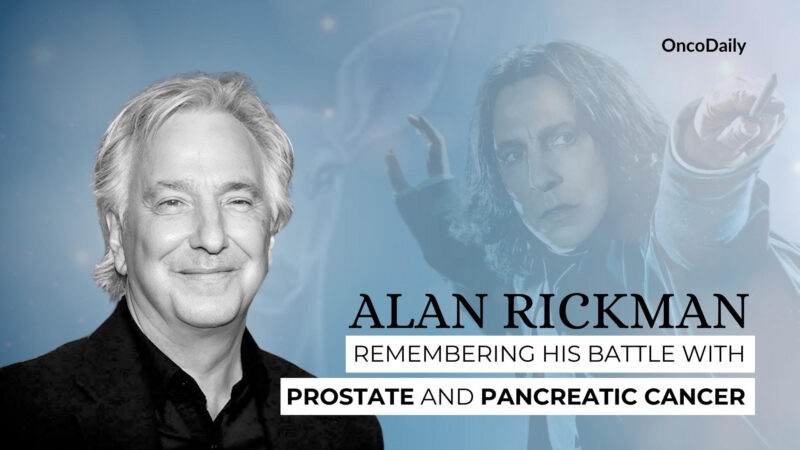
You Can Also Read In Memory of Alan Rickman and His Battle with Prostate and Pancreatic Cancer by OncoDaily
Written by Aharon Tsaturyan, MD
FAQ
Did Maggie Smith have breast cancer?
Yes. Dame Maggie Smith was diagnosed with breast cancer in 2008 and underwent treatment including chemotherapy and radiotherapy. She continued working during her treatment period, including filming Harry Potter and the Half-Blood Prince while receiving cancer therapy.
What type of cancer did Maggie Smith have?
Maggie Smith was diagnosed with breast cancer. The exact biological subtype of her cancer, including hormone receptor status or HER2 status, was not publicly disclosed.
Did Maggie Smith film Harry Potter while having cancer?
Yes. Maggie Smith continued filming Harry Potter and the Half-Blood Prince while undergoing breast cancer treatment in 2008–2009. The film was produced during her treatment period and released in 2009.
What treatment did Maggie Smith receive for breast cancer?
Maggie Smith received chemotherapy and radiotherapy after her breast cancer diagnosis in 2008. Reports stated that she had recovered from the disease by late 2009.
Did Maggie Smith lose her hair during chemotherapy?
Yes. Maggie Smith spoke publicly about losing her hair during cancer treatment and described herself as “hairless” during chemotherapy. She also explained that wearing a wig became easier because of the hair loss caused by treatment.
Can people work while receiving chemotherapy?
Yes, some people can continue working during chemotherapy, but it depends on several factors, including the type of cancer, treatment regimen, side effects, blood counts, and the physical or emotional demands of the job. Some patients may continue working with adjustments, while others may need reduced hours or time away from work.
How did Maggie Smith continue acting during chemotherapy?
Maggie Smith’s ability to continue filming was likely supported by professional accommodations, including flexible scheduling, production planning, and adjustments for treatment-related side effects such as fatigue and hair loss. However, every patient’s ability to work during cancer treatment is different.
What are common side effects of chemotherapy for breast cancer?
Common chemotherapy side effects may include fatigue, nausea, hair loss, increased infection risk due to low white blood cell counts, neuropathy, and difficulties with concentration or memory. The severity of these effects varies depending on the treatment regimen and individual patient factors.
Did Maggie Smith recover from breast cancer?
Reports stated that Maggie Smith had made a full recovery by late 2009 after completing treatment. She continued acting for many years afterward and died in 2024 at the age of 89 from natural causes, not active breast cancer.
What can cancer patients learn from Maggie Smith’s story?
Maggie Smith’s experience highlights that cancer treatment affects every person differently. Some patients may continue working during therapy, while others may need to prioritize rest and recovery. Decisions about working during treatment should always be personalized and discussed with the healthcare team.