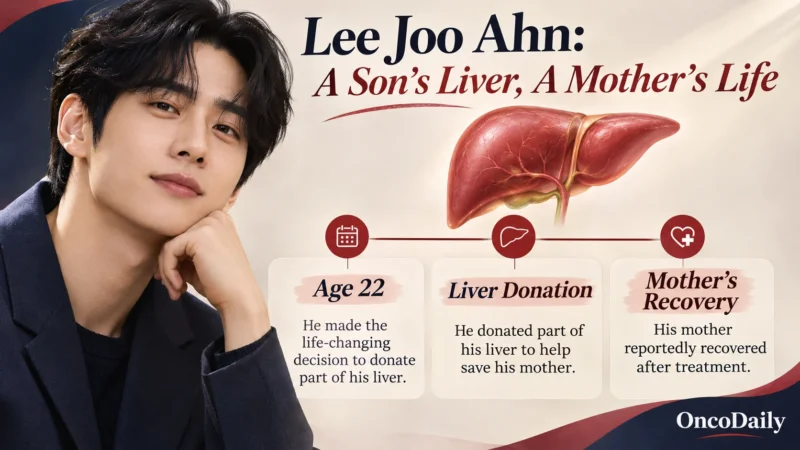
South Korean actor Lee Joo Ahn, recognized internationally for portraying Gong-gil in the tvN drama Bon Appétit, Your Majesty, revealed that he donated approximately 70–80% of his liver to his mother after she developed cirrhosis and liver cancer. His experience highlights both the life-saving potential of living-donor liver transplantation and the considerable medical risks involved in the procedure.
For many viewers, Lee Joo Ahn is a rising Korean actor whose performance in Bon Appétit, Your Majesty brought him wider recognition. Yet years before his growing popularity, he experienced a deeply personal medical crisis that would permanently affect his life. His mother had been living with serious liver disease. As her condition deteriorated, she developed liver cancer and reportedly lost consciousness. With transplantation considered necessary, Lee volunteered to donate a substantial portion of his liver.
The decision involved major surgery, concerns about donor safety, and a difficult recovery. Although his mother reportedly recovered successfully, Lee experienced a postoperative complication requiring emergency medical attention. When he shared the story publicly in October 2025, audiences learned about a chapter of his life that had taken place largely outside the spotlight. Beyond its emotional significance, Lee’s experience raises important medical questions: How does cirrhosis increase the risk of liver cancer? When can transplantation offer curative treatment? How much liver can a living person safely donate? And what are the long-term consequences for donors?
Who Is Lee Joo Ahn?
Lee Joo Ahn, also romanized as Lee Joo-an or Lee Joo-ahn, is a South Korean actor born on January 19, 1996. He began his television career in 2018 with an appearance in SKY Castle, the critically acclaimed Korean drama exploring family expectations, academic competition, and social pressure. His subsequent acting credits included Save Me 2, Chief of Staff 2, Sweet Munchies, True Beauty, and Love Song for Illusion. In 2025, Lee gained wider international attention through the tvN historical romantic-comedy series Bon Appétit, Your Majesty.
He portrayed Gong-gil, a royal court entertainer whose storyline intersected with the personal and political conflicts of the Joseon-era palace. The drama introduced Lee to new audiences and led to greater interest in his professional and personal history. In October 2025, his appearance on the MBC television program Omniscient Interfering View revealed a particularly significant event from his past: his decision to become a living liver donor for his mother.
When Did Lee Joo Ahn Donate His Liver to His Mother?
During the October 18, 2025 broadcast of Omniscient Interfering View, Lee explained that he had donated a large portion of his liver approximately eight years earlier. He was therefore in his early twenties at the time of the operation. The subject arose when viewers and program participants noticed a prominent scar on his abdomen. Lee explained that the scar was the result of liver donation surgery. He recalled that his mother had been suffering from cirrhosis and that her illness had eventually progressed to liver cancer.
As her health worsened, transplantation became an important treatment consideration. Lee decided to volunteer as a living donor despite concerns expressed by his mother and members of the medical team. He reported that approximately 70–80% of his liver had been removed for transplantation. The exact percentage is based on his recollection and has not been independently confirmed through an operative report. His account was documented by MBC and subsequently reported by several Korean news organizations, including Maeil Business Newspaper.
What Illness Did Lee Joo Ahn’s Mother Have?
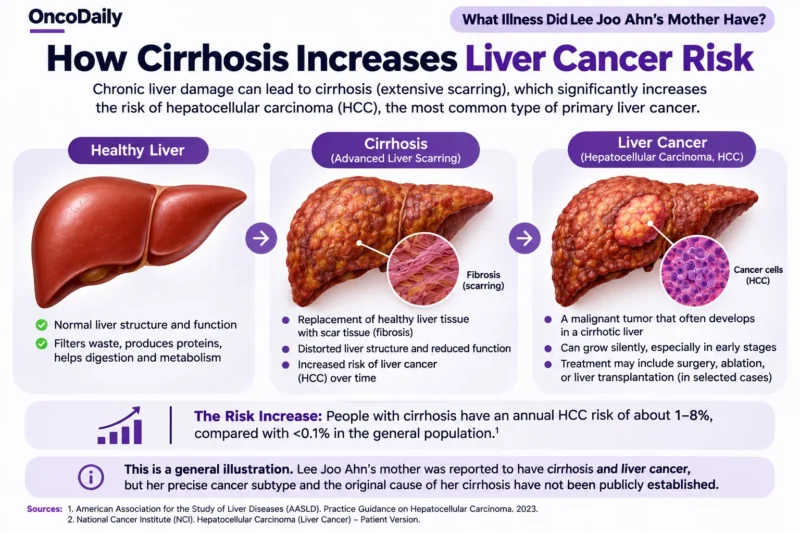
Lee’s mother reportedly had two serious and closely related medical conditions: liver cirrhosis and liver cancer. Cirrhosis represents an advanced stage of chronic liver disease characterized by extensive fibrosis, distortion of normal liver architecture, and the formation of regenerative nodules. These structural changes interfere with normal hepatic blood flow and can progressively impair essential liver functions. The liver plays a central role in metabolism, protein synthesis, coagulation, detoxification, and bile production. As cirrhosis advances, patients may develop complications such as portal hypertension, ascites, variceal gastrointestinal bleeding, hepatic encephalopathy, jaundice, and hepatorenal dysfunction. Liver cancer can further complicate this clinical picture.
What Causes Liver Cirrhosis?
Cirrhosis develops after prolonged liver injury from a variety of possible causes. Important etiologies include chronic hepatitis B or C infection, alcohol-associated liver disease, metabolic dysfunction-associated steatotic liver disease (MASLD), autoimmune hepatitis, cholestatic liver disease, and certain hereditary metabolic disorders. The underlying cause influences treatment, disease progression, and the patient’s risk of developing hepatocellular carcinoma. However, the specific cause of Lee Joo Ahn’s mother’s cirrhosis has not been publicly disclosed. There is no reliable basis for attributing her condition to alcohol consumption, viral hepatitis, or another particular disease.
How Does Cirrhosis Increase Liver Cancer Risk?
Cirrhosis is one of the strongest risk factors for hepatocellular carcinoma (HCC), the most common form of primary liver cancer. Chronic hepatic injury triggers repeated cycles of inflammation, cell death, tissue repair, and hepatocyte proliferation. Over time, these processes can promote genomic instability, accumulation of somatic mutations, and alterations in signaling pathways involved in malignant transformation. The risk varies considerably according to the cause of liver disease and other individual factors.
The American Association for the Study of Liver Diseases (AASLD) identifies cirrhosis as a major indication for HCC surveillance in patients who would be eligible for potentially effective treatment. Importantly, HCC may also occur in patients without established cirrhosis, particularly in some individuals with chronic hepatitis B infection. Although Lee’s mother reportedly developed liver cancer in the setting of cirrhosis, the precise histological subtype of her malignancy has not been disclosed. Her diagnosis therefore should not automatically be described as confirmed hepatocellular carcinoma.
How Common Is Liver Cancer? Latest 2026 Statistics
Liver cancer remains a substantial global and public health challenge. According to the National Cancer Institute’s Surveillance, Epidemiology, and End Results (SEER) program, an estimated 42,340 new cases of liver and intrahepatic bile duct cancer will be diagnosed in the United States in 2026. The same projections estimate approximately 30,980 deaths during 2026. These estimates combine primary liver cancer with intrahepatic bile duct malignancies. They should not be interpreted as HCC-only figures.
The overall five-year relative survival rate for liver and intrahepatic bile duct cancer is approximately 21.9%, based on patients diagnosed between 2016 and 2022. Survival differs considerably according to the extent of disease at diagnosis.
According to the National Cancer Institute’s SEER data, five-year relative survival rates for liver and intrahepatic bile duct cancer vary significantly depending on the extent of disease at diagnosis. Patients with localized disease have a five-year relative survival rate of 37.4%, compared with 13.4% for regional disease and just 3.6% for distant metastatic disease. These statistics highlight the importance of early detection, as patients diagnosed before cancer spreads generally have substantially better survival outcomes.
However, they are population-level estimates encompassing different liver and intrahepatic bile duct cancer types, treatments, and patient characteristics. They are not specific estimates of survival following liver transplantation, nor can they be applied directly to Lee’s mother. For selected patients with early-stage HCC who undergo transplantation, outcomes may be substantially better than these overall cancer statistics.
Why Did Lee Joo Ahn’s Mother Need a Liver Transplant?
According to Lee’s account, his mother’s liver disease progressed to a critical stage, and she eventually lost consciousness. He described transplantation as necessary to address her worsening condition. In patients with severe cirrhosis, liver transplantation may be indicated when the organ can no longer maintain adequate function or when serious complications develop.
Transplantation may also be considered for selected patients with primary liver cancer. Unlike partial liver resection, which removes a portion of the diseased liver, transplantation replaces the entire native liver with a healthy donor organ or graft. For patients with HCC arising in a cirrhotic liver, this offers an important theoretical advantage: it can eliminate both the identified cancer and the underlying cirrhotic organ, which may otherwise remain at risk for further malignant transformation.
However, candidacy depends on comprehensive medical assessment. Lee’s mother reportedly developed a coma, but the cause has not been publicly established. Although hepatic encephalopathy is a recognized complication of advanced liver disease, it cannot be assumed to explain her loss of consciousness. Likewise, her tumor burden, liver function scores, and transplant eligibility criteria are not publicly available.
Can Liver Transplantation Cure Liver Cancer?
Liver transplantation can provide curative-intent treatment for carefully selected patients with hepatocellular carcinoma, particularly when the cancer occurs alongside cirrhosis. The primary challenge is selecting patients whose cancer is sufficiently limited that transplantation offers a durable benefit. One widely used framework is the Milan criteria. These traditionally include either a single HCC lesion measuring no more than 5 cm or up to three lesions, each measuring no more than 3 cm, without macrovascular invasion or extrahepatic spread.
Patients outside conventional criteria may sometimes become transplant candidates after successful downstaging using locoregional therapies. Transplant eligibility also depends on liver function, comorbidities, general performance status, donor availability, and local transplant policies.
According to AASLD guidance, the objective is to maximize transplant benefit while minimizing the likelihood of postoperative cancer recurrence. Even following successful transplantation, recipients require regular cancer surveillance because recurrence remains possible. They also require ongoing immunosuppressive therapy to reduce graft rejection. In Lee’s mother’s case, public reports describe a successful recovery, but there is insufficient information to determine precisely why transplantation was considered oncologically appropriate.
What Is Living-Donor Liver Transplantation?
Living-donor liver transplantation is a surgical procedure in which a healthy person donates a portion of their liver to a patient who requires transplantation. The operation involves two separate surgical procedures. During donor hepatectomy, surgeons remove a carefully planned portion of the donor’s liver while preserving enough functioning liver tissue for the donor’s recovery. During the recipient operation, the diseased liver is removed and the donated segment is connected to the recipient’s vascular and biliary structures. Living-donor transplantation is possible because the liver possesses an exceptional capacity for regeneration.
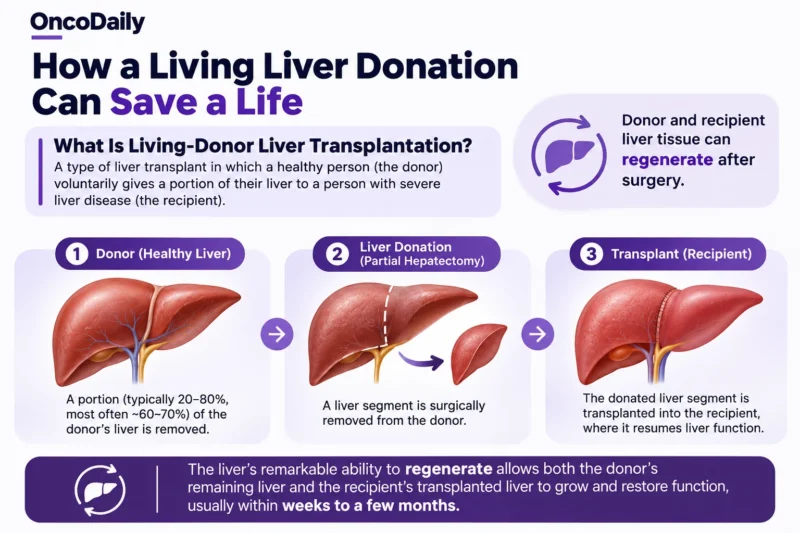
Both the remaining portion of the donor’s liver and the transplanted graft can undergo compensatory growth after surgery. However, this biological capability does not eliminate the risks associated with removing substantial liver tissue. Before surgery, donor candidates undergo a rigorous evaluation that may include laboratory testing, cardiovascular assessment, vascular and biliary imaging, liver volumetry, assessment for hepatic steatosis, and psychological evaluation. The central principle is that donor safety must not be compromised in the attempt to improve recipient outcomes.
How Much of His Liver Did Lee Joo Ahn Donate?
Lee reported donating approximately 70–80% of his liver, a substantial volume of functioning hepatic tissue. The reported extent of donation is particularly significant because the amount of liver left behind is a critical determinant of postoperative donor safety. In adult-to-adult transplantation, right-lobe donation may be necessary to provide adequate graft volume for the recipient. However, surgeons must ensure that the remaining donor liver can maintain essential metabolic and synthetic functions.
The 2024 EASL liver transplantation guidelines recommend that the estimated remnant liver mass in a living donor generally exceed 30–35%, with more conservative thresholds in certain circumstances. Graft adequacy for the recipient must also be considered, including graft size relative to recipient body weight and the recipient’s clinical condition. These thresholds are part of a broader assessment and cannot be applied as isolated numerical rules.
If 70–80% of Lee’s liver was removed, the remaining volume would appear relatively small compared with commonly recommended donor remnant thresholds. However, it is impossible to assess the specific surgical decision without knowing how the percentage was calculated, the operative anatomy, and the preoperative volumetric measurements. Lee also recalled that doctors considered his liver smaller than average, making the decision more challenging. His report should therefore be understood as a personal account rather than evidence that such extensive donation is routinely appropriate.
Can the Liver Grow Back After Donating 70%?
The liver has a remarkable capacity to restore its volume and functional mass after partial surgical removal. Liver regeneration is a coordinated biological process involving hepatocyte proliferation, growth-factor signaling, vascular adaptation, and remodeling of the remaining tissue. Following partial hepatectomy, the remaining liver begins adapting to increased metabolic demand. Substantial regeneration can occur during the first several weeks and months after surgery. The transplanted segment in the recipient can also increase in volume.
However, regeneration does not necessarily reproduce the original liver’s exact anatomical shape. Furthermore, restoration of liver volume and recovery of normal liver function are not identical outcomes. Postoperative liver function depends on several factors, including the quality of the remaining tissue, vascular integrity, biliary drainage, complications, and the donor’s baseline health.
Lee reported that his liver had regenerated but that he personally felt his liver function was somewhat reduced compared with before surgery. This statement is clinically important but should not be interpreted as a confirmed diagnosis of chronic hepatic insufficiency. Without objective laboratory results, imaging, or specialist follow-up findings, the current degree of his liver function cannot be determined. His experience illustrates why postoperative donor monitoring remains important even after substantial anatomical regeneration.
What Are the Risks of Living Liver Donation?
Living liver donation is generally performed in carefully selected healthy individuals, but it remains major surgery with a measurable risk of complications and death. Potential complications include postoperative bleeding, surgical-site infection, biliary leakage or stricture, venous thromboembolism, vascular injury, abdominal hernia, and temporary or persistent hepatic dysfunction. Rarely, severe postoperative liver failure may occur. A 2026 national cohort analysis examined outcomes among living liver donors in the United States using transplant registry data collected across several decades.
The investigators reported a decline in donor mortality over time, with 90-day mortality in the contemporary era estimated at approximately 0.04%, or 4 deaths per 10,000 donors. The same analysis found that approximately 2% of living liver donors reported reduced physical capacity six months after donation, with such limitations becoming less frequent by one year.
These findings reflect improvements in transplantation practice, donor selection, and perioperative management. However, they should be interpreted with caution because donor outcomes vary with the extent of hepatectomy, surgical experience, recipient requirements, and individual donor characteristics. Historical studies have reported higher mortality estimates for right-lobe donation. The 2026 population estimate therefore should not be used as a universal risk estimate for every donor or transplant center.
What Happened to Lee Joo Ahn After His Liver Donation?
Lee’s postoperative course was more difficult than expected. In his October 2025 television appearance, he explained that he initially left the hospital following surgery but developed a medical complication near his gallbladder region. He returned to the emergency department on the night of discharge. The complication required further hospital care and prolonged his recovery. Lee recalled that although living donors often leave the hospital before recipients, his mother ultimately recovered sufficiently to be discharged before him.
She later visited him while he was still receiving treatment. This reversal was one of the most memorable aspects of his story. Although the complication occurred near the gallbladder region, Lee has not disclosed sufficient clinical information to identify its precise cause. Biliary complications are recognized following liver surgery, but it would be inappropriate to diagnose him with a bile leak, stricture, or another specific condition without supporting evidence.
What is established is that he experienced an unexpected postoperative problem serious enough to require emergency reassessment. His case highlights an essential aspect of transplant medicine: the recipient’s successful outcome does not guarantee an uncomplicated recovery for the donor.
How Long Does Recovery Take After Living Liver Donation?
Recovery after living-donor liver transplantation varies according to the extent of surgery and whether postoperative complications occur. Early recovery generally involves monitoring liver function, pain control, wound healing, nutritional intake, mobility, and the development of complications. Donors may require several weeks before resuming many everyday activities, with a longer period often necessary before returning to physically demanding work or exercise. Longer-term recovery involves reassessment of liver function, symptoms, physical performance, and overall well-being.
The 2026 national donor cohort analysis provides useful evidence regarding functional recovery. Although most donors did not report persistent physical limitations, a small proportion experienced reduced capacity several months after surgery. These findings support the importance of counseling prospective donors about possible effects on employment, exercise, and quality of life. Lee’s reported complication demonstrates why an individual’s recovery may differ considerably from the expected postoperative course.
Did Lee Joo Ahn’s Mother Recover From Liver Cancer?
According to Lee’s statements in October 2025, his mother recovered successfully following liver transplantation. Korean media reports described her as having been declared recovered, and Lee indicated that she continued attending hospital appointments. Her recovery was particularly meaningful because she had previously experienced severe illness and loss of consciousness.
However, public reporting does not provide pathology results, imaging findings, or details of long-term oncological surveillance. The terms complete response, remission, and cure have distinct clinical implications and should not be used interchangeably. A complete response generally means that all detectable evidence of cancer has disappeared following treatment.
This does not necessarily exclude microscopic residual disease or guarantee that recurrence will never occur. It is therefore most accurate to state that Lee reported his mother’s successful recovery and continued medical follow-up. Her exact cancer status cannot be independently established from the information available.
Why Is Follow-Up Important After Liver Transplantation?
Liver transplant recipients require continued multidisciplinary follow-up to monitor graft function, immunosuppression, infection risk, metabolic complications, and possible cancer recurrence. For patients transplanted because of hepatocellular carcinoma, post-transplant surveillance is particularly important. Recurrence risk depends on factors such as pretransplant tumor burden, vascular invasion, tumor differentiation, and biological tumor behavior.
Surveillance protocols vary among transplant centers and according to individual recurrence risk. Living donors also require ongoing medical care. Even when the liver regenerates successfully, follow-up may include liver biochemical tests, clinical assessments, and investigation of persistent symptoms. Long-term attention to donor health is essential because living donation involves an operation performed on a person who was healthy before surgery. Lee’s experience underscores the importance of monitoring both donor and recipient outcomes rather than focusing exclusively on the success of transplantation.
Can Liver Cancer Be Detected Earlier in People With Cirrhosis?
Early detection is a central component of liver cancer management. People with cirrhosis have an increased risk of hepatocellular carcinoma, making surveillance important for eligible patients. AASLD guidance recommends HCC surveillance using liver ultrasound and serum alpha-fetoprotein (AFP) approximately every six months in appropriate at-risk populations.
The goal is to identify tumors at a stage when potentially curative therapies, including resection, ablation, or transplantation, may remain feasible. However, AFP is not sufficiently accurate to diagnose or exclude HCC on its own. When surveillance identifies a suspicious lesion, further evaluation may involve multiphasic contrast-enhanced CT or MRI. In appropriately selected at-risk patients, characteristic imaging findings can support a noninvasive diagnosis of HCC.
Other patients require additional diagnostic assessment, potentially including biopsy. Surveillance decisions should take into account the patient’s liver disease, overall health, and eligibility for meaningful treatment. Because the original cause of Lee’s mother’s cirrhosis and details of her monitoring are unknown, it is not possible to determine whether earlier surveillance would have changed her clinical course.
What Does Lee Joo Ahn’s Story Teach Us About Organ Donation?
Lee Joo Ahn’s experience demonstrates both the extraordinary possibilities of modern transplant medicine and the medical responsibilities associated with living organ donation. For selected patients with advanced cirrhosis and liver cancer, transplantation may offer an opportunity for long-term survival. Living donation can expand access to transplantation, particularly when deceased-donor organs are unavailable or waiting periods are prolonged. However, the procedure requires careful balancing of donor risk and recipient benefit. Living donors must receive comprehensive information about the operation, expected recovery, potential complications, and possible long-term consequences.
Donation must remain voluntary and should never be treated as a moral obligation. For patients with chronic liver disease, the story also emphasizes the importance of identifying underlying causes, preventing disease progression where possible, and maintaining appropriate surveillance for liver cancer. For healthcare professionals, it highlights the need for coordinated care among hepatologists, transplant surgeons, oncologists, anesthesiologists, radiologists, and other specialists. Most importantly, it demonstrates why outcomes should be evaluated for both people involved in living-donor transplantation.
You Can Also Read “If I Know What Love Is…”: Kim Woo-bin, Shin Min-ah, and Love After Nasopharyngeal Cancer by OncoDaily

Written by Aharon Tsaturyan, MD, Editor at OncoDaily Intelligence Unit
FAQ
Why did Lee Joo Ahn donate his liver to his mother?
He donated part of his liver because his mother reportedly had advanced cirrhosis and liver cancer, and her condition had become critical.
How much of his liver did Lee Joo Ahn donate?
Lee reported donating approximately 70–80% of his liver. The exact surgical percentage has not been independently verified.
How old was Lee Joo Ahn when he donated his liver?
He was in his early twenties. In October 2025, he described the surgery as having occurred approximately eight years earlier.
Did Lee Joo Ahn's mother survive liver cancer?
According to Lee's public statements, she recovered successfully following transplantation and continued receiving medical follow-up.
What complication did Lee Joo Ahn experience after surgery?
He reported a postoperative complication near the gallbladder region that required emergency medical care. The exact diagnosis was not disclosed.
Can someone survive after donating 70% of their liver?
Yes, carefully selected donors can survive after donating a substantial portion of their liver. However, donor suitability depends on detailed anatomical and functional assessment, and surgery carries genuine risks.
Does the liver grow back after donation?
The liver can regenerate much of its lost volume. However, regeneration does not necessarily restore the original anatomical shape, and functional recovery varies.
Can liver transplantation cure liver cancer?
Transplantation can offer curative-intent treatment for selected patients with hepatocellular carcinoma, particularly those with limited tumor burden and underlying cirrhosis.
What role did Lee Joo Ahn play in Bon Appétit, Your Majesty?
He portrayed Gong-gil, a Joseon-era royal court entertainer whose role brought him wider recognition.
What is the survival rate for liver cancer?
According to NCI SEER data, the overall five-year relative survival rate for liver and intrahepatic bile duct cancer is approximately 21.9%, based on diagnoses from 2016–2022. Survival varies by stage, cancer subtype, and treatment.