
Gloria Steinem spent more than six decades challenging assumptions about what women could be, do, and demand from society. A journalist, author, organizer, and co-founder of Ms. magazine, Steinem became one of the most recognizable figures of the modern women’s movement. Her work helped move issues including workplace discrimination, reproductive rights, political representation, and violence against women from the margins of public discussion into the national conversation.
Steinem died peacefully at her home in New York on September 2, 2026, at age 92, according to her foundation. Tributes following her death emphasized not only her public influence but also her ability to mentor and inspire generations of activists. Her life also included a personal encounter with breast cancer in 1986 a diagnosis she survived and later spoke about publicly.
Early Life and Family Background
Gloria Marie Steinem was born on March 25, 1934, in Toledo, Ohio, to Leo Steinem and Ruth Nuneviller Steinem. Her childhood was unconventional. Her father worked as a traveling antiques dealer, and the family spent periods traveling throughout the United States. Her mother, a former journalist, experienced severe mental health difficulties, and Gloria took on caregiving responsibilities at a young age.
Her parents eventually separated, leaving Steinem and her mother to navigate financial and personal difficulties. Those experiences would later inform Steinem’s understanding of women’s economic independence, caregiving, and the social expectations placed on women.
Education and the Experiences That Shaped Her
Steinem attended Smith College, graduating magna cum laude in 1956 with a degree in government. After college, she received a fellowship that took her to India, where she observed grassroots organizing and nonviolent political movements. The experience exposed her to forms of social activism that would later influence her own approach to organizing.
When she returned to the United States, Steinem began working as a freelance journalist. Her early career was not always easy. Journalism remained heavily male-dominated, and women writers were frequently expected to focus on lifestyle and culture rather than politics or serious public affairs. Steinem gradually challenged those expectations.
The Journalist Who Challenged the Status Quo
Steinem gained national attention through reporting that examined the experiences of women from the inside. In 1963, she went undercover as a Playboy Bunny at a New York Playboy Club and documented the working conditions and treatment of the women employed there. Her resulting article, A Bunny’s Tale, became one of her best-known pieces of early journalism. The assignment helped establish her reputation as a journalist willing to investigate subjects that other publications often avoided.
By the late 1960s, Steinem’s writing increasingly focused on gender inequality, reproductive rights, employment, and women’s political participation. She was becoming not simply a journalist covering a movement, but one of the people helping to build it.
Building the Modern Women’s Movement
In the early 1970s, Steinem became one of the most visible public voices of second-wave feminism. In 1971, she helped establish the National Women’s Political Caucus, working alongside activists and political leaders including Bella Abzug, Shirley Chisholm, Betty Friedan, and others. She also helped establish the Women’s Action Alliance, which connected organizations and activists working on women’s rights.
The Birth of Ms. Magazine
In 1972, Steinem and her colleagues launched Ms. magazine, creating a national publication dedicated to women’s experiences and feminist issues. The magazine quickly became an important platform for conversations about reproductive freedom, workplace discrimination, domestic violence, equality, and women’s political participation. For Steinem, media was not simply a way to report on social change. It was a tool for creating it. Her influence came partly from her ability to translate complex political and social issues into language that could reach a broad audience. As she later wrote:
“A feminist is anyone who recognizes the equality and full humanity of women and men.”
That sentence captured the broader philosophy behind much of her work.
Gloria Steinem and Breast Cancer
In 1986, at age 52, Steinem was diagnosed with breast cancer after discovering a lump in her breast. Her initial mammogram reportedly did not detect the cancer, but further evaluation confirmed the diagnosis. She underwent a lumpectomy followed by radiation therapy and did not receive chemotherapy. Steinem later described the emotional shock of receiving the diagnosis. She recovered and became a long-term breast cancer survivor.
Her experience added a personal dimension to her longstanding advocacy around women’s health and bodily autonomy. Rather than allowing cancer to become the defining story of her life, she incorporated it into a much broader conversation about women’s experiences and the importance of taking women’s concerns seriously.
Why Her Cancer Story Matters
Steinem’s breast cancer diagnosis occurred at a time when conversations about cancer were becoming increasingly visible, but many people still experienced the disease primarily as a private matter. Her openness contributed to the growing visibility of cancer survivorship.
Her experience also illustrates an important reality of breast cancer: a normal screening result does not necessarily eliminate the need to investigate a new or persistent breast abnormality. Steinem’s diagnosis followed the discovery of a lump despite an initially unrevealing mammogram. Today, breast cancer remains the most commonly diagnosed cancer among women worldwide. Advances in screening, surgery, radiation, endocrine therapy, chemotherapy, targeted therapy, and immunotherapy have substantially expanded treatment options and improved outcomes for many patients. Steinem’s personal experience, however, is not a substitute for medical guidance and should not be used to draw conclusions about another person’s cancer risk or treatment.
A Second Health Challenge
In 1994, Steinem was diagnosed with trigeminal neuralgia, a neurological disorder associated with severe facial pain. Unlike breast cancer, trigeminal neuralgia is not a malignancy. The diagnosis nevertheless became another part of a life in which health challenges did not bring her public work to an end.
Later Activism, Writing, and Public Life
Steinem remained active for decades after her breast cancer diagnosis. She wrote extensively, including Outrageous Acts and Everyday Rebellions, Revolution from Within, Moving Beyond Words, and My Life on the Road. She continued speaking and organizing around reproductive rights, gender equality, political participation, domestic violence, and women’s health.
She also supported organizations including the Ms. Foundation for Women, the Women’s Media Center, and other initiatives focused on advancing women’s rights. Her activism increasingly emphasized coalition-building rather than individual celebrity. That approach became central to how she understood her own legacy. Steinem continued to challenge assumptions about aging and women’s public roles long after becoming a cultural icon.
One of her most frequently cited observations was:
“Women may be the one group that grows more radical with age.”
The quote became particularly fitting for Steinem herself. She continued speaking publicly, writing, mentoring younger activists, and participating in political conversations well into her 80s and 90s. In her final years, she remained engaged with the next generation rather than presenting feminism as a finished movement.
A Feminist Icon Who Rejected the Idea of Being “The Face”
Steinem became so closely associated with feminism that it was difficult to separate her name from the movement itself. But she resisted that characterization. In a previously recorded interview released after her death, Steinem said:
“I hope I wasn’t the face of the feminist movement.”

Photo: Depositphotos
She emphasized that feminism was a diverse movement rather than something that belonged to one individual. She attributed her prominence partly to longevity, saying that she had simply “stayed at it longer.” That distinction is important to understanding her legacy. Steinem did not create the women’s movement alone. She helped give it visibility, language, institutions, and a powerful public platform.
The Legacy of Gloria Steinem
Steinem’s legacy extends far beyond the issues most closely associated with her name. She changed journalism by demonstrating that women’s experiences could be serious political subjects. She changed activism by connecting journalism, organizing, and political advocacy.
She helped build institutions that continued working long after individual campaigns ended. And she helped normalize conversations about subjects that had often been treated as private including reproductive health, workplace discrimination, violence against women, and women’s experiences with illness. Her career also demonstrated the power of persistence. She once described herself as an “entrepreneur of social change,” a phrase that reflected her emphasis on building movements rather than simply becoming their most recognizable spokesperson.
A Life That Outlived the Headlines
Gloria Steinem died at 92, but the issues she spent her life addressing remain part of public debate. Her breast cancer experience was only one chapter in her story. It did not define her career, but it became another experience through which she understood the importance of women’s voices, health, and autonomy. Ultimately, Steinem’s influence was not simply about the positions she took.
It was about her ability to make people reconsider what they had previously accepted as normal. She helped change the questions Americans asked about gender, power, work, health, and equality—and inspired generations of people to continue asking them.
A Note From the OncoDaily Editorial Board
Gloria Steinem’s legacy extends far beyond her role as a feminist icon. As a journalist, organizer, and rights activist, she helped give women a stronger voice in conversations about equality, reproductive freedom, political participation, and control over their own bodies. Her willingness to challenge established systems and bring women’s experiences into the public conversation helped influence generations of advocates. At OncoDaily, we also recognize the importance of her openness about breast cancer—a personal experience that added another dimension to her lifelong commitment to women’s health and empowerment. Her story reminds us that advocacy can change not only policies, but also the way society listens to people whose voices have too often been overlooked.
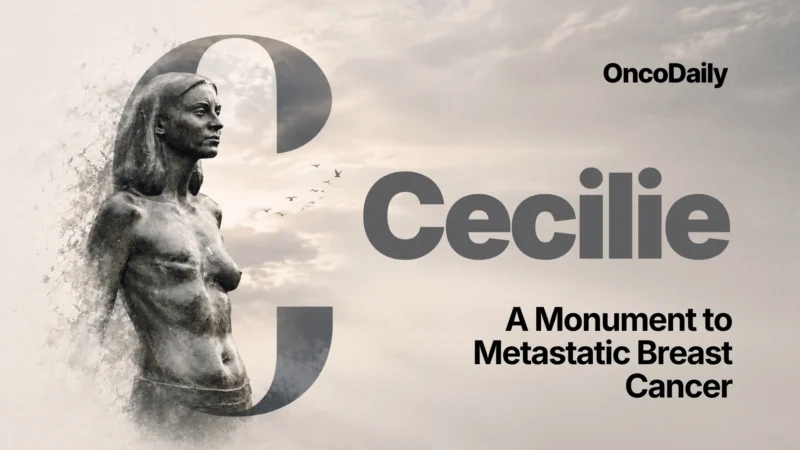
You Can Also Read Cecilie in Bronze: The Oslo Statue Giving Metastatic Breast Cancer by OncoDaily
Written by Aharon Tsaturyan, MD, Editor at OncoDaily Intelligence Unit
FAQ
Who was Gloria Steinem?
Gloria Steinem was an American journalist, author, activist, and organizer who became one of the most prominent leaders of the U.S. women's movement.
What was Gloria Steinem famous for?
She was best known for her journalism, feminist activism, co-founding Ms. magazine, and advocacy for gender equality, reproductive rights, and women's political participation.
When did Gloria Steinem die?
Gloria Steinem died on September 2, 2026, at her home in New York City. She was 92.
What type of cancer did Gloria Steinem have?
Steinem was diagnosed with breast cancer in 1986, when she was 52 years old.
How did Gloria Steinem treat her breast cancer?
She underwent a lumpectomy followed by radiation therapy and did not receive chemotherapy, according to accounts of her experience.
Did Gloria Steinem survive breast cancer?
Yes. Steinem became a long-term breast cancer survivor and continued her activism and writing for decades after her diagnosis.
What organizations did Gloria Steinem co-found?
Among other organizations, Steinem helped establish the National Women's Political Caucus, Women's Action Alliance, and Ms. magazine, and was involved in the development of several women's advocacy organizations.
Why was Gloria Steinem important to feminism?
She helped bring women's rights issues into mainstream American journalism and politics while helping build organizations focused on equality, reproductive freedom, political participation, and women's rights.
What did Gloria Steinem write?
Her major works include Outrageous Acts and Everyday Rebellions, Revolution from Within, Moving Beyond Words, and My Life on the Road.
What is Gloria Steinem's legacy?
Steinem's legacy lies in her ability to combine journalism, activism, and organizing to challenge gender inequality and expand public discussion of women's rights, health, political participation, and bodily autonomy. Her influence continues through the organizations, publications, and generations of activists she helped inspire.