Deion Sanders, the Pro Football Hall of Famer and University of Colorado football coach, publicly revealed in July 2025 that he had been treated for high-grade, very-high-risk non-muscle-invasive bladder cancer. Sanders did not share the diagnosis publicly until after surgery and the first stage of recovery. During a July 28, 2025 press conference with his medical team, he spoke about the difficult period he had faced, while his doctors explained that the cancer had been removed. Sanders later said publicly that he was cancer-free.
His story has brought attention to bladder cancer, including the fact that high-risk disease can require complex and highly individualized treatment even when it has not reached the bladder muscle.
How Did Deion Sanders Reveal His Bladder Cancer Diagnosis?
Sanders revealed his diagnosis during a July 28, 2025 press conference alongside his medical team at the University of Colorado. He explained that he had undergone major surgery during the offseason after doctors identified an aggressive bladder tumor. Janet Kukreja, MD, Director of Urologic Oncology at the University of Colorado Cancer Center, discussed the medical reasoning behind his treatment and said that surgery had removed the cancer.
Rather than announcing the diagnosis at the time it was discovered, Sanders spoke publicly after the operation and initial recovery. The update gave an unusually open look at the physical and emotional demands of cancer treatment, including the adjustment required after bladder removal and urinary reconstruction.
How Was Deion Sanders’ Bladder Cancer Detected?
Sanders’ bladder tumor was found on a routine precautionary CT scan, leading to further evaluation and a bladder cancer diagnosis. Bladder cancer may be detected after blood is found in the urine, during an assessment of urinary symptoms, or on imaging performed for another reason. Some people with earlier-stage bladder cancer may have no obvious symptoms.
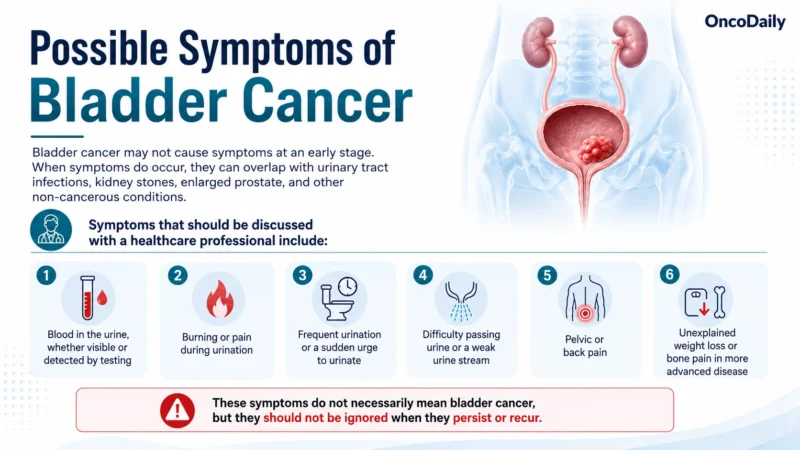
The most common symptom is blood in the urine, also called hematuria. Other possible symptoms include frequent urination, a sudden urge to urinate, pain or burning during urination, difficulty passing urine, or a weak urine stream. These symptoms can also be caused by non-cancerous conditions, but persistent or recurring urinary changes should be assessed by a healthcare professional.
What Type of Bladder Cancer Did Deion Sanders Have?
Sanders’ medical team described his cancer as high-grade, very-high-risk non-muscle-invasive bladder cancer. Bladder cancers are classified partly by how deeply they extend into the bladder wall. Non-muscle-invasive bladder cancer has not entered the bladder’s muscular layer. However, the term does not mean the cancer is automatically low risk.
In Sanders’ case, his doctor said the tumor had not reached the muscle layer. Its high-grade features and concern about recurrence or progression led his team to classify it as very high risk.
What Does “Very High-Risk” Bladder Cancer Mean?
Very-high-risk bladder cancer refers to disease with features linked to a substantial likelihood of recurrence or progression. Risk assessment can include tumor grade, stage, the presence of carcinoma in situ, the number and size of tumors, prior recurrence, and pathology findings.
For some people with high-risk non-muscle-invasive bladder cancer, treatment may include transurethral resection followed by intravesical therapy, such as bacillus Calmette-Guérin, or BCG. In selected cases with very-high-risk features, doctors may recommend early bladder removal to reduce the risk of future progression. The best approach depends on the pathology, imaging, prior treatment history, kidney function, overall health, and the patient’s individual priorities.
Was Deion Sanders’ Cancer Muscle-Invasive?
No. According to his physician’s public comments, Sanders’ tumor had not entered the bladder muscle. This distinction is important because muscle-invasive bladder cancer is typically managed differently and may involve chemotherapy before surgery, bladder-preserving chemoradiation in selected cases, or systemic therapy when cancer has spread beyond the bladder.
Sanders’ cancer was non-muscle-invasive, but its high-risk features meant that it still required decisive treatment.
What Surgery Did Deion Sanders Have?
Sanders underwent a robot-assisted radical cystectomy, a procedure that removes the bladder. His surgical team also created a neobladder using intestinal tissue. A neobladder is a urinary reconstruction designed to serve as a new reservoir for urine after the original bladder has been removed. After surgery, Sanders’ doctors said he was cancer-free.
Why Was His Bladder Removed?
Bladder removal is not needed for every bladder cancer diagnosis. It may be recommended for muscle-invasive disease, recurrent cancer that has not responded to bladder-preserving treatment, or selected non-muscle-invasive tumors with very-high-risk features. In Sanders’ case, his doctors recommended surgery because of the cancer’s risk profile. The decision was based on the characteristics of his tumor and concern that the disease could recur or progress.
What Is a Radical Cystectomy?
A radical cystectomy is an operation to remove the bladder. In men, nearby structures may also be removed depending on the cancer’s location and surgical plan. Because the bladder normally stores urine, surgeons must create another route for urine to leave the body. This is called urinary diversion. Common options include an ileal conduit, a continent cutaneous reservoir, and an orthotopic neobladder. The most appropriate reconstruction depends on anatomy, kidney function, bowel health, tumor location, overall fitness, and patient preference.
How Was Deion Sanders’ Neobladder Created?
A neobladder is made from a section of intestine that is reshaped into a reservoir and connected to the urethra. For some people, this allows urine to pass through the urethra rather than through an external bag. However, recovery takes time. Patients may need to follow a timed emptying schedule, manage nighttime leakage, strengthen pelvic-floor control, or use intermittent catheterization in some circumstances. A neobladder can be an important option after bladder removal, but it is not the right reconstruction for every patient.
Is Deion Sanders Cancer-Free?
After surgery, Sanders’ medical team said he was cancer-free. Sanders has continued to describe himself that way publicly. This is encouraging news. Still, “cancer-free” should be understood in the context of follow-up care. It means there is no current evidence of cancer based on the available post-treatment assessment. It does not eliminate the need for continued surveillance.
What Does “Cancer-Free” Mean After Bladder Cancer Surgery?
After surgery, “cancer-free” generally means that available pathology, imaging, examinations, or other follow-up assessments have not shown remaining cancer. Long-term outlook varies between patients. It depends on the original tumor characteristics, pathology findings, treatment response, and time since treatment.
Why Is Long-Term Follow-Up Still Important?
Follow-up after radical cystectomy helps monitor for recurrence, kidney-function changes, urinary-diversion complications, and nutritional issues. Survivorship care can also address continence, sexual health, fatigue, body-image changes, emotional wellbeing, and the practical adjustment to life with a neobladder. These are essential parts of recovery after bladder cancer treatment.
How Did His Earlier Health Problems Add Context?
Sanders had already faced significant health challenges before his cancer diagnosis, including circulation problems and surgery related to blood clots that resulted in the amputation of two toes. His cancer diagnosis came during continued medical care. His experience shows why regular medical follow-up can matter, particularly for people managing complex health histories. Sanders has spoken about the demands of recovery while remaining focused on coaching, family life, and his return to work.
What Are the Possible Symptoms of Bladder Cancer?
Bladder cancer may not cause symptoms at an early stage. When symptoms do occur, they can overlap with urinary tract infections, kidney stones, enlarged prostate, and other non-cancerous conditions.
Symptoms that should be discussed with a healthcare professional include:
Deion Sanders Bladder Cancer , bladder cancer symptoms AT
How Can Bladder Cancer Risk Be Reduced?
Bladder cancer cannot always be prevented, but some steps may help reduce risk. Avoiding tobacco is the most important modifiable measure. Smoking exposes the bladder lining to carcinogenic chemicals that enter the bloodstream, are filtered by the kidneys, and can collect in urine. People who work around industrial chemicals, dyes, paints, rubber, leather, metals, or diesel exhaust should follow workplace safety guidance and use appropriate protective equipment. Testing private well water for arsenic may also be relevant in areas where contamination is a concern.
Staying hydrated and seeking prompt evaluation for blood in the urine or persistent urinary symptoms may support earlier diagnosis. These measures cannot eliminate risk, but they can reduce exposure to known hazards and encourage timely care.
You Can Also Read Patriots DC Terrell Williams Declared Cancer‑Free After Prostate Cancer Battle by OncoDaily
What Is the Main Takeaway From Deion Sanders’ Bladder Cancer Story?
Deion Sanders’ story is about more than a high-profile coach returning to work after major surgery. It highlights the value of medical follow-up, early evaluation, individualized treatment decisions, and support during recovery. His tumor was found before it entered the bladder muscle. His team chose radical cystectomy and neobladder reconstruction, and his doctors later said there was no evidence of cancer after surgery. Every bladder cancer diagnosis is different. But his experience reinforces a practical message: do not ignore blood in the urine, persistent urinary changes, or symptoms that feel unusual. Timely evaluation can make a meaningful difference.
Written by Aharon Tsaturyan, MD, Editor at OncoDaily Intelligence Unit
FAQ
What type of bladder cancer did Deion Sanders have?
Deion Sanders’ doctors described his cancer as high-grade, very-high-risk non-muscle-invasive bladder cancer. They said the tumor had not entered the bladder muscle, but its features created a high risk of recurrence or progression.
How was Deion Sanders’ bladder cancer found?
His bladder tumor was found on a routine precautionary CT scan, which led to further evaluation and a bladder cancer diagnosis.
Did Deion Sanders have his bladder removed?
Yes. Sanders underwent a robot-assisted radical cystectomy, a surgery to remove the bladder, followed by urinary reconstruction.
What surgery did Deion Sanders have after bladder removal?
His surgeons created a neobladder using intestinal tissue. A neobladder is a reconstructed urine reservoir connected to the urethra after the original bladder is removed.
Is Deion Sanders cancer-free now?
After surgery, Sanders’ medical team said he was cancer-free, and he has continued to describe himself that way publicly. Continued follow-up remains important after bladder cancer treatment.
What is the most common symptom of bladder cancer?
The most common symptom is blood in the urine, known as hematuria. It may be visible or detected only on urine testing.
Can bladder cancer be cured if found early?
Some non-muscle-invasive and localized bladder cancers can be treated successfully, but treatment and outlook depend on tumor grade, depth of invasion, recurrence risk, and the individual treatment plan.
What is a neobladder?
A neobladder is a new urinary reservoir made from part of the intestine after the bladder is removed. It is usually connected to the urethra, allowing some patients to pass urine through the usual pathway.
Can you urinate normally with a neobladder?
Many people with a neobladder can pass urine through the urethra. However, they may need timed emptying, pelvic-floor rehabilitation, nighttime management, or intermittent catheterization in some cases.
Can bladder cancer come back after bladder removal?
Yes. The risk varies depending on the original cancer’s pathology and stage. This is why long-term surveillance, imaging, laboratory tests, and follow-up appointments remain important after radical cystectomy.