
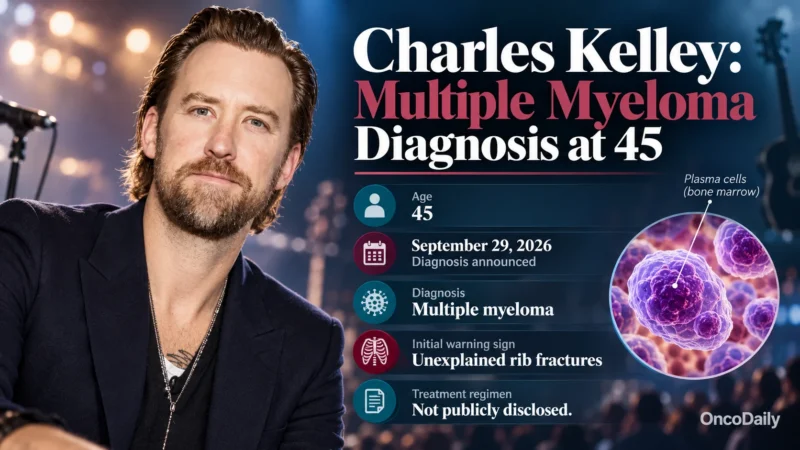
Charles Kelley’s cancer diagnosis has drawn attention after the 45-year-old Lady A singer revealed that he has multiple myeloma, a blood cancer affecting plasma cells in the bone marrow. The country music star announced the news on September 29, 2026, in an Instagram video alongside his wife, Cassie McConnell Kelley. Kelley explained that his diagnosis followed several unexplained rib fractures, which prompted further medical investigations and blood tests.
Multiple myeloma is frequently associated with bone destruction, skeletal pain, and pathological fractures, making his initial symptoms particularly relevant. According to the American Cancer Society, approximately 36,000 new cases of multiple myeloma are expected in the United States in 2026. Although the disease predominantly affects older adults, it can also occur in younger individuals. Despite the diagnosis, Kelley has expressed optimism about treatment and hopes to continue performing and recording music with Lady A.
Who Is Charles Kelley?
Charles Kelley is an American country music singer, songwriter, and founding member of Lady A, formerly known as Lady Antebellum. The group was formed in Nashville in 2006 and includes Kelley, Hillary Scott, and Dave Haywood. Over nearly two decades, Lady A has become one of country music’s most recognizable groups, with successful songs including “Need You Now,” “Just a Kiss,” and “American Honey.” Alongside his work with Lady A, Kelley has pursued solo projects and songwriting collaborations.
In recent years, the singer has also spoken openly about his sobriety journey. In July 2026, he celebrated four years without alcohol, a personal milestone he has discussed publicly. Kelley is married to Cassie McConnell Kelley, who appeared alongside him in the video announcing his cancer diagnosis. The couple have two sons.
When Did Charles Kelley Announce His Cancer Diagnosis?
Charles Kelley announced his multiple myeloma diagnosis on September 29, 2026, in an Instagram video shared with fans. Sitting beside his wife, Cassie, Kelley explained that doctors had discovered the cancer after investigating several unexpected rib fractures. He described the diagnosis as difficult news but emphasized his optimism about recent improvements in multiple myeloma treatment. Kelley said he felt physically healthy and was encouraged by how significantly available therapies had advanced in recent years.
He also spoke about the importance of being open about difficult personal experiences, drawing comparisons with the support he had received after publicly discussing his sobriety. Although he acknowledged that treatment could bring challenges, Kelley expressed confidence in his medical team and a desire to continue his professional activities.
How Was Charles Kelley’s Multiple Myeloma Discovered?
Kelley reported experiencing several unexplained rib fractures, which led his physician to recommend additional medical investigations. A series of blood tests subsequently revealed findings that led to his multiple myeloma diagnosis. His experience reflects a well-recognized clinical presentation of the disease. Multiple myeloma can initially become apparent through skeletal pain, fractures, anemia, renal impairment, or abnormal laboratory results. Bone involvement is one of the most frequent complications of symptomatic multiple myeloma. Clinical studies and reviews indicate that osteolytic bone disease is present in up to 80% of patients at diagnosis, depending on the population and imaging methods used.
However, rib fractures alone do not establish a diagnosis of multiple myeloma. Such fractures may also result from trauma, osteoporosis, prolonged coughing, or other medical conditions. In Kelley’s case, the fractures prompted further testing, but he has not publicly disclosed his bone marrow examination results, imaging findings, or the extent of any skeletal involvement.
What Is Multiple Myeloma?
Multiple myeloma is a hematologic malignancy characterized by the abnormal proliferation of clonal plasma cells within the bone marrow. Plasma cells are specialized immune cells responsible for producing antibodies that protect the body against infections. In multiple myeloma, malignant plasma cells accumulate in the bone marrow and frequently produce abnormal monoclonal immunoglobulins, known as M proteins, or free light chains. These abnormal cells and proteins can interfere with normal blood-cell production, weaken bones, impair kidney function, and disrupt immune responses. The disease is biologically heterogeneous, meaning its clinical behavior and response to treatment can vary considerably between patients.
How Common Is Multiple Myeloma?
According to the American Cancer Society’s 2026 estimates, approximately 36,000 new cases of multiple myeloma are expected to be diagnosed in the United States, with an estimated 10,850 deaths from the disease. Multiple myeloma accounts for approximately 1.7% of all newly diagnosed cancers and predominantly affects older adults, with an average age at diagnosis of around 69 years. Fewer than 1% of cases occur in individuals younger than 35, although the disease can develop at younger ages. Charles Kelley’s diagnosis at age 45 is therefore notably earlier than the typical age of onset, highlighting that multiple myeloma, while primarily associated with older populations, can also affect younger adults.
What Happens in the Body?
As malignant plasma cells expand within the bone marrow, they can interfere with normal blood-cell formation and alter the surrounding bone microenvironment. The principal complications are commonly summarized using the CRAB criteria:
C — Hypercalcemia: Increased blood calcium levels, often caused by accelerated bone destruction. Symptoms may include nausea, constipation, excessive thirst, and confusion.
R — Renal impairment: Kidney dysfunction, which may result from abnormal monoclonal light chains and other disease-related mechanisms.
A — Anemia: Reduced red blood cell production, potentially causing fatigue, weakness, and shortness of breath.
B — Bone lesions: Osteolytic destruction that increases the risk of bone pain and pathological fractures.
Other manifestations may include recurrent infections, impaired immune function, and, less commonly, disease involving tissues outside the bone marrow. Not every patient experiences these complications, and some individuals initially have few noticeable symptoms.
Why Can Multiple Myeloma Cause Rib Fractures?
Multiple myeloma-associated bone disease is among the most common and clinically significant complications of the malignancy. Osteolytic lesions are detected in up to 80% of patients at diagnosis in reported cohorts, and skeletal complications may develop in additional patients during the disease course. The underlying mechanism involves disruption of normal bone remodeling. Healthy bone continuously undergoes renewal through the coordinated activity of two cell types: osteoclasts, which break down bone, and osteoblasts, which produce new bone tissue. In multiple myeloma, malignant plasma cells interact with the bone marrow microenvironment and alter this balance.
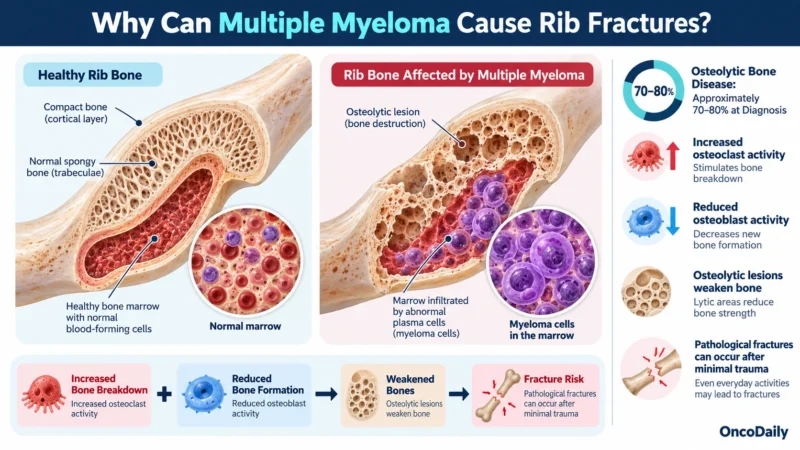
Myeloma cells promote osteoclast activation through signaling pathways involving the receptor activator of nuclear factor-kappa B ligand (RANKL) and other inflammatory mediators. Simultaneously, factors such as Dickkopf-1 (DKK1) and sclerostin contribute to suppression of osteoblast differentiation and activity. The resulting increase in bone resorption, combined with reduced bone formation, leads to progressive skeletal destruction. Unlike normal bone remodeling, this process can create localized osteolytic lesions that weaken the structural integrity of affected bones.
Why Are the Ribs Particularly Vulnerable?
Multiple myeloma frequently affects bones containing hematopoietic marrow, particularly the spine, ribs, pelvis, skull, and proximal long bones. When osteolytic lesions weaken the ribs, fractures may occur following relatively minor physical stress or minimal trauma. In some patients, ordinary activities, coughing, or twisting movements can be sufficient to produce fractures in already compromised bone. These are known as pathological fractures, meaning they occur because an underlying disease has weakened the bone. Other skeletal complications include vertebral compression fractures, persistent bone pain, spinal instability, and, in severe cases, spinal cord compression. Such complications can substantially affect mobility, functional independence, and quality of life.
How Is Bone Disease Evaluated in Multiple Myeloma?
Modern imaging plays an essential role in identifying the extent of skeletal involvement. Whole-body low-dose computed tomography (CT) is widely recommended for detecting osteolytic lesions. Whole-body magnetic resonance imaging (MRI) and FDG PET/CT may provide additional information regarding bone marrow infiltration, focal lesions, and active disease. These techniques are generally more sensitive than conventional skeletal radiographs for identifying certain forms of myeloma-related bone involvement. Treatment may include bone-modifying agents such as zoledronic acid or denosumab, alongside systemic antimyeloma therapy, depending on clinical indications and kidney function. Importantly, although Kelley’s rib fractures preceded his diagnosis, he has not confirmed whether imaging demonstrated characteristic myeloma-related osteolytic lesions.
What Are the Early Symptoms of Multiple Myeloma?
Multiple myeloma may initially develop without obvious symptoms. In other patients, the disease is identified after persistent complaints or unexpected laboratory abnormalities. Bone pain is one of the most characteristic manifestations, particularly in the back, ribs, and pelvis. It may be associated with osteolytic lesions or vertebral compression fractures. Fatigue and weakness can occur because of anemia, systemic inflammation, kidney impairment, or other disease-related complications.
Recurrent infections may develop when malignant plasma cells interfere with normal antibody production, leading to impaired immune function. Kidney dysfunction can result from the accumulation of abnormal immunoglobulin light chains and may initially be detected through blood or urine tests. Hypercalcemia may produce excessive thirst, frequent urination, constipation, nausea, and, in severe cases, neurological symptoms. Additional warning signs can include unexplained fractures, persistent anemia, or elevated blood protein levels. These findings are not specific to multiple myeloma and may occur in numerous nonmalignant conditions. However, persistent unexplained symptoms warrant appropriate medical assessment.
How Is Multiple Myeloma Diagnosed?
The diagnosis of multiple myeloma requires a combination of clinical assessment, laboratory testing, bone marrow evaluation, and imaging. According to the International Myeloma Working Group (IMWG), active multiple myeloma is generally diagnosed when a patient has at least 10% clonal plasma cells in the bone marrow, or a biopsy-proven plasmacytoma, together with at least one myeloma-defining event. These events include organ damage attributable to the plasma cell disorder, as described by the CRAB criteria, or specific biomarkers associated with a high risk of progression.
Additional myeloma-defining biomarkers include the presence of at least 60% clonal plasma cells in the bone marrow, an involved-to-uninvolved serum free light chain ratio of at least 100 with an absolute involved light chain concentration of at least 100 mg/L, or more than one focal lesion measuring at least 5 mm on MRI. Diagnostic evaluation typically involves complete blood counts, serum calcium and kidney function tests, serum and urine protein studies, immunofixation, serum free light chain measurements, bone marrow biopsy, and whole-body imaging.
Fluorescence in situ hybridization (FISH) testing is used to identify cytogenetic abnormalities that influence disease risk stratification, prognosis, and treatment decisions. Together, these investigations help distinguish active multiple myeloma from precursor conditions, including monoclonal gammopathy of undetermined significance (MGUS) and smoldering multiple myeloma. Charles Kelley has not publicly disclosed the specific investigations that confirmed his diagnosis or the results of his molecular and cytogenetic assessments.
What Treatment Will Charles Kelley Receive for Multiple Myeloma?
Charles Kelley has not publicly disclosed his specific treatment regimen. However, he has described his expectations for the first six months of therapy as relatively manageable and expressed hope that he will be able to continue working during treatment. His statements reflect his personal expectations following medical consultations rather than a prediction of how treatment will affect every patient. Treatment selection in multiple myeloma depends on disease biology, cytogenetic risk, kidney function, overall fitness, age, and eligibility for autologous stem-cell transplantation.
Modern First-Line Treatment for Multiple Myeloma
Current treatment approaches for multiple myeloma frequently involve combinations of medications targeting different mechanisms of malignant plasma cell survival and proliferation. These include anti-CD38 monoclonal antibodies, such as daratumumab and isatuximab, which target CD38 expressed on malignant plasma cells; proteasome inhibitors, including bortezomib and carfilzomib, which disrupt cellular protein degradation; immunomodulatory drugs, such as lenalidomide, which exert direct antimyeloma and immune-modulating effects; and corticosteroids, particularly dexamethasone, which enhance therapeutic activity when combined with other agents.

Four-drug regimens have become important treatment options for many patients with newly diagnosed multiple myeloma, including the combination of daratumumab, bortezomib, lenalidomide, and dexamethasone (D-VRd). Patients eligible for autologous stem-cell transplantation may receive induction therapy followed by high-dose melphalan and autologous transplantation. Maintenance therapy, commonly involving lenalidomide alone or a risk-adapted combination, is subsequently used to prolong disease control. However, treatment selection remains individualized, with important differences between transplant-eligible and transplant-ineligible patients, and no single regimen is appropriate for all patients.
What New Treatments Are Available?
Multiple myeloma treatment has evolved considerably with the introduction of immune-based therapies. These include BCMA-directed CAR T-cell therapies and bispecific antibodies targeting proteins such as BCMA or GPRC5D. Such treatments can produce clinically meaningful responses in selected patients, particularly those with relapsed or refractory disease, although indications vary according to the therapy and regulatory setting. The introduction of these approaches has expanded options for patients whose disease progresses after standard treatment. Despite these advances, Kelley has not confirmed whether his treatment will involve transplantation, a particular antibody-based regimen, or any other specific therapeutic strategy.
Is Multiple Myeloma Curable? Survival Rates and Prognosis
Multiple myeloma is generally considered treatable but not routinely curable with currently established standard therapies. Nevertheless, advances in treatment have considerably improved the depth of remission, duration of disease control, and overall survival. According to the National Cancer Institute’s Surveillance, Epidemiology, and End Results (SEER) programme, the five-year relative survival rate for myeloma in the United States is 63.7%, based on patients diagnosed between 2016 and 2022. For historical comparison, five-year relative survival was approximately 25% in the mid-1970s.
This progress reflects the development of effective combination therapies, improved supportive care, transplantation, and more recently introduced immune-based treatments. However, population-level survival estimates require careful interpretation. A 2026 study published in the Journal of the National Cancer Institute identified potential overestimation in registry-based myeloma survival data resulting from the inclusion of patients with smoldering multiple myeloma. In its analysis of patients diagnosed between 2015 and 2021, the investigators estimated five-year relative survival at 57.9% for symptomatic multiple myeloma, compared with 61.6% when symptomatic and smoldering cases were analyzed together. These estimates describe historical patient populations and should not be directly applied to individuals receiving modern treatment.
What Determines Multiple Myeloma Prognosis?
Prognosis depends on several clinical and biological characteristics, including disease burden, cytogenetic abnormalities, kidney function, overall health, and response to therapy. Risk assessment often incorporates the Revised International Staging System (R-ISS) and additional cytogenetic and molecular characteristics. Certain genetic abnormalities, including deletion 17p and selected immunoglobulin heavy-chain translocations, may be associated with higher-risk disease. Treatment response and the achievement of minimal residual disease (MRD) negativity can also provide important prognostic information. Younger age and good functional status may influence treatment eligibility, but they do not independently establish an individual’s prognosis. Charles Kelley has not publicly disclosed the clinical details required to estimate his personal survival or long-term outcome.
Charles Kelley Shares Another Health Update in October 2026
On October 4, 2026, Kelley provided another update following his initial diagnosis announcement. The singer said he was feeling well after speaking with several multiple myeloma specialists, both in person and remotely. He also reflected on the significant advances in treatment made possible through clinical trials. Kelley expressed appreciation for patients who had participated in earlier studies, recognizing their contributions to therapies available to people diagnosed today. His comments highlighted the important role of clinical research in improving outcomes for patients with hematologic malignancies. However, the update did not identify his treatment regimen, disease stage, or a specific prognosis.
Will Charles Kelley Continue Performing With Lady A?
Despite his diagnosis, Kelley has expressed a strong intention to continue performing and recording music.At the time of his September announcement, Lady A was preparing new music and had upcoming performances scheduled, including Christmas concerts in December. Kelley said he hoped to remain professionally active during the initial treatment period. He has also emphasized the importance of spending time with his wife and children while navigating his diagnosis.
His bandmates, Hillary Scott and Dave Haywood, publicly expressed their support following the announcement. However, Kelley’s future performance schedule will depend on his health, treatment tolerance, and medical recommendations. His stated intention to continue touring should not be interpreted as confirmation that every planned performance will proceed unchanged.
How Have Lady A and Fellow Musicians Supported Charles Kelley?
Kelley’s cancer announcement prompted an outpouring of support from his colleagues, friends, and fans. Lady A bandmates Hillary Scott and Dave Haywood were among those expressing encouragement following the news. His wife, Cassie McConnell Kelley, has also been closely involved in sharing his health updates and discussing how the family is adjusting to the diagnosis. Members of the country music community responded with supportive messages, reflecting Kelley’s long-standing relationships within the industry. Kelley subsequently acknowledged the encouragement he received and spoke about the emotional value of sharing difficult personal experiences openly. His public discussion of multiple myeloma has also helped introduce a wider audience to a disease that is less commonly recognized than many solid tumors.
What Remains Unknown About Charles Kelley’s Cancer?
Although Kelley has disclosed that he was diagnosed with multiple myeloma, several important clinical details remain private. These include his disease stage, cytogenetic risk classification, bone marrow findings, and the full extent of skeletal involvement. He has not confirmed whether he has additional myeloma-related complications, including anemia, hypercalcemia, or kidney impairment. His specific medications, potential stem-cell transplantation plans, treatment response, and individual prognosis also have not been publicly established. Because multiple myeloma is a biologically heterogeneous disease, such details are necessary for meaningful clinical risk assessment. Until Kelley provides further information, reporting on his health should remain grounded in his public statements rather than assumptions about the course of his disease.
You Can Also Read RHOBH Star Teddi Mellencamp’s Fight With Melanoma: From Diagnosis to Survival by OncoDaily

Written by Aharon Tsaturyan, MD, Editor at OncoDaily Intelligence Unit
FAQ
What Type of Cancer Does Charles Kelley From Lady A Have?
Charles Kelley, the 45-year-old singer and founding member of Lady A, announced on September 29, 2026, that he had been diagnosed with multiple myeloma, a blood cancer affecting plasma cells in the bone marrow. He shared the news in an Instagram video alongside his wife, Cassie McConnell Kelley.
How Did Charles Kelley Find Out He Had Cancer?
Charles Kelley revealed that several unexplained rib fractures prompted his doctor to order blood tests. Those investigations led to his multiple myeloma diagnosis. Bone damage and pathological fractures are recognized complications of the disease, although the singer has not disclosed his complete diagnostic findings.
How Old Is Charles Kelley, the Lady A Singer Diagnosed With Cancer?
Charles Kelley was 45 years old when he announced his multiple myeloma diagnosis in September 2026. The disease is more commonly diagnosed in older adults, with the average age at diagnosis around 69 years.
Why Does Multiple Myeloma Cause Rib Fractures?
Multiple myeloma can cause rib fractures because malignant plasma cells disrupt normal bone remodeling. They stimulate bone breakdown while suppressing new bone formation, leading to osteolytic lesions and weakened bones. Approximately 70–80% of patients with symptomatic multiple myeloma have bone involvement at diagnosis in reported cohorts.
Is Multiple Myeloma a Rare or Serious Blood Cancer?
Multiple myeloma is a relatively uncommon but serious blood cancer. The American Cancer Society estimates approximately 36,000 new US cases in 2026. The disease can cause anemia, kidney impairment, infections, and bone damage. However, modern treatments can achieve prolonged disease control in many patients.
What Are the First Warning Signs of Multiple Myeloma?
Early symptoms of multiple myeloma can include persistent back or rib pain, unexplained fractures, fatigue, weakness, recurrent infections, and abnormal kidney function. Some patients have no obvious symptoms initially. Diagnosis requires laboratory testing, bone marrow assessment, and imaging rather than symptoms alone.
Is Multiple Myeloma Curable, and What Is the Survival Rate?
Multiple myeloma is generally considered treatable but not routinely curable with current standard therapies. The US five-year relative survival rate is approximately 63.7%, based on SEER data for patients diagnosed between 2016 and 2022. Individual outcomes vary considerably according to disease characteristics, treatment response, and overall health.
What Treatment Is Charles Kelley Receiving for Multiple Myeloma?
Charles Kelley has not publicly disclosed his specific medications or treatment regimen. He has said he expects the first six months of treatment to be manageable. Multiple myeloma treatment may include antibody-based combinations, proteasome inhibitors, immunomodulatory drugs, corticosteroids, and, for eligible patients, autologous stem-cell transplantation.
Will Charles Kelley Continue Touring and Performing With Lady A?
Charles Kelley has expressed his intention to continue recording music and performing with Lady A while undergoing treatment. At the time of his diagnosis announcement, the group had upcoming Christmas performances and new music planned. His ability to continue touring will depend on his health and medical recommendations.
Who Is Charles Kelley's Wife, and How Has His Family Supported Him?
Charles Kelley's wife is Cassie McConnell Kelley, who appeared alongside him in the September 2026 video announcing his diagnosis. The couple have two sons. Lady A bandmates Hillary Scott and Dave Haywood have also publicly expressed their support during his cancer journey.