





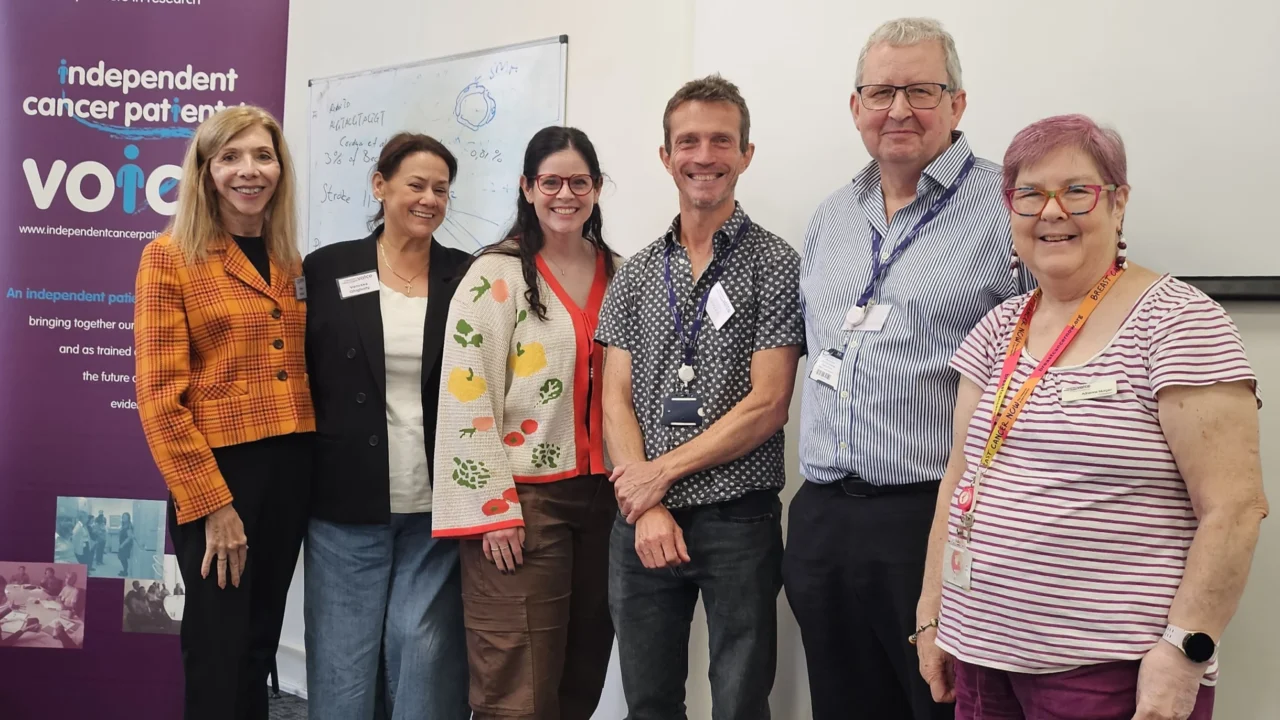
The patient voice is critical to research in every corner of the world. Following its participation in 2026 ICPV VOICE London, the GI Cancers Alliance is excited to announce a partnership with ICPV to bring the program to the United States, with VOICE USA focused specifically on gastrointestinal (GI) cancers.
“Bringing ICPV’s VOICE to the United States represents an important opportunity to strengthen the role of patients and advocates in cancer research by giving them greater access to the science, language, and processes that shape discovery and care. Our Board of Directors is proud to support this collaboration and its potential to help GI cancer advocates participate even more meaningfully in research, policy, and patient-centered innovation,”
said Margaret-Ann Simonetta, President, Board of Directors, GI Cancers Alliance.
The collaboration will bring the experience, faculty, scientific rigor, and patient-centered approach of the established London course to the GI cancer advocacy community in the U.S., while also beginning to explore how the ICPV VOICE model can be tailored to the educational needs of specific cancer communities.
The partnership builds on more than a decade of work connecting patients and advocates directly with cancer science and research.
In 2013, scientists at Barts Cancer Institute recognized an opportunity to bring patients more fully into cancer research. Academics collaborated with patient advocate leaders at Independent Cancer Patients’ ICPV VOICE (ICPV) to create a week-long course combining classroom learning with hands-on laboratory experience. The curriculum covers topics including cell biology, genomics, research trials, liquid biopsies, and other areas shaping modern cancer research.
“I was working at Barts and sitting in a lecture listening to someone giving a talk and I thought, ‘Why shouldn’t we have patient advocates sitting here listening to this talk? I’ll organize it.’ I talked to my colleagues and asked how they would feel about doing this with patients. They said, ‘What a good idea!’ And that was how it started,”
Adrienne Morgan, an immunologist/senior lecturer at Barts Cancer Institute and trustee of ICPV.
The late advocate Maggie Wilcox from ICPV helped carefully co-design the course, developing elements that have made ICPV VOICE a distinctive educational experience.
Classroom learning is structured around two-way discussion between students and lecturers. Participants are encouraged to ask questions throughout presentations, creating an interactive environment in which academics and advocates learn from one another.
For faculty, the experience provides an opportunity to hear directly from cancer patients and caregivers (carers), whose knowledge and lived experience often bring new perspectives to scientific discussions. For students, it offers an opportunity to engage with complex cancer science in an environment where their questions and perspectives are welcomed and valued.
“ICPV VOICE helps patient advocates learn a bit more about science, how to get trusted information, so that they become more powerful and more confident advocates when they sit on committees and panels that make choices about how funding is going to help cancer patients, because it’s really important that cancer patients themselves influence the outcomes of those policies,”
said John Marshall, Professor of Tumor Biology at Barts Cancer Institute Queen Mary University of London.
From the Classroom to the Laboratory
The laboratory component is one of the defining features of ICPV VOICE.
Students spend time working alongside PhD candidates and researchers, gaining firsthand experience with the processes behind cancer research. Wearing lab coats and goggles, participants may create cell cultures, test tissue, work with microscopes, use pipettes and laboratory equipment, and observe techniques involved in areas such as biomarker testing and drug development.
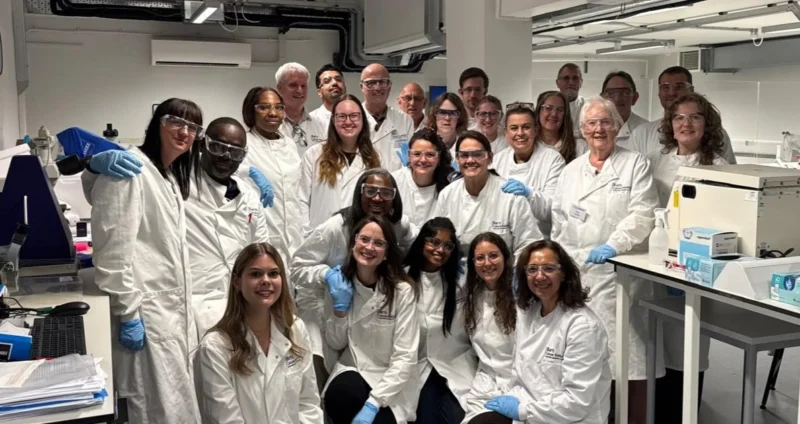
VOICE students and faculty in the Barts Cancer Institute laboratory receiving research instruction as part of the course curriculum
The experience provides advocates with a tangible understanding of what happens behind the scientific results and terminology they encounter in research, clinical trials, and patient care.
“For me, the most important bit is the lab in the afternoon, and that’s what uniquely makes it ‘VOICE.’ Exposing the students to the lab is the only way for them to understand what it’s really like to be a scientist. It’s how they can really know what went into getting their results they see – after they did the tests themselves,”
Adrienne Morgan said.
At the conclusion of the week, students graduate from the course and are invited to join ICPV, creating opportunities to remain engaged in patient and public involvement and advocacy initiatives.
“VOICE has been a ‘before and after’ in my advocacy career and also as a patient because I have been able to truly understand the biology of cells not only in GI cancer but others,”
said early-onset colorectal cancer survivor and GI Cancers Alliance Patient Advisory Board Member Mila Oglala Toledo.
Building a Global Community of Informed Advocates
ICPV VOICE has become an impactful experience for cancer patients and caregivers (carers) from around the world. The program continues to be spearheaded by scientists at Barts Cancer Institute – John Marshall, Angus Cameron, and Louise Jones – together with ICPV’s Dave Chuter and ICPV VOICE’s co-facilitator Ceri Steele. Dr. John Marshall and Dr. Angus Cameron are also members of the GI Cancers Alliance Medical Advisory Board.
The 2026 VOICE London cohort also reflected GICA’s broader patient and caregiver leadership. Dave Chuter, Ceri Steele, Mila Ogalla Toledo, Hans Rueffert, Vanessa Ghigliotty, and Stephen Rowley attended VOICE London and are members of the GI Cancers Alliance Patient and Caregiver Advisory Board. Sathana Selvamaran and Khushi Adhikara participated as VOICE interns and GICA interns, gaining firsthand exposure to the course alongside the patient advocate community.
The connections developed during the course frequently continue long after the final session.
“Students go on and stay connected; they get involved as PPIs in research”,
said Dave Chuter, esophageal cancer survivor, GI Cancers Alliance Patient Advisory Board Member and Chair of ICPV.
“They stay connected to one another. It’s a fantastic thing for me to see. I love this every year.”
As interest in ICPV VOICE has grown, so has interest in bringing the model to cancer communities outside Great Britian.
“The feedback from the students has been incredible,”
said John Marshall.
“Many who’ve come from around the world now want to take VOICE to their own countries, and we are very keen to help them do that.”
Earlier this year, a group of patient advocates collaborated with the University College Dublin and All Ireland Cancer Research Institute to launch VOICE Ireland, bringing the same dynamics and experiences of the ICPV VOICE course to Irish patient advocates.
ICPV VOICE USA: A Focus on Gastrointestinal Cancers
The next chapter in that expansion will include the United States.
Through the new partnership, the GI Cancers Alliance will work with the faculty and ICPV advocates to bring the established ICPV VOICE educational model to the U.S. while maintaining the history, curriculum, scientific credibility, faculty involvement, and collaborative spirit that have defined the London program.
VOICE USA will focus on gastrointestinal cancers, creating an opportunity for GI cancer patients, caregivers, and advocates to build a stronger understanding of the science behind cancer research and treatment while strengthening their ability to contribute meaningfully to research, policy, clinical development, and advocacy.
The collaboration represents a transatlantic scientific education partnership for GI cancer advocates – connecting the expertise of the ICPV VOICE London academic and advocacy community with the collective experience and reach of the GI cancer patient advocacy community in the United States.
“Experiencing ICPV ‘s VOICE in London reinforced what we have long believed at the GI Cancers Alliance: when patients and advocates are given the opportunity to understand the science behind cancer research, they are better equipped to contribute their experience, perspectives, and the research process. We are honored to work alongside the faculty and advocates to bring this extraordinary educational model to the United States while preserving the scientific rigor, collaborative spirit, and respect for the patient voice that have defined ICPV VOICE from the beginning. We look forward to building a transatlantic scientific education partnership that will prepare GI cancer advocates to participate even more meaningfully in research and help shape the future of cancer care.”
– Martha Raymond, Founder and CEO, GI Cancers Alliance.
To stay updated with information about VOICE USA, follow the GI Cancers Alliance.
To learn more about the ICPV VOICE course and Independent Cancer Patients’ ICPV VOICE, visit.
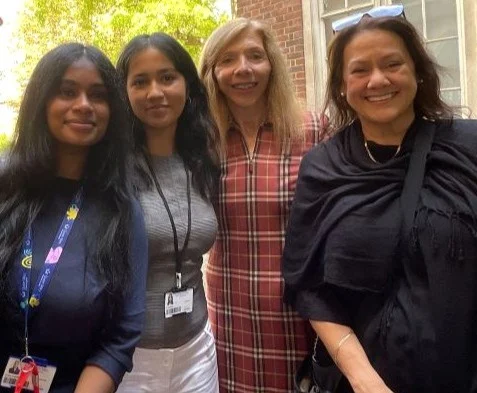
GI Cancers Alliance staff: Martha Raymond, Vanessa Ghigliotty, Sathana Selvamaran and Khushi Adhikara
Other articles about Gastrointestinal Oncology on OncoDaily.