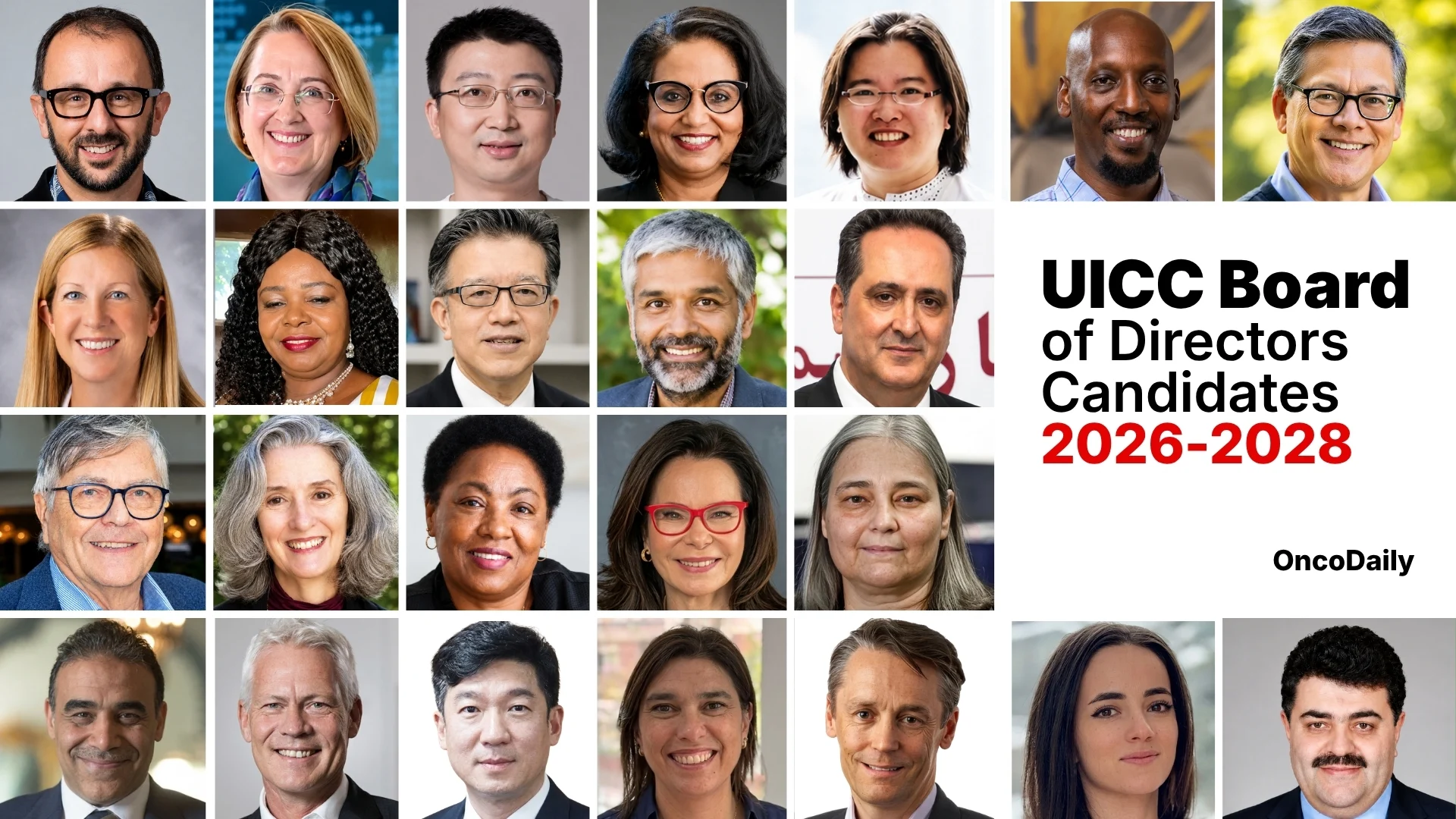
The Union for International Cancer Control (UICC) will hold elections for its 2026–2028 Board of Directors and next President-elect during the virtual UICC General Assembly on 20 October 2026.
Members will elect 14 Board members and one President-elect for the 2026–2028 term. The President-elect will serve ex officio on the Board before assuming the presidency in October 2028.
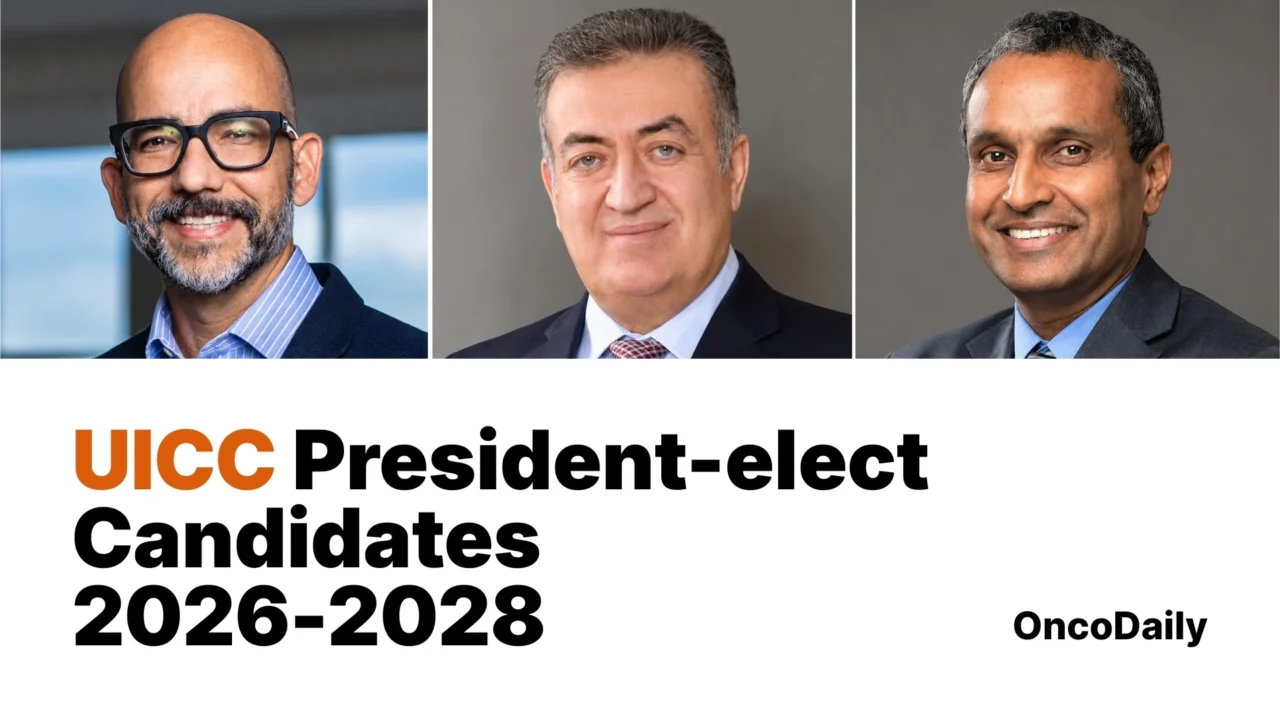
As the election approaches, OncoDaily takes a closer look at the candidates for UICC President-elect for the 2026–2028 term.
Gilberto Lopes
Gilberto Lopes is Professor of Clinical Medicine, Chief of the Division of Medical Oncology, and Associate Director and Medical Director for International Programmes at Sylvester Comprehensive Cancer Center at the University of Miami Miller School of Medicine. He also chairs the Access to Oncology Medicines (ATOM) Coalition, serves on the UICC Board of Directors, and is Editor Emeritus of JCO Global Oncology.
Trained in Brazil and the United States, Lopes is a medical oncologist whose work spans clinical trials, health technology assessment, health economics, and global oncology policy. He has led international studies that contributed to the development and global availability of new cancer treatments and has focused extensively on improving access to cancer medicines in low- and middle-income countries. He has authored more than 300 publications and is a Fellow of the American Society of Clinical Oncology (FASCO).
Explaining why he is running for UICC President-elect, Lopes emphasized the need to turn advances in cancer care into tangible progress for patients worldwide:
“I have spent my career closing the distance between what cancer control and management can do and what most people actually receive. I want to lead UICC because the next decade is decisive.”
He said his priorities would include strengthening access to medicines and diagnostics, helping countries secure sustainable financing for cancer control, increasing Global South representation within UICC leadership, and supporting the organisation’s long-term financial sustainability and independence.
Asem H. Mansour
Asem H. Mansour is Director General and CEO of the King Hussein Cancer Center (KHCC) in Amman, Jordan, and a physician executive and board-certified radiologist. Under his leadership, KHCC has grown into a 364-bed institution managing more than 29,000 active cancer cases annually, doubling Jordan’s cancer-care capacity and expanding access through three satellite centres. He has also overseen the development of advanced services including bone marrow transplantation, CAR T-cell therapy, robotic surgery, precision medicine, and artificial intelligence.
Mansour has supported increased investment in research, contributing to growth in Jordan’s cancer research capacity, and has authored more than 120 publications on cancer care, health systems, and outcomes in resource-constrained settings. He also serves as Executive Chairman of the Jordan Breast Cancer Programme, is a UICC Board Member, and serves as a Commissioner for The Lancet Commission on Cancer and Health Systems.
Explaining his motivation to run for UICC President-elect, Mansour highlighted the persistent inequities in access to cancer care:
“I have spent much of my professional life working to challenge one unacceptable reality: that a person’s chance of surviving cancer is still too often shaped by where they live, what resources are available around them, and whether their health system can provide timely diagnosis and treatment.”
His priorities for UICC include strengthening cancer systems, expanding prevention and early detection, supporting research and workforce development in low- and middle-income countries, and ensuring that innovation and high-quality cancer care reach patients beyond the most privileged settings.
C S Pramesh
C S Pramesh is Director of Tata Memorial Hospital and Professor and Head of Thoracic Surgery at Tata Memorial Centre in Mumbai, India. A surgical oncologist, researcher, and health systems leader, he is also Convener of the National Cancer Grid, a network of more than 400 cancer centres, research institutions, and patient advocacy groups across India and partner countries.
His work has focused on improving access, quality, and equity in cancer care through standardisation, capacity building, research, and collaboration. Pramesh serves on the Boards of Directors of UICC and ASCO and contributes to advisory groups and expert committees for WHO, ASCO, ESMO, and UICC. His broader work spans cancer policy, implementation science, health systems strengthening, value-based care, and efforts to reduce barriers to high-quality cancer care, particularly in low- and middle-income countries.
Highlighting why he wants to run for UICC President-elect, Pramesh emphasized the importance of global collaboration in addressing the growing cancer burden and persistent inequities:
“My motivation to serve as President of the Union for International Cancer Control is rooted in a lifelong commitment to improving outcomes for people affected by cancer, and a firm belief that global collaboration is essential to achieving this goal.”
His priorities include strengthening UICC’s role in global advocacy for equitable cancer control, supporting stronger and more sustainable health systems, helping translate advances in diagnostics, therapeutics, data science, and artificial intelligence into broader patient benefit, and deepening collaboration across UICC’s global membership.
Read further on OncoDaily: UICC Board Elections 2026: Meet the Candidates