


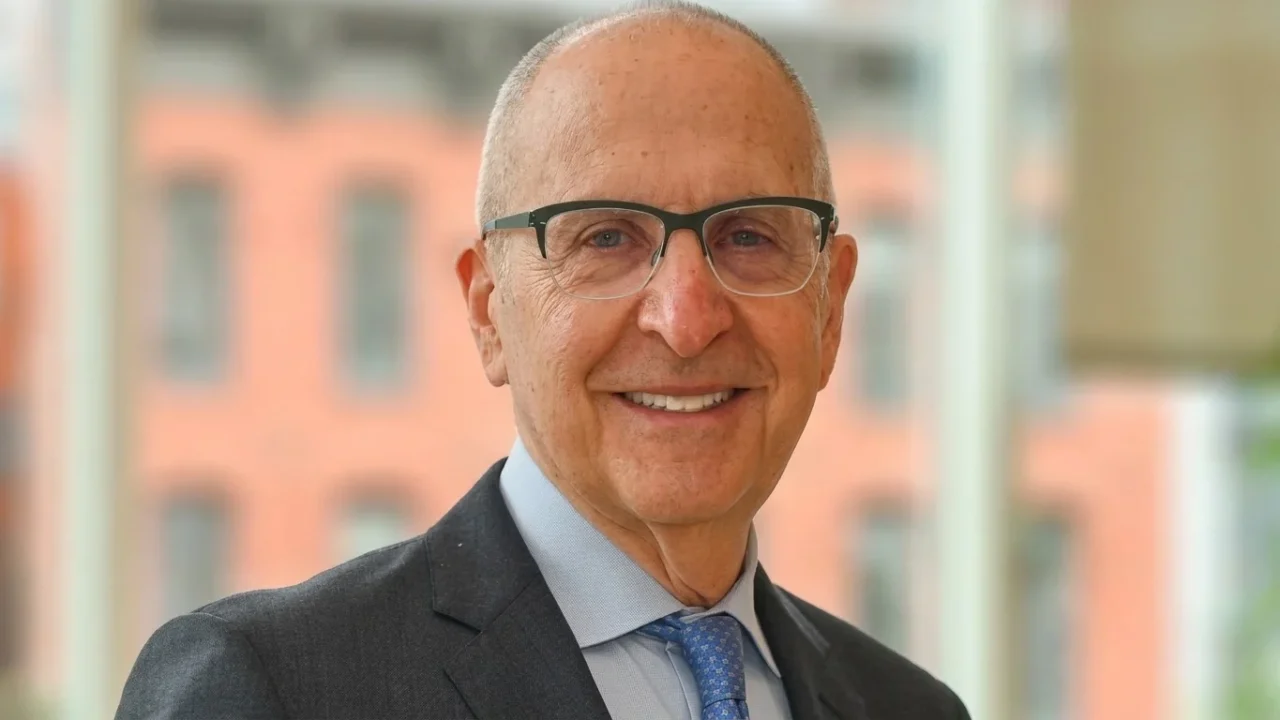
David Skorton, President and CEO of the Association of American Medical Colleges (AAMC), shared on LinkedIn:
”Lately, I’ve been thinking even more about what declining trust in medicine and science means for patients, families, and communities and how those of us in academic medicine can earn that trust. My reflections here.
President’s Corner: Mistrust is a Public Health Isuue
My 50 years in medicine have given me a front-row seat to remarkable progress – and, at the
same time, to worrisome challenges that often keep me up at night.
On the positive side, recent breakthroughs like a new treatment for pancreatic cancer, which is known for tragically low survival rates, have the promise to revolutionize care in specific circumstances. We should celebrate that progress and much other exciting new research happening every day – while recognizing the precarious fragility of this progress.
It can continue only if we protect the resources and support that make it possible. I’m deeply concerned about what will happen if we do not.
Today, we face a particularly dangerous public health threat: declining trust in medicine, science, and the proven systems and people that have made generations of impressive medical progress possible. Not only that, but according to new polling data from the AAMC Center for Health Justice, half of U.S. adults believe there are organized efforts to make people distrust health institutions and experts.
Lack of trust is resulting in changes in behavior for 59% of U.S. adults, including 17% who delayed or avoided going to the doctor. This distrust can – and in some cases already is – negatively affecting the health of our patients, families, and communities.
We are already seeing the consequences of mistrust as measles and other infectious disease outbreaks affect communities and will likely see more during the upcoming season.
How did we get here? It’s hard to pinpoint one specific instance that led to widespread mistrust, especially when considering various groups of people, their impact, and their engagement with healthcare and other systems.
In part, there has been greater prominence of people with little or no medical or scientific training increasingly shaping public perception of what is, and is not, evidence based. Some spread misinformation, while others make consequential decisions about the health of our communities without the expertise those decisions demand. At the same time, misinformation travels quickly and can be difficult to evaluate amid the flurry of information and the demands of daily life. I understand that challenge.
That’s a normal human response. But when our patients and families – often our neighbors and friends, as well as policymakers – rely on quick, seductive claims, sometimes from those without medical or scientific training rather than experienced experts who have devoted years to rigorous training and practice, they put their health, and the lives of others, at risk.
Just as we in medicine have boldly confronted polio, cancer, prematurity, and congenital heart disease – to name a few challenges – I feel strongly that we must dedicate ourselves to addressing mistrust and our role in earning back the public’s trust.
At Northwestern, where I went to medical school, graduates solemnly take this oath: ‘The health and well-being of my patient will be my first consideration.’
How do we apply that oath amid rampant misinformation and resulting confusion? Rather than spend our time and influence attacking others, we need to do our part in a more effective way to earn the public’s trust.
First, we must explain in a much more effective manner how evidence-based science works to protect patients’ health. Drugs and treatments undergo layers of rigorous research and review designed to guard against institutional pressure, bias, and predetermined conclusions. Safeguards include peer review, regulatory review when applicable, independent assessment of evidence, professional society guidelines, and hospital oversight.
Of course, all systems need ongoing scrutiny and attempts at improvement, but let’s be better at communicating how well these current structures work.
We also need to recognize that scientific progress can be confusing to those not directly involved. For example, as new evidence emerges, research and medical practice evolve – sometimes dramatically – just as they always have. Yet this process is not always intuitive, and changing guidance – sometimes directly contradicting earlier approaches – can understandably be confusing.
We must communicate more clearly and consistently, meeting people where they are, listening to their concerns, and explaining not only what has changed, but how and why. Changing guidance in response to new findings is a sign of an effective system, not a flaw.
And second, we must take responsibility for our own roles in creating mistrust. We can do more to help people feel heard and seen when they question our guidance or encounter misinformation. I call on the medical community to practice not only medicine, but also patience, humility, and empathy.
We must respect our communities’ fears and doubts, and bridge divides through dialogue. As the AAMC Center for Health Justice’s Principles of Trustworthiness emphasize, we must earn others’ trust by demonstrating that we are worthy of it. Through listening. Through understanding. Through taking the specific actions communities tell us would demonstrate our trustworthiness to them. Only then can we make measurable progress.
Today, I urge my colleagues across academic medicine to join me in asking ourselves:
- Am I ready to initiate complex conversations about trust and misinformation?
- Where can I communicate more effectively and actively listen to people whose views differ from mine – at the dinner table, in the grocery store, and at community meetings?
- How can I meet people where they are and bridge divides, and ensure that everyone feels heard?
We must also adapt, remain open to continual improvement, and work every day to earn and re-earn the public’s trust. That trust cannot be demanded on the strength of our credentials; it must be earned through humility, honesty, listening, and action.
As Reed Tuckson, со-founder and chair of the Coalition for Trust in Health & Science, has said, “We have to get comfortable with humility.” That means acknowledging what we do not know, learning from the communities we serve, changing course when needed, and never taking the public’s confidence for granted.
The health of our communities depends on our willingness to do the hard, sustained work of earning trust in science and medicine, and that work must begin with us.”
You can also read:
Rahul Bhargava: Lower Cancer Drug Prices Can Build Trust and Expand Access to Care