





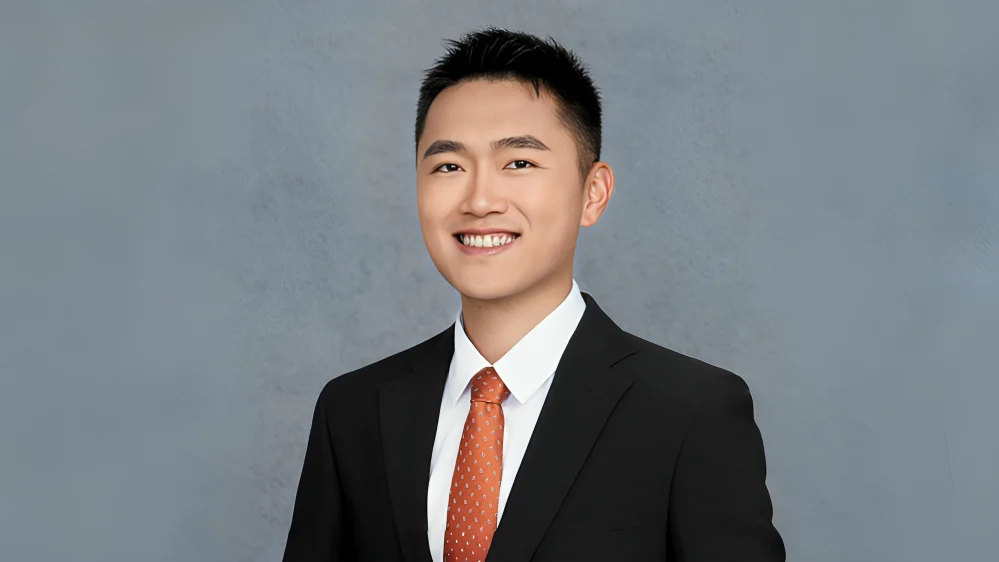
Shuming Zhang, Computational Oncologist, Postdoctoral Researcher at Cedars-Sinai, shared on LinkedIn:
“Excited to share our new paper (also the last paper of my doctoral program) in PNAS: ‘Quantitative calibration of a spatial QSP model identifies fibroblast impact on HCC immunotherapy.’
In this work, we extend a spatial quantitative systems pharmacology (spQSP) model of liver cancer by mechanistically incorporating a fibroblast module, and pair it with an Approximate Bayesian Computation–Sequential Monte Carlo pipeline that calibrates the model directly against spatial molecular data – matching simulated and real tumor architectures by fitting statistical summaries of cellular neighborhoods.
Key results:
- The calibrated model reproduces fibroblast-mediated exclusion of lymphocyte infiltration seen in spatial transcriptomics
- It predicts posttreatment spatial tumor states in an independent cohort receiving immune checkpoint inhibitor + cabozantinib combination therapy
- By sampling across varying pretreatment TME states, we identify spatial and nonspatial biomarkers of response to combination immunotherapy in hepatocellular carcinoma
Grateful to my co-authors and special shout out to my PhD mentors Aleksander S. Popel, Elana Fertig, and Atul Deshpande.”
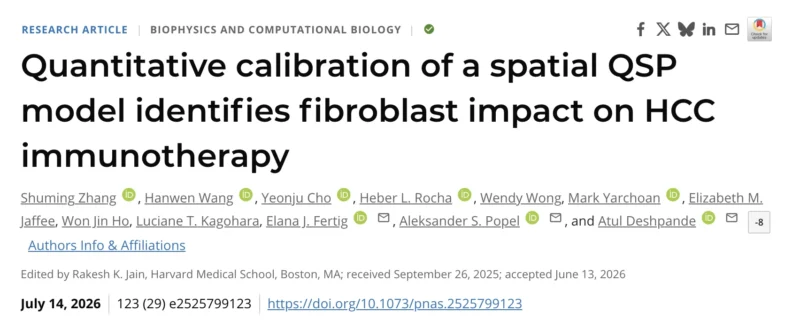
Title: Quantitative calibration of a spatial QSP model identifies fibroblast impact on HCC immunotherapy
Authors: Shuming Zhang, Hanwen Wang, Yeonju Cho, Heber L. Rocha, Wendy Wong, Mark Yarchoan, Elizabeth M. Jaffee, Won Jin Ho, Luciane T. Kagohara, Elana J. Fertig, Aleksander S. Popel, Atul Deshpande
Otehr articles about HCC immunotherapy on OncoDaily.