





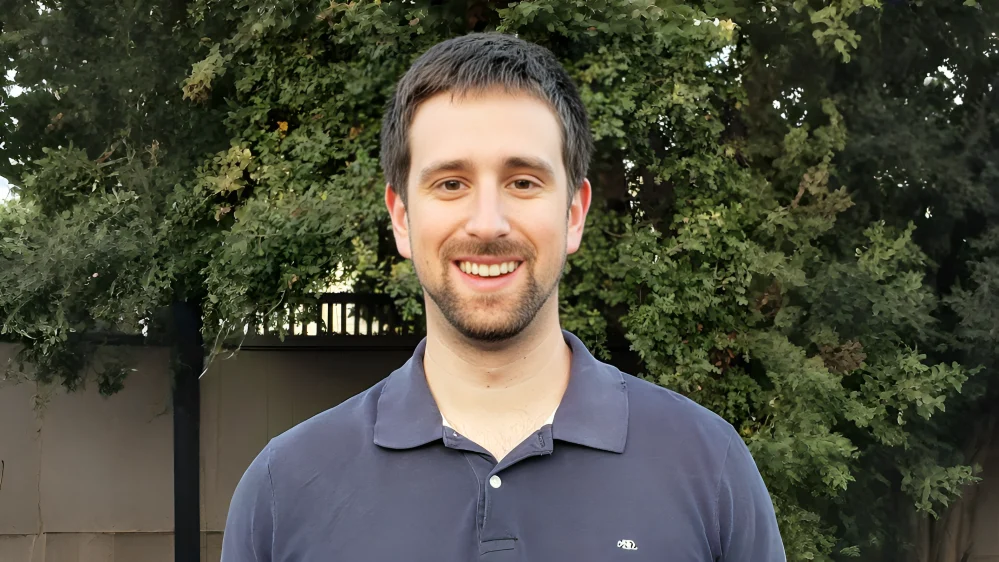
Sam Witus, American Cancer Society Postdoctoral Fellow at UC Berkeley, shared on LinkedIn:
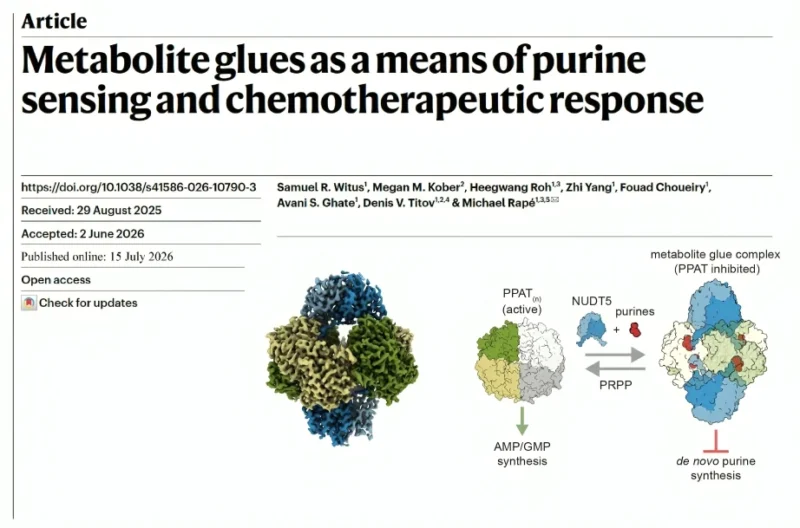
“I am thrilled to share my first postdoctoral work, now available online and open access at Nature. Our work reveals a clever role for endogenous human metabolites that function as molecular glues to control purine nucleotide synthesis. This led us to discover a suprising mechanism of action for some of the oldest chemotherapeutic drugs (thiopurine antimetabolites) that also function as enhanced glues to shut down the pathway and starve cancer cells. Structural insights allowed us to design more potent and selective glue molecules. Importantly, our work establishes that human cells utilize molecular glues in normal cellular processes that can be harnessed for therapeutics – an idea that I am excited about exploring further!
A huge thank you to my mentor Michael Rape, and to everyone who contributed to this project including: Denis Titov, Megan Kober, Heegwang Roh, Zhi Yang, Fouad Choueiry, and Avani Ghate. This was truly a remarkable team effort!
Our work is highlighted in a generous News and Views article by Varun Shah and Ivan Đikić.
Finally, it has been thrilling (and a bit terrifying) to be a part of a remarkable wave of discoveries regarding PPAT and NUDT5 from labs around the world. This work builds on fantastic work by the labs of Ralph DeBerardinis and Zheng Wu, Alexis A. Jourdain, Stefan Kubicek and Killian Huber, Jun Yang, and Nicholas Valerie and Mikael Altun who all independently discovered the PPAT-NUDT5 axis and characterized its role in regulating purine synthesis, thiopurine sensitivity, and purinisome dynamics. A huge thank you to the American Cancer Society for funding me to do this work through a postdoctoral fellowship.
Hope you enjoy! ”
Title: Metabolite glues as a means of purine sensing and chemotherapeutic response
Authors: Samuel R. Witus, Megan M. Kober, Heegwang Roh, Zhi Yang, Fouad Choueiry, Avani S. Ghate, Denis V. Titov, Michael Rapé
Other articles about molecular glue on OncoDaily.