


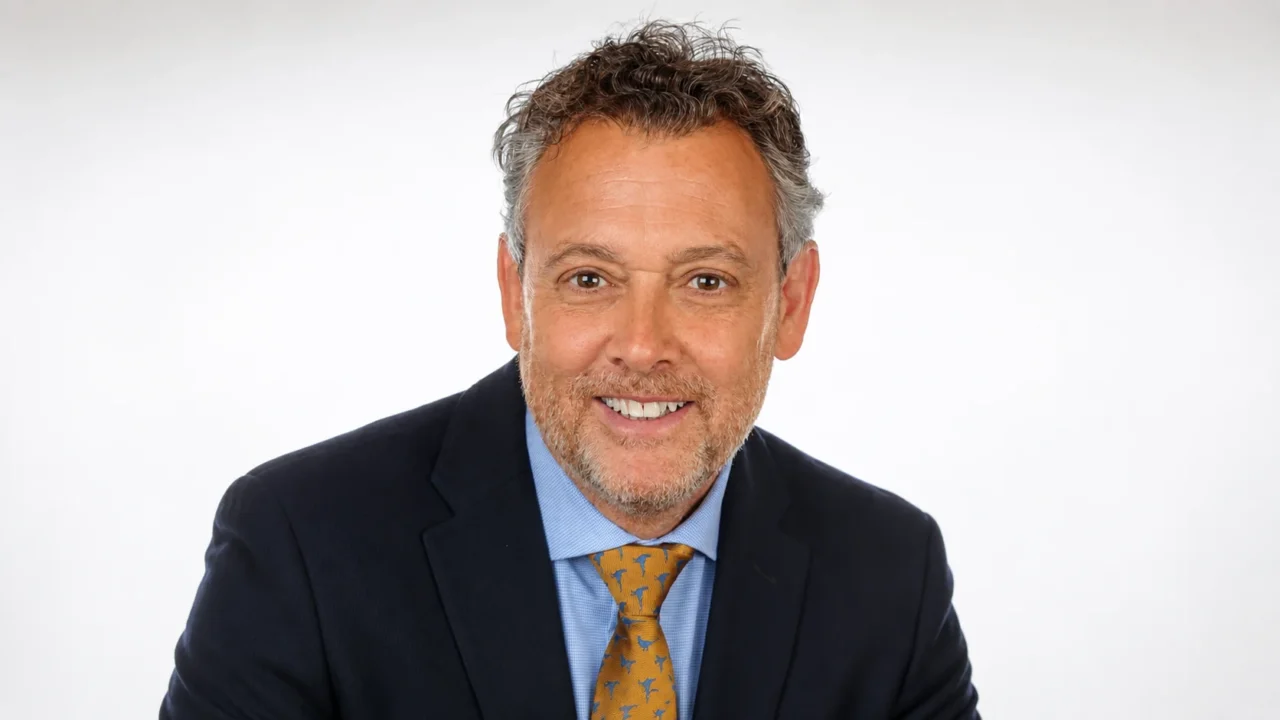
Richard Sullivan, Professor of Cancer and Global Health at King’s College London, shared on LinkedIn:
“When Adam Smith postulated the invisible hand, he had in mind the economic principle that, in a free market, self-interest tends to promote the good of the community as a whole. But in the case of cancer medicines and the broader pharmaceutical business model, something has gone seriously off course.”

“The pricing strategy for the new K-Ras inhibitor daraxonrasib for pancreatic cancer has once again ignited the flames of unaffordable, unsustainable prices and costs.”
Title: The unfulfilled promise of effective cancer medicines priced beyond reach
Authors: Christopher M Booth, Carolyn Taylor, Christopher G C A Jackson, Michelle Tregear, Manju Sengar, Brooke E Wilson, Ian F Tannock, Bishal Gyawali, Scott R Berry, Haydeé Verduzco-Aguirre, Craig Leroux, Richard Sullivan.
Read the full article.
“It’s frankly depressing. We’ve been banging the drum about this since the first Lancet Oncology Commission on Affordable Cancer Care in High-Income countries. And that was written 15 years ago.”
Title: Delivering affordable cancer care in high-income countries
Authors: Richard Sullivan, Jeffrey Peppercorn, Karol Sikora, John Zalcberg, Neal J Meropol, Eitan Amir, David Khayat, Peter Boyle, Philippe Autier, Ian F Tannock, Tito Fojo, Jim Siderov, Steve Williamson, Silvia Camporesi, J Gordon McVie, Arnie D Purushotham, Peter Naredi, Alexander Eggermont, Murray F Brennan, Michael L Steinberg, Mark De Ridder, Susan A McCloskey, Dirk Verellen, Terence Roberts, Guy Storme, Rodney J Hicks, Peter J Ell, Bradford R Hirsch, David P Carbone, Kevin A Schulman, Paul Catchpole, David Taylor, Jan Geissler, Nancy G Brinker, David Meltzer, David Kerr, Matti Aapro.
Read the full article.
“The latest launch-price figures from the 2026 ICER are eye-watering. Between 2022 and 2025, they rose 35%; bear in mind this is before the full impact of the US’s Most Favoured Nation policies really hit. In 2025, the median launch price in the USA was $257,000 per annum; a quarter of medicines exceeded the half-million mark.
New cancer medicines made up half of the top thirty most expensive launch prices. Needless to say, some 2/3rds of these prices seriously exceeded ICER’s generous health benefit package benchmarks. Pricing in the USA matters because it sets the benchmark for global negotiations.
The picture of overpriced cancer medicines and unaffordable cancer care per se has become a global norm. And just to be clear. Prices have no relationship to RandD costs, as we and many others have shown.”
Title: Delivering the precision oncology paradigm: reduced RandD costs and greater return on investment through a companion diagnostic informed precision oncology medicines approach
Authors: Raymond H. Henderson, Declan French, Elaine Stewart, Dave Smart, Adam Idica, Sandra Redmond, Markus Eckstein, Jordan Clark, Richard Sullivan, Peter Keeling, Mark Lawler.
Read the full article.
“The downstream cost impact is also growing exponentially as health systems see increasingly older, more comorbid patients. The cost opportunity is also growing, even in heavily regulated systems like England, as we pay too much for both highly effective and marginal cancer medicines.”
Title: Population-health impact of new drugs recommended by the National Institute for Health and Care Excellence in England during 2000–20: a retrospective analysis
Authors: Huseyin Naci, Peter Murphy, Beth Woods, James Lomas, Jinru Wei, Irene Papanicolas.
Read the full article.
“It’s increasingly hard to see how any rational economic realignment can happen when the whole system is so ‘addicted’ to the money, without the train first going completely off the tracks. This problem requires the assault of sustained thinking and voices of recognition.“
Other articles from Richard Sullivan on OncoDaily.