


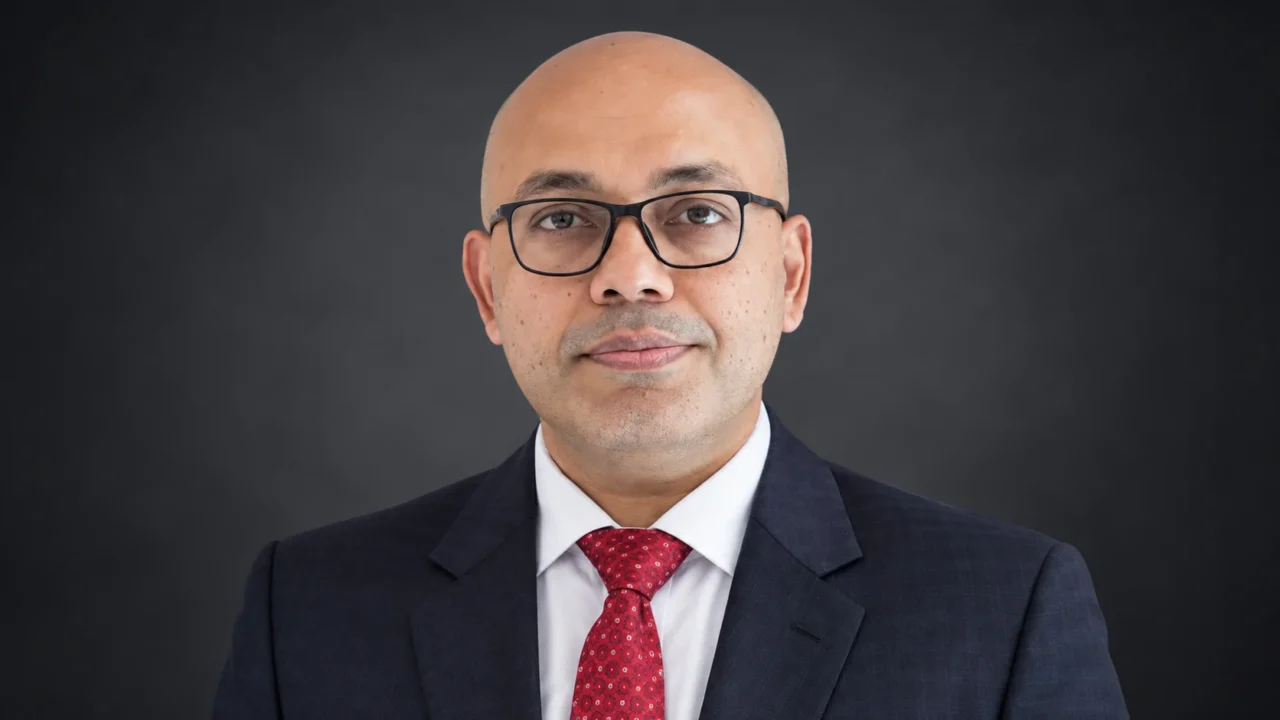
Pushkal Dwivedi, Consultant Medical Oncologist and Hemato-Oncologist at RB Hospital, Bilaspur,, shared on LinkedIn:
“Cancer Care Should Not Depend on How Far a Patient Can Travel
Geographical accessibility is one of the most overlooked challenges in cancer care in India. For many patients, the journey to a cancer hospital is not just about distance; it involves financial hardship, loss of daily wages, accommodation expenses and emotional stress.
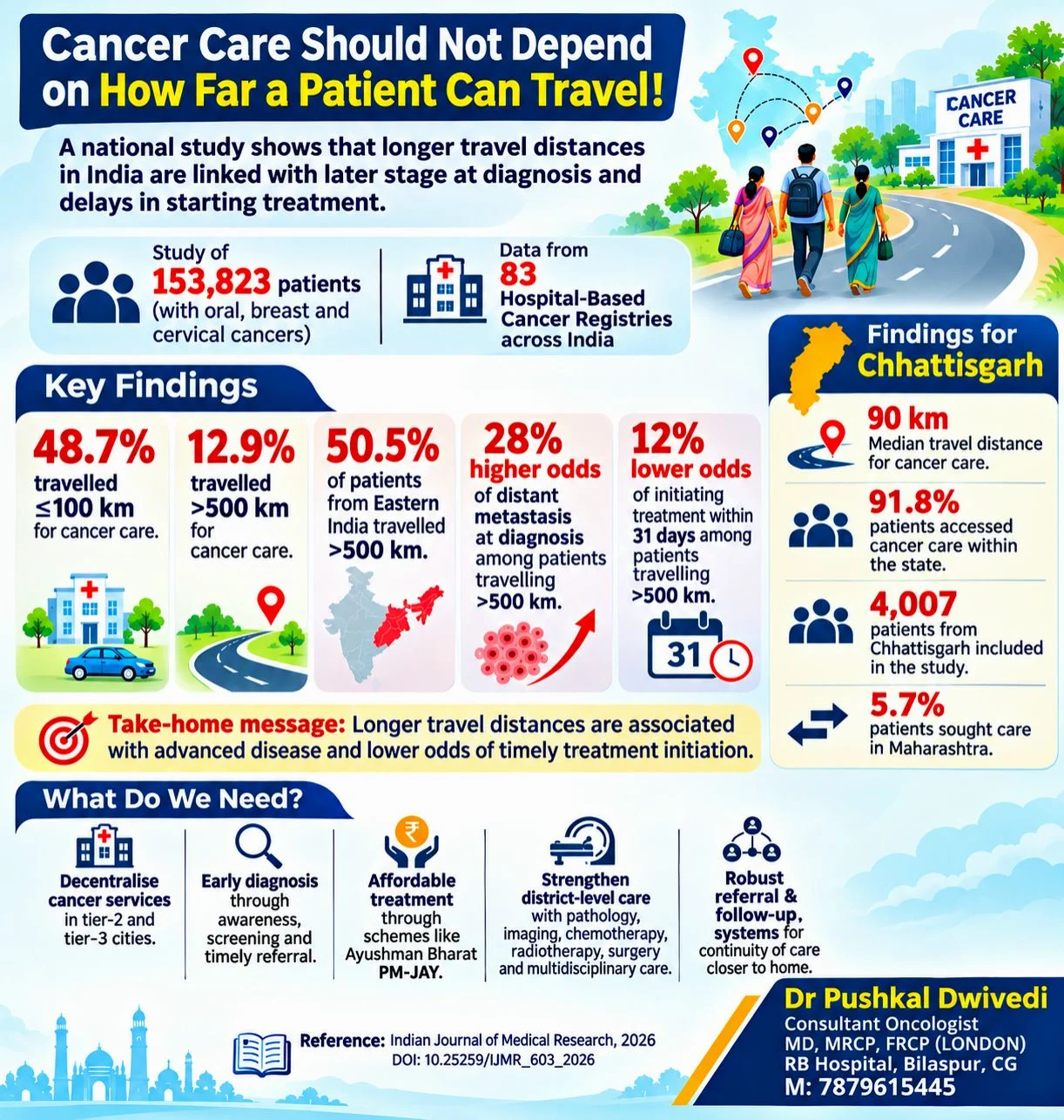
A recent study published in the Indian Journal of Medical Research, by ICMR-National Institute of NCD Epidemiology, analysed 153,823 patients across 83 Hospital-Based Cancer Registries in India.
Key findings:
- 48.7% travelled up to 100 km for cancer treatment.
- 12.9% travelled more than 500 km.
- 50.5% of patients from Eastern India travelled more than 500 km.
- Long-distance travel was associated with 28% higher adjusted odds of distant metastasis at diagnosis.
- Patients travelling over 500 km had 12% lower adjusted odds of initiating treatment within 31 days.
What does this mean for Chhattisgarh?
As a Medical Oncologist practising in Bilaspur, Chhattisgarh, these findings are particularly relevant to my clinical experience.
The study reported a median travel distance of 90 km for patients from Chhattisgarh, with 91.8% accessing cancer care within the state.
However, patients from remote rural and tribal communities continue to face significant barriers to accessing comprehensive cancer treatment.
At RB Hospital, Bilaspur, we believe that cancer care should be accessible, affordable and patient-centred, particularly for economically disadvantaged families.
Government-supported healthcare schemes such as Ayushman Bharat PM-JAY have an important role in reducing financial barriers.
What do we need?
- Decentralisation of cancer services in tier-2 and tier-3 cities.
- Early diagnosis and stronger referral networks.
- Affordable diagnostic and treatment facilities.
- Greater access to chemotherapy, radiotherapy and multidisciplinary care.
- Stronger support for rural, tribal and economically weaker patients.
A cancer patient from a remote village deserves the same opportunity for timely diagnosis and quality treatment as a patient living in a metropolitan city.
We must move beyond concentrating cancer infrastructure in major cities and work towards bringing quality cancer care closer to the people who need it.
Cancer care must reach patients. Patients should not have to travel hundreds of kilometres to receive the care they deserve.
Dr Pushkal Dwivedi
Consultant Medical Oncologist and Hemato-Oncologist
RB Hospital, Bilaspur, Chhattisgarh.”
Title: Distance travelled for oral, breast, and cervical cancer care and its association with stage and treatment patterns: Analysis from the hospital-based cancer registries in India
Authors: Thilagavathi Ramamoorthy, Gokul Sarveswaran, Anita Nath, Saravanan Vijayakumar, Prashant Mathur
Read the Full Article on Indian Journal of Medical Research
You can also read: Harish Nagaraj: Equal Treatment, Beyond Geographical Boundaries.