
Pavlos Msaouel, Associate Professor of Genitourinary Medical Oncology at MD Anderson Cancer Center, shared on X:
“New in European Urology Oncology: the largest series yet of metastasis-directed radiation therapy in SMARCB1-deficient Renal Medullary Carcinoma.
Key finding that this cancer appears far more radiosensitive than clear cell kidney cancer.
Title: High Radiographic Response Rates After Metastasis-directed Radiation Therapy in SMARCB1-deficient Renal Medullary Carcinoma
Authors: Shlok Mohanty, Pavlos Msaouel, Chad Tang
The mechanistic rationale was that RMC is defined by SMARCB1 loss, which impairs DNA damage repair, the same repair radiation overwhelms.
We studied 24 patients with metastatic RMC (52 lesions) treated with definitive-intent SBRT/IMRT at MD Anderson (2019-2026).
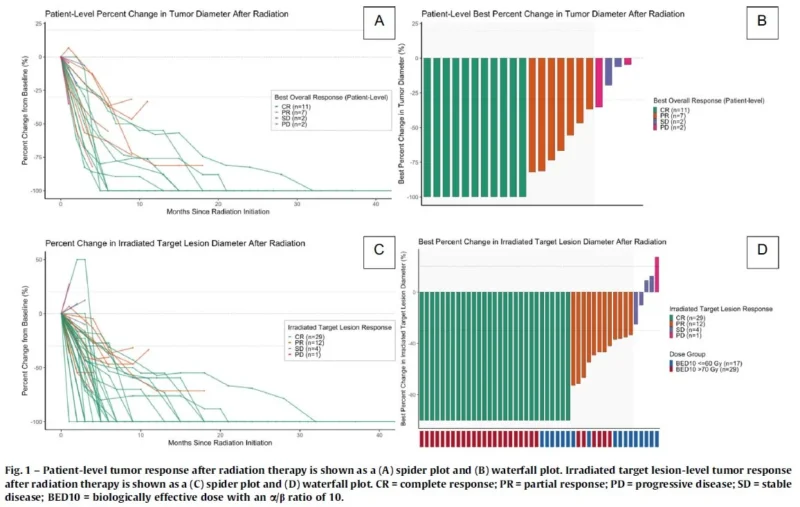
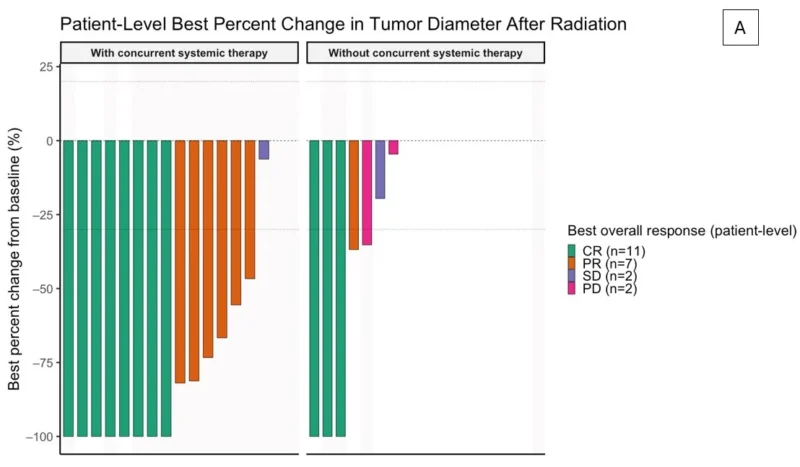
Responses were high: 82% of evaluable patients responded in irradiated disease, with 50% complete responses.
Local control was 91% at 1 yr, 84% at 2 yr.
For contrast, clear cell RCC at similar doses gives ~90% local control but response rates under 60%.
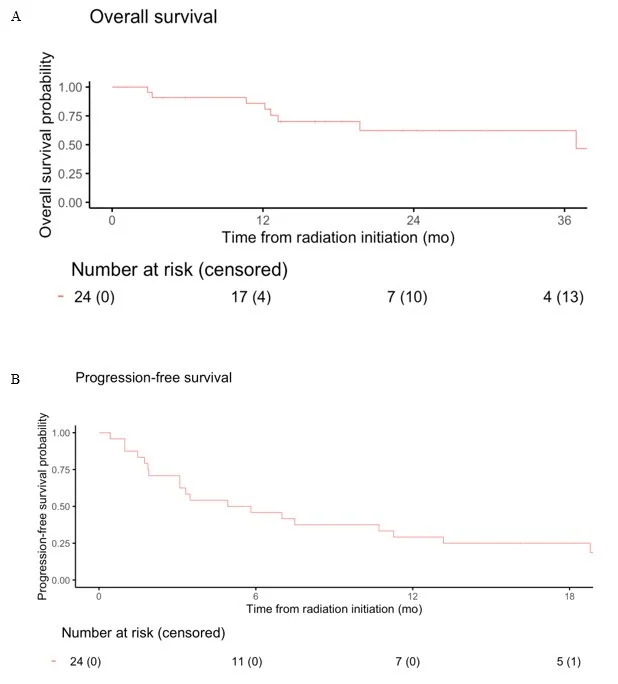
Survival stood out: median OS reached 36.9 months (1-yr 86%, 2-yr 62%), in a disease historically near 12 months.
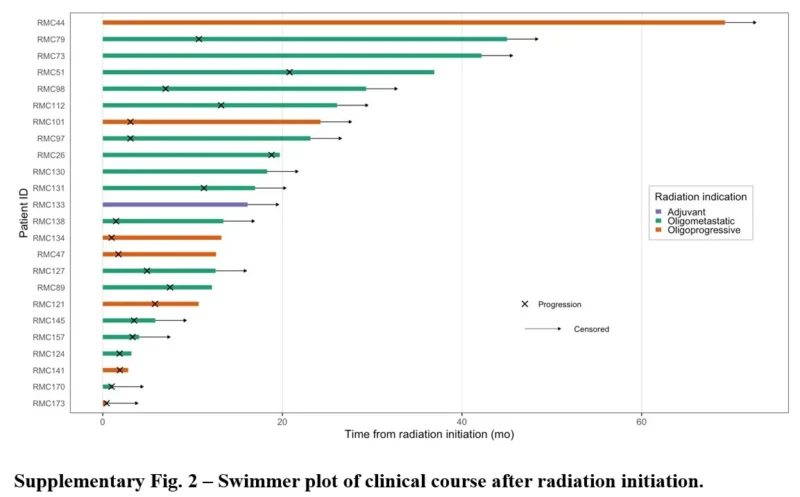
This was a selected oligometastatic subset, and median PFS was 5.4 mo with progression mostly distant, so survival cannot be credited to radiation alone.
Takeaway: dose paradigms from clear cell kidney cancer likely understate RMC radiosensitivity, and metastasis-directed RT belongs in multimodal RMC care.
Prospective studies should address patient selection, dose/fractionation, and integration with systemic therapy.”
You can also read: Key Updates in GU Oncology From ESMO 2026