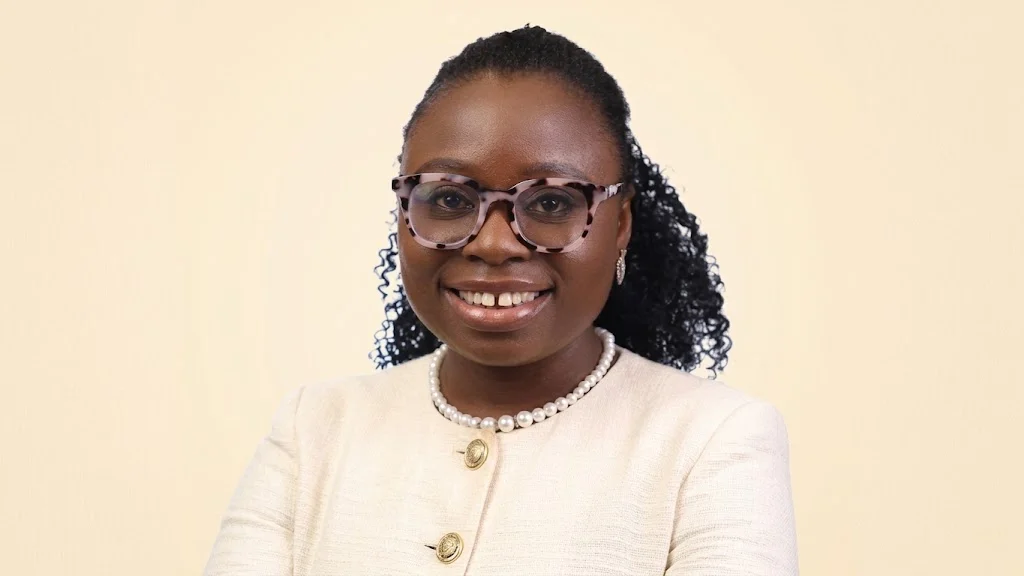
Oyepeju Abioye-Akintola, Health Equity Fellowship for Trainees (HEFT) Fellow at Health Affairs, shared on X:
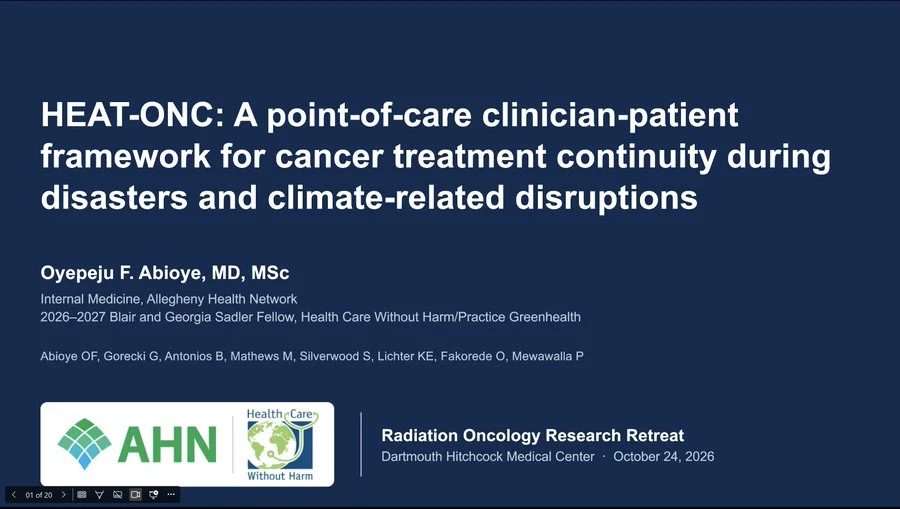
“Grateful to have presented our HEAT-ONC study today at the Radiation Oncology Research Retreat at Dartmouth Hitchcock Medical Center (DHMC).
Thank you to Katie Lichter for the invitation, and to Dr. Charles Thomas for the opportunity to share this work. This builds on our poster presented last week at the ASCO Quality Care Symposium in Boston.
When a hurricane, wildfire or flood hits, cancer centers plan for continuity of the service. But who plans for the individual patient in the middle of treatment?
What we found:
- About 1 in 4 new US cancer diagnoses in 2026 will be in seven states that rank in the top quarter for both disaster hazard and social vulnerability
- Those states had 1.86 times as many federal disaster declarations over the past decade
- In the Upper Valley, the counties around DHMC saw 16 federally declared storms and floods since 2014
HEAT-ONC is a point-of-care framework that helps a clinician and patient build a treatment continuity plan in a routine visit, in four steps:
Hazards, Effects on access, Adaptation and Teaching.
Patients leave with the HEAT-ONC Resilience Wheel, a take-home guide with what to do before and during each local hazard and when to call their cancer team. We look forward to next steps, including piloting the framework in oncology clinics.
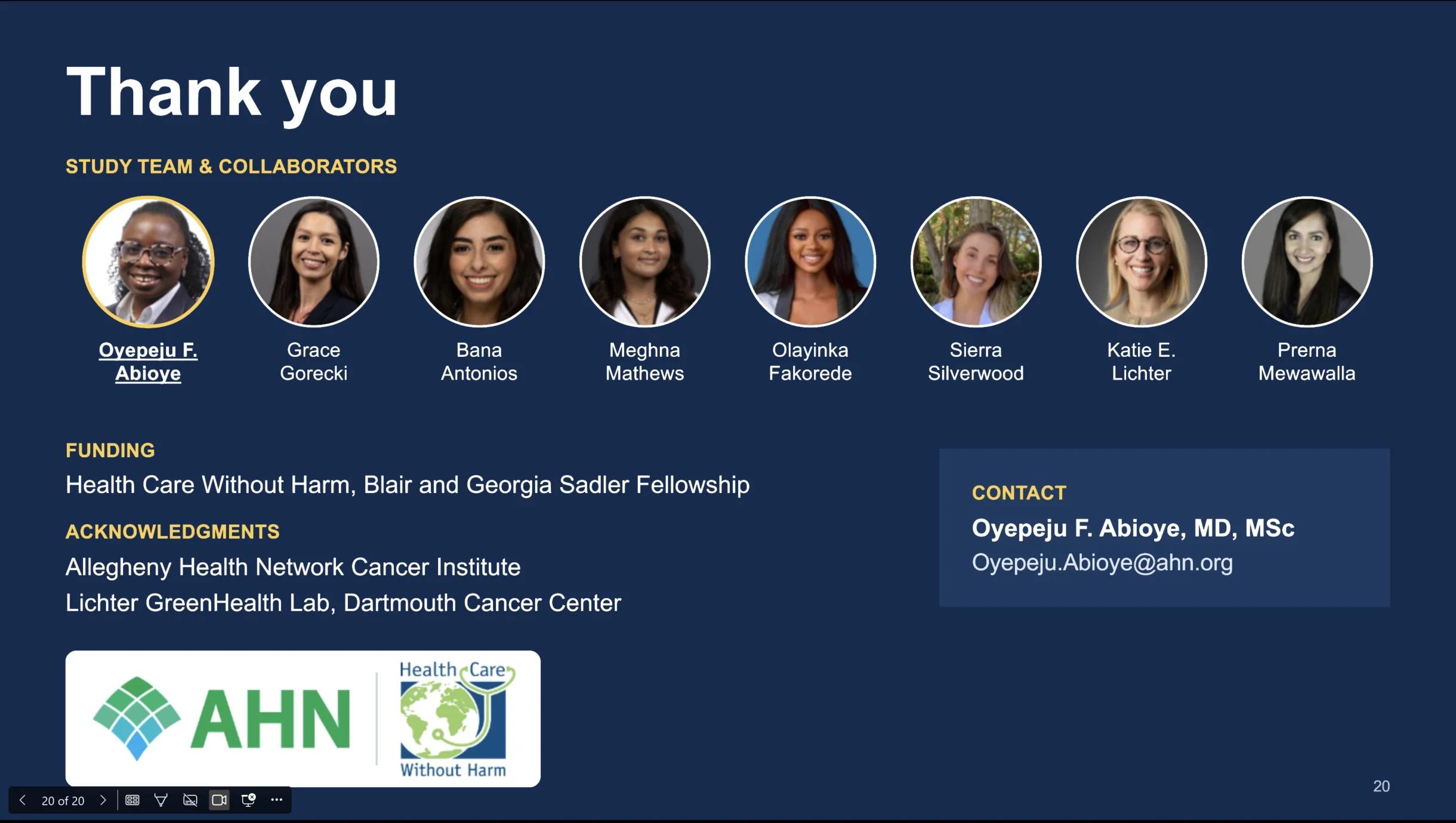
Thank you to our study team, and to Health Care Without Harm/ Practice Greenhealth for supporting this work through the 2026-2027 Blair and Georgia Sadler Fellowship.”
You can also read:
20 Posts Not To Miss From ASCOQLTY26