Ovarian Cancer Research Foundation (OCRF) shared on LinkedIn:
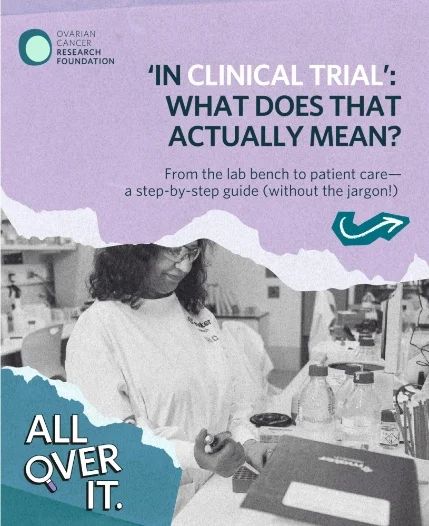
” ‘In clinical trial’ …it sounds exciting and promising, but what does it actually mean?
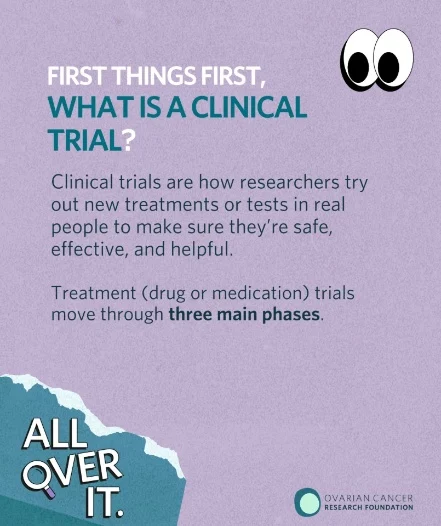
Clinical trials are how researchers safely try out new treatments or tests in real people to make sure they’re safe, effective, and helpful.
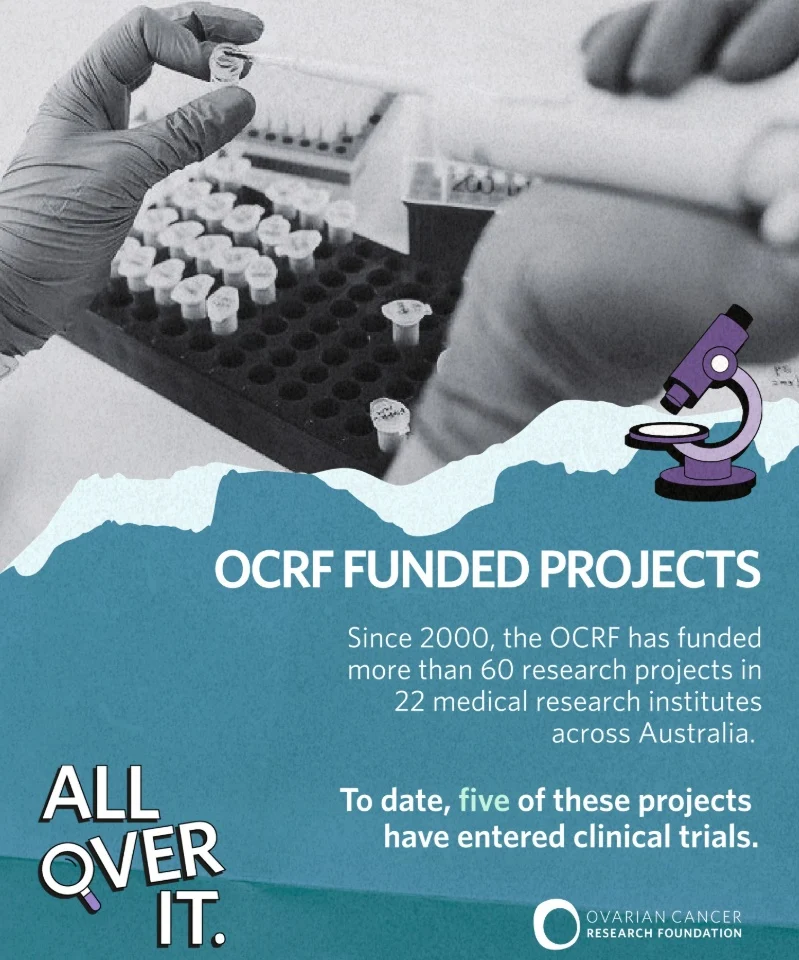
Not all treatments and tests that get into clinical trials actually make it through to be used in patients – in fact, the majority don’t! To date, five of OCRF’s funded projects have entered clinical trials, marking real progress in ovarian cancer research.
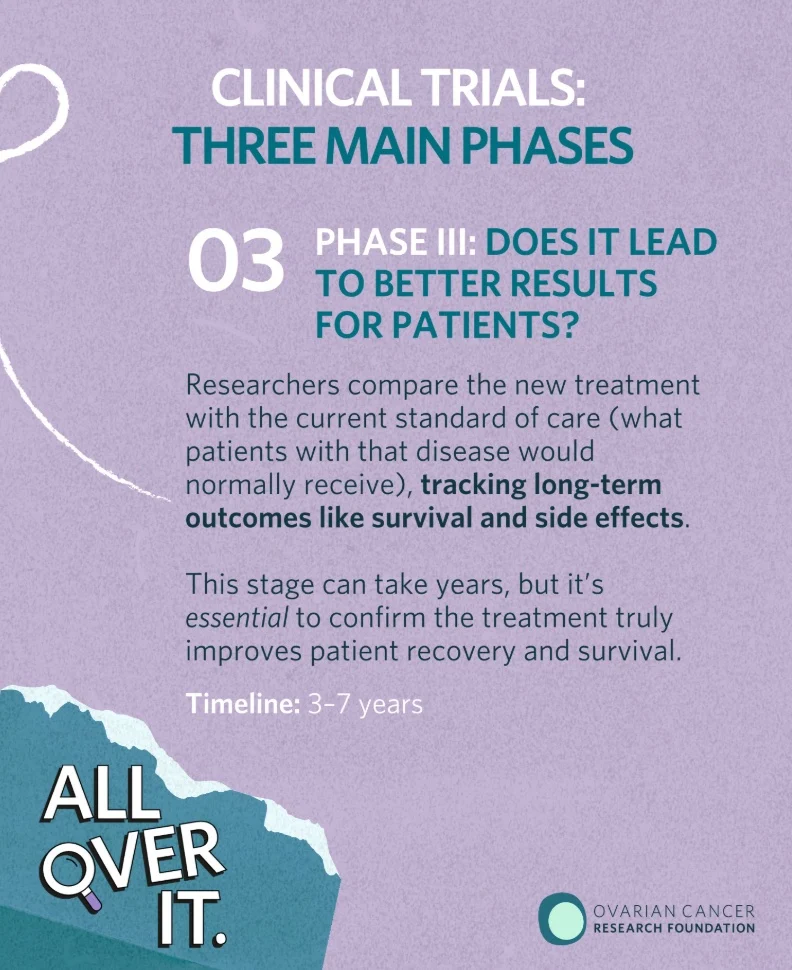
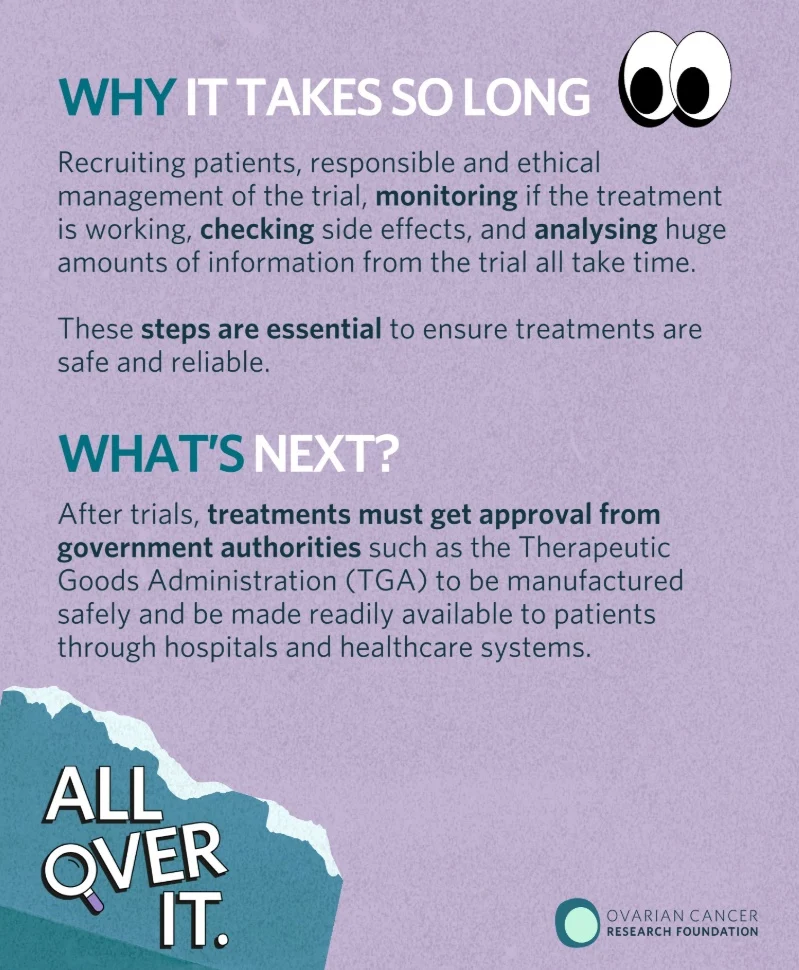
Learn how clinical trials move through three main phases, how long they take on average, and what they mean for the progress of treatment research. Understanding this journey explains:
- why it takes time before a new treatment reaches the public,
- why, when it does, you can be confident it has been rigorously tested.
Curious about how clinical trials really work?
The Ovarian Cancer Research Foundation (OCRF) wants you to stay smart in the era of misinformation.
All Over It is our public education campaign designed to help more Australians get curious, confident, and informed about what’s real in medical research – and what’s not.
Keep following for more clear, credible and easy-to-understand medical research explainers and updates.

Why Research Takes Time
Medical research is a rigorous, step-by-step process designed to guarantee safety and effectiveness. Medical breakthroughs begin as early-stage ideas that require extensive lab testing, safety evaluations, and real-world clinical trials before reaching patients.
Developing reliable diagnostic tools and targeted therapies is exceptionally challenging, because ovarian cancer represents over 30 distinct subtypes with high genetic variability and often hides from the immune system. In addition, the diversity of disease means that there won’t be a single blood test or marker that can catch every case. That’s why researchers are working to identify the best combination of biomarkers to help detect ovarian cancers earlier and more accurately.
The Multi-Stage Research Pipeline
- Stage 1: Discovery Research (3 to 10+ years) – Studying the fundamental biology of cancer to find potential diagnostics or treatments. It takes time due to complex biology, peer-review cycles, and grant funding rounds.
- Stage 2: Validation (2 to 5+ years): Testing whether discoveries are reproducible and reliable across various cell lines, datasets, and scarce tissue samples.
- Stage 3: Preclinical Testing (2 to 5+ years) – Fine-tuning diagnostics for clinical labs or testing treatments on organoids and animal models to determine safe dosing and side effects.
- Stage 4: Intellectual Property and Commercialization (6 months to 3+ years) – Filing patents and negotiating complex contracts with industry partners to secure funding for large-scale trials and manufacturing.
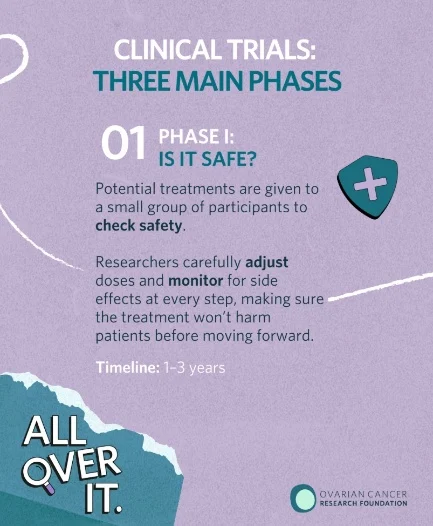
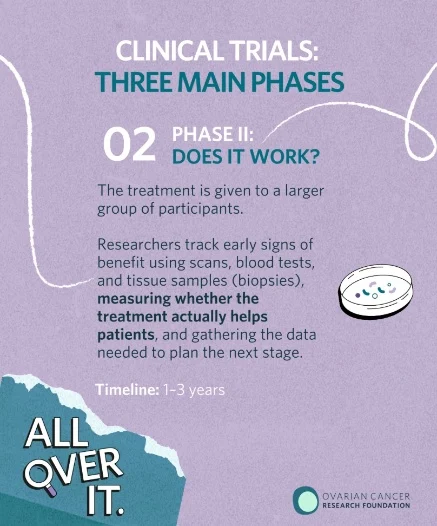
- Stage 5: Clinical Trials – Phase I focuses on safety and dosage, Phase II assesses clinical efficacy, and Phase III evaluates superiority over standard care in large patient populations across multiple centers.
- Stage 6: Manufacturing and Scaling – Ensuring successful therapies or tests can be safely, consistently, and widely produced for real-world medical use.
- Stage 7: Translation to patient use –Government regulators check all the evidence, including safety, effectiveness, side effects, and quality.
To address the urgent timeline faced by ovarian cancer patients, organizations like the Ovarian Cancer Research Foundation (OCRF) fund innovative research, foster collaborative systems, and support precision medicine trials (such as basket and N-of-1 trials) to streamline the pipeline and deliver effective treatments faster.
You can also read: OCRF and News Corp Australia Launch “Over It” Campaign to Close the Ovarian Cancer Survival Gap