






Mohammad Jad Moussa, Postdoctoral Fellow at the Department of GU Oncology at MD Anderson Cancer Center, shared on X:
“The First Time I was introduced to adrenal cancer research was through the GU clinic of Matt Campbell, UT MDAnderson.
Thanks to the momentum he created with his collaborator Dr. Habra (9th International Adrenal Cancer Conference), the field continues to push forward .”
ACC is a rare but an aggressive cancer with high recurrence rates, typically treated by multidisciplinary teams (GU Oncology, Endo, Surg Onc, Path, Rad Onc…).
We still lack reliable biomarkers to detect recurrence or monitor response to systemic therapy in real time.”
Our original retrospective study UT MDAnderson, led by Dr. Brondani, evaluated whether personalized circulating tumor DNA (ctDNA) could help us bridge this gap.
We contarsted the results of ctDNA testing with imaging performed at the same time.
The personalized ctDNA assay showed a sensitivity of 88%, specificity of 92% & overall accuracy of 89%.
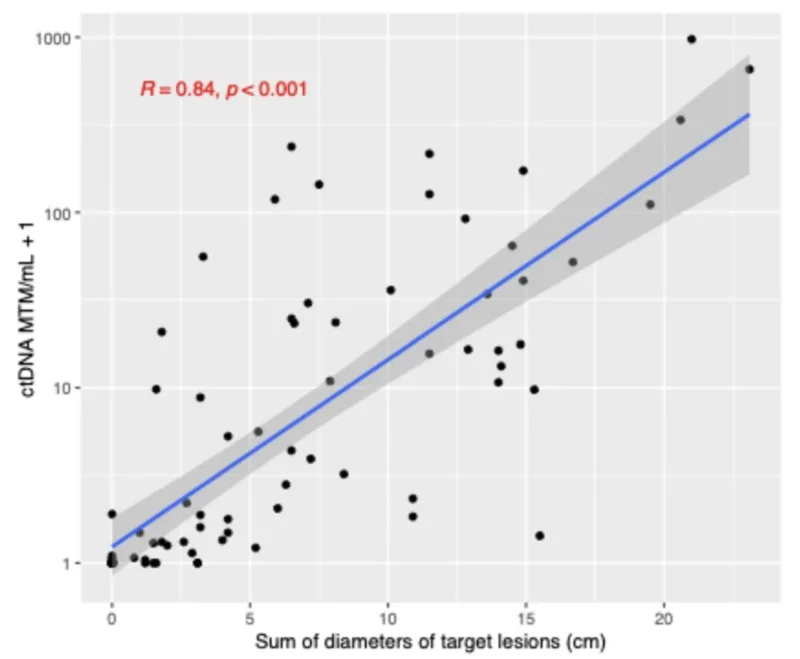
Detectable ctDNA was associated with active disease and more compellingly, ctDNA levels correlated with radiographic disease burden.
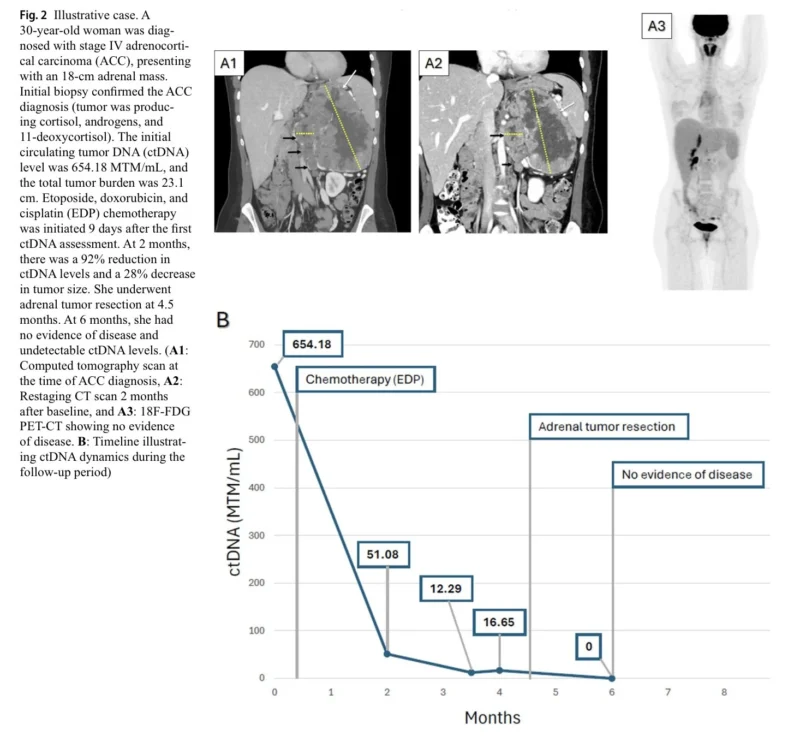
Patient’s stories are where this becomes meaningful to us.
One patient’s ctDNA fell after chemo + surgery, becoming undetectable when NED.
Another patient’s ctDNA rose months before recurrence was confirmed on imaging.
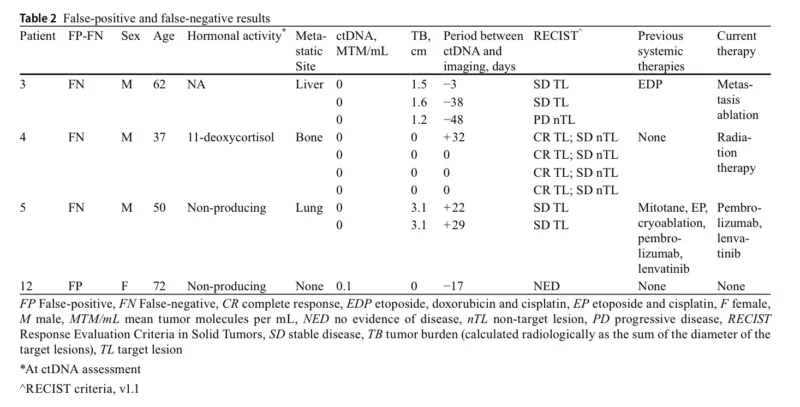
Like every biomarker, ctDNA has its own limitations.
Some patients with low-volume or treated metastatic disease had undetectable ctDNA despite persistent lesions, reminding us that a (-) ctDNA result should not replace imaging or clinical judgment.
Take home message Personalized ctDNA will not replace imaging, but as supported by findings of our institutional study, it may become an important complimentary tool for monitoring treatment response, detecting recurrence and following disease burden over time.
Congratulations to Dr. Brondani, Dr. Habra, Dr. Campbell, and colleagues UT MDAnderson, on another insightful contribution to rare GU cancer research.
Looking forward to seeing how ctDNA can be incorporated into further prospective studies and hopefully routine care.”
Other articles about Adrenocortical Carcinoma on OncoDaily.