





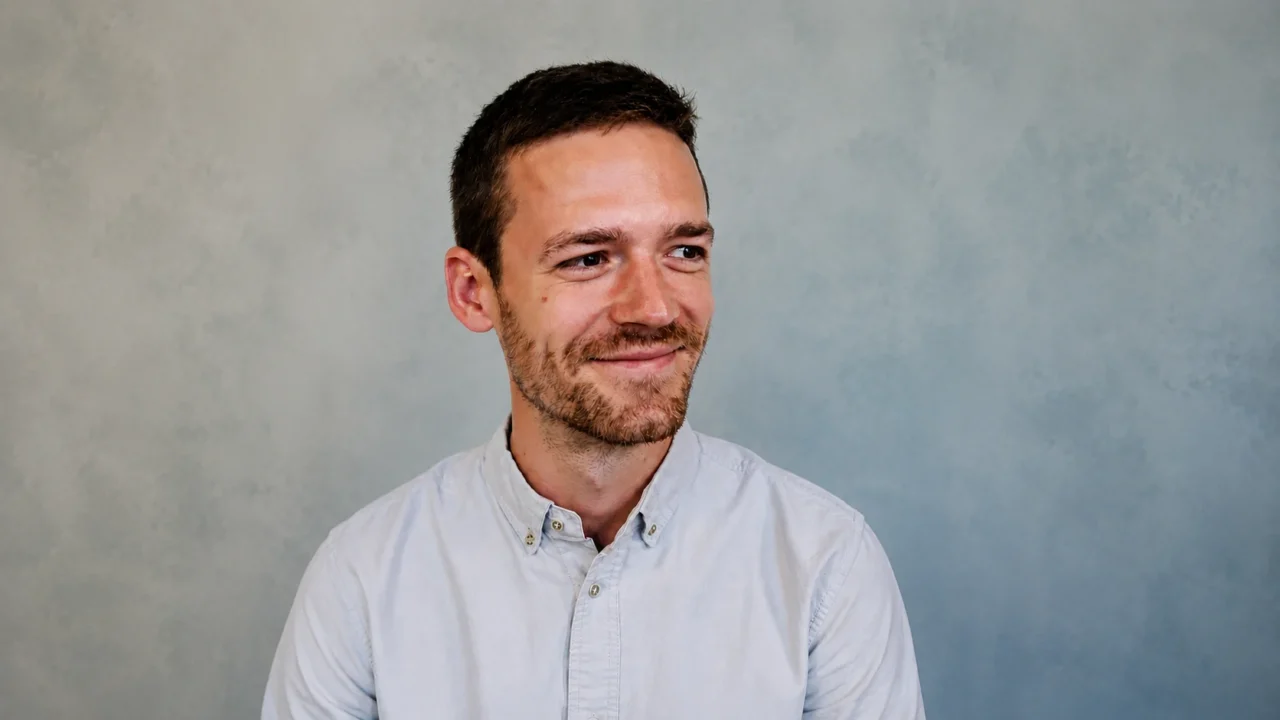
Louis Fox, Research fellow at King’s College London, shared on LinkedIn:
“Surviving cancer is something experienced by increasing numbers of people, but can be an experience fraught with long-term physical issues, social and psychological impacts, and even positive transformative experiences, amongst any other things.
I am really happy to report publication of this work with the EORTC – European Organisation for Research and Treatment of Cancer‘s Quality of Life Group to validate the EORTC QLQ-SURV100 questionnaire to measure health-related quality of life in cancer survivors, done alongside colleagues Marieke van Leeuwen, Lonneke van de Poll-Franse and Neil Aaronson, along with 60+ others across 22 countries.
The work is a culmination of a monumental collaborative effort involving over 45 research teams, and more than 2,500 participants who have survived cancer. A massive thank you to all of the participants and collaborators who were involved!
A particular shout out to Marieke van Leeuwen, who did a tremendous amount of work to develop this measure across phases 1-3 before handing the baton to myself during the final phase. I hope this work will have a real impact on survivorship research and practice for years to come.”
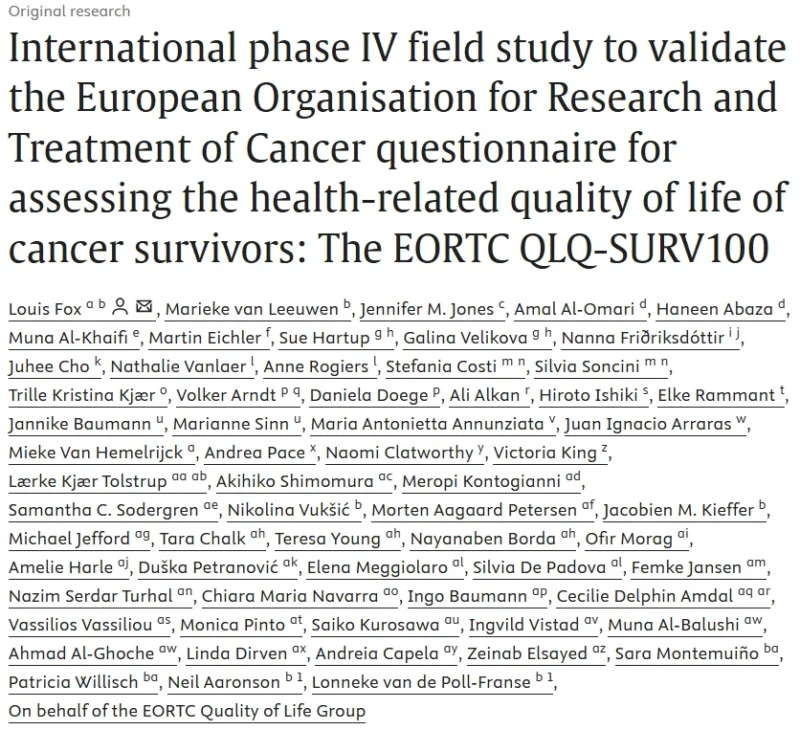
Title: International phase IV field study to validate the European Organisation for Research and Treatment of Cancer questionnaire for assessing the health-related quality of life of cancer survivors: The EORTC QLQ-SURV100
Authors: Louis Fox, Marieke van Leeuwen, Jennifer M. Jones, Amal Al-Omari, Haneen Abaza, Muna Al-Khaifi, Martin Eichler, Sue Hartup, Galina Velikova, Nanna Friðriksdóttir, Juhee Cho, Nathalie Vanlaer, Anne Rogiers, Stefania Costi, Silvia Soncini, Trille Kristina Kjær, Volker Arndt, Daniela Doege, Ali Alkan, Hiroto Ishiki, Elke Rammant, Jannike Baumann, Marianne Sinn, Maria Antonietta Annunziata, Juan Ignacio Arraras, Mieke Van Hemelrijck, Andrea Pace, Naomi Clatworthy, Victoria King, Lærke Kjær Tolstrup, Akihiko Shimomura,
Meropi Kontogianni, Samantha C. Sodergren, Nikolina Vukšić, Morten Aagaard Petersen, Jacobien M. Kieffer, Michael Jefford, Tara Chalk, Teresa Young, Nayanaben Borda, Ofir Morag, Amelie Harle, Duška Petranović, Elena Meggiolaro, Silvia De Padova, Femke Jansen, Nazim Serdar Turhal, Chiara Maria Navarra, Ingo Baumann, Cecilie Delphin Amdal, Vassilios Vassiliou, Monica Pinto, Saiko Kurosawa, Ingvild Vistad, Muna Al-Balushi, Ahmad Al-Ghoche, Linda Dirven, Andreia Capela, Zeinab Elsayed, Sara Montemuiño, Patricia Willisch, Neil Aaronson, Lonneke van de Poll-Franse.
Read The Full Article.
Muna Al-Khaifi, Lead of Breast Cancer Survivorship Program and GP oncologist, Skin Cancer Clinic at Sunnybrook, added on LinkedIn:
“Congratulations Louis Fox, and the entire EORTC – European Organisation for Research and Treatment of Cancer, on this outstanding achievement.
I am incredibly proud to have been coauthor and collaborator on this important international project, and that our centre had the opportunity to contribute to this remarkable global collaboration involving more than 46 research sites, over 2,500 cancer survivors, and investigators from 22 countries.
The development and validation of the EORTC – European Organisation for Research and Treatment of Cancer QLQ-SURV100 represents a major milestone for cancer survivorship research. Developed through a rigorous, multi-phase international process, this questionnaire goes far beyond measuring traditional quality of life. It provides a comprehensive assessment of the long-term and late effects of cancer and its treatment, including physical symptoms, emotional well-being, cognitive function, sexual health, fear of recurrence, social participation, financial challenges, work-related concerns, and positive life changes.
As cancer outcomes continue to improve, our focus must extend beyond survival alone. Cancer care should not simply be about helping people live longer-it should also be about helping them live better. Measuring survivors’ experiences is essential to identifying unmet needs, monitoring outcomes over time, evaluating interventions, and ultimately improving the quality of survivorship care. The QLQ-SURV100 is an important step toward achieving that goal.
Congratulations again to Louis, Marieke, Lonneke, Neil, and the entire EORTC Quality of Life Group on this outstanding achievement. I am honoured to have contributed to this important work and look forward to seeing its impact on cancer survivorship research and clinical.
Cancer care should not simply be about helping people live longer-it should also be about helping them live better.”