Kefah Mokbel, Professor of Medicine (Honorary) at Cardiff University School of Medicine, shared on LinkedIn:
“When stereotactic vacuum-assisted biopsy (VAB) of mammographic calcifications shows atypical ductal hyperplasia (ADH), the clinical question is whether the biopsy has missed adjacent ductal carcinoma in situ or invasive cancer.
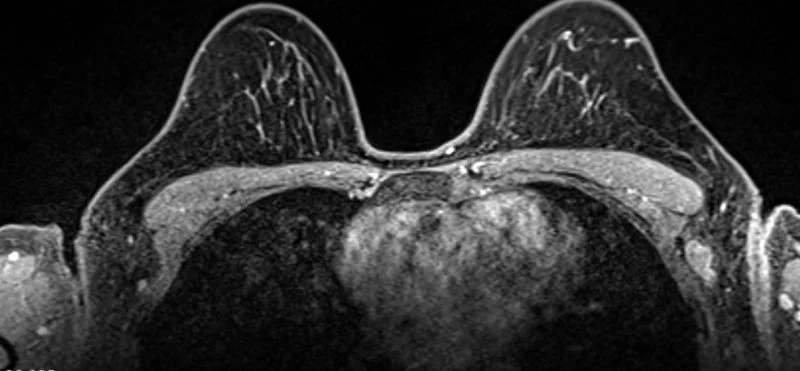
Nicole Brunetti and colleagues examined this question in a systematic review and meta-analysis of seven studies comprising 312 ADH lesions. Among 145 lesions with a negative contrast-enhanced MRI, the pooled upgrade rate was 1% (95% CI 0–4%). The point estimate falls below the 2% threshold commonly used for BI-RADS 3 surveillance, but the confidence interval extends to 4%.
There is also a practical issue. VAB can cause enhancement along the biopsy tract or around a haematoma. A breast radiologist can often recognise these changes, but the optimal interval between VAB and MRI has yet to be established. The findings do not justify routine MRI before biopsy. For mammographically detected ADH with concordant pathology, current multidisciplinary guidance also advises against using post-biopsy MRI to decide whether to excise.
For a woman with calcifications alone, focal ADH, adequate sampling and agreement between imaging and pathology, surveillance is already an option to discuss after multidisciplinary review. The question for future studies is whether MRI can safely identify additional women who could avoid surgery beyond those we can identify from the mammogram and biopsy.”
Title: A negative contrast-enhanced imaging in atypical ductal hyperplasia: Is the risk of upgrade low enough to avoid surgery? a systematic review and meta-analysis
Authors: Nicole Brunetti, Marta Ponzano, Sara Cesano, Giuseppe Rescinito, Simona Tosto, Alessandro Garlaschi, Massimo Calabrese, Alberto Stefano Tagliafico
Find out more: