Jorge Reis-Filho, Chief of AI for Science Innovation, Enterprise AI Unit at AstraZeneca, shared on LinkedIn:
”The AI transformation of drug design and clinical development is already under way.
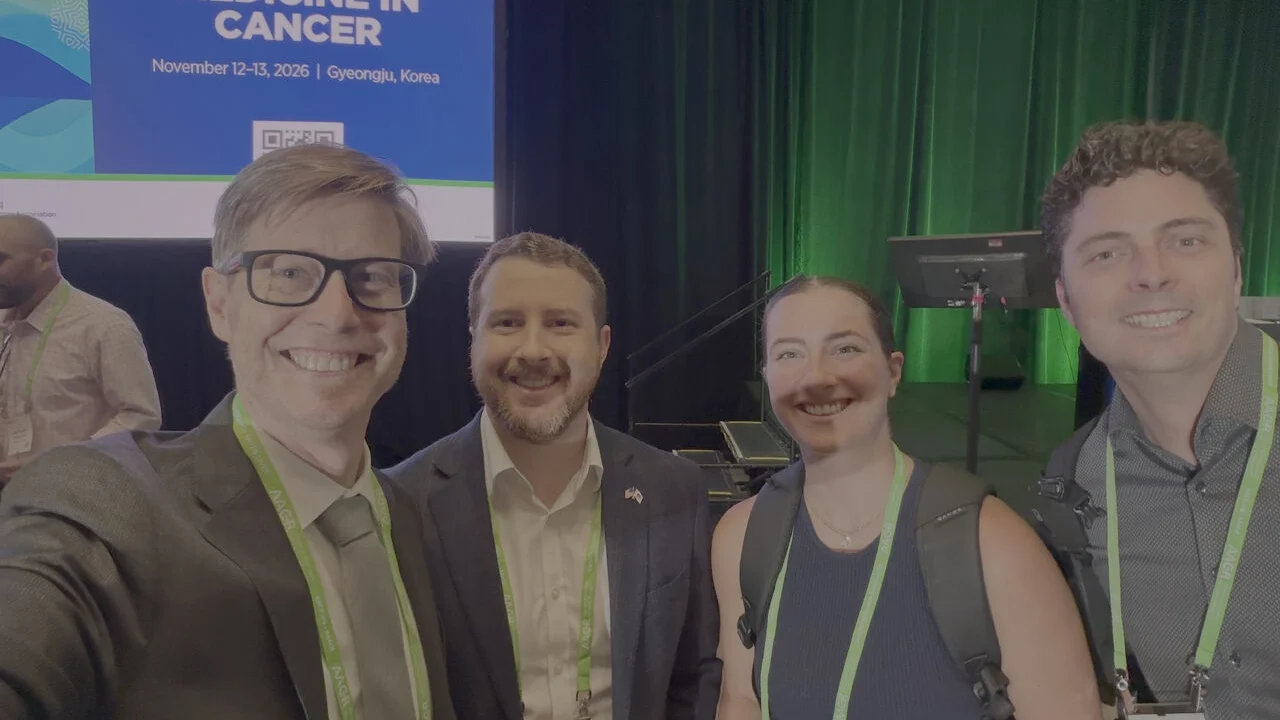
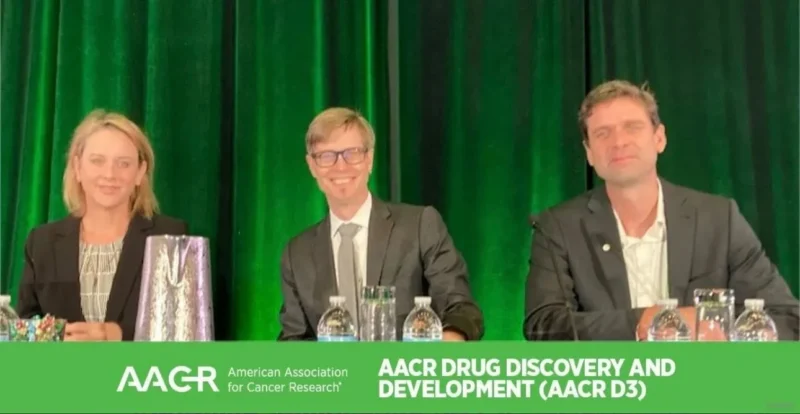
Today, I was delighted to speak at American Association for Cancer Research during the plenary session “AI in Oncology: Facts and Hopes,” chaired by Sarah Skerratt, FRSC, alongside Benjamin Haibe–Kains. The session, panel discussion, the meeting with our very own Puja Sapra (who adroitly chaired the session on Challenges in Drug Discovery Clinical and participated as a panelist in the Accelerating IITs with Team Science session) and conversations with Neil Pfister, MD, PhD of Numenos AI, Adrian Schomburg of Eisbach Bio GmbH and Sophia Marshall of BostonGene, crystallized five conclusions for me.
First, we have moved beyond debating whether AI will transform how medicines are designed and developed. The transformation is happening now. We are witnessing it first-hand across target discovery, molecular design, biomarker development, patient selection and clinical trials.
Second, the quality of this transformation will depend on fit-for-purpose evals and benchmarks. It will also require the intentional generation and inclusion of negative data, specifically designed to teach models where hypotheses fail. Without this discipline, greater scale may simply produce more plausible-sounding, seemingly sophisticated but weakly grounded “AI hypothesis slop.”
Third, as Ben aptly observed during the Q&A, AI can also help us reduce “human slop”: the cognitive shortcuts, fragmented synthesis of evidence, inherited assumptions and inconsistencies that constrain scientific reasoning. Used well, AI should raise the standard of thought and expose its weaknesses before they harden into decision-making errors.
Fourth, we must reimagine how we educate the next generation of scientists. What if we taught them to think through AI: how to interrogate models, challenge outputs, design discriminating experiments, and combine deep domain expertise with computational reasoning while understanding the limits of current models and agents? Making AI an instrument for deeper thought unlocks transformative opportunities, especially when we remember that the models and agents we have access to today will be the worst ones we will ever have.
Finally, access to comprehensive and deep translational data will determine the next wave of biological and clinical insights. This includes positive and negative data, longitudinal and multimodal data, and the experimental feedback loops that allow models to learn from reality.
When we get this right, AI will help us not only to move faster through greater insights but to generate novel insights altogether. More importantly, it will help us ask better questions, design more discriminating experiments, and deliver more meaningful advances for patients, advancing our bold ambition in oncology: to eliminate cancer as a cause of death.
Onwards and upwards!”
Also you can read ‘Eli Lilly Bets €2.4B on AI-Designed Drugs in New Insilico Medicine Deal‘