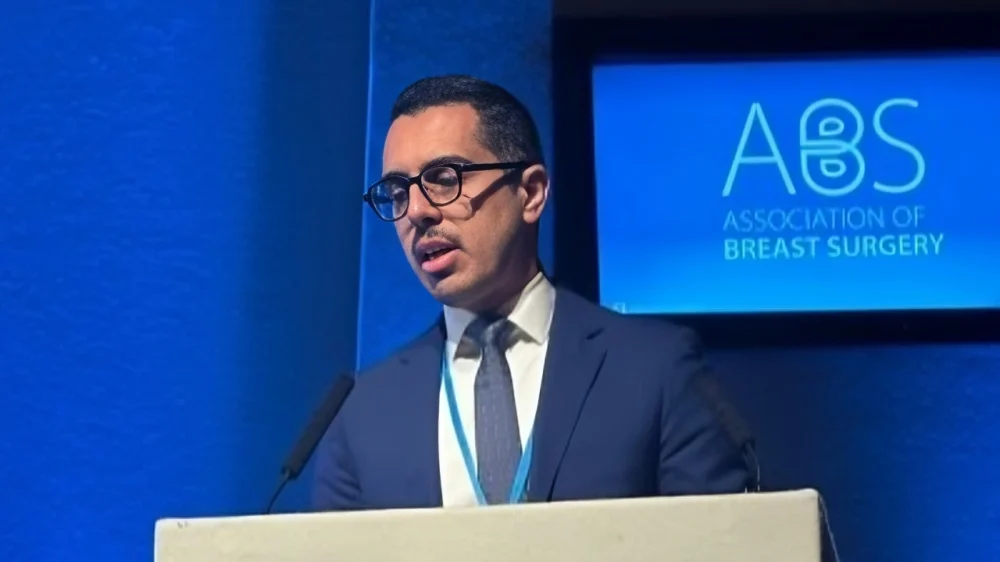
Hussain Abdulla, Oncoplastic and Reconstructive Breast Surgeon at Bahrain Government Hospitals, shared on LinkedIn:
”Publication alert:
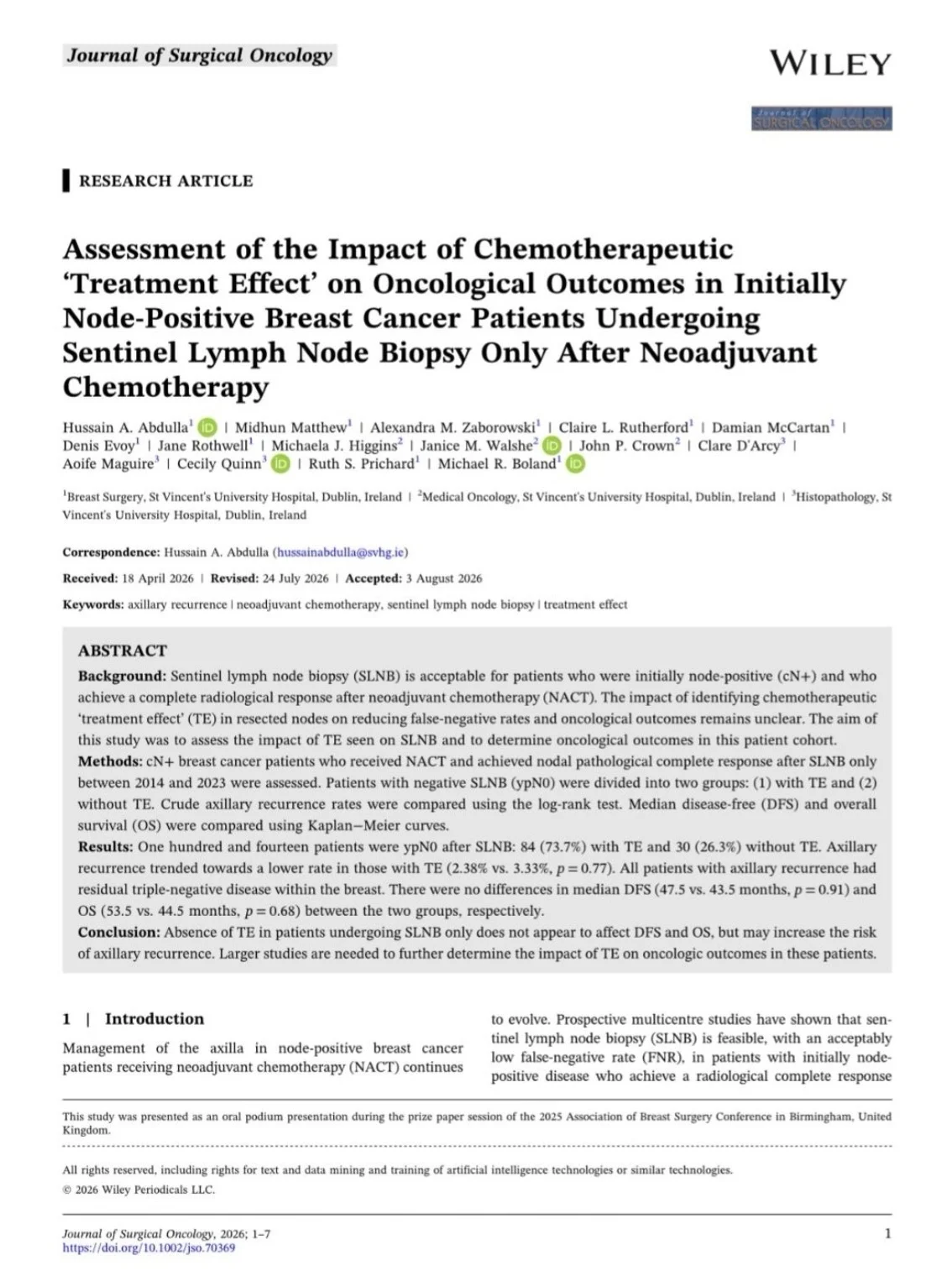
In this study, we evaluated the oncological outcomes of nodal chemotherapeutic effect in patients who were cN+ and underwent SLNB alone (ypN0) following NAC. Our findings highlight some important clinical messages:
- Treatment effect provides valuable information regarding nodal response to systemic therapy and should be routinely reported by breast pathologists.
- For institutions that do not routinely perform TAD or nodal clipping, treatment effect may provide evidence that the initially abnormal node has been removed and can reduce the FNR of SLNB.
- Treatment effect has adjuvant treatment implications. Without histological evidence of nodal response, it becomes difficult to justify omission of RNI, as there remains uncertainty whether the originally abnormal node has been retrieved.
As the move towards axillary de-escalation continues, accurate staging of those with residual disease becomes increasingly important. On that basis, TAD, with nodal clipping at diagnosis, may be strongly considered.
A huge thank you to Midhun Matthew and all my co-authors at St. Vincent’s University Hospital for their collaboration on this work.”
Title: Assessment of the Impact of Chemotherapeutic ‘Treatment Effect’ on Oncological Outcomes in Initially Node-Positive Breast Cancer Patients Undergoing Sentinel Lymph Node Biopsy Only After Neoadjuvant Chemotherapy
Authors: Hussain A. Abdulla, Midhun Matthew, Alexandra M. Zaborowski, Claire L. Rutherford, Damian McCartan, Denis Evoy, Jane Rothwell, Michaela J. Higgins, Janice M. Walshe, John P. Crown, Clare D’Arcy, Aoife Maguire, Cecily Quinn, Ruth S. Prichard, Michael R. Boland
Other articles featuring Hussain Abdulla on OncoDaily.