





Global Health Otherwise (GHO) shared a post on LinkedIn:
“Can technology bridge the mental health gap in low- and middle-income countries?
Across low- and middle-income countries, roughly 85% of people living with mental illness receive no treatment at all. Stigma, workforce shortages, and chronically underfunded health systems leave rural and remote communities most exposed.
Tele-mental health, which delivers care through phone calls, video conferencing, and text messaging, offers a promising way to close this gap. Yet remarkably little evidence exists on what actually makes these tools work in the communities that need them most.
Jumbe and colleagues (2026) address this gap directly through a scoping review published in PLOS Digital Health.
Searching four major databases, they identify just nine eligible studies, a finding that itself signals how underresearched this field remains. Using the COM-B behaviour change framework, they map barriers and facilitators for both patients and providers.
Patients most commonly face unreliable internet, lack of personal devices, and absence of private space. Providers struggle with limited digital training and missing protocols.
Despite these challenges, both groups consistently value the time and cost savings tele-mental health delivers. The authors call for infrastructure investment, digital literacy programmes, and stronger provider training to build equitable systems.
Jumbe and colleagues (2026) find that infrastructure gaps and provider training deficits remain the biggest obstacles to tele-mental health delivery in low- and middle-income country settings.”
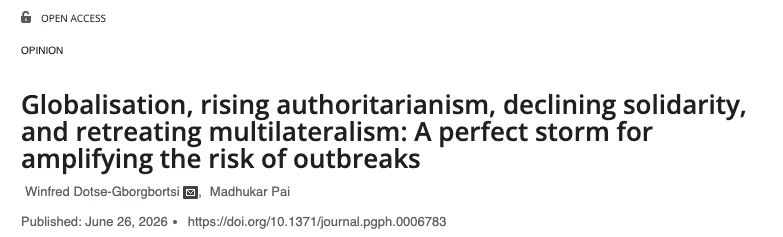
Title: Globalisation, rising authoritarianism, declining solidarity, and retreating multilateralism: A perfect storm for amplifying the risk of outbreaks
Authors: Winfred Dotse-Gborgbortsi, Madhukar Pai
Other articles about GHO on OncoDaily.