George L. Kumar, Senior Director at AstraZeneca, shared on LinkedIn:
”One Molecule, Many Targets: Rethinking Glioblastoma Therapy with miRNAs.
Glioblastoma still carries an average survival of about 15 months, even with surgery, chemotherapy, and radiation. The reason single-agent molecular therapies keep failing is structural: GBM deregulates many genes at once. Hit one node, and the network routes around it.
The logical answer – combination therapy – runs into two walls: a shortage of suitable drugs, and compounding toxicity.
A team took a different route. If the problem is that many genes are deregulated simultaneously, use an agent that is natively multi-target. That’s what microRNAs do – small regulatory RNAs that suppress multiple mRNAs at once.
The approach:
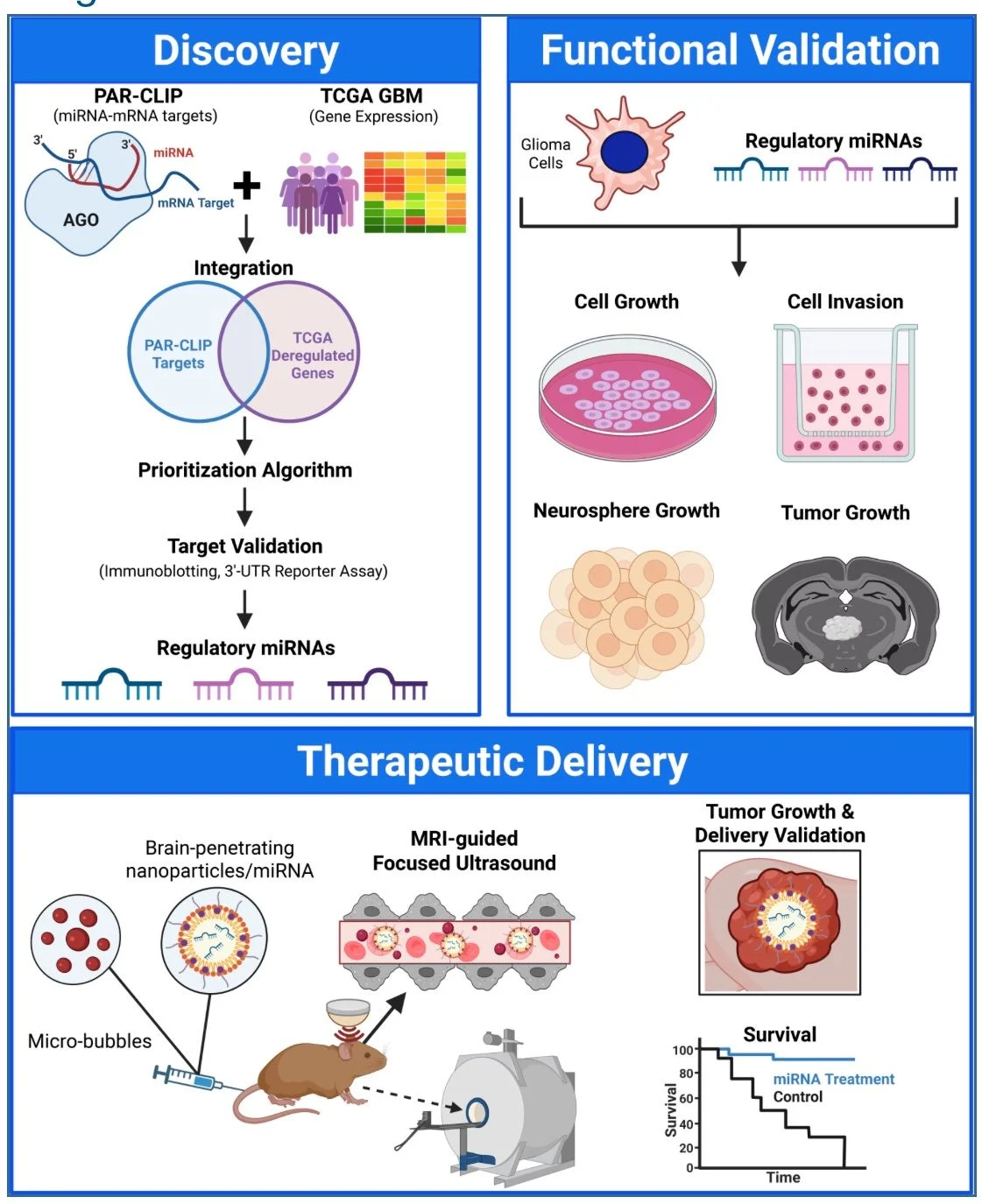
- Identify the right miRNAs, not just any miRNAs. The team combined PAR-CLIP screening with TCGA data analysis and built an algorithm to rank both target importance and therapeutic potential – turning miRNA selection into a prioritization problem rather than a guess.
- Validate function. Three candidates emerged: tumor suppressors miR-340 and miR-382, and the oncogenic miR-17. Each was shown to hit critical GBM pathways and to alter cell growth, survival, invasion, and in vivo tumor growth.
- Solve delivery – the part that usually kills brain therapeutics. They paired brain-penetrating nanoparticles with MRI–guided focused ultrasound and microbubbles, achieving inhibition of established tumor growth and extended survival in animals.
What makes this compelling isn’t any single element. It’s that the multi-target rationale, the computational target selection, and a non-invasive blood-brain barrier strategy were assembled into one coherent pipeline -with efficacy against established tumors, not just prophylaxis.
The framing generalizes well beyond neuro-oncology: in diseases defined by network-level dysregulation, the therapeutic agent may need to be network-level too. The bottleneck then shifts from “what to target” to “how to get there” – which is exactly where focused ultrasound is beginning to earn its place.”
Title: Discovery and therapeutic delivery of microRNAs targeting deregulated glioblastoma pathways inhibits tumor growth in mice
Authors: Shekhar Saha, Ying Zhang, Myron K. Gibert Jr., Collin Dube, Farina Hanif, Elizabeth Qian Xu Mulcahy, Sylwia Bednarek, Yunan Sun, Pawel Marcinkiewicz, Xiantao Wang, Gijung Kwak, Ahsan H. Polash, Haolin Li, Kadie Hudson, Manikarna Dinda, Tapas Saha, Matthew McCord, Fadila Guessous, Nichola Cruickshanks, Rossymar Rivera Colon, Lily Dell’Olio, Rajitha Anbu, Wenjie Liu, Songy Choi, Benjamin Kefas, Pankaj Kumar, Alexander L. Klibanov, David Schiff, Jung Soo Suk,Justin Hanes, Jamie Mata, Markus Hafner, and Roger Abounader.
You can also read ‘INTRAGO-II Finds No Survival Benefit From Intraoperative Radiotherapy in Newly Diagnosed Glioblastoma’