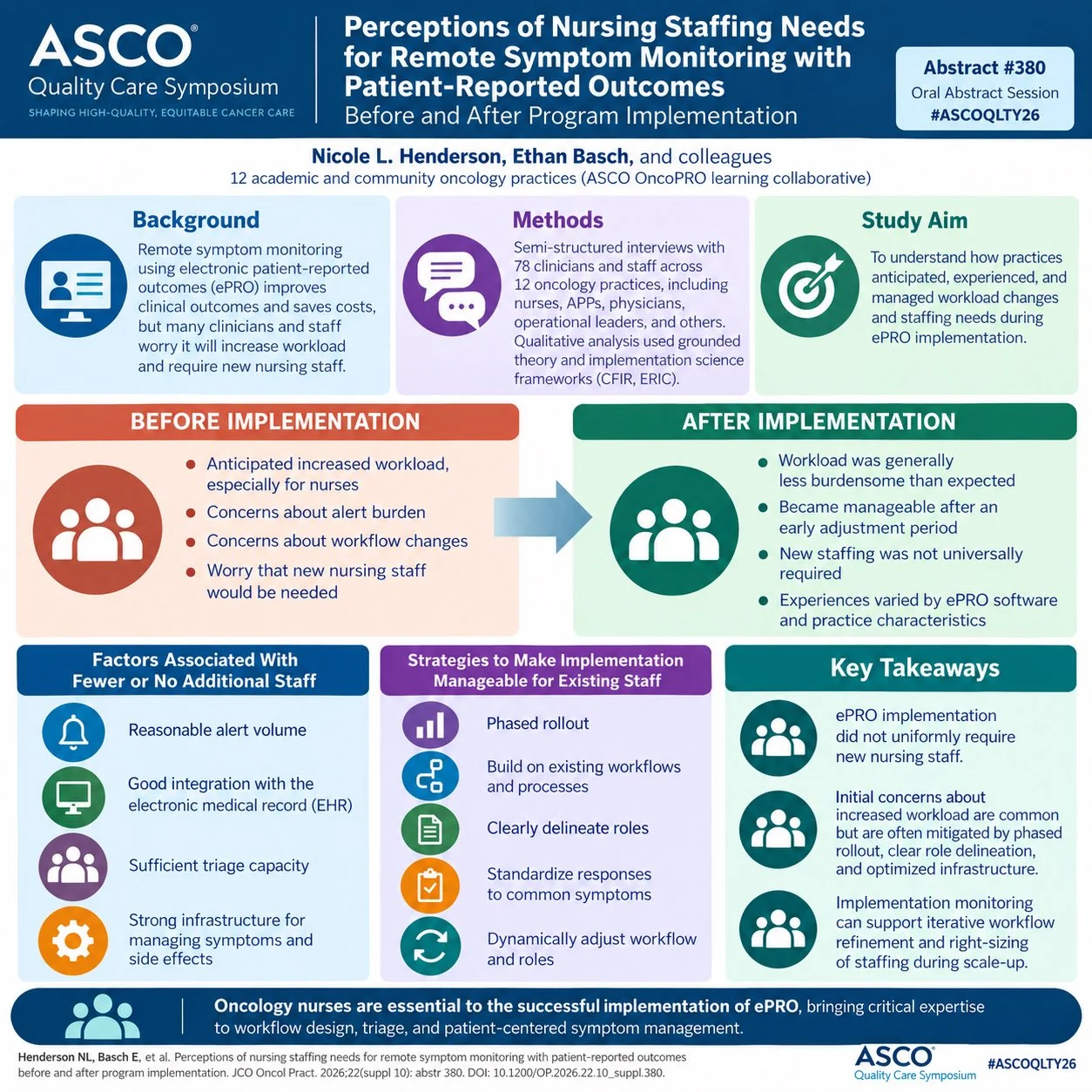
Darcy Burbage, Oncology Clinical Nurse Specialist, shared on X:
“Does ePRO implementation require more Oncology Nursing Society?
At ASCOQLTY26, Ethan Basch and colleagues found staffing needs varied across 12 practices.
Workloads were often less burdensome than expected.
Workflow design and nursing input matter!”
ASCO Quality Care Symposium
Perceptions of Nursing Staffing Needs for Remote Symptom Monitoring with Patient-Reported Outcomes
Before and After Program Implementation։ Nicole L. Henderson, Ethan Basch, and colleagues․
Background
Remote symptom monitoring using electronic patient-reported outcomes (ePRO) improves clinical outcomes and saves costs, but many clinicians and staff worry it will increase workload and require new nursing staff.
Methods
Semi-structured interviews with 78 clinicians and staff across 12 oncology practices, including nurses, APPs, physicians, operational leaders, and others.
Qualitative analysis used grounded theory and implementation science frameworks (CFIR, ERIC).
Study Aim
To understand how practices anticipated, experienced, and managed workload changes and staffing needs during ePRO implementation.
Before Implementation
- Anticipated increased workload, especially for nurses
- Concerns about alert burden
- Concerns about workflow changes
- Worry that new nursing staff would be needed
After Implementation
- Workload was generally less burdensome than expected
- Became manageable after an early adjustment period
- New staffing was not universally required
- Experiences varied by ePRO software and practice characteristics
Factors Associated With Fewer or No Additional Staff
- Reasonable alert volume
- Good integration with the electronic medical record (EHR)
- Sufficient triage capacity
- Strong infrastructure for managing symptoms and side effects
Strategies to Make Implementation Manageable for Existing Staff
- Phased rollout
- Build on existing workflows and processes
- Clearly delineate roles
- Standardize responses to common symptoms
- Dynamically adjust workflow and roles
Key Takeaways
- ePRO implementation did not uniformly require new nursing staff.
- Initial concerns about increased workload are common but are often mitigated by phased rollout, clear role delineation, and optimized infrastructure.
- Implementation monitoring can support iterative workflow refinement and right-sizing of staffing during scale-up.
Oncology nurses are essential to the successful implementation of ePRO, bringing critical expertise to workflow design, triage, and patient-centered symptom management.”
Other articles about electronic Patient-Reported Outcomes on OncoDaily.