Daniel Shapiro, Urologic Oncologist at UW Urology, shared on X:
“Why do some kidney tumors contain the right CD8⁺ T cells in the right places – and others do not?
In our new paper, we investigated whether the CXCL13-CXCR5 axis helps recruit and organize stem-like CD8⁺ T cells in clear cell RCC.
Stem-like CD8⁺ T cells retain proliferative capacity and can replenish downstream effector and exhausted populations, helping sustain antitumor immunity.
But how are these cells recruited into ccRCC tumors, and where are they maintained?
We integrated:
- Human tumor and blood samples
- Migration assays
- An endothelial-lined microphysiologic model
- Single-cell RNA-seq
- Spatial transcriptomics
- Multiplex immunofluorescence
- A syngeneic mouse model.
CXCL13 was upregulated in ccRCC versus matched normal kidney. Its expression varied considerably across tumors and was embedded within a CD8⁺ T cell–associated inflammatory and cytotoxic transcriptional program.
Was CXCL13 merely a marker of an inflamed tumor – or did it have a functional role?
Using microphysiologic models for migration assays, CXCL13 promoted CD8⁺ T-cell trafficking toward tumor cells, including across an endothelial-lined microvessel.
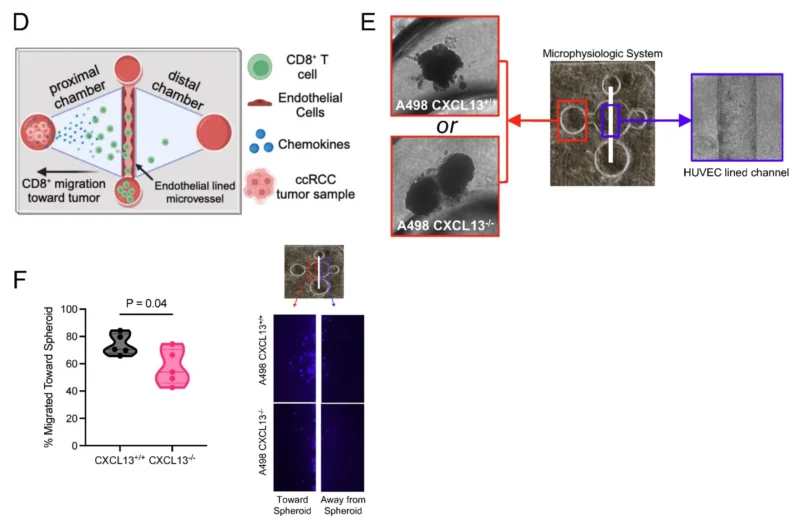
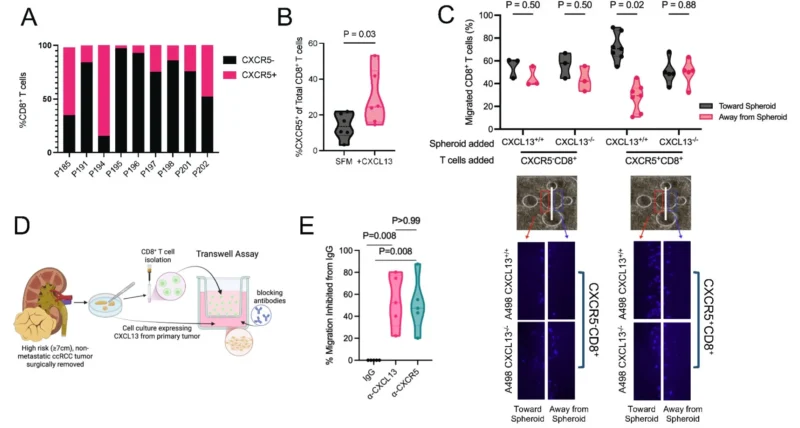
The effect was linked to CXCR5. CXCL13 enriched CXCR5⁺ cells among migrating CD8⁺ T cells, CXCR5⁺ cells migrated directionally toward CXCL13-producing spheroids, and blocking either CXCL13 or CXCR5 reduced migration.
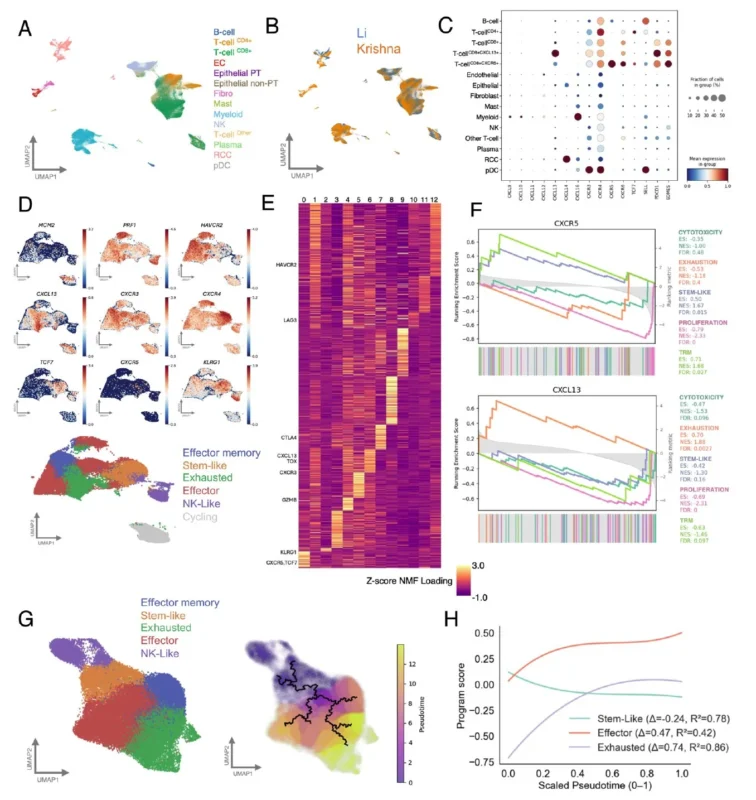
Using publicly single cell datasets, CXCR5 and CXCL13 positioned at different points along a continuous CD8⁺ T-cell differentiation landscape. CXCR5 associated with stem-like programs, while CXCL13 aligned with later cytotoxic and exhausted states.
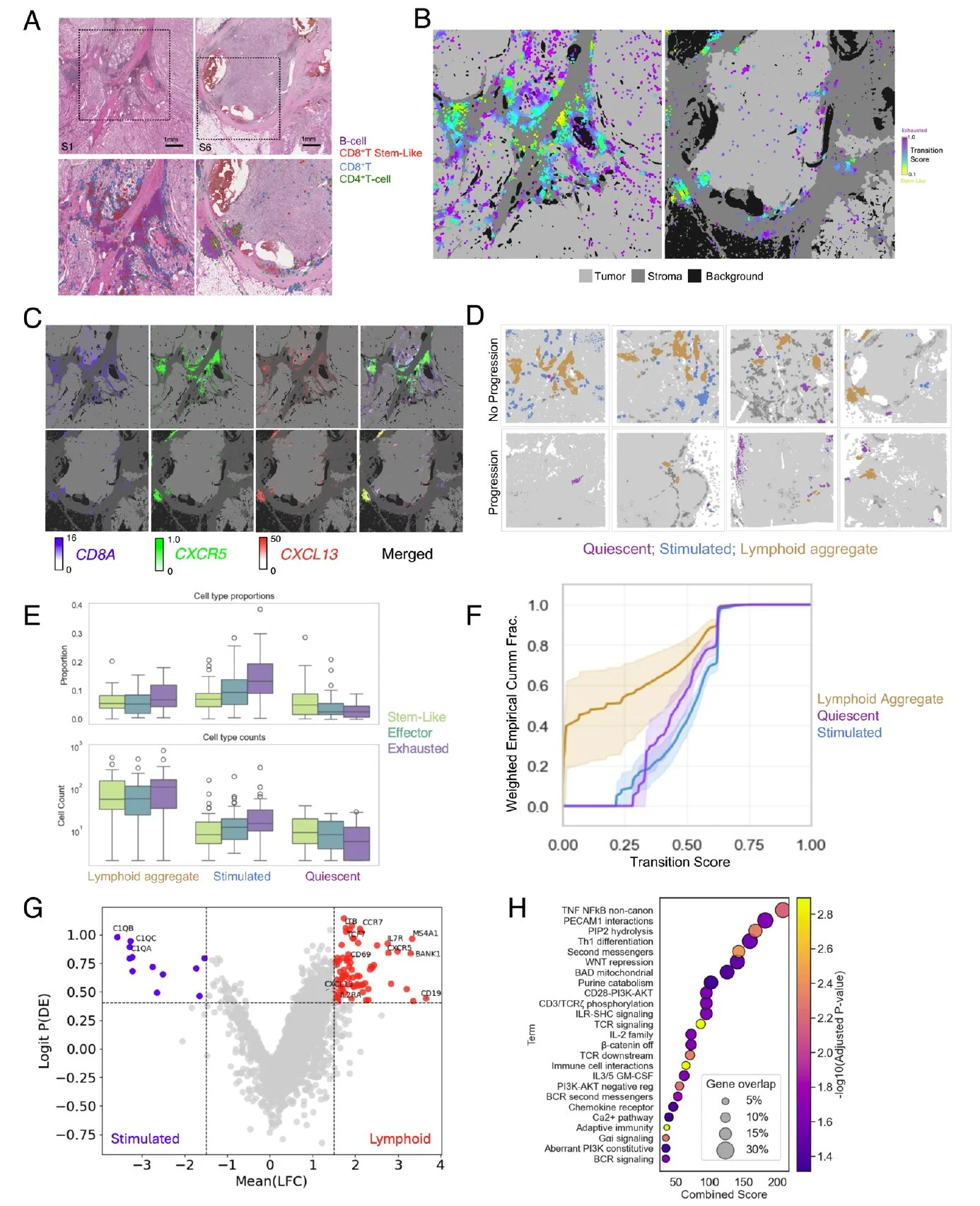
Spatially, stem-like CD8⁺ T cells were not diffusely scattered. They concentrated within structured stromal immune aggregates enriched for B cells, T cells, coordinated CXCL13/CXCR5 expression, and antigen-presentation and costimulatory programs.
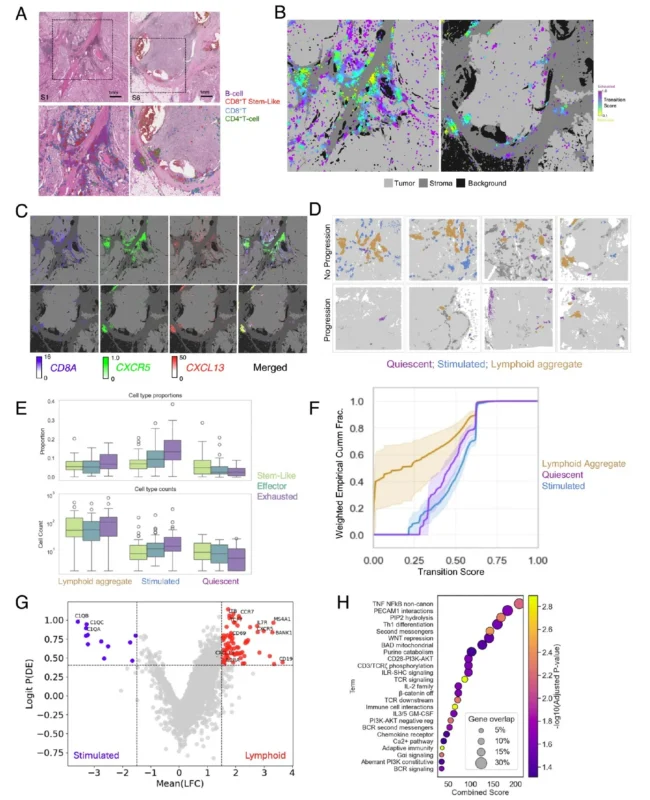
Compared with other immune aggregates, they contained more stem-like CD8⁺ T cells and showed features consistent with tertiary lymphoid structure organization.
In vivo, CXCL13 overexpression suppressed RENCA tumor growth, increased intratumoral CD8⁺ T-cell infiltration, and enriched CXCR5⁺TCF1⁺CD8⁺ stem-like cells. CXCL13-knockout tumors grew more rapidly.
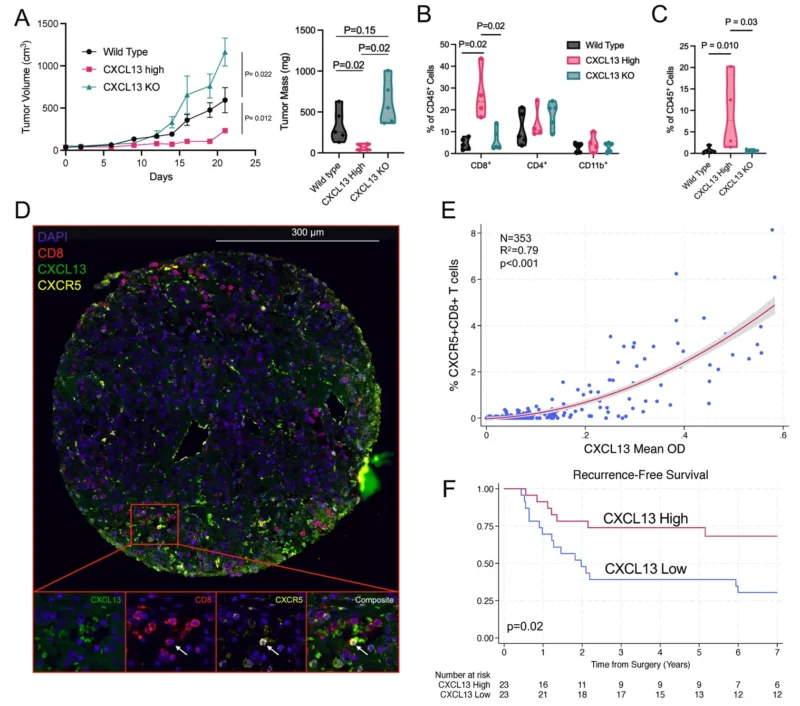
In human high-risk nonmetastatic ccRCC, tumor CXCL13 expression correlated strongly with CXCR5⁺CD8⁺ T-cell infiltration.
Higher CXCL13 expression was also associated with improved recurrence-free survival.
Our model: CXCL13 may recruit or retain CXCR5-associated stem-like CD8⁺ T cells within organized immune niches that sustain antitumor immunity. This axis may have value as a biomarker and therapeutic target.
Thank you to the Kidney Cancer Research Program CDMRP Public Affairs for funding this work, our collaborators, and the wonderful people working hard in the lab.
Looking forward to continuing to develop this work as our lab moves to UT MDAnderson!”
Title: CXCL13-CXCR5 signaling in CD8+ T cell recruitment and lymphoid immune organization in clear cell renal cell carcinoma
Authors: Daniel D. Shapiro, Kye D. Nichols, Moon Hee Lee, Pavlos Msaouel, Yuanshan Li, Yang Zong, Rong Hu, Wei Huang, Karla Esbona, Toshi Kinoshita, Paz Lotan, Daniel F. Roadman, Everlyne Nkadori, Stephanie M. McGregor, David J. Beebe, Sheena C. Kerr, Christian M. Capitini, Edwin Jason Abel
Other articles about renal cell carcinoma on OncoDaily.