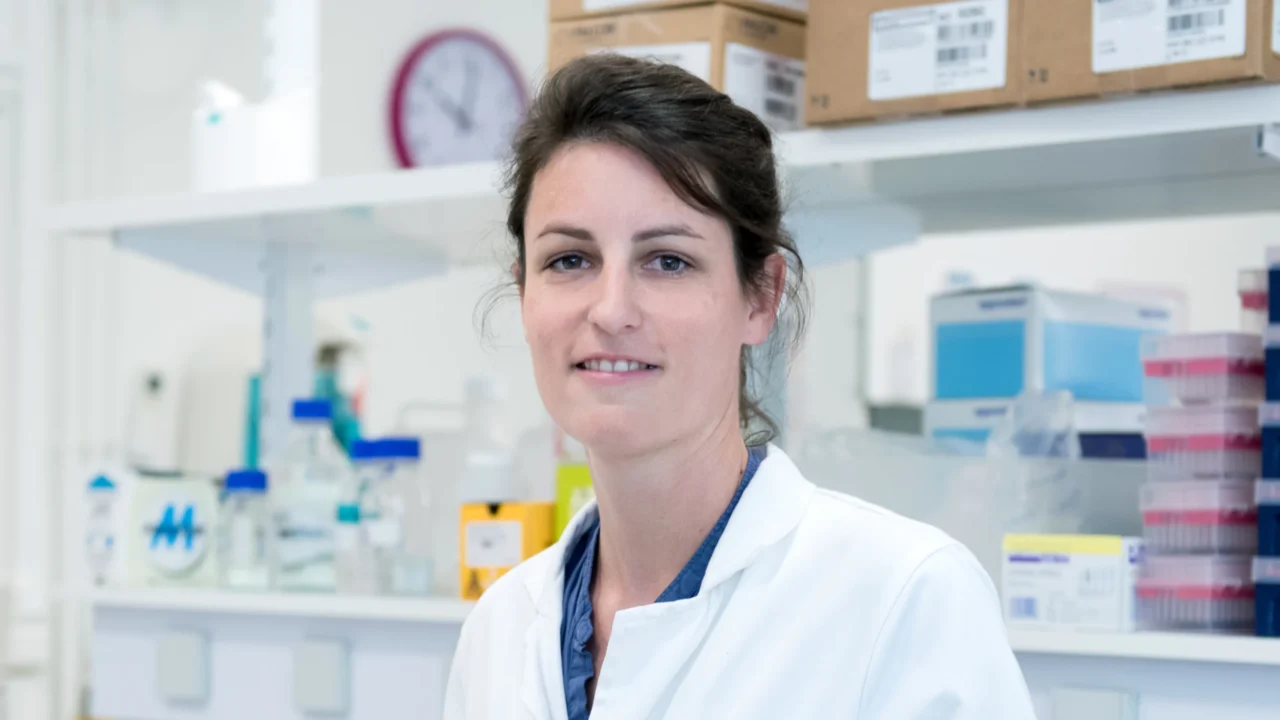
Céline Vallot, Senior Group Leader at Institut Curie, shared on LinkedIn:
“What can a tumor’s cellular and epigenetic landscapes tell us about its future response to chemotherapy?
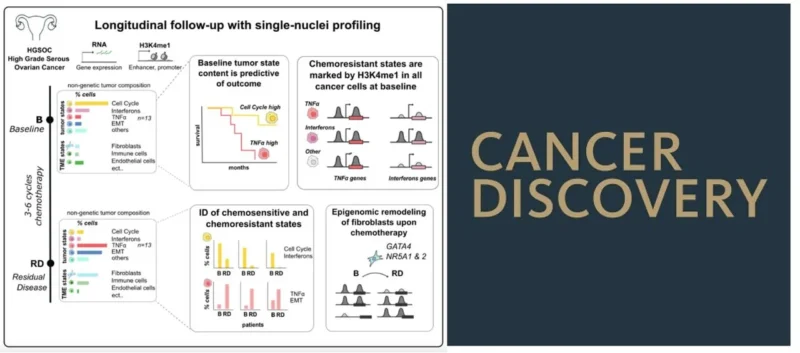
Our latest work on chemotherapy resistance in high-grade serous ovarian cancer is now published in Cancer Discovery! Using single-nucleus transcriptomic and epigenomic profiling of longitudinal tumor biopsies, we investigated how tumor cell states evolve during chemotherapy.
Our main finding: Chemoresistant tumor cell states, particularly those associated with TNF-α signaling and epithelial–mesenchymal transition (EMT), are already epigenetically primed before treatment, with H3K4me1 marking regulatory regions linked to resistance programs. These findings suggest that chemotherapy resistance is not solely a response to treatment, but can emerge from pre-existing epigenetic states.
Congratulations to Yuna Landais and all co-authors and collaborators involved. This work was made possible by a close collaboration between experimental, computational and clinical teams at Institut Curie, CNRS and One Biosciences.”
Title: H3K4me1-Mediated Epigenomic Priming of Chemoresistant Tumor States in Ovarian Cancer
Authors: Yuna Landais, Juliette Bertorello, Marta Plasencia Puerto, Agathe Kahn, Baptiste Simon, Amélie Roehrig, Adeline Durand, Marceau Quatredeniers, Constance Lamy, Enora Laas, Nicolas Pouget, Simon Dumas, Jean-Guillaume Féron, Virginie Fourchotte, Claire Bonneau, Vincent Cockenpot, Marianne Delville, Magali Richard, Maud Kamal, Fabrice Lecuru, Christophe Le Tourneau, Céline Vallot
You can also read: