Cardio-Oncology Bulletin shared on LinkedIn:
“Cardio-Oncology Bulletin – Issue number 5.
A monthly evidence update at the intersection of cardiology and oncology.
Novel Highlight.
Featured Study: Saijo et al.
European Heart Journal – Digital Health, 2026
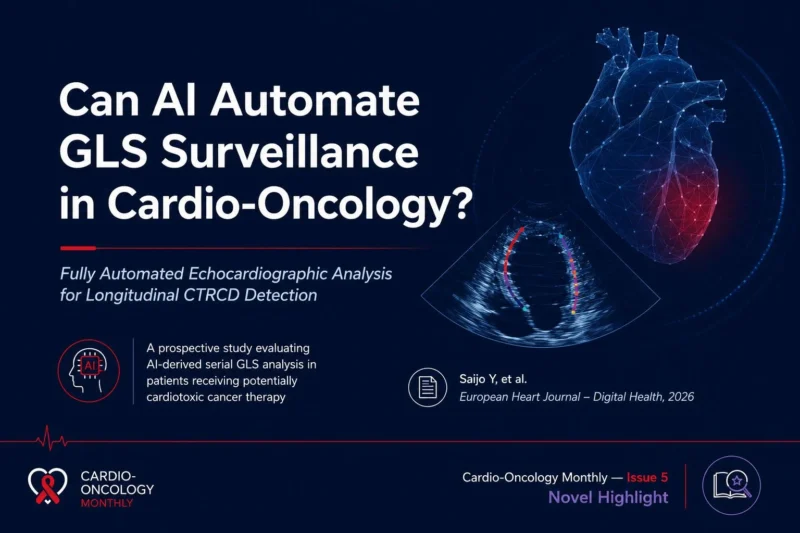
Can AI Support Automated Serial GLS Surveillance in Cardio-Oncology?
Global longitudinal strain is increasingly used to detect subclinical cardiac dysfunction during potentially cardiotoxic cancer therapy.
However, its routine implementation remains limited by technical complexity, inter-observer variability, and the additional time required for high-quality analysis.
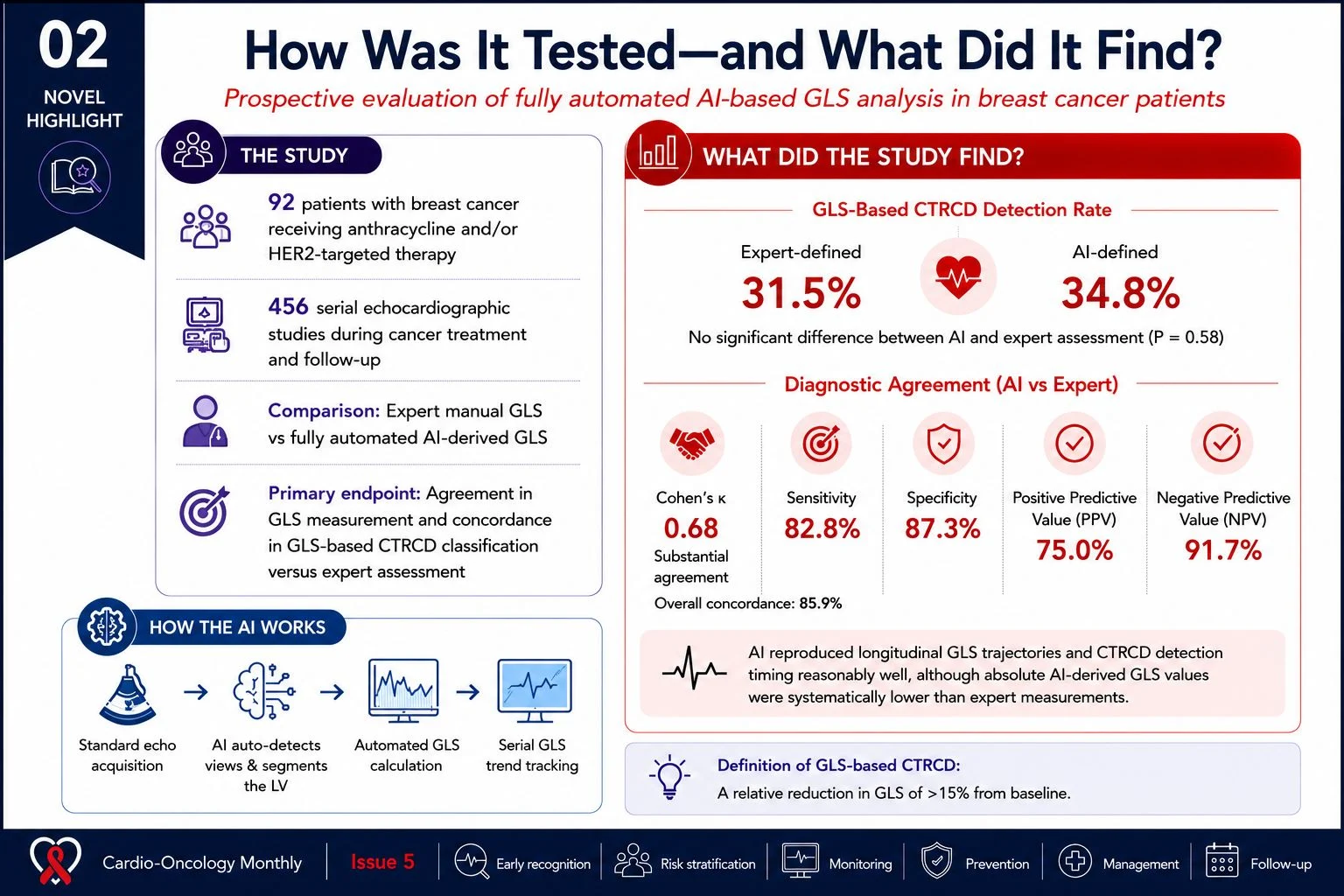
In this prospective observational study, Saijo and colleagues evaluated whether a fully automated AI-based echocardiographic system could track serial GLS changes and identify GLS-based cancer therapy–related cardiac dysfunction in patients with breast cancer receiving anthracyclines and/or HER2-targeted therapy.
The final analysis included 92 patients and 456 echocardiographic studies.
What did the study find?
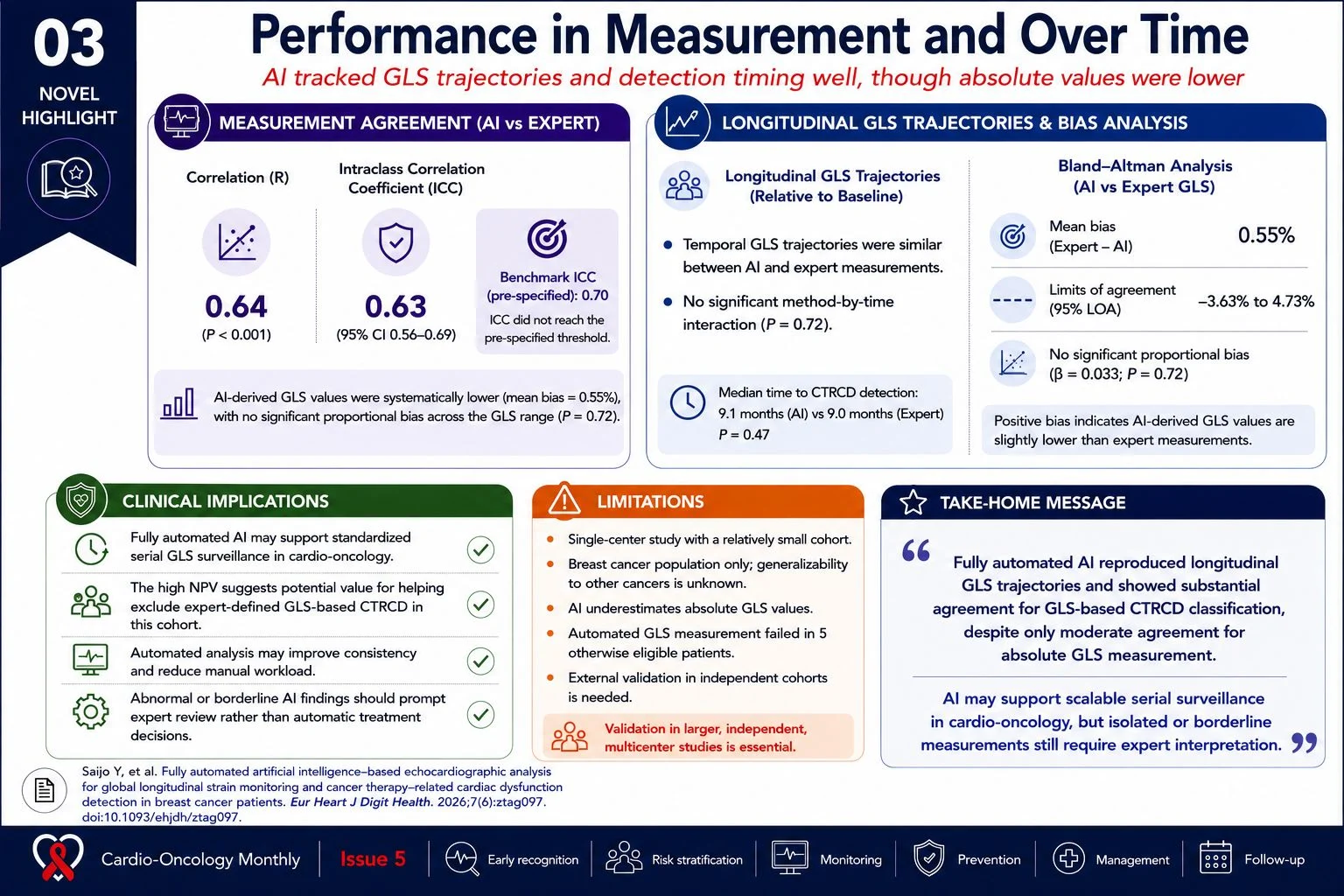
AI-derived GLS magnitudes were slightly but significantly lower than expert measurements, while agreement for individual absolute GLS values was only moderate.
Despite this, the automated system followed longitudinal GLS trajectories similarly to expert assessment and showed comparable rates and timing of GLS-based CTRCD detection:
- Expert assessment: 31.5%
- AI assessment: 34.8%
- Overall concordance: 85.9%
- Diagnostic agreement: κ = 0.68
- Negative predictive value: 91.7%, using expert assessment as the reference standard
These findings suggest that AI may track serial relative GLS changes more reliably than it reproduces individual absolute measurements.
Why does this matter?
Fully automated analysis may help improve workflow efficiency and expand access to serial GLS surveillance, particularly in institutions with high clinical workload or limited expert availability.
However, the findings do not support full interchangeability between AI and expert analysis.
The prespecified agreement benchmark was not reached, automated GLS measurement failed in five otherwise eligible patients, and systematic differences in absolute GLS values may contribute to classification discordance near the >15% relative-change threshold.
Take-home message:
AI may support scalable serial GLS surveillance, but it should not yet replace expert interpretation.
Its most immediate value may be as a workflow and longitudinal monitoring tool, while isolated, discordant, or borderline AI-derived measurements still require expert review and clinical interpretation.”
Title: Fully automated artificial intelligence–based echocardiographic analysis for global longitudinal strain monitoring and cancer therapy–related cardiac dysfunction detection in breast cancer patients
Authors: Yoshihito Saijo, Robert Zheng, Yuichiro Okushi, Yuka Nomura, Yukina Hirata, Hiroaki Inoue, Hirotsugu Yamada, Kenya Kusunose, Masataka Sata
Other articles about Cardio-Oncology, AI and Cardiotoxicity on OncoDaily.