Cardio-Oncology Bulletin shared on LinkedIn:
“Cardio-Oncology Bulletin of Iranian Cardio-Oncology Association – Issue #5
A monthly evidence update at the intersection of cardiology and oncology
Featured Study: Moreno-Arciniegas et al.
JACC: CardioOncology, 2026
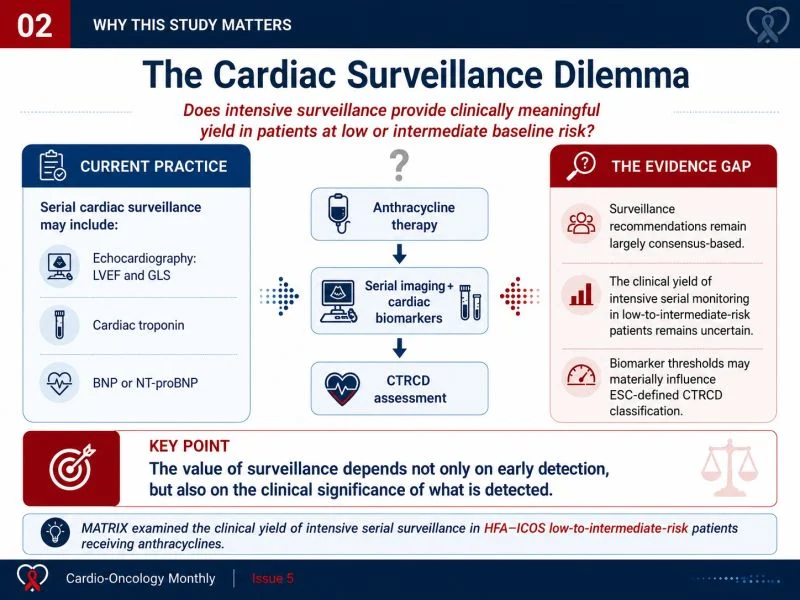
When intensive surveillance detects more abnormalities, does it necessarily deliver more clinically meaningful information?
Cardiovascular surveillance during anthracycline therapy is intended to identify cardiac injury before it progresses to clinically significant dysfunction. However, most surveillance recommendations are informed by expert consensus and are frequently extended to patients at low-to-intermediate baseline cardiovascular risk – precisely the group in whom the balance between early detection, clinical relevance, and resource use remains uncertain.
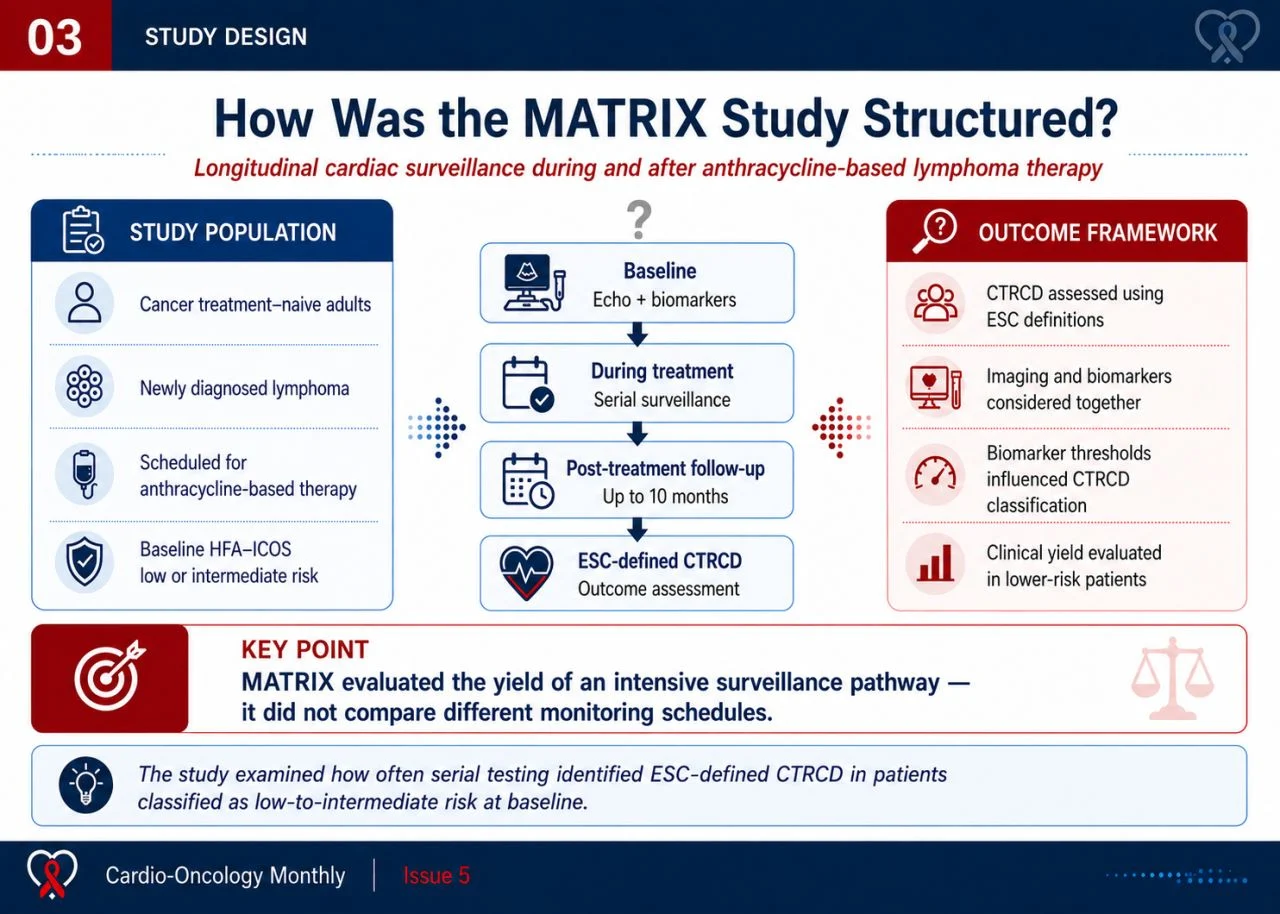
The prospective, single-center MATRIX study evaluated cancer treatment–naive adults with newly diagnosed lymphoma receiving anthracycline-based chemotherapy, using intensive serial multimodality surveillance over 10 months.
- What did the study find?
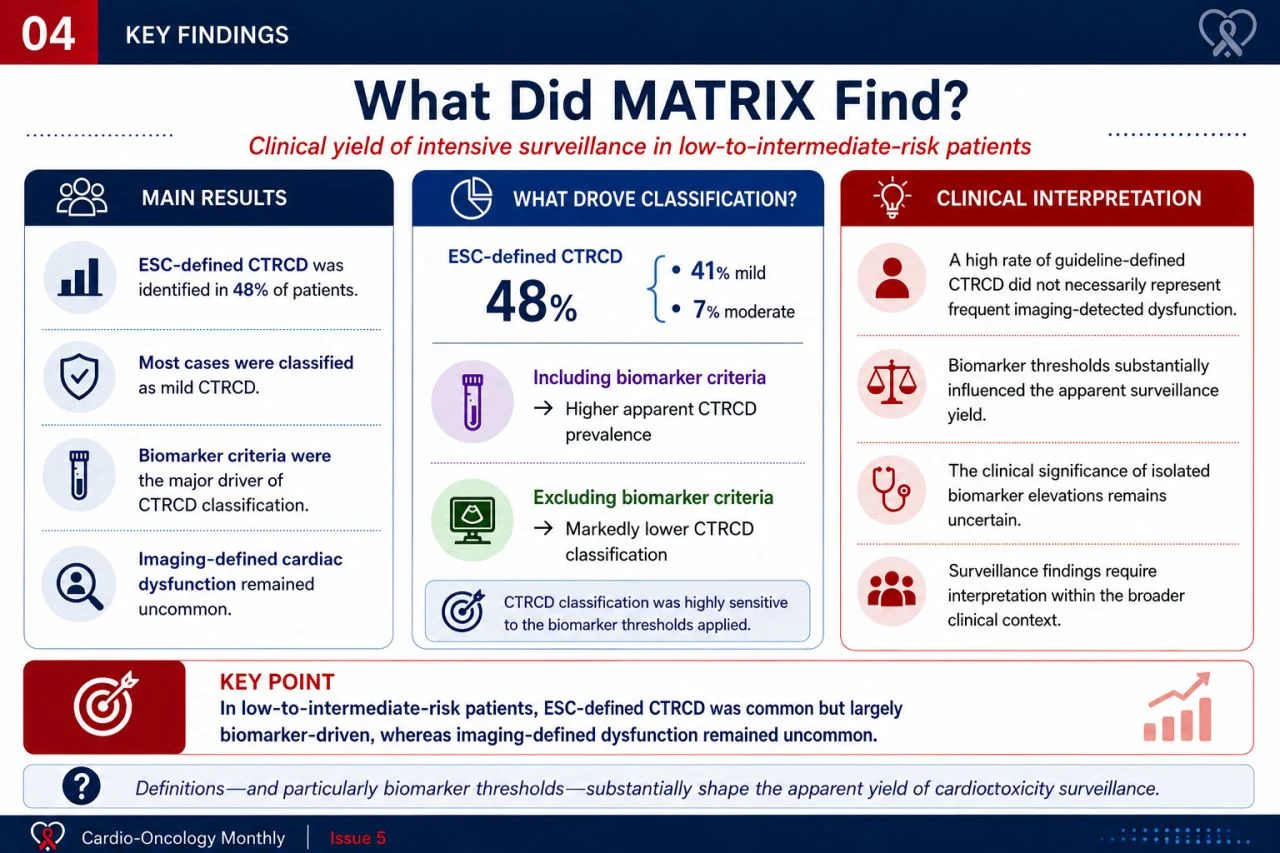
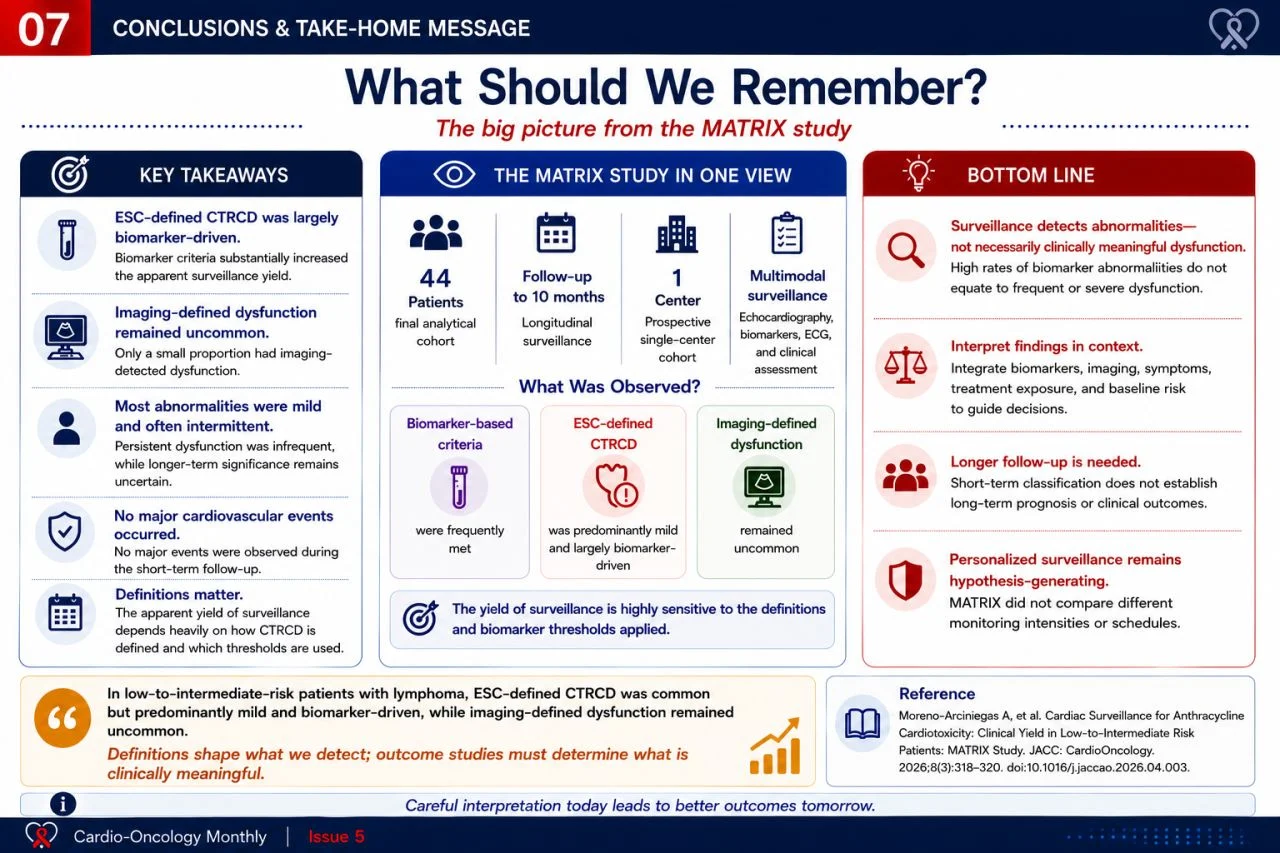
ESC-defined CTRCD was identified in 48% of patients: 41% mild and 7% moderate.
When biomarker criteria were excluded, the proportion classified as having CTRCD decreased to 30%: 25% mild and 5% moderate.
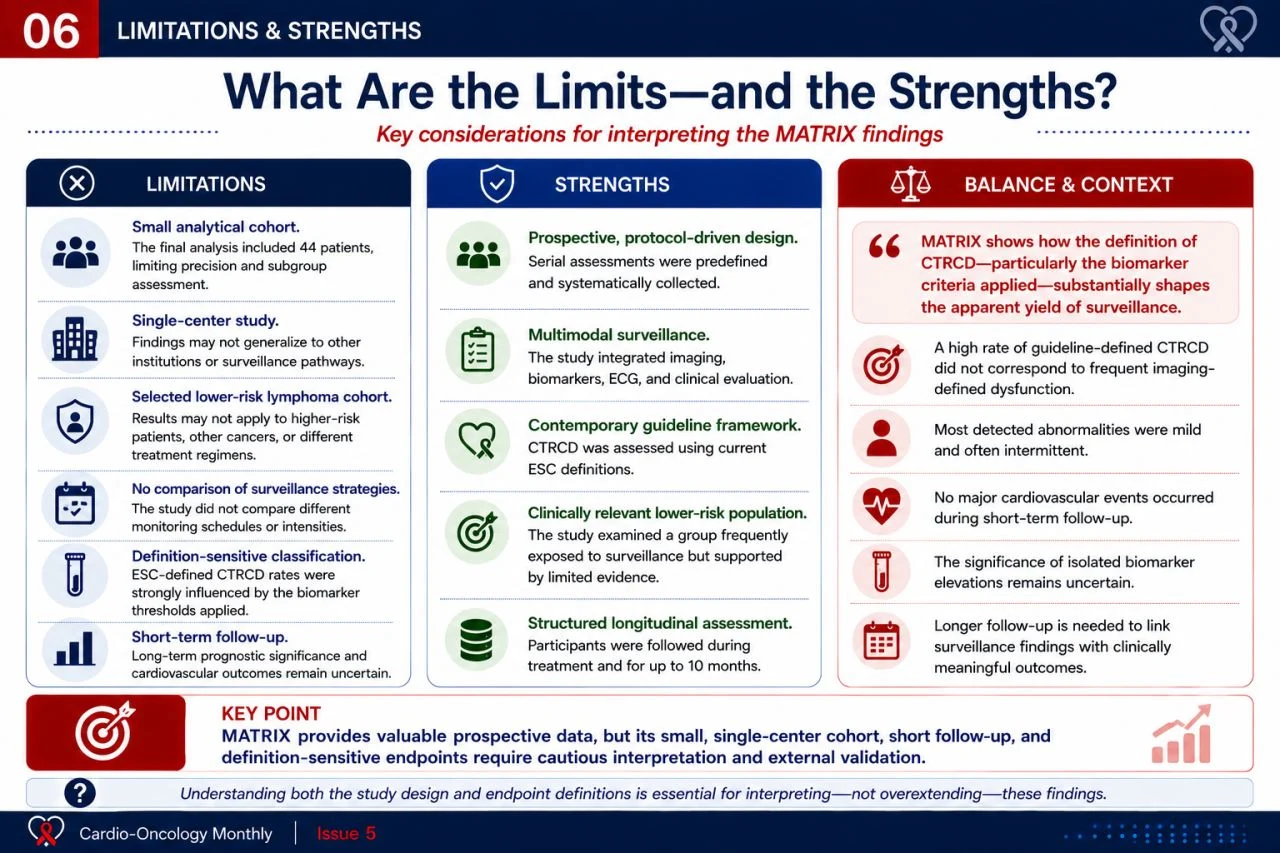
Most detected abnormalities were mild and frequently intermittent.
No major cardiovascular events were observed during the reported short-term follow-up. - Why does this matter?
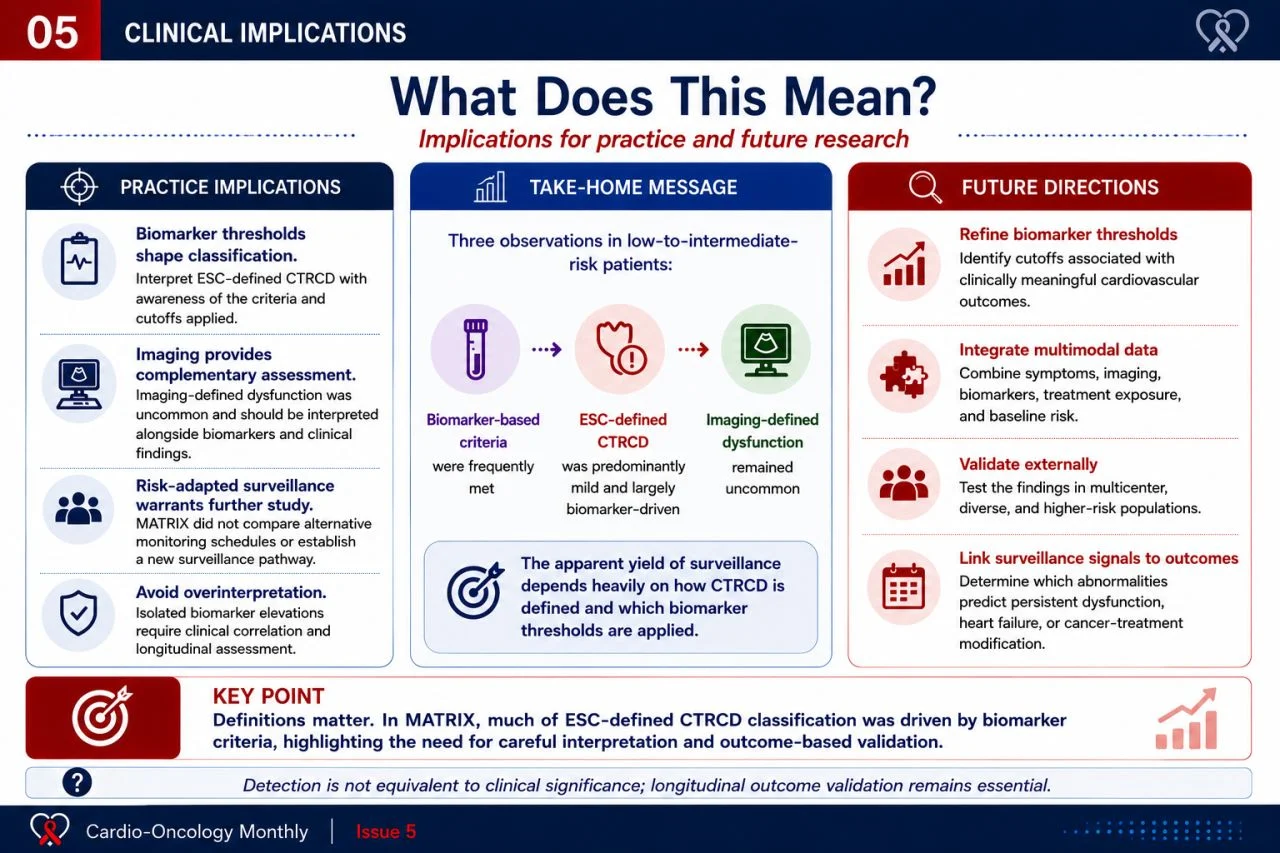
The study does not show that surveillance is unnecessary. Instead, it demonstrates how strongly CTRCD rates depend on the diagnostic components used – particularly cardiac biomarkers – and raises an important question: which subclinical abnormalities meaningfully change treatment, prognosis, or patient outcomes?
A high detection rate should therefore not automatically be interpreted as a high clinical yield. - Take-home message
In low-to-intermediate-risk patients receiving anthracyclines, intensive surveillance may identify frequent mild or transient abnormalities whose short-term clinical significance remains uncertain. Future studies should determine which findings warrant intervention and whether more individualized, risk-adapted surveillance can preserve safety while reducing unnecessary testing.
Other articles about Cardio-Oncology Bulletin on OncoDaily.