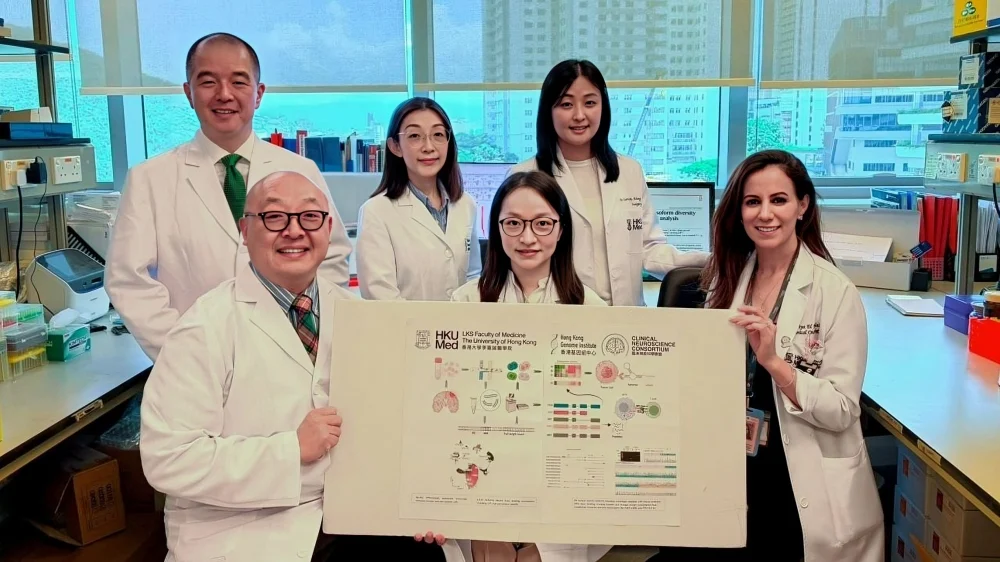
Aya El Helali, Principal Investigator at Center for Oncology and Immunology, Clinical Assistant Professor at The University of Hong Kong, Vice President of the Hong Kong Neuro-Oncology Society, shared HKUMed’s post on LinkedIn, adding:
“Our latest work is now published ‘Mapping glioblastoma’s isoform diversity using long-read single-cell analysis’
Glioblastoma remains the most lethal primary brain tumor in adults. Median overall survival sits at approximately 10.6 months despite maximal resection, temozolomide, and radiotherapy. A central challenge is the profound intratumoral heterogeneity, and critically, the widespread dysregulation of RNA splicing that drives treatment resistance, recurrence, and immune evasion.
Yet the tools we have relied on to characterize these tumors at single-cell level capture only fragments. Short-read approaches quantify gene expression but cannot resolve full-length transcript isoforms, the very molecules that dictate protein function, surface antigen presentation, and drug sensitivity.
In this study, we applied single-cell long-read RNA sequencing across >182,000 cells from 27 IDH-wildtype GBM patients to construct an isoform-resolution atlas of the disease.
What this revealed:
- Differential transcript usage across malignant cell states that is largely undetectable at the gene level
- 6,524 isoforms absent from current annotations, 179 of which are tumor-specific
- A systematic framework to identify patient-specific extracellular–intracellular target pairs, with direct relevance for dual-targeting ligand-mediated therapeutics such as aptamer-siRNA chimeras, an approach particularly suited to GBM given blood-brain barrier constraints
- Tumor-exclusive peptides with strong predicted MHC class I binding affinity, representing a potential neoantigen source for personalized vaccine strategies in a tumor type that responds poorly to checkpoint blockade
Each patient’s tumor harbored distinct target pairs, reinforcing what we see clinically: that GBM demands individualized therapeutic design.
This work was made possible through the Clinical Neuroscience Consortium, a collaboration between HKUMed – The University of Hong Kong, Queen Mary Hospital, and the Hong Kong Genome Institute. My sincere thanks to Wenshu Tang and Cario W. S. Lo, Professor Hon-Yin Brian Chung, Professor Gilberto Leung and the full team.
Much remains ahead, experimental validation of immunogenicity, functional characterization, and ultimately clinical translation. But we believe this resource provides a foundation for isoform-centric therapeutic development in GBM and beyond.”
Quoting HKUMed’s post:
“Researchers from the Clinical Neuroscience Consortium have achieved a major breakthrough in brain cancer research by developing the most comprehensive map to date of isoform diversity in glioblastoma, the most common and aggressive form of brain cancer in adults.
Every gene in the human body can produce slightly different versions of its genetic instructions, known as isoforms. These variations can profoundly influence cellular function and in cancer, may determine whether tumor cells are recognized by the immune system or evade detection. Until now, the technology used to study individual cancer cells could read only short fragments of genetic information, limiting researchers’ ability to study full-length isoforms in individual cells.
‘Using long-read sequencing and data from over 210,000 individual cells from 27 glioblastoma patients, the research team built the most comprehensive map of isoform diversity to date, encompassing both tumor cells and the surrounding immune and stromal cells that make up the tumor microenvironment. The study identified thousands of previously unannotated isoforms, including numerous novel isoforms found exclusively in tumor cells and absent from healthy tissues,’
said Professor Aya El Helali from the Department of Clinical Oncology, Centre of Cancer Medicine.
The CNC is a collaborative platform between HKUMed, Queen Mary Hospital and the Hong Kong Genome Institute.”
Title: Mapping glioblastoma’s isoform diversity using long-read single-cell analysis
Authors: Wenshu Tang, Cario W. S. Lo, Annie T. W. Chu, Wing Lun Lee, Dingyuan Wang, Karrie Mei-Yee Kiang, Lai-Fung Li, Gilberto K. K. Leung, Hong Kong Genome Project, Aya El Helali, Brian H. Y. Chung.
You can also read: ‘INTRAGO-II Finds No Survival Benefit From Intraoperative Radiotherapy in Newly Diagnosed Glioblastoma’