





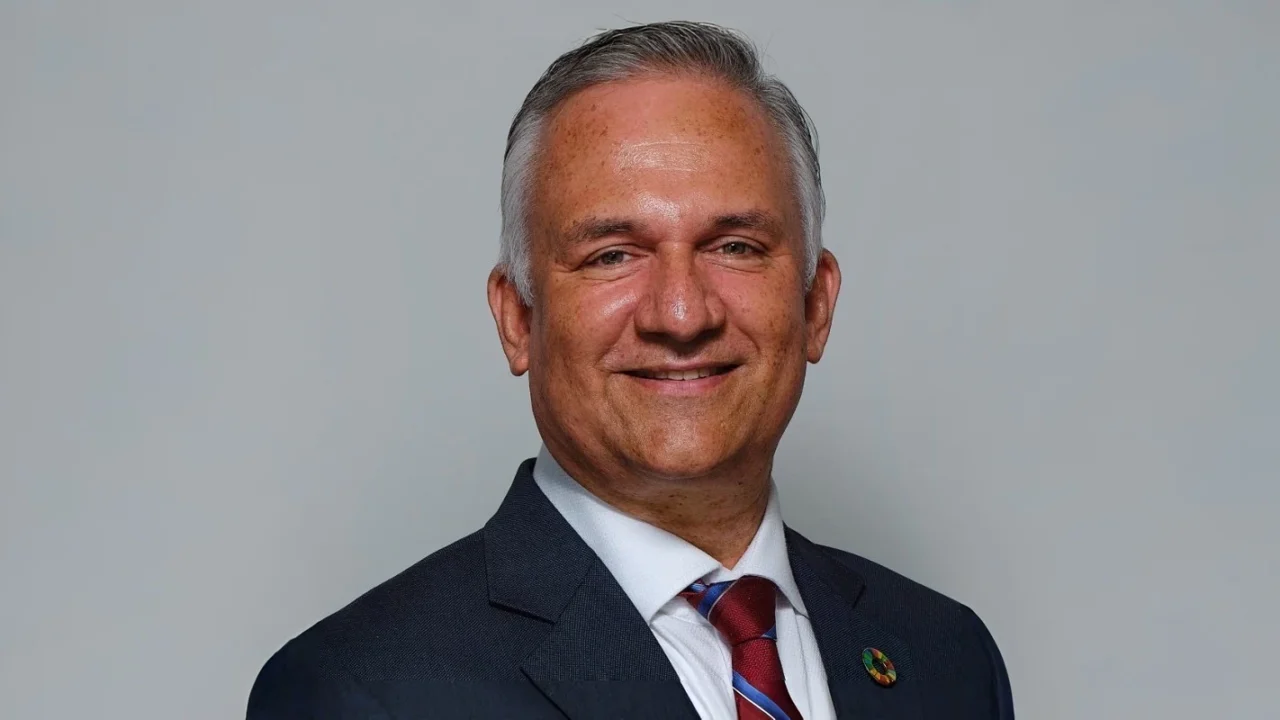
Alain Labrique, Director of the Department of Data, Digital Health, Analytics and Artificial Intelligence in the Health Systems and Data Division of the World Health Organization, Switzerland, shared on LinkedIn:
“Last week, WHO successfully launched the Global Health Estimates 2023, our most comprehensive picture yet of what people live and die with from 2000 to 2023.
What makes GHE distinctive is how it is built. It is not the product of a single team or a single model.
Technical programmes across WHO contribute their disease- and condition-specific expertise, and these inputs are reconciled within one harmonized, internally consistent framework, so that causes of death add up to all-cause mortality and results are comparable across countries, regions and over time.
Every round also goes through formal consultation with Member States, who review the input data, methods and results before publication, in addition indicator specific consultations.
The outcome is a set of official WHO estimates that countries and partners can rely on.
Producing the estimates is only half the job. The other half is making sure they are used.
Today we are previewing for WHO colleagues a powerful visualization tool built on the millions of data points in GHE. It goes beyond data access: it offers on-demand analytics, allowing programmes, regional and country offices to distil exactly the information they need, in the most efficient way possible.
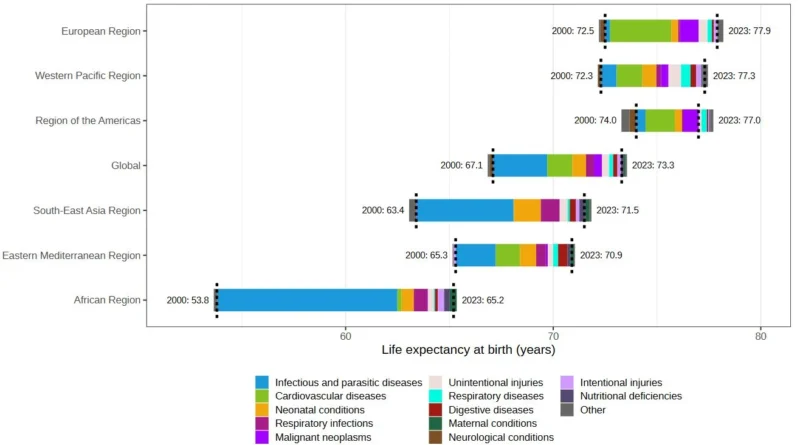
The chart below is one example of what it can generate in seconds: a decomposition of life expectancy gains between 2000 and 2023 by cause and WHO region.
The African Region gained 11.4 years, driven overwhelmingly by reductions in infectious and parasitic diseases, while in the European Region gains came largely from declining cardiovascular mortality.
Analyses like this once required a dedicated request. Soon they will be a few clicks away.
My thanks to the colleague in our Data, Standards and Analytics unit, our colleagues across WHO technical programmes and regional offices, and the Member States whose engagement makes this work possible.
Other articles about WHO on OncoDaily.