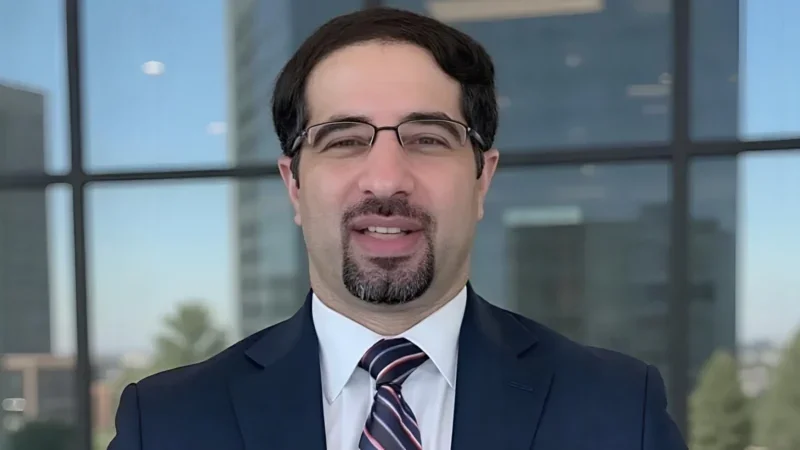
Al-Ola Abdallah, Associate Professor and Plasma Cell Disorder Program Director of the Division of HMCT at the University of Kansas Medical Center, shared on X:
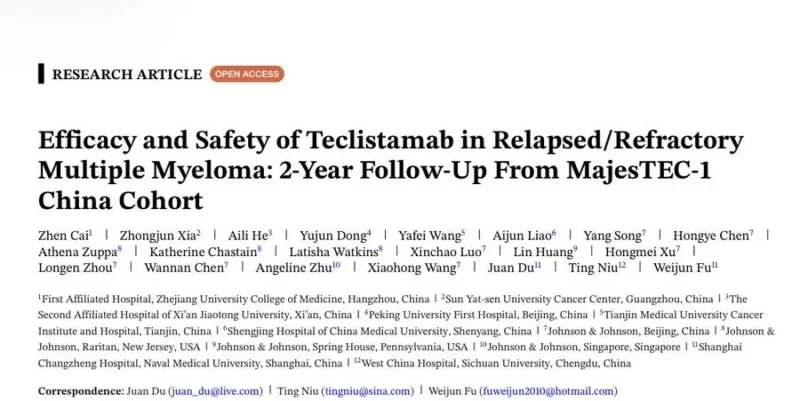
“1/8. The updated 2-year follow-up of the MajesTEC-1 China cohort adds important long-term data on Teclistamab in heavily pretreated relapsed/refractory Multiple Myeloma.
Key takeaway:
- Responses remain deep
- Many responses remain durable
- No new major safety signals
Title: Efficacy and Safety of Teclistamab in Relapsed/Refractory Multiple Myeloma: 2‐Year Follow‐Up From MajesTEC‐1 China Cohort
Authors: Zhen Cai, Zhongjun Xia, Aili He, Yujun Dong, Yafei Wang, Aijun Liao, Yang Song, Hongye Chen, Athena Zuppa, Katherine Chastain, Latisha Watkins, Xinchao Luo, Lin Huang, Hongmei Xu, Longen Zhou, Wannan Chen, Angeline Zhu, Xiaohong Wang, Juan Du, Ting Niu, Weijun Fu
Read The Full Article
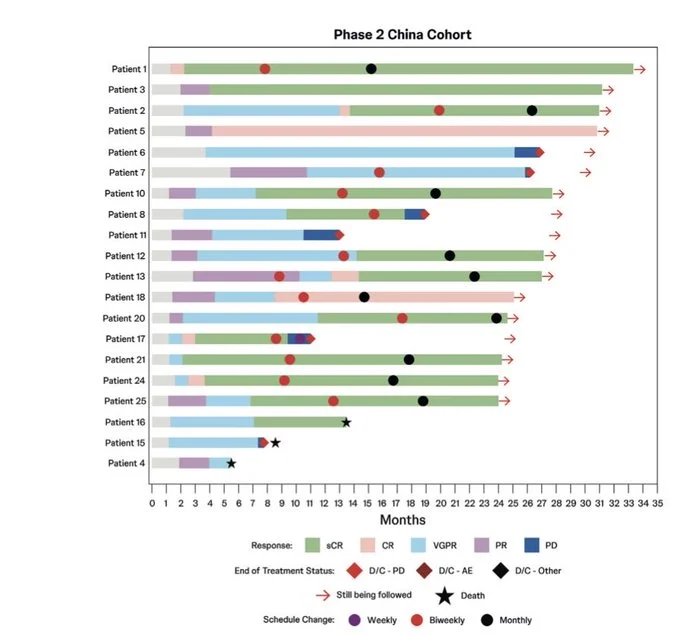
2/8. Efficacy remains impressive:
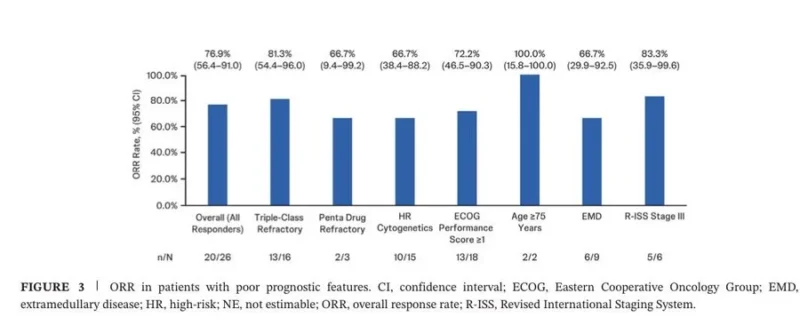
- ORR: 76.9%
- 100% of responders achieved ≥VGPR
- 75% achieved ≥CR
- Median PFS: 25.1 months
- Median OS: Not reached
These are remarkable outcomes in triple-class exposed disease.
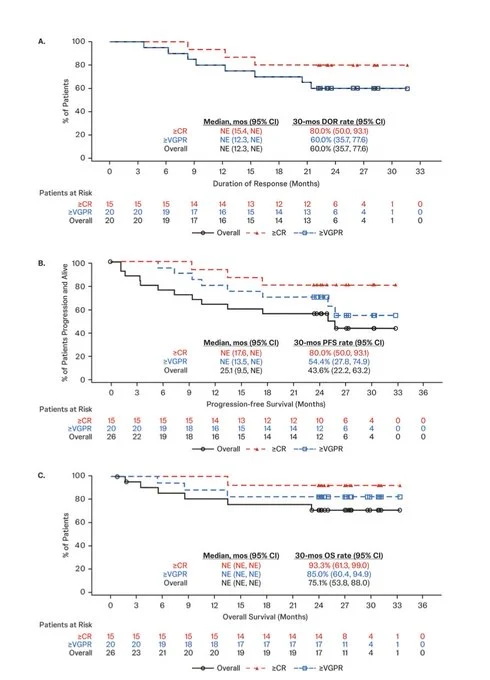
3/8. One encouraging observation is the durability of response.
Among patients achieving ≥CR:
- Estimated 30-month DOR: 80%
- PFS: 80%
- OS: 93%
This reinforces an important concept:
Depth of response still matters with BCMA bispecific antibodies.
4/8. Another positive finding
Patients reported improvements in:
- Physical function
- Global health
- Fatigue
- Pain
Long-term quality of life is becoming just as important as response rates for our myeloma patients.
5/8. The infection story is interesting.
The incidence of new Grade ≥3 infections appeared to decrease over time, coinciding with:
- Less frequent dosing (Q2W)
- Increased IVIG use
- Better maintenance of IgG >400 mg/dL
This supports aggressive supportive care in BCMA-treated patients.
6/8. However, several limitations deserve discussion.
- Only 26 patients
- Single-arm study
- No comparator arm
- Small numbers make subgroup analyses exploratory
- Excellent outcomes may not fully generalize to broader real-world populations.
7/8. Another important critique:
- Despite durable efficacy, toxicity remains substantial.
- Grade 3/4 infections: 76.9%
- Nearly all patients developed infections
- Hypogammaglobulinemia occurred in >90%
This highlights that supportive care-including IVIG and infection prophylaxis-is not optional; it’s integral to BCMA bispecific therapy.
8/8. Overall, this paper strengthens the evidence that Teclistamab provides durable disease control with meaningful quality-of-life improvements after >2 years of follow-up.
The next frontier isn’t simply improving response rates-it’s reducing infections, optimizing dosing intervals, and identifying which patients truly benefit from long-term continuous therapy.”