Achyut Saroj, Medical Affairs and Scientific Strategy Leader at Helio Genomics, shared on LinkedIn:
“The Power of Methylation Score in Predicting Liver Cancer Progression
For clinicians managing hepatocellular carcinoma (HCC), risk stratification and predicting disease progression remain complex due to underlying liver disease, comorbidities, and tumor heterogeneity.
Because tissue biopsy is often contraindicated in early- to intermediate-stage disease (BCLC A-B), non-invasive liquid biopsy modalities are critical for guiding post-treatment management.
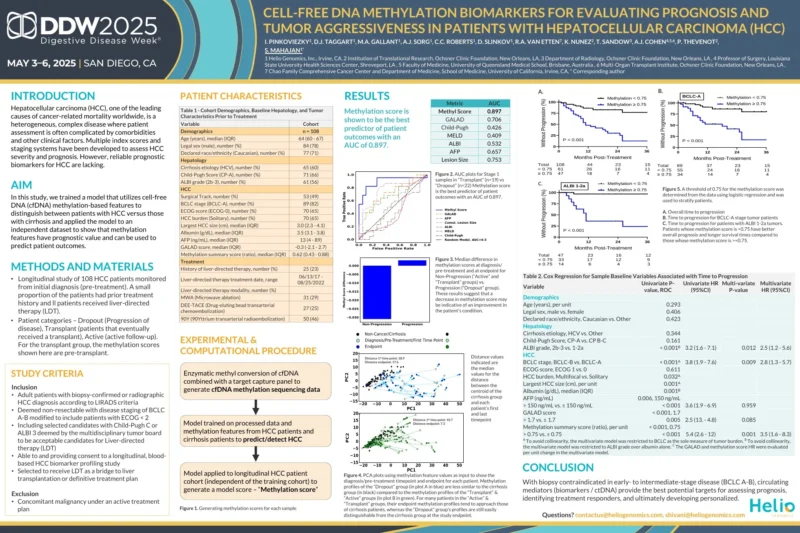
A longitudinal study evaluated a novel cell-free DNA (cfDNA) methylation summary score in 108 patients with HCC monitored from baseline, before receiving liver-directed therapy (LDT) such as MWA, TACE, or Y-90.
- The cfDNA methylation score predicted patient outcomes with an AUC of 0.897, significantly outperforming standard clinical metrics and scoring systems, including GALAD (0.706), lesion size (0.753), AFP (0.657), ALBI (0.532), Child-Pugh (0.426), and MELD (0.409).
- Using a logistic regression-derived cutoff of 0.75, the score stratified patients into distinct prognostic groups. Patients with a methylation score below 0.75 demonstrated significantly longer time to progression across the overall population, BCLC-A stage, and ALBI 1–2a patient subsets (P < 0.001).
- A decrease in methylation score from baseline to endpoint correlated with non-progression, offering a potential tool for evaluating therapeutic response after LDT.
- By combining enzymatic methylation detection with targeted capture sequencing, this liquid biopsy approach provides clinicians with a non-invasive biomarker that may help refine prognosis, identify treatment responders, and personalize post-LDT management.”