Cancer care is advancing, but for millions of people worldwide, access to effective treatment remains beyond reach. The widening gap between scientific progress and the affordability of better-value cancer care demands a coordinated global response, one grounded in evidence, shared responsibility, and practical action.
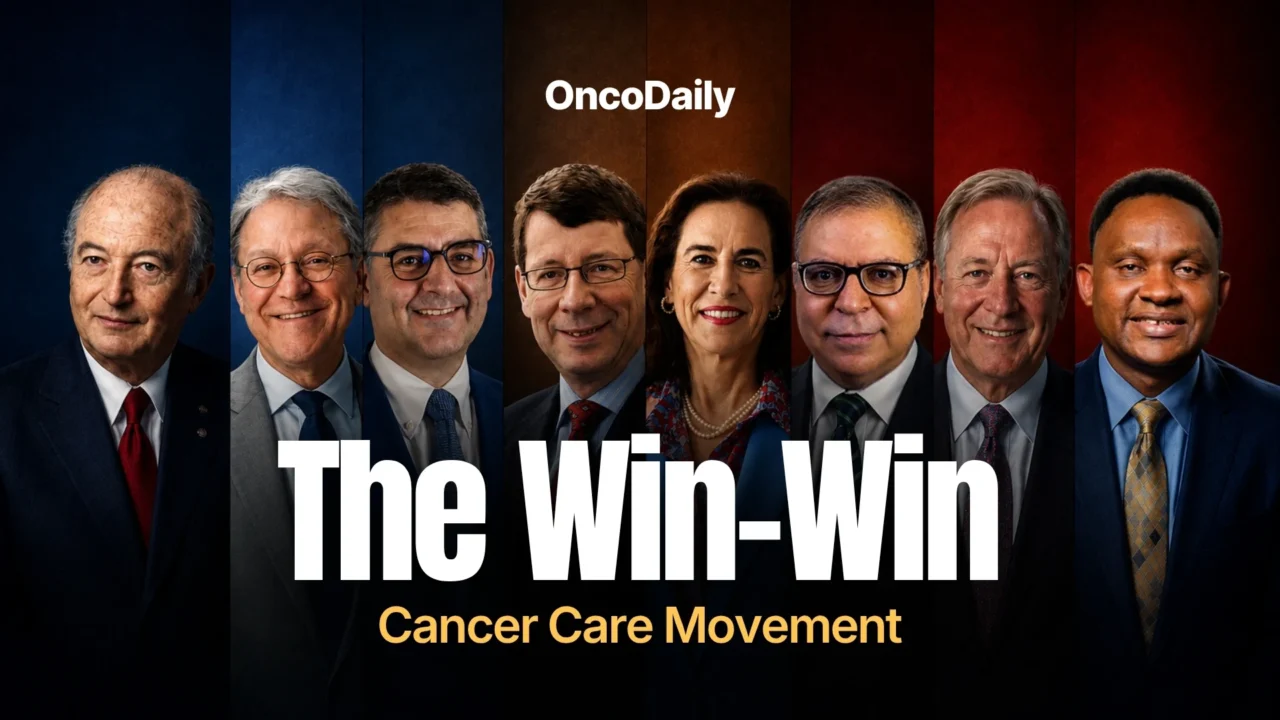
The Win-Win: Game-Changing Global Cancer Care movement is calling on cancer professionals, scientists, societies, organizations, research institutes, health industries, and all stakeholders concerned with cancer care affordability to help lead this effort.
The message is clear: game-changing global oncology has become a necessity, not an option.
A Crisis That Cannot Wait Another Decade
Without decisive action, the next five to ten years may bring the same discussions about access and affordability—only with an even wider gap than the one the cancer community faces today.
Despite the work of organizations, societies, institutions, conferences, publications, declarations, and educational initiatives, the affordability crisis persists. Treatment costs continue to rise without a corresponding improvement in outcomes, threatening the sustainability of healthcare systems worldwide.
More than 70% of patients with cancer in low- and middle-income countries still lack access to cancer care. At the same time, financial toxicity is not limited to resource-constrained settings. According to an ASCO survey cited by the initiative, treatment costs and the fear of family bankruptcy represent the leading concern for approximately 40% of patients with cancer in the United States.
This raises a fundamental question: What is the value of new and existing cancer treatments if millions of patients cannot afford to receive them?
Future generations may rightly ask why the oncology community continued along the same path despite knowing that the existing model was unsustainable.
From Fragmented Efforts to Collective Leadership
The central proposal is to establish cooperation and coordination among groups, institutions, organizations, societies, and individuals working to increase the affordability of better-value cancer care through science.
This would require clearly defined responsibilities, continuous communication, substantial scientific work, and shared leadership.
The proposed coordination would not interfere with the independence, internal systems, policies, or financial affairs of any participating organization. It is not intended to replace existing institutions or create another competing organization.
It is a movement: an open forum owned by all who are willing to contribute.
The aim is to align existing efforts around one shared objective achieving a real and measurable improvement in the affordability of better-value cancer care in everyday clinical practice.
Seven Actions to Change the Course of Global Cancer Care
The initiative identifies seven initial and expandable areas in which coordinated scientific action could produce meaningful real-world change.
1. Bring Overlooked Cost-Saving Evidence Into Practice
Numerous published scientific approaches could reduce cancer care costs—some by 70% to 80% or more—without compromising patient outcomes. However, many of these approaches are rarely highlighted or implemented.
The first proposed action is to amplify this evidence and support its translation into practice.
The initiative also calls for an international, freely accessible online repository containing existing scientific work that could improve cancer care affordability. It would be updated regularly as new evidence becomes available and would connect users with relevant organizations, resources, and implementation tools.
The purpose would not simply be to collect publications, but to ensure that valuable scientific solutions are no longer overlooked.
Relevant material is available here.
2. Make Affordability a Major Research Priority
There remains considerable room for new ideas, studies, and innovations focused specifically on improving the affordability of better-value cancer care with dignity.
Initiatives such as Common Sense Oncology, Choosing Wisely, and the deeper scientific interpretation of clinical trials—particularly Phase III trials—are important and necessary. However, no single initiative can independently close the global affordability gap.
The solution requires broad collaboration across multiple areas of research and implementation. Focusing on only one component risks examining a few individual trees while overlooking the entire forest.
Affordability must therefore become a defined scientific priority, supported by research programs that examine clinical value, treatment duration, resource use, drug pricing, radiotherapy capacity, toxicity, implementation, education, and health-system sustainability.
3. Make Critical Safety Information More Accessible
Reports cited by the initiative indicate that 58% of potentially fatal adverse events are not included in initial FDA drug labels, while 38% are not reported in randomized trials, including trials published in high-impact journals.
Incomplete access to safety information may contribute not only to preventable mortality and morbidity, but also to greater financial burden through treatment complications and hospitalizations.
The third action is therefore to make critical information about potentially serious adverse events more accessible to cancer care professionals and scientists.
Better access to complete safety evidence is essential for informed treatment decisions, effective toxicity prevention, and the responsible use of healthcare resources.
4. Confront the Waste of Billions of Dollars
Tens of billions of dollars continue to be wasted in cancer care despite the availability of published approaches that could reduce this waste.
Identifying these losses, presenting the evidence at scientific meetings, and discussing practical solutions in conferences, articles, professional education, and other oncology platforms represent necessary first steps.
The goal is not merely to expose deficiencies. It is to use the recovered resources to repair healthcare systems, expand the quantity and quality of cancer services, and improve remuneration for cancer care professionals.
This approach would reduce the need to rely continuously on charity or global funding while helping cancer systems become more sustainable.
5. Correct the Misallocation of Resources
Alongside waste, the initiative highlights the misallocation of enormous healthcare resources.
Resources must be directed toward interventions that deliver meaningful clinical benefit and improve the number of patients who can receive appropriate cancer care. Correcting resource allocation could strengthen treatment capacity, support independent research, and help healthcare systems provide better-value services without compromising quality.
Further discussion on repairing systems to provide resources for better cancer treatment and less commercially biased research is available through ecancer.
Additional supporting material is available in the presentation Why Is There a Need for Game-Changing Global Oncology?, particularly slides 9–27, and in Be One of the Leaders of Game Changing in the World.
6. Turn Evidence Into Persistent Global Advocacy
Scientific evidence cannot change clinical practice if it remains confined to publications or isolated discussions.
The sixth action calls for persistent and effective advocacy, dissemination, and implementation of scientific approaches capable of increasing the affordability of better-value cancer care across different regions.
Affordability should become a principal subject within cancer societies, organizations, research institutes, clinical studies, conferences, and professional oncology education.
The focus must move beyond announcements, discussions, and projects that produce only a limited number of services. The objective is wide, sustainable, and measurable implementation in the real world.
7. Place Affordability at the Heart of Professional Cancer Education
Professional cancer education is one of the most important instruments for long-term change.
Education on increasing the affordability of better-value cancer care through science should be incorporated at different levels into oncology programs, courses, certificates, and academic degrees worldwide.
The Win-Win International Scientific Initiative and its free professional cancer education program, Global Oncology–Implementing Science (GOIS/GO-U), represent a small-scale example of this approach.
The program focuses exclusively on improving the affordability of better-value cancer care through science. Its intended benefits extend to patients, communities, healthcare professionals, researchers, economies, and the health industry.
The first series of the ASCO–GOIS webinars and the certificate program, Game Changers in Global Oncology, can be accessed through the GOIS webinar platform and ecancer.
A Movement, Not Another Organization
The initiative emphasizes that the problem does not lie with the many excellent professionals and organizations already working in oncology. The problem lies in the structure of the game itself.
The proposed movement is therefore not intended to criticize any party, claim ownership, seek recognition, or compete for leadership. It calls instead for coordination, shared responsibility, and collective ownership.
All stakeholders should have the opportunity to contribute, benefit, propose modifications, develop research, and participate in implementation. No stakeholder or individual voice should be underestimated.
As several of the initiative’s co-leaders—David Kerr, Eduardo Cazap, Wil Ngwa, Karol Sikora, Luca Incrocci, Cristina Stefan, and Ahmed Elzawawy stated:
“It is a needed forum, open to all who are willing.”
Giuseppe Curigliano further emphasized:
“We can move from principles to wide, real-world impact through collective leadership, shared responsibility, and science-driven, win-win solutions.”
A Modern “New Deal” for Cancer Care
Ahmed Elzawawy describes the proposed movement as a modern, modified “New Deal” for science and cancer care.
The original New Deal, introduced under Franklin D. Roosevelt during the Great Depression, was primarily economic and political. It expanded the role of the United States federal government and included restrictions affecting business freedom and stakeholder autonomy.
The proposed cancer care movement is different. It is global, medical, and based on scientific evidence. It is intended for both affluent and less-affluent countries and seeks to protect the independence, internal policies, and autonomy of participating organizations and stakeholders.
Its purpose is to create a win-win framework in which cancer health systems become more sustainable while all collaborators retain their freedom and independence.
From Scientific Progress to Real-World Access
Achieving a meaningful increase in affordable, better-value cancer care is an ambitious goal. It should become a central raison d’être for cancer organizations, societies, universities, research departments, institutes, and treatment centers.
Scientific progress alone is not enough. Its true value is determined by whether patients can receive the resulting care with dignity.
Doctors, scientists, and healthcare experts must help drive the ideas, studies, and plans required for change. Waiting exclusively for policymakers or administrators risks delaying action indefinitely.
The movement calls on members of the global cancer community to read, advise, disseminate, advocate, refine, and co-lead. Professionals are also invited to present talks and publish articles inspired by the movement’s work and materials under their own names.
This initiative claims neither ownership nor praise. It belongs to everyone and its success will depend on whether it is adopted, expanded, and strengthened by many.
For millions of patients and families, the message is urgent:
“Don’t let us down. Enough is enough.”
Supporting Materials and Opportunities to Participate
Two short supporting videos are available from distinguished co-founders and co-chairs of Win-Win: Changing the Game of Global Cancer Care:
- Prof. David Kerr, University of Oxford, UK
- Prof. Eduardo Cazap, former President of UICC and President of SLACOM
Further resources include:
- Why Is There a Need for Game-Changing Global Oncology—and How Can It Be Achieved?, particularly slides 9–27
- Be a Game Changer: Lead the Flag of Global Cancer Care
- Repairing Systems to Provide Resources for Better Cancer Treatment and Non-Commercially Biased Research
- Can We Double—or More—the Number of Patients Treated Using Existing Radiotherapy Facilities Worldwide?
- Why Further Research in Radiotherapy and Allied Sciences Is Needed
- Approaching Global Oncology: The Win-Win Model, with the first chapter, front matter, and book summary available free online
Registration for GOIS/GO-U is free and available through the program’s registration platform. Additional information is available at GOIS and ICEDOC.
For feedback and further discussion: feeback@icedoc.website and worldcooperation@gmail.com.
The call is presented by Professors Ahmed Elzawawy, David Kerr, Eduardo Cazap, Wil Ngwa, Karol Sikora, Luca Incrocci, Cristina Stefan, and Giuseppe Curigliano, on behalf of the co-leaders and faculty of the Win-Win Initiative and GOIS/GO-U.
Prof. Ahmed Elzawawy, MD, PhD, serves as Chair of the Win-Win Initiative and Co-founder and Chair of the Board of Directors of the Global Oncology–Implementing Science program, GOIS/GO-U. He is the Founder and President of ICEDOC and ICEDOC’s Experts in Cancer Without Borders; Past President of the African Organization for Research and Training in Cancer; Co-founder and Co-president of SEMCO; Professor of Clinical Oncology at Suez Canal University in Ismailia; and Medical Founder of Alsoliman Radiation and Clinical Oncology Center in Port Said, Egypt.
Stay informed with more articles like this on OncoDaily