





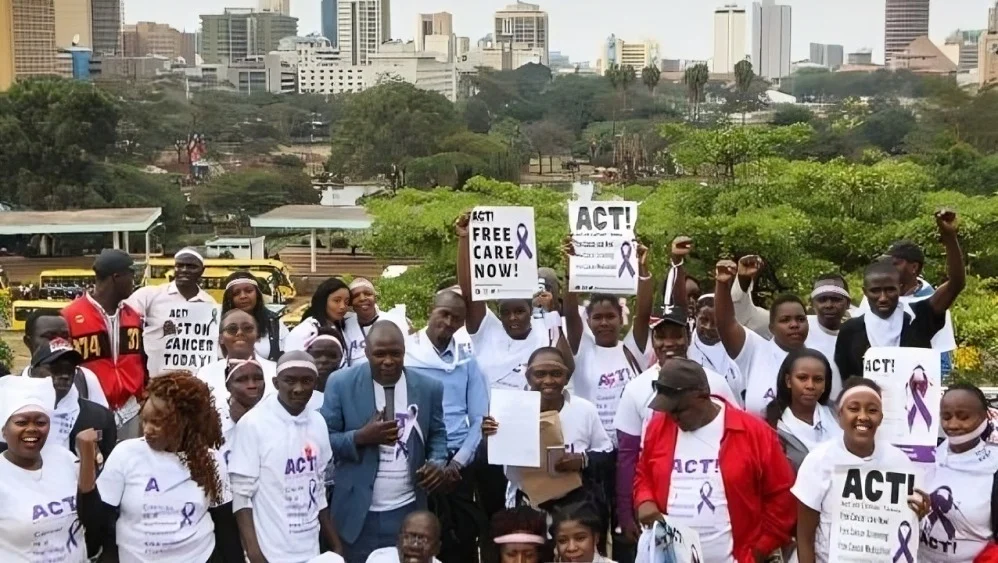
Omondi Ochuka, Financial Analyst at Richards Audits Associate, Nairobi Kenya, shared a post on Substack:
” ‘The wound is the place where the Light enters you.’ - Rumi
‘The worst thing about cancer is not the disease. It is the life the disease leaves behind.’ - overheard, Kenyatta National Hospital oncology ward, Ward 1E, 2022
Preface (Two Diagnoses, One Education)
I am not writing this from the clean altitude of scholarship. I am writing this from inside the wreckage.
In 2019, I was diagnosed with liver cancer. I entered the system as a statistic and emerged after surgery, years of uncertainty and long path between crisis and something resembling normalcy, as what the medical world calls a survivor. The word never sat right with me. It has too much triumph for what the experience actually is. Survival is a condition, evolving, repetitive, demanding, mundane, unromantic, full of paperwork and phantom aches and the loneliness of people who no longer know which waiting room belongs to them.
Then, in 2024, after twenty-three months of remission, I was diagnosed with leukemia.
You learn things the second time around that you could not have learned the first. The system has a memory problem. Each encounter resets. The hospital does not remember what my body has already been through and insurance does not account for what it cost me the first time. The social world of my colleagues, extended family and people who brought food and prayers in 2019 have largely moved on. They believe the story is over because they saw the ending. They do not know there are sequels, and the sequels are harder.
What follows is not memoir, though memoir lives in it and neither is it a policy paper, though policy runs through it like a nerve. It is, most honestly, a reckoning with what Kenya gets right about cancer, catastrophically ignores, and what the gap between those two things costs the people brave and unlucky enough to survive.
Socializing the Survivor
The bell hangs in most oncology wards as a gesture of completing treatment. When a patient completes their final chemotherapy cycle, they ring it. Nurses clap. Whoever is nearby stops what they are doing. For thirty seconds, the ward is a site of shared joy. It is, genuinely, a beautiful tradition.
It is also a lie.
Although, the relief is real and the gratitude is earned, the lie is in what the bell implies; that the story has reached its conclusion and the hard part is behind you and what follows is return, restoration and the resumption of the life that was briefly interrupted.
Ask any survivor what follows the bell and the answers are remarkably consistent across countries, cancer type, income bracket and gender. What follows is a grief. Support, which had been generous and sustained through treatment withdraws. Friends who visited during chemotherapy now send occasional WhatsApp messages. The medical system, which had been intensely attentive, steps back to scheduled follow-up appointments that feel institutional rather than caring. An employer who granted sick leave wants to know when you are coming back, preferably now. The insurance company, which funded your treatment with considerable administrative resistance, does not ask how you are doing. Nobody does, really; not in the way that matters.
The survivor is left alone with a body that is not what it was, a mind that has changed around the experience of near-death, and a social world that has already decided the story ended when the bell rang.
In The Wounded Storyteller (1995), sociologist Arthur Frank introduces a crucial framework for understanding how individuals navigate illness. He notes that ‘serious illness is a loss of the ‘destination and map’ that had previously guided the ill person’s life’. In the context of a Kenyan cancer survivor, this disruption is deeply tied to both physical vulnerability and systemic challenges. Initially, many patients attempt to ground themselves in Frank’s restitution narrative, which positions the patient as a passive recipient of a clinical cure, operating under the assumption that ‘yesterday I was healthy, today I am sick, but tomorrow I will be healthy again’.
However, for a Kenyan survivor, this linear path is routinely destabilised by systemic roadblocks. Cancer survivorship in Kenya involves selling land or cattle to pay for treatment, navigating matatu routes to chemo, holding onto hope in referral lines and mothers skipping meals to afford a scan. These severe socio-economic hurdles pull the patient away from the orderly expectation of a quick cure, complicating their journey back to a pre-illness reality.
When the promise of seamless medical restitution fractures, the patient often falls into the chaos narrative, a state where illness seems to stretch on forever, with no respite or redeeming insights. Frank explains that ‘chaos feeds on the sense that no one is in control’, which manifests acutely in Kenya through structural barriers like delayed diagnosis and prohibitive out-of-pocket costs. This phase is severely worsened by prevailing cultural stigmas where the fear of death, fuelled by the narrative that ‘cancer is a death sentence’ is an impediment to treatment. Healing requires transitioning from this overwhelming anxiety into the quest narrative. In this final stage, survivors meet their suffering head-on, accepting the illness to find a deeper purpose. This transformation is vividly illustrated by advocates who emerge from a place of despair and isolation to become a beacon of hope. For example, me using my lived experience to drive early screening awareness, my cancer experience embodies Frank’s belief that ‘the pedagogy of suffering means that one who suffers has something to teach… and thus has something to give’.
Kenya, at the level of public discourse, media, and policy, overwhelmingly privileges the restitution narrative in which illness disrupts, treatment intervenes and the patient returns to who they were. It is a comforting story. It is also, for a significant proportion of survivors, not true.
Invisible Community
Kenya’s National Cancer Control Strategy (2023–2027), the most recent policy framework for oncology, sets as its central ambition the reduction of premature cancer mortality by one-third by 2028. This is a meaningful target. The strategy points to improved screening, equitable access and strengthened treatment infrastructure. It speaks of patient-centred care. What it does not speak of, with any sustained or structural attention, is the estimated 82,620 people who were living with a cancer diagnosis in Kenya in 2020 (the five-year prevalence figure) or the tens of thousands who survive beyond five years and whose needs the system largely ceases to categorise, fund, or even count. This is the invisible community and not the dead or the currently-in-treatment. The ones who rang the bell and found themselves on the other side of it with no map.
A community is only real when it is counted. When you are not counted, you are not real to the people who distribute resources. Kenya’s cancer statistics are built around incidence of approximately 44,726 new diagnoses per year, per KEMRI’s 2022 GLOBOCAN estimates and mortality at approximately 27,092 deaths annually. What sits between these numbers, the accumulated population of people who are neither newly diagnosed nor dead, exists in a data vacuum. The National Cancer Registry does not routinely track survivorship outcomes through employment status, psychological health, marital stability, household economic trajectory, quality of life at one year, three years or five years post-treatment.
We know how many people enter the system. We do not know how they leave it.
I had a conversation in 2022, my eleventh year as someone the system calls a liver cancer survivor, outside the oncology block at Kenyatta National Hospital. The man next to me on the bench was perhaps fifty, maybe younger. He wore a sinister stillness. We sat without speaking for several minutes.
‘Second time,’ he said eventually, not looking at me.
‘Second time for what?’ I asked.
‘Second time here. I finished treatment two years ago. Oesophageal. They said I was clear.’
‘And now?’
‘Not the cancer. My wife left. Last year. She said she couldn’t do it again… the worrying. And I understood her.’ He paused. ‘But nobody told me this was also part of it. Nobody warned me that surviving could cost you this much.’
He had no language for what had happened to him because the medical system had given him no language. He had a diagnosis code, a treatment record and an NHIF claim history. He did not have a survivorship plan, a psychosocial assessment or a counsellor who had asked about his marriage. His wife’s departure was not in any dataset. His loneliness was not a clinical indicator. His grief, which was not about the cancer exactly but about the entire restructuring of his life that the cancer had triggered, was invisible to the system that had saved his life. Cancer survivorship in Kenya zoomed in. Biological survival achieved. Social and psychological survival are unassisted, unmonitored and largely undiscussed.
Financial Toxicity and the Debt of Illness
Informed consent process in oncology is extensive. Before chemotherapy begins, patients are told about nausea, hair loss, peripheral neuropathy, the risk of infection and a fatigue so profound it can make the effort of eating laborious. We are told about the possibility of cognitive changes or rather what patients christen chemo brain and the effects on fertility. A responsible oncologist will discuss all of this.
Almost none of them discuss financial toxicity.
Financial toxicity is the term health economists use to describe the economic harm that cancer diagnosis and treatment inflict on patients and their households. It is, by any reasonable clinical measure, one of the most common and most devastating side effects of cancer care in sub-Saharan Africa and yet it does not appear in treatment consent forms. It is not part of the clinical narrative. It is simply what happens in the background, while the medical story plays out in the foreground.
A 2025 scoping reviewsynthesising sixty studies on cancer medicine access in Kenya, the most comprehensive evidence landscape assembled on this question to date, found that financial toxicity affected between 20% and 54% of Kenyan households dealing with a cancer diagnosis, and that over half of patients, 53.8%, had abandoned treatment at some point due to costs. Quality of life scores among patients were poor across the board, with median scores ranging from 41.99 to 53 on standardised instruments; figures that place Kenyan cancer patients significantly below what international benchmarks consider acceptable functional thresholds.
The review also found that medicine affordability was catastrophically low: a single chemotherapy cycle cost between 3.15 and 162.42 days of minimum wage, with regimens including Trastuzumab sitting at the extreme upper end of that range. Treatment costs for stage I–III cancers ran from USD 1,340 to USD 1,542 in public facilities - and between USD 10,915 and USD 11,862 in private ones, a disparity of nearly eightfold that maps almost perfectly onto Kenya’s existing class geography. Public facility availability for cancer medicines sat below 50%, with procurement delays of four to eight months driving stockouts that translate directly into interrupted treatment and, in many cases, death.
These findings demand both honest confrontation and careful contextualisation. The review’s 60-article base, while the largest synthesis of its kind on Kenya, skews heavily toward breast cancer (63% of studies) and cervical cancer (50%), with prostate, oesophageal and colorectal cancers significantly underrepresented. This is reflects where research funding goes, which populations get studied and which cancers carry the most visibility in global health contexts. The consequence is that the financial toxicity figures, already alarming, may actually understate the burden for cancer types concentrated in populations less likely to be enrolled in studies such as men with prostate cancer in rural counties, oesophageal cancer patients in the Rift Valley corridor or colorectal cancer patients whose presentations are frequently late and whose treatment trajectories are poorly documented.
SHA data in the review deserves particular scrutiny. The authors note that SHA’s KES 400,000 cap showed ‘potential to reduce costs’ which is technically accurate but risks being viewed as endorsement of a structure that remains fundamentally inadequate. A cap of KES 400,000 in a treatment environment where a single Trastuzumab cycle can consume over 150 days of minimum wage earnings is a ceiling that most patients hit before their treatment is complete, at which point the financial toxicity the system was meant to prevent reasserts itself in full. The review’s own finding that insurance provided ‘inadequate coverage’ sits in tension with the qualified optimism about SHA’s potential. The gap between institutional potential and patient reality is precisely the terrain that policy must urgently occupy.
The review’s most structurally significant finding is what it could not find. The authors identify as major evidence gaps the scarcity of data on pricing and on catastrophic health expenditure measures meaning that the 20–54% financial toxicity figure is a floor, constrained by the limits of what has been measured rather than what exists. In a country where over half of cancer patients abandon treatment due to cost, and where the evidence base for the full scale of that abandonment is itself incomplete, the true burden of financial toxicity in Kenya remains, by definition, unknown. The country is making cancer financing decisions in a data environment that cannot yet see the problem it is trying to solve.
Across sub-Saharan Africa more broadly, the regional picture confirms rather than complicates the Kenya findings. Between 74% and 94% of cancer patients experience what researchers term catastrophic health expenditure, defined as healthcare spending that consumes more than 40% of a household’s non-food income. Kenya is not an outlier. It is the regional norm. The difference is that Kenya now has, in this view, something most of its neighbours do not i.e., a systematic and rigorous evidence base from which to argue for change. The obligation that creates is not merely academic. It is political.
Shall we let those figures breathe for a moment?
In the wealthiest oncology systems in the world such as the United Kingdom, Canada or Germany financial toxicity is discussed as an emerging concern, a problem to be addressed. In Kenya, it is the baseline condition. It is the reality in which cancer treatment swims.
The Kenya-specific data from that same 2025 review is precise in its devastation. Treating stage I–III breast or cervical cancer in a public facility costs between USD 1,340 and USD 1,543. For a drug that is standard-of-care for HER2-positive breast cancer in any high-income system. That single figure has the entire argument about what equitable oncology financing actually requires. In a private facility, the same treatment costs between USD 7,500 and USD 11,862. General chemotherapy runs from KES 6,000 to KES 600,000 per course. Targeted therapies like Trastuzumab (Herceptin) for breast cancer required, before the recent government price negotiation, the equivalent of between 69 and 151 days of minimum wage per cycle. Per cycle.
These are the prices that determined which Kenyans lived and which died, which families kept their assets and which sold them, which children stayed in school and which were withdrawn.
After Cancer Treatment
What happens to the financial trajectory of a household after cancer treatment concludes?
Financial toxicity does not end when chemotherapy ends. It has a tail; sometimes a very long one. The direct costs of treatment (drugs, diagnostics, transport, accommodation for those who travel from outside Nairobi to access Kenyatta National Hospital or Moi Teaching and Referral Hospital in Eldoret) are followed by ongoing indirect costs of reduced work capacity, continued supplementary purchases that insurance does not cover, medical appointments that bring their own logistical and opportunity costs and the accumulated burden of debt contracted during treatment.
Households that experienced cancer-related expenditure do not typically return to pre-diagnosis financial stability upon the patient’s discharge from active treatment. Assets that were sold including land parcels, livestock and vehicles are not automatically recoverable. Education plans for children that were deferred during treatment do not resume automatically. Health shocks in low-income countries is consistent on this poin where a catastrophic health event leaves a permanent income scar on households that lack adequate financial protection mechanisms.
For the majority of cancer survivors, especially those who were not formally employed or whose employers did not sustain salary payments through treatment, return to work is not guaranteed. It depends on the physical residua of the cancer and its treatment such as fatigue, neuropathy, immunosuppression and surgical sequelae. It depends on whether the employer held the position or replaced them or whether the social stigma attached to cancer - still considerable in many Kenyan communities, particularly rural ones - has damaged the professional reputation that precedes the person back into their workplace.
There are no national statistics on employment re-entry rates among Kenyan cancer survivors. This is itself a data catastrophe. We are building a health financing system for a population we have not described.
Harambee Economy of Cancer
Kenyan families have long deployed harambee against catastrophic illness through collective fundraising drive, whether formalised through community organisations, church networks, SACCO structures or the improvised digital fundraiser on M-Changa or GoFundMe, as the most visible response to the financial crisis that cancer creates. It is also a symptom of the problem rather than a solution to it.
The harambee model has three structural weaknesses when applied to cancer care. First, it front-loads support during the acute crisis (diagnosis or initial treatment) and dissipates as the emergency subsides. Survivorship costs, which are distributed over years, are poorly suited to the episodic structure of collective fundraising. Second, it is not universal. Social capital is unevenly distributed. Patients with extensive church networks, active alumni communities or public-facing profiles raise significantly more than patients who are socially peripheral. The market for sympathy is, like most markets, inequitable. Third, the social transaction costs of harambee are themselves burdensome. To activate the network, you must publicise your illness, parade your vulnerability and absorb the social consequences of becoming a person defined by sickness. For many patients, particularly men for whom illness is attached to a stigma within Kenyan masculine culture, these costs are prohibitive.
I have been, twice, on both sides of this equation. I have been the person for whom the harambee was called. I know what it costs to ask for and receive that help and the re-ordering of how others see you, the transfer of narrative control. You are the sick one. The survivor. The cautionary tale. Even when people mean only kindness, the gaze they bring to you is changed.
SHA Question
In October 2024, Kenya’s Social Health Authority formally displaced NHIF and instituted a new framework for health financing. The transition was contentious politically, logistically, and within the health/cancer community. For oncology patients, the accounting changed in ways that felt, to many, like regression.
Under NHIF, individual cancer patients received an oncology benefit of KES 680,000 per year. Under SHA, the benefit was restructured as a household allocation of KES 550,000 (KES 400,000 from SHIF and KES 150,000 from ECCIF) meaning that in a household where more than one member needed cancer treatment at the same time, the effective individual coverage was reduced. Parliament took note. By November 2025, under sustained pressure from the Kenya Network of Cancer Organisations, MPs backed petitions to raise the package to KES 830,000 or beyond. President Ruto, in his State of the Nation address that same month, announced an increase to KES 800,000 effective December 2025. SHA has since stated that its Benefits Package and Tariffs Advisory Panel is pursuing a KES 1,000,000 cap.
NHIF vs SHA Comparative Matrix
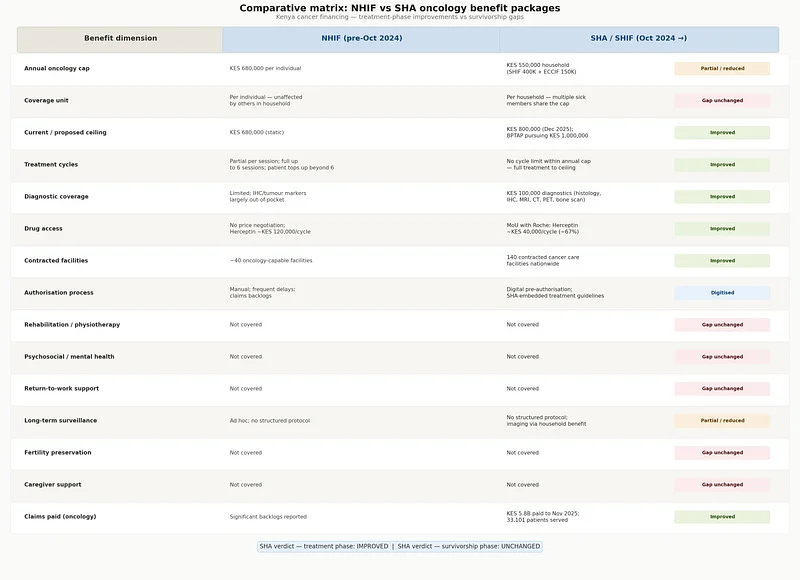
The matrix shows a paradox at the centre of Kenya’s oncology financing transition. SHA represents a genuine and meaningful improvement in the treatment phase with the removal of session-cycle limits was the single most important reform, ending the perverse situation where NHIF’s partial-payment model meant a patient requiring a seventh chemotherapy cycle was suddenly on their own. Herceptin price reduces a single cycle from KES 120,000 to roughly KES 40,000 so for HER2-positive breast cancer patients, it is the difference between completing a standard protocol and rationing care to death. The expansion to 140 contracted facilities represents real geographic equity gains but set against these improvements, the household coverage restructuring introduced a regressive element that the public debate has not adequately examined. Two members of the same household presenting with concurrent cancer diagnoses now share a single KES 550,000 envelope. In a country where cervical cancer and prostate cancer, two of the five most prevalent cancers, often affect husband and wife in overlapping age cohorts, this is a critical concern. The matrix exposes the frozen baseline across every survivorship domain. Rehabilitation, psychological support, return-to-work, fertility preservation, caregiver coverage. Not one of these moved between NHIF and SHA. The system was redesigned and the blind spot survived the redesign intact.
Healthcare Budget FY 2023/24–2025/26
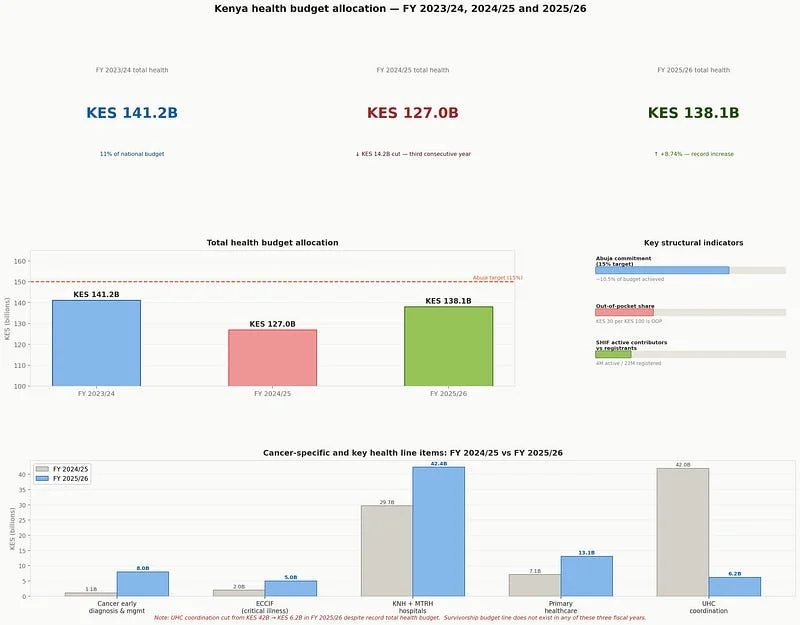
Kenya committed, in its Constitutional health obligations and the Abuja Declaration, to allocating a minimum of 15% of the national budget to health. It has never reached that threshold. At approximately 10–11% of the national budget, the health allocation sits roughly a third below the commitment level and this is before accounting for the three consecutive years of nominal cuts between 2022/23 and 2024/25 that dismantled capacity in the very period when SHA was being architectured.
FY 2025/26 record increase to KES 138.1 billion is genuinely significant, and the cancer line items offer meaningful intent of cancer early diagnosis rising from KES 1.1 billion to KES 8 billion in a single year is a sevenfold increase that would be remarkable in any system. UHC coordination budget as the operational structure coordinating the government’s flagship health policy was cut from KES 42 billion to KES 6.2 billion, a reduction of 85%, a figure that strains the credibility of the record investment narrative. The deeper structural fault is the contribution base. With 22 million SHA registrants but only approximately 4 million active contributors, the scheme is financing services for a population five times larger than the one paying for them. No oncology benefit package, however well-designed, is actuarially sustainable on that contribution base. What must change is not the benefit ceiling number, although that matters, but the fiscal decision beneath it i.e., mandatory enrollment enforcement, survivorship as a designed budget category rather than an implicit gap, and a transparent actuarial model that prices the lifetime trajectory of a surviving cancer patient rather than the episode of their treatment.
This legislative drama around coverage figures obscures a more fundamental analytical problem, which is the debate about how much SHIF should pay for cancer treatment is a debate about the acute phase. It is a debate about treatment episodes. It is almost entirely not a debate about what happens after treatment ends than about rehabilitation, psychological recovery, return-to-work support, long-term surveillance, late-effects management and the domestic economy of survivorship.
SHA has contracted 140 healthcare facilities to deliver cancer care. By April 2026, 33,101 patients had benefited from the oncology package, and SHA paid out KES 5.8 billion in cancer claims. These are real achievements which represent real lives that received real support.
However, the benefits package covers diagnosis, treatment, surgery, radiology and chemotherapy cycles. It does not cover, systematically or as a line item or as a designed category, physiotherapy for treatment-induced mobility loss, occupational therapy for return-to-work planning, psychotherapy for the depression and anxiety that follow treatment, counselling for the marriages and families that have been structurally disrupted or vocational rehabilitation for the survivor who cannot return to their former occupation. In any serious health economics framework, these are productivity investments.
Actuarial Blind Spot
Kenya’s health financing architects have not calculated with public transparency what the expected lifetime healthcare utilisation of a cancer survivor should be.
The question matters because survivorship creates long tails of medical demand that are categorically different from the acute treatment episode. Survivors of breast cancer need surveillance imaging, follow-up consultations, management of treatment sequelae (lymphedema, joint pain, hormonal effects of aromatase inhibitors) for years, sometimes decades. Survivors of colorectal cancer require colonoscopic surveillance. Survivors of haematological malignancies such as leukaemia, and lymphoma require ongoing monitoring, management of immunosuppression, and in many cases long-term drug therapy. Survivors of childhood cancer, whose numbers are expected to grow significantly under improved treatment protocols, will bear the consequences of their treatment into adult life via cardiac effects, cognitive effects, endocrine disruption and secondary malignancy risk.
SHA Payment Model (Full Arc Costs)
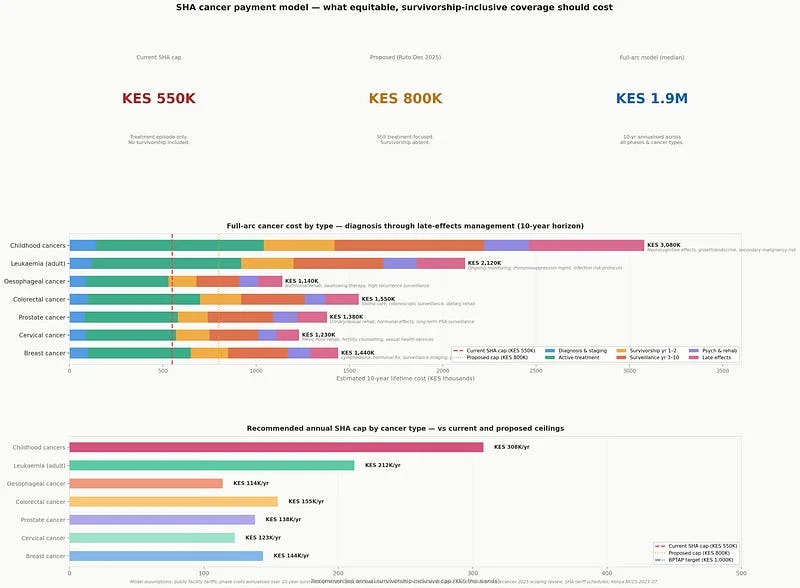
The model exposes the core actuarial gap in Kenya’s current coverage framework. SHA is pricing a sprint when the patient is running a marathon. The red line cutting across the horizontal bar chart (at KES 550,000 current annual cap) is a ceiling that almost every cancer type, when the full ten-year survivorship arc is costed, falls dramatically below. The model distributes costs across six phases of diagnosis and staging, active treatment, immediate survivorship (years one and two), long-term surveillance (years three through ten), psychosocial and rehabilitation services and late-effects management. What emerges is both predictable and clarifying. Leukaemia and childhood cancers sit at the extreme high end because their survivorship tails are the longest and most complex. A child who survives leukaemia at age eight and is monitored to age eighteen has neurocognitive, endocrine, cardiac and secondary malignancy risk for a decade after the acute phase concludes. The estimated KES 620,000 in late-effects management alone for childhood cancers, six times the equivalent estimate for oesophageal cancer, is not a modelling artefact. It reflects the documented clinical literature on what surviving paediatric cancer actually costs. The equity argument embedded in this model is as important as the financial one. A flat annual cap is structurally regressive because it applies an identical ceiling to cancers whose survivorship burdens differ by a factor of five. The progressive cap structure as a base treatment cap supplemented by cancer-type-specific survivorship supplements is a more honest system.
The SHIF actuarial model, to the extent that it has been made visible, prices cancer treatment episodes. It does not, as far as available evidence suggests, price the lifetime survivorship trajectory of the growing population it is successfully treating.
This is a solvency concern as much as it is a policy gap. The more successful Kenya becomes at treating cancer, and Kenya is making progress, the larger the survivorship population becomes. If SHA’s benefits structure does not expand to meet that population’s needs, the gap between what survivors need and what the system provides will widen as the survivor population grows. Success, in other words, is creating a liability that the current framework has not yet priced.
Neglect vs. Investment
Literature on survivorship investment in middle-income countries is still thin but directionally consistent. Rehabilitation after cancer treatment through physiotherapy, occupational therapy or psychosocial support reduces re-hospitalisation rates. Psychological support reduces depression prevalence among survivors and depression is independently associated with higher healthcare utilisation, poorer medication adherence and worse survival outcomes. Employment support reduces long-term disability claim rates and the transfer to formal social protection systems.
Put differently, the cost of not investing in survivorship is distributed across the healthcare system, social protection system, labour market and household economy in ways that are difficult to attribute back to the original cancer episode but are nonetheless real.
A Kenyan woman who completes breast cancer treatment and develops clinical depression without access to psychotherapy will, over subsequent years, make more frequent visits to lower-level facilities for unexplained somatic complaints, more likely misdiagnose as a presenting anxiety or comorbid condition and become less productive in the labour market. These costs appear as line items in the health system’s accounts but disconnected from the cancer that preceded them.
A man who completes colorectal surgery and is never offered physiotherapy will develop chronic mobility restrictions that reduce his capacity to work and increase his probability of requiring home-based or institutional care earlier in life. That cost appears, years later, as a burden on SHIF or as a burden on his family. It does not appear as a cancer survivorship cost. But it is one.
Kenya has not, as a matter of formal health policy, attempted to quantify what survivorship neglect costs the system. This is a research and policy gap of considerable magnitude, and filling it would change the conversation about what SHIF should cover and why.
Changed Selfhood
Literature in medical sociology such as Susan Sontag’s Illness as Metaphor, Arthur Frank’s work on illness narratives and Byron Good’s Medicine, Rationality and Experience examines how illness fundamentally restructures the relationship between a person and their body. Cancer, specifically, stages this restructuring in a particularly extreme way.
Before cancer, the body is largely background. It does what it does without demanding much attention. After cancer, after the surgery or chemotherapy or radiotherapy, the body moves to the foreground of consciousness. It is something a cancer survivor must watch. Something they are watchful of. Every new asymmetry is investigated, compared against yesterday’s asymmetry and held against the memory of the pre-cancer body like a photograph against its original.
The fear of recurrence is the most prevalent psychological consequence of cancer survivorship globally. Across oncology populations, between 40% and 70% of survivors report clinically significant fear of recurrence at some point in the years following treatment. In Kenya, there is no systematic data on this. It has not been measured in any large national sample. It exists in clinical anecdote, ward conversations, testimonies of oncology nurses who see it daily or my own body and mind, but not in any dataset that informs policy.
Men in the Silence
There is a gender dimension to cancer survivorship in Kenya that the policy discourse has not adequately engaged. Our most prevalent male cancers are prostate, oesophageal and colorectal. Each with its own survivorship burden. Prostate cancer treatment has radical prostatectomy, hormonal therapy and radiotherapy which consistently produces sexual dysfunction, urinary incontinence and hormonal effects that include fatigue, cognitive changes and depression. These are profoundly disruptive to masculine self-concept within Kenyan cultural frameworks that place considerable weight on sexual function, physical strength, and the capacity to provide.
The men in the silence are the ones who completed prostate cancer treatment and cannot discuss its effects on their marriages because there is no clinical space for this discussion and no cultural permission for it. They experience the grief of a body changed in ways that their wives suspect or know and their sons do not know and their friends would not understand. Men experience complex emotional weight quietly, alone, until it turns into withdrawal, difficulty or distance that a marriage interprets as abandonment.
I know this silence from the inside. The liver cancer that I survived in 2018 and 2022 did not leave my body unchanged. The surgery left markings physical and otherwise. The months of recovery restructured my relationship to physical capacity, time and what I believed I could demand of myself. These changes did not appear in my discharge summary and were not captured by any follow-up appointment. They lived only in me, and in the people closest to me who witnessed them without the clinical language to name them.
The leukemia that I am managing now has its own vocabulary of limitation. The fatigue is of a different quality than ordinary weariness. It has a distress to it, a density, an additional complication. On certain days, the walk from the bedroom to the kitchen is a matter of what can I do with the energy I have and what must wait. These calculations do not appear in any productivity measure or show up in GDP but they are real, and they shape what a working life looks like for a person in the middle of treatment and survivorship.
Sexuality and Intimacy
Our cancer discourse has an avoidance pattern around sexuality. It is present in what is not said including the absence of structured discussion about sexual health outcomes in cancer policy documents, fertility preservation pathways as a standard care component and psychosexual counselling as an oncology service. This silence represents a an unconscious and consequential decision about whose suffering counts as medical suffering and whose suffering is categorised as personal, domestic, private or too uncomfortable for clinical engagement.
Cancer affects sexuality in documented and significant ways. Cervical and gynaecological cancers changes the anatomy and physiology of sexual function for women who survive them. Prostate cancer treatment results in sexual dysfunction in between 30% and 80% of men, depending on treatment modality, age and pre-treatment function. Haematological malignancies and their treatments often affect hormonal systems in ways that bear sexual and reproductive consequences. Chemotherapy in younger patients raises serious fertility questions that, in Kenya, are rarely addressed prospectively because the infrastructure for fertility preservation such as cryopreservation services or reproductive endocrinology is largely limited to private facilities and has costs that place it beyond most patients.
A twenty-six-year-old woman who completes treatment for cervical cancer and was never counselled on the option of oocyte cryopreservation before starting radiation is not a victim of cancer. She is a victim of a clinical system that made a decision, by omission, about what mattered and what did not.
Kenya’s National Cancer Control Strategy 2023–2027 does not address sexual health or fertility as explicit survivorship domains. A values statement, made in the language of institutional silence/neutrality.
Children and Families
A 2021–2022 study at a Kenyan hospital interviewed childhood cancer survivors and their parents. Among 54 survivors of haematological and solid tumour malignancies, 72% experienced ongoing symptoms according to parental reports. Pain was present in 37%. Fatigue in 26%. Ocular problems in 26%. Eleven percent showed measurable limitations in daily activities. Fifteen of the twenty-six directly-interviewed survivors, at 58%, had previously been lost to follow-up. Continuous physical burden routinely disrupts any transition into a restitution narrative forcing families back into a state of structural chaos and high rate of systemic detachment highlights how the crushing financial and geographical strains of the Kenyan oncology landscape disrupt medical continuity, turning the path to survival into an unpredictable, chaotic struggle rather than a straightforward medical cure.
Lost to follow-up is a clinical phrase that describes an administrative rupture where the patient stopped coming to appointments. In Kenya, this rupture has specific causes if the patient lives far from the referral hospital and cannot afford repeated transport or follow-up appointments cause out-of-pocket expenses even with insurance and social disorganisation within the family structure where organised appointments during the crisis phase has settled back into the demands of ordinary life. Most critically, the normalisation bias of the child looking well or feels approximately well and the family concludes that the danger is passed. The danger has simply changed its face.
Childhood cancer survivors present late effects into adolescence and adulthood such as cardiac toxicity from anthracycline-based chemotherapy, pulmonary effects from thoracic radiation, endocrine disruption that affects growth and fertility, secondary malignancy risk and the neurocognitive effects of cranial radiation and high-dose methotrexate that can alter educational trajectory, executive function and social development.
These children become adults with needs that our health system is not currently designed to meet because the framework for tracking childhood cancer survivors stops at five years (the GLOBOCAN prevalence measure) and does not follow the child into adulthood.
Cancer significantly impacts families. The primary caregiver, most often a woman or the patient’s wife, mother or adult daughter, adjusts her working life, social relationships and physical health around the patient’s needs. In Kenya, where caregiver support services are essentially non-existent as a formal clinical category, this restructuring is entirely informal and entirely uncounted.
What does this cost?
Extensive regional research explicitly echoes these patterns. A PLOS Global Public Health systematic review analyzed 47 studies across sub-Saharan Africa including Nigeria, Ghana, and South Africa with over half (25 studies) focusing specifically on oncology caregivers consistently documenting severe financial devastation, explicitly capturing direct direct costs of care alongside structural opportunity costs like job loss, missed educational opportunities, and reduced working hours. Heavy physical and mental health strain is shown via widespread rates of clinical depression, severe psychological distress and chronic physical issues like musculoskeletal problems. Because sub-Saharan health systems heavily lack formal palliative infrastructure, these individuals are routinely left providing total, unremitting end-of-life care completely isolated from state or institutional support.
From the study, the financial toxicity of oncology care in Nigeria is among the most severe in sub-Saharan Africa due to an extreme reliance on out-of-pocket (OOP) financing, which accounts for roughly 76% of total healthcare expenditures. 82.7% of cancer patients in Nigeria suffer from catastrophic financial hardships, with a substantial segment of households relying on financial contributions from their children to avoid personal bankruptcy. This acute financial toxicity is driven by the fact that less than 3% of the Nigerian population has any form of health insurance, forcing families to exhaust savings, sell essential assets, or entirely abandon treatment due to costs that can exceed 80% of the country’s GDP per capita for complex regimens.
To mitigate these catastrophic expenditures, regional health policies have diverged structurally, as seen in the contrasting architectures of Ghana’s National Health Insurance Scheme (NHIS) and Kenya’s newly transitioned Social Health Authority (SHA). Ghana’s NHIS relies on a single-payer model funded primarily through value-added tax (VAT) and social security levies, providing broad universal coverage that completely absorbs the cost of care for breast, cervical and four specific pediatric cancers without co-payments. However, Ghana’s model creates an operational bottleneck, as it completely excludes all other adult malignancies, forcing those patients to pay entirely out-of-pocket for chemotherapy and radiation. Conversely, our SHA employs a tiered, contribution-based system that establishes standardized, capped benefit packages for oncological care across all cancer types rather than restricting coverage by diagnosis. While Kenya’s approach offers broader equity across different cancer typologies, the presence of strict cycle caps means Kenyan families remain highly vulnerable to residual financial toxicity once these specific fiscal limits are breached.
To calculate a precise Incremental Cost-Effectiveness Ratio (ICER) comparing Ghana’s National Health Insurance Scheme (NHIS) to Kenya’s Social Health Authority (SHA) frameworks, we can use standard Markov simulation model.
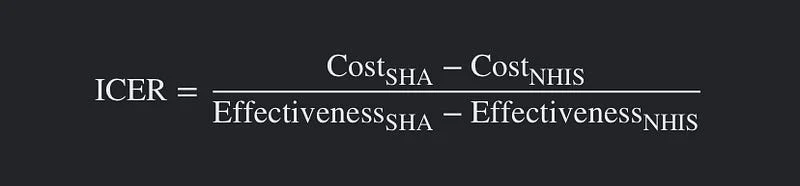
Micro-costing values and clinical efficacy fluctuate based on drug prices, patient adherence, and healthcare worker labor costs, a direct calculation requires setting a specific oncological baseline. The table below represents a standard health economic simulation for a localized cohort of 1,000 adult breast cancer patients transitioning through a 5-year treatment horizon.
5-Year Oncology Horizon (Per 1,000 Patients)
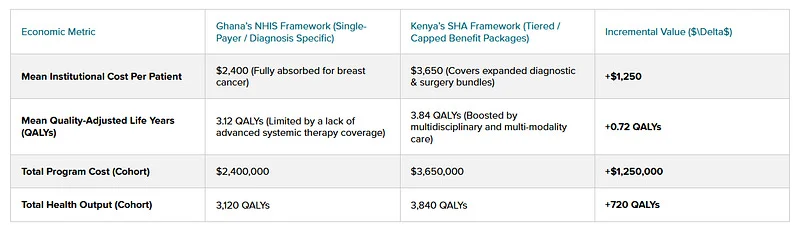
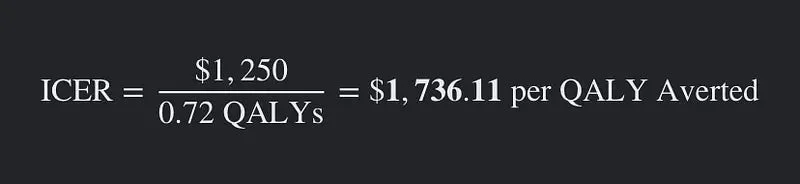
According to WHO-CHOICE guidelines, an intervention is highly cost-effective if its ICER is less than a nation’s Gross Domestic Product (GDP) per capita. Moving from Ghana’s NHIS framework to Kenya’s SHA framework requires an additional public investment of $1,736.11 for every single year of perfect health gained per patient. While Kenya’s SHA achieves higher overall QALYs by offering multi-modality surgical and diagnostic access, its strict benefit cycle caps mean that once fiscal limits are breached, patients experience a rapid accumulation of catastrophic out-of-pocket costs, often resulting in treatment abandonment. Ghana’s model keeps cost predictable but yields lower overall QALYs due to its narrow, rigid diagnosis restrictions.
In Kenya, we do not measure this. We do not count the woman who leaves her market stall for six months to accompany her husband through chemotherapy. We do not count the impact of that income loss on the household budget, school fees or savings trajectory. We do not count the depression she may develop, untreated, in the aftermath of his recovery or his death because the clinical system was focused on the patient and not on family member.
SHA’s oncology package funds diagnosis and treatment. It does not fund family-centred care. There is no caregiver support line item or respite care provision. The family is the invisible pillar of our cancer care system and it has been invisible for so long that its visibility and its cost is no longer even part of the conversation.
Survivorship Ecosystem
Kenya has a cancer registry. It is, by regional standards, functional and improving and responsible for capturing incidence and mortality data with increasing coverage across counties. It is the foundation on which credible epidemiology is built.
What it does not capture is the survivorship trajectory. There is no nationally coordinated data system tracking what happens to cancer survivors after treatment completion via their employment status, household economic position, psychological health indicators, quality of life, recurrence rates, late-effects burden or social functioning.
Without this data, survivorship is anecdote. It is the conversation on the bench outside Ward 1E or the women in the post-mastectomy support groups sharing what no clinical record documents or what patients know and policy does not.
Survivorship Productivity Investment Framework
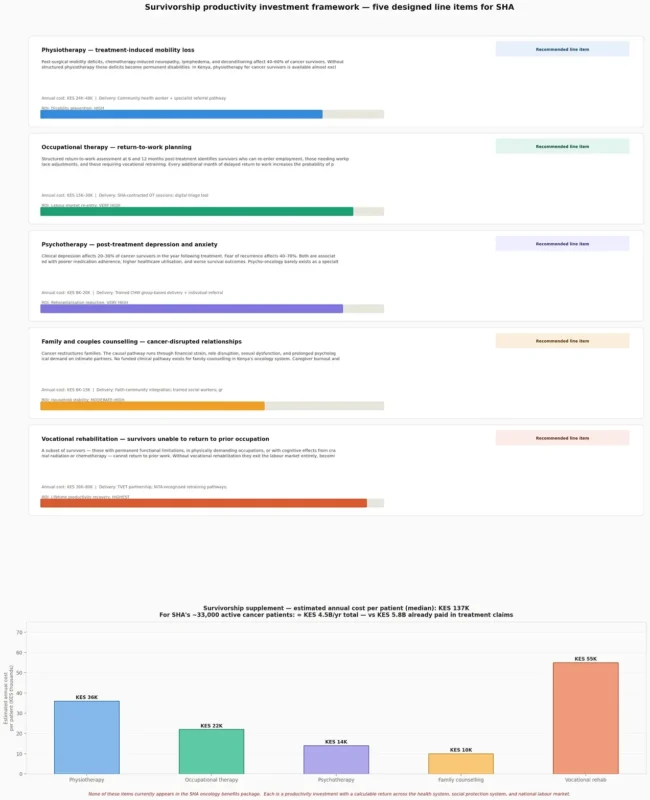
The five-item framework in this graphic is minimum viable survivorship package and its aggregate cost at approximately KES 94,000 per survivor per year for the first three post-treatment years is the number that reframes the entire policy conversation. Against SHA’s active cancer population of approximately 33,000 patients, full implementation of this survivorship supplement would cost roughly KES 3.1 billion annually. SHA paid KES 5.8 billion in treatment claims through November 2025. The survivorship supplement is therefore approximately 53% of the treatment claims already being processed (not a doubling of the system’s obligations but a roughly 50% expansion). Put against the KES 8 billion allocated to cancer early diagnosis and management in the FY 2025/26 budget, it is less than 40% of a single line item. The framework’s most important analytical contribution is the ROI column. Physiotherapy preventing permanent disability, occupational therapy accelerating labour market re-entry, psychotherapy reducing re-hospitalisation rates, family counselling protecting household economic stability, vocational rehabilitation converting permanent labour market exit into redirected contribution; each of these has a return that distributes across the health system, social protection system and national accounts in ways that are rarely attributed back to the oncology investment that generated them. The invisibility of that return is a framing problem. Kenya frames cancer spending as expenditure. The framework insists it be framed as investment and holds the government’s own UHC language to account for the gap between what that framing requires and what the benefits package currently funds.
The argument for a national survivorship registry is actuarial. You cannot design a benefits package for a population you have not understood. You cannot allocate rehabilitation resources without knowing what rehabilitation demand actually exists. You cannot make the case to Treasury, Parliament, SHA’s Benefits Package and Tariffs Advisory Panel for survivorship investment without evidence of survivorship need. A registry is the epistemic foundation of a functional survivorship system.
A redesigned survivorship-inclusive SHA benefits package would require the following as structural components:
There is a human resource dimension to this argument that cannot be elided by the optimism of a policy recommendation. Kenya has 58 registered oncologists for a population of 54 million. It has significant shortages of cancer nurses, oncology-trained physiotherapists, psycho-oncologists (a specialty category that barely exists in the formal system), and occupational therapists with oncology experience. A survivorship system that requires specialist clinical delivery cannot, therefore, be built on specialist clinical infrastructure alone.
The answer, and there is an answer, lies in task-sharing, community health worker integration and technology-enabled remote support. Our community health worker network is extensive. With appropriate training and supervision protocols, community health workers can deliver psychosocial support, conduct quality-of-life screenings, monitor treatment adherence and flag concerns for clinical escalation. Telehealth platforms, accessible on the smartphones that most Kenyans now have, can deliver psychological support and physiotherapy guidance at a fraction of the cost of specialist clinical delivery.
None of this is new in global oncology. Survivorship care plans, structured follow-up protocols, and community-delivered psychosocial support are documented and effective. What is new is applying them in Kenya by adapting them to the epidemiologic, cultural context and resource environment and funding them as core services rather than treating them as optional supplements to the real business of treating the disease.
What Do We Owe Cancer Survivors?
Every society, consciously or not, expresses its values in what it chooses to measure. Kenya measures cancer incidence and cancer mortality. These measurements generate data, data generates funding cases and funding cases generate infrastructure. We have more chemotherapy capacity than we had fifteen years ago. We have more diagnostic machines and oncologists, though never enough. We have SHA.
We do not measure how survivors live.
Measurement is political. A measure of employment outcomes among cancer survivors creates an obligation to address them or prevalence of depression after treatment which then creates a responsibility to fund treatment. To measure caregiver burden is to make visible what has been convenient to leave invisible as the enormous social subsidy that families, primarily women, provide to a healthcare system that prices itself as though they did not exist.
The decision not to measure is, therefore, a values decision that reflects a judgment, usually implicit and rarely examined, about whose life counts as policy-relevant. A survivor who cannot return to work is not a number. The marriage that did not survive treatment is not a statistic. The child of a survivor who was withdrawn from school during the cancer crisis and never fully caught up is not an indicator.
To build a survivorship system in Kenya requires, first, making the decision to measure. Everything else follows from that.
The argument for survivorship investment has a paradox that makes it politically awkward to state plainly but important to state nonetheless. The stronger Kenya’s oncology system becomes, the more urgent the survivorship problem also grows.
Every Kenyan who survives cancer because SHA funded their treatment or research improved the treatment protocols or the oncology ward at Kenyatta National Hospital extended their life by ten years is a future demand on the system that the system has not prepared for.
Success is building the problem. More survivors means more people with late effects, psychological distress and those in need of surveillance imaging, rehabilitation, return-to-work support and long-term pharmaceutical management. More families struggle with the distributed burden of the cancer’s aftermath.
Kenya has been celebrating the success. It has not priced the liability that success creates. This is the actuarial silence at the centre of the country’s cancer policy. SHIF has been designed around the treatment episode and not the survivorship arc. If the benefits package continues to focus primarily on treating cancer while ignoring the economy of surviving it, then we are building a system that saves lives and leaves the living stranded.
My leukemia is being managed. The protocols are in place and the appointments are kept. On the days when the fatigue is high and the effort to think clearly is a matter of will rather than ease, I know what is happening with my health and why, and the knowledge is both burden and orientation.
What I know that no clinical encounter has prepared me for is the taxation of living with an ongoing medical event and a consideration of how much I promise and when, the management of what I can do on a good week versus a week when the treatment is winning. Illness is a lens through which even ordinary decisions whether to work, plan a trip to visit Awuor in Stockholm or begin the next piece of writing are refracted through a question that never fully disappears: what does this cost me, and what do I currently have to give?
This management is invisible to the system. It does not appear in any claim. It does not trigger any intervention. It is the private labour of survivorship and it is the labour that millions of Kenyan survivors do, daily, without support, recognition or being counted. The country we want to in health policy and as a society is one that acknowledges this labour, funds the infrastructure to support it and measures dignifyingly what happens after the bell rings and takes responsibility for what the measurement reveals.
We celebrated when the treatments improved. We will not fully deserve that celebration until we learn to care for what the treatments leave behind.
Kenya is succeeding partially, imperfectly, inequitably, but genuinely. Cancer is the third leading cause of death in Kenya, with an annual incidence of approximately 44,726 cases and a five-year prevalence population exceeding 102,000. Against this burden, the investments of the past decade seen through expanded diagnostic infrastructure, oncology benefits package under SHA, KEMRI research agenda and National Cancer Control Strategy represent real and meaningful progress.
Our progress has a shadow. Financial toxicity affected between 20% and 54% of Kenyan households dealing with cancer, and over half of patients abandoned treatment at some point due to costs. Across sub-Saharan Africa, between 74% and 94% of cancer patients experience catastrophic health expenditure. Under SHA, cancer benefits were restructured into a household allocation of KES 550,000 which is a shift from individual to household coverage that significantly reduces financial protection where more than one family member requires treatment simultaneously.
These treatment-phase statistics describe the crisis but do not describe what follows it i.e., the economics of intimate disruptions and reckonings of the surviving life. The measure of a health system is both the lives it saves and the quality of life it makes possible for those it saves. We have learned, at great cost, to ask the right diagnostic question. We have yet to ask the right survivorship question.
What do we owe the people who survive?
The answer will require data we have not gathered, infrastructure we have not built, conversations we have been too uncomfortable to have and benefits package that prices the full arc of cancer’s impact on a human life and not just the acute episode. Survivorship is not the end of the cancer story. For the person living it, it is where the story truly begins.”
You can also read articles about Kenyan Network of Cancer Organizations on OncoDaily.