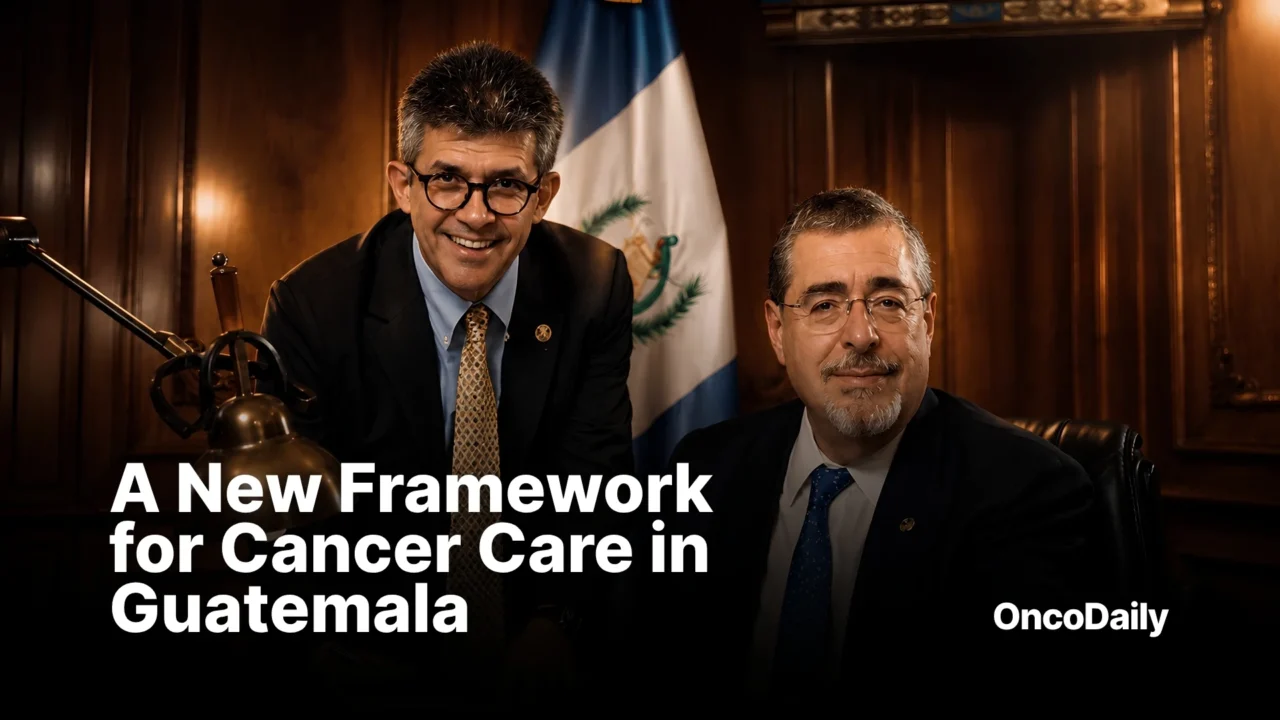
President Bernardo Arévalo, together with Minister of Health Joaquín Barnoya, has signed the Regulation of the Law for Comprehensive Cancer Care, marking an important step in the formal implementation of the country’s cancer-care framework.
The regulation was officially enacted on Wednesday through its publication in the Official Gazette.
A Framework for Comprehensive Cancer Care
The newly enacted regulation establishes the guidelines for the comprehensive care of patients with cancer.
It sets out the regulatory framework that health entities providing cancer-related services must follow, with the aim of ensuring that care is guided by established public policies, strategic plans, clinical guides, standards, and protocols.

Defining Responsibilities Across the Health System
The regulation outlines the measures that must be applied by health institutions involved in cancer care.
These include the development and implementation of public policies and strategic planning instruments, as well as the use of guides, standards, and protocols designed to support the delivery of comprehensive services for people affected by cancer.
By formalizing these requirements, the regulation provides a structured basis for how cancer care services should be organized and delivered across the health system.
From Law to Implementation
The signing of the regulation by President Bernardo Arévalo and Minister of Health Joaquín Barnoya moves the Law for Comprehensive Cancer Care from legislative approval toward practical implementation.
Its publication in the Official Gazette gives official force to the framework and establishes the standards that health entities must apply in the provision of cancer-related services.
The regulation places comprehensive care at the center of the national approach to cancer, bringing together policy, planning, clinical guidance, and service-delivery standards under one formal structure.
Find more exclusive oncology content on OncoDaily