


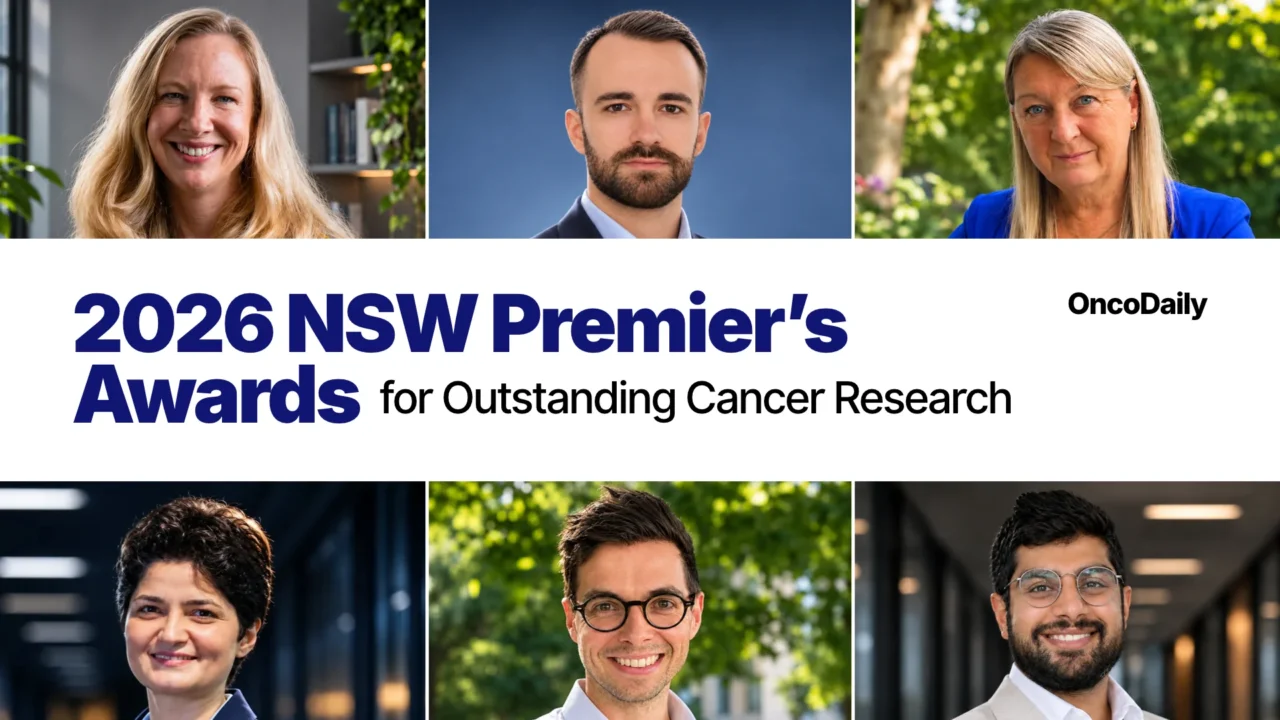
On November 19, 2026, the NSW Premier’s Awards for Outstanding Cancer Research recognize the scientists, clinicians, and research teams contributing to advances in cancer research and care across New South Wales.
Presented by Cancer Institute NSW, the annual awards celebrate achievements in cancer prevention, diagnosis, treatment, clinical trials, and patient care.
Established in 2006, the awards mark their 21st year in 2026, recognizing contributions from early-career researchers, established scientists, healthcare professionals, and research organizations. This year’s awards also highlight efforts to reduce inequalities in cancer care, improve access to clinical trials, and strengthen patient involvement in research.
Meet the 2026 Award Winners
The 2026 recipients represent different areas of cancer research, from scientific discoveries and clinical innovation to supportive care and community health.
Outstanding Early Career Researcher Award
Dr Darren Haywood, a Cancer Institute NSW Early Career Fellow at the University of Technology Sydney, received the Outstanding Early Career Researcher Award.
A Cancer Institute NSW Early Career Fellow at the University of Technology Sydney, Dr Haywood is advancing how cancer-related cognitive impairment and mental health challenges are understood and managed.
His internationally recognised research includes the development of MASCC COG-IMPACT, a world-first tool designed to assess unmet needs associated with cancer-related cognitive impairment.
Through innovative research and leadership in psycho-oncology, Dr Haywood is helping improve supportive care and quality of life for people living with and beyond cancer.
Outstanding Mid-Career Researcher Award
Professor Noushin Nasiri, Professor and ARC Industry Fellow at Monash University, received the Outstanding Mid-Career Researcher Award.
A leading researcher at Macquarie University, Professor Nasiri is using nanotechnology to develop innovative approaches to skin cancer prevention.
Through her Cancer Institute NSW Early Career Fellowship, she led the development of SunWatch, a smart wearable designed to provide personalised, real-time feedback on harmful UV exposure.
Her research is helping translate advanced nanosensor technology into practical tools that could support sun-safe behaviours and earlier protective action.
Professor Nasiri’s internationally recognised work demonstrates the potential of engineering and technology to improve cancer prevention and health outcomes.
Outstanding Cancer Researcher of the Year Award
Professor Karen Canfell AC, Lead of CEC and Professor of Public Health at The Cancer Elimination Collaboration, received the Outstanding Cancer Researcher of the Year Award.
An internationally renowned cancer epidemiologist, Professor Canfell has helped transform cancer prevention and control through research that informs policy and practice in NSW, Australia and around the world.
As leader of the Cancer Elimination Collaboration at the University of Sydney, her pioneering work in cancer screening, modelling and implementation has helped drive population-wide improvements in cancer outcomes and reduce inequities.
Professor Canfell is a dedicated research leader and mentor who continues to shape the future of cancer control through evidence, collaboration and innovation.
Please join us in congratulating Professor Canfell!
Rising Star PhD Candidate Award
Dr Udit Nindra, Medical Oncologist at South Western Sydney Local Health District, received the Rising Star PhD Candidate Award.
A medical oncologist and emerging clinical trials researcher, Dr Nindra is working to make early-phase cancer trials more equitable, accessible and patient-centred.
Through his PEARLER research, he is improving understanding of the experiences and needs of people participating in early-phase trials, while exploring opportunities to improve access through precision oncology and digital innovation.
Alongside his research, Dr Nindra is helping strengthen the next generation of cancer researchers through mentorship and leadership.
His work highlights the importance of putting patients at the centre of cancer research.
Outstanding Cancer Clinical Trials Unit Award
The Macquarie University Clinical Trials Unit received the Outstanding Cancer Clinical Trials Unit Award.
Since its establishment in 2013, the unit has grown into a major multidisciplinary clinical trials centre, delivering research across all phases of clinical development.
With a strong focus on cancer and early-phase trials, the team is helping improve access to innovative treatments while strengthening clinical trial capability through training and workforce development.
Its commitment to research excellence, collaboration and building the next generation of clinical trial professionals is helping advance cancer care and create more opportunities for patients to participate in research.
Improving Equitable Outcomes through Cancer Research Award
The PEACH Study received the Improving Equitable Outcomes through Cancer Research Award.
Led by Associate Professor Vincent Cornelisse, PEACH (Preventing and Eliminating Anal Cancer for people living with HIV) is Australia’s first rural and regional anal cancer screening program.
Operating across the Tweed Valley, Lismore, Coffs Harbour and Port Macquarie, the study is bringing vital cancer prevention services closer to people who previously faced travelling hundreds of kilometres to access screening.
By addressing longstanding barriers to care, PEACH demonstrates how research and collaboration can help improve access and deliver more equitable cancer outcomes for regional communities.
Reducing Cancer Inequities for Aboriginal People Award
Strong Spirit Aboriginal Services and Associate Professor Julieann Coombes, Aboriginal Research Fellow at The George Institute for Global Health, were recognized with the Reducing Cancer Inequities for Aboriginal People Award.
An Aboriginal community-controlled organisation, Strong Spirit is helping improve cancer prevention and survivorship through culturally safe, community-led approaches.
Its Mob’s Way to Wellness program brings together Aboriginal health workers, Elders, community members and researchers to strengthen wellbeing through physical activity, health education, connection to culture and peer support.
By placing Aboriginal leadership, self-determination and community priorities at the centre of its work, Strong Spirit is demonstrating how culturally grounded partnerships can help improve cancer outcomes for Aboriginal people.
A proud Gumbaynggirr woman and internationally recognised Indigenous health researcher, Associate Professor Coombes is helping transform healthcare through culturally safe, community-led research.
With more than 30 years of experience working alongside Aboriginal communities, her work places Indigenous leadership, knowledges and community priorities at the centre of health research and service design.
Through her leadership in Indigenous research methodologies and culturally safe models of care, Associate Professor Coombes is helping improve access, experiences and outcomes for Aboriginal and Torres Strait Islander people affected by cancer.
Cancer Control Innovation Award
The NSW Early Phase Clinical Trials Alliance (NECTA) received the Cancer Control Innovation Award.
Australia’s first collaborative academic network dedicated to early-phase cancer trials, NECTA is helping people with advanced cancer access promising new treatments, regardless of where they live.
By connecting cancer centres across NSW through coordinated referrals, expert review and trial matching, the alliance is helping overcome geographic and system barriers to clinical trial participation.
Its innovative, patient-centred approach is strengthening collaboration between hospitals, improving access to emerging treatments and helping more people benefit from advances in cancer research.
Consumer Engagement in Cancer Research Award
Dr Phoebe Dun, Founder and Chairperson, received the Consumer Engagement in Cancer Research Award. As Founder and Chairperson of RUN DIPG, Dr Dun has become a powerful advocate for children and families affected by childhood brain cancer.
Inspired by her daughter Josephine’s diagnosis, she has brought families, researchers and clinicians together to advance research into Diffuse Intrinsic Pontine Glioma (DIPG) and Diffuse Midline Glioma (DMG).
Through her advocacy and leadership, Dr Dun is ensuring the voices and experiences of families help shape research priorities and progress towards better outcomes for children affected by these devastating cancers.
Beyond the Awards: More Cancer Research Stories from NSW on OncoDaily