Anna Geguchadze, Medical Oncologist at Caucasus Medical Center, shared on LinkedIn:
“Young oncologists plus AI: from users to collaborators
Just wrapped up the YO Brunch at ESMO 2026 with Vanja Mišković on ‘Digital technologies in Young Oncologists’ daily life: opportunities for career development.’
The poll that stuck with me: 72% of the room already use ChatGPT regularly in clinical work, 22% occasionally, and 0% said “No, and I don’t intend to.” The question is no longer if, but how well.
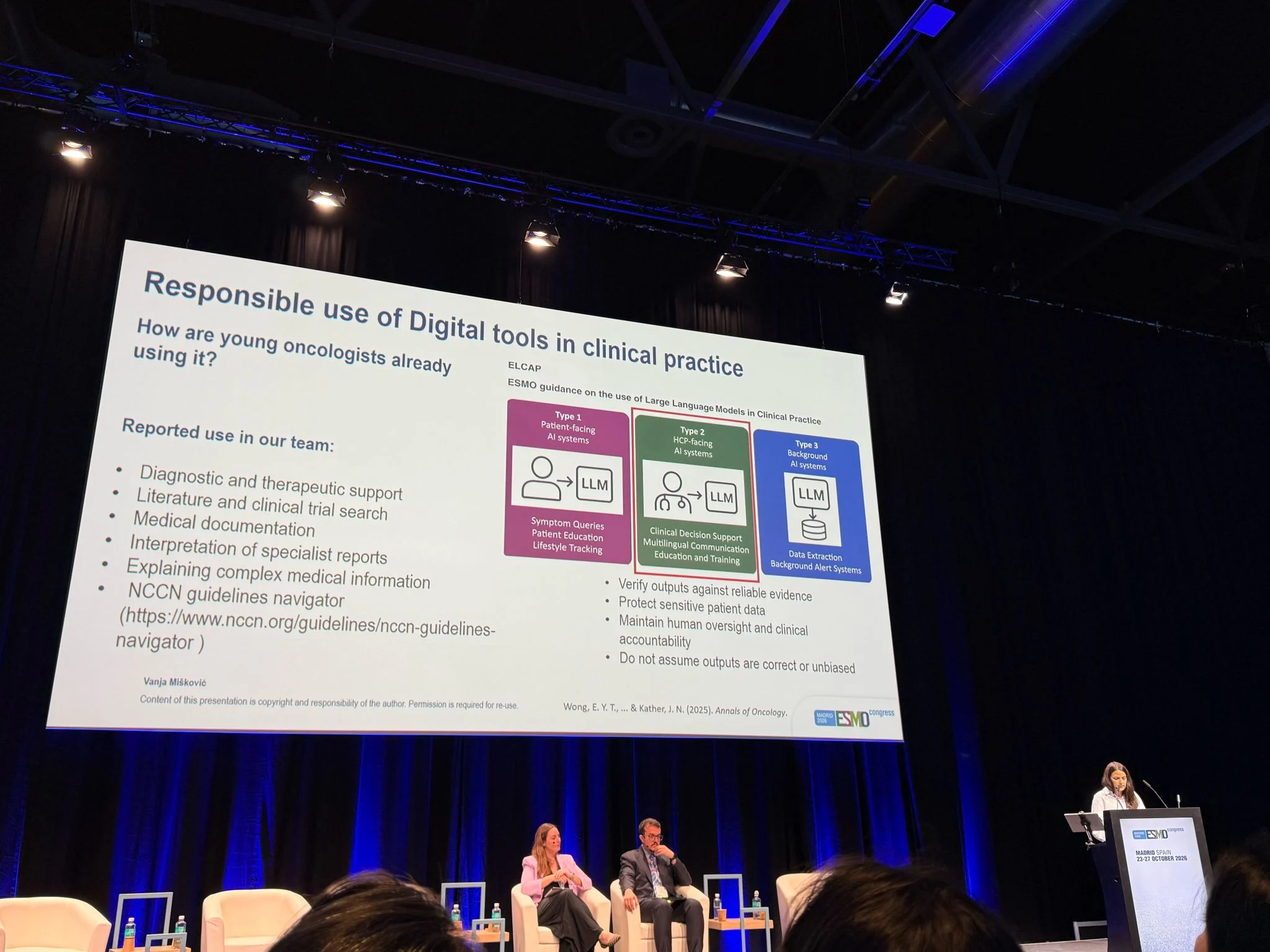
- What colleagues already use AI for: diagnostic and therapeutic support, literature and trial search, documentation, interpreting specialist reports, explaining complex information to patients, and guideline navigators like NCCN’s.
- A clear rulebook: ESMO’s LLM guidance splits tools into patient-facing, clinician-facing and background systems. The golden rules: verify outputs, protect patient data, keep human accountability, never assume AI is unbiased.
- Science is already changing: estimated AI-modified text in computer science papers rose to about 14% after 2023. Oncology isn’t immune.
- Where the line is drawn: in Nature’s survey, the community accepts AI for editing but pushes back on drafting results and discussion, where about two-thirds say it’s never appropriate.
- Presentations: “interactive” AI (brainstorming, structure, visuals, you stay in control) vs “autonomous” AI (one prompt → one deck). Her advice: give context, iterate, be explicit about tone and length.
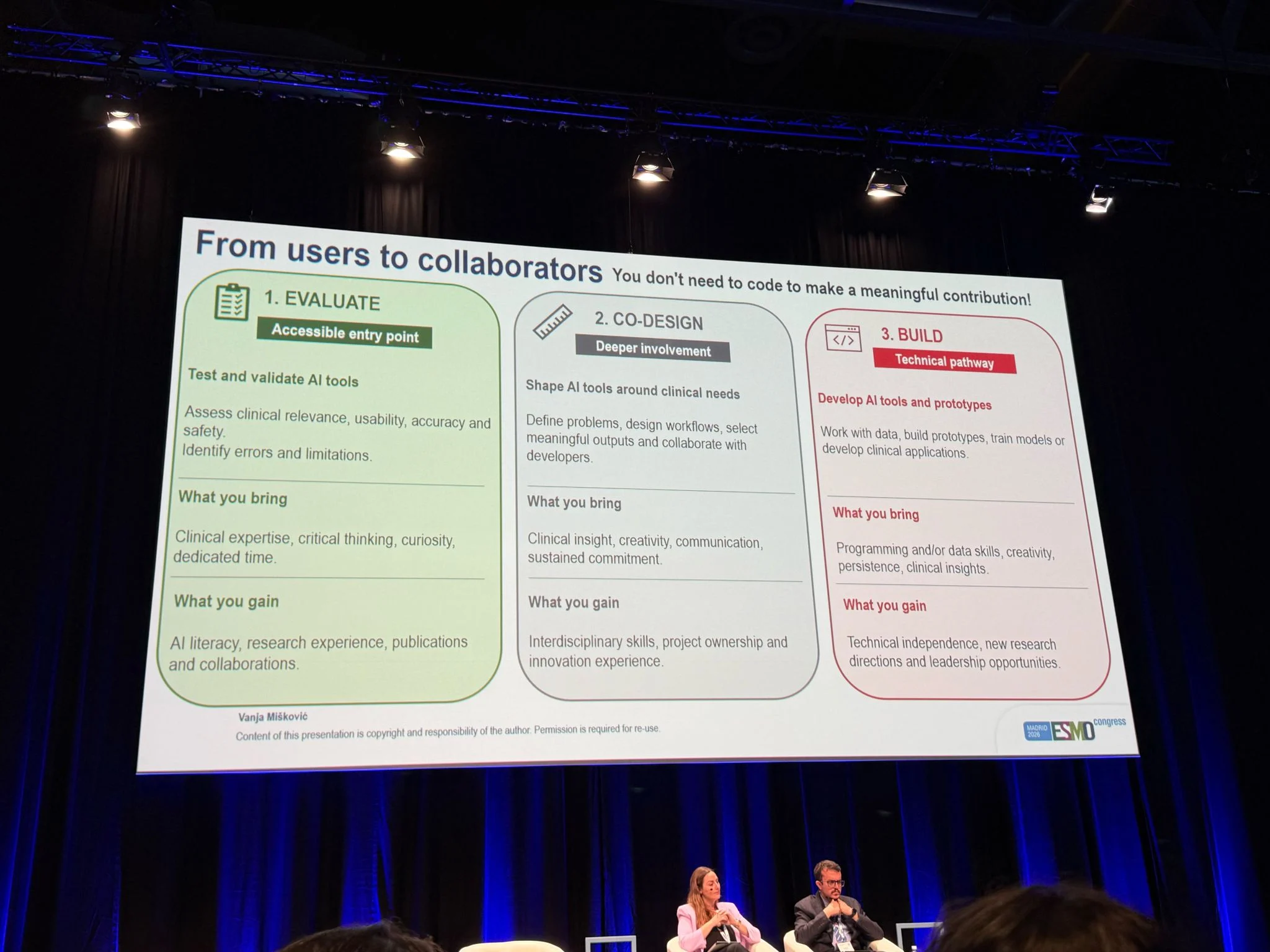
- You don’t need to code: Evaluate → Co-design → Build. In the I³LUNG study, 20 physicians tested an explainable AI tool in NSCLC, first without it, then with it.
- Networking: ESAC, the European Interdisciplinary Society of AI for Cancer Research, has a junior membership. Benefits include working groups, priority access to events, workshops and fellowships, and eligibility for leadership roles.
Takeaway: AI takes the repetitive work, and we keep the judgment, the accountability and the patient.
Where would you start: evaluate, co-design or build?”
Stay informed on the latest research, insights, and discussions from ESMO 2026 with OncoDaily.