Adding consolidative thoracic radiotherapy to atezolizumab maintenance increased serious and fatal toxicities without improving survival in patients with extensive-stage small cell lung cancer, according to results from the randomized phase 2 TREASURE trial.
The study enrolled patients whose disease had remained stable or responded after first-line carboplatin, etoposide, and atezolizumab. Participants were assigned to atezolizumab maintenance with consolidative thoracic radiotherapy or atezolizumab maintenance alone.
Recruitment was stopped early after investigators observed an unexpected increase in serious adverse events in the radiotherapy group.
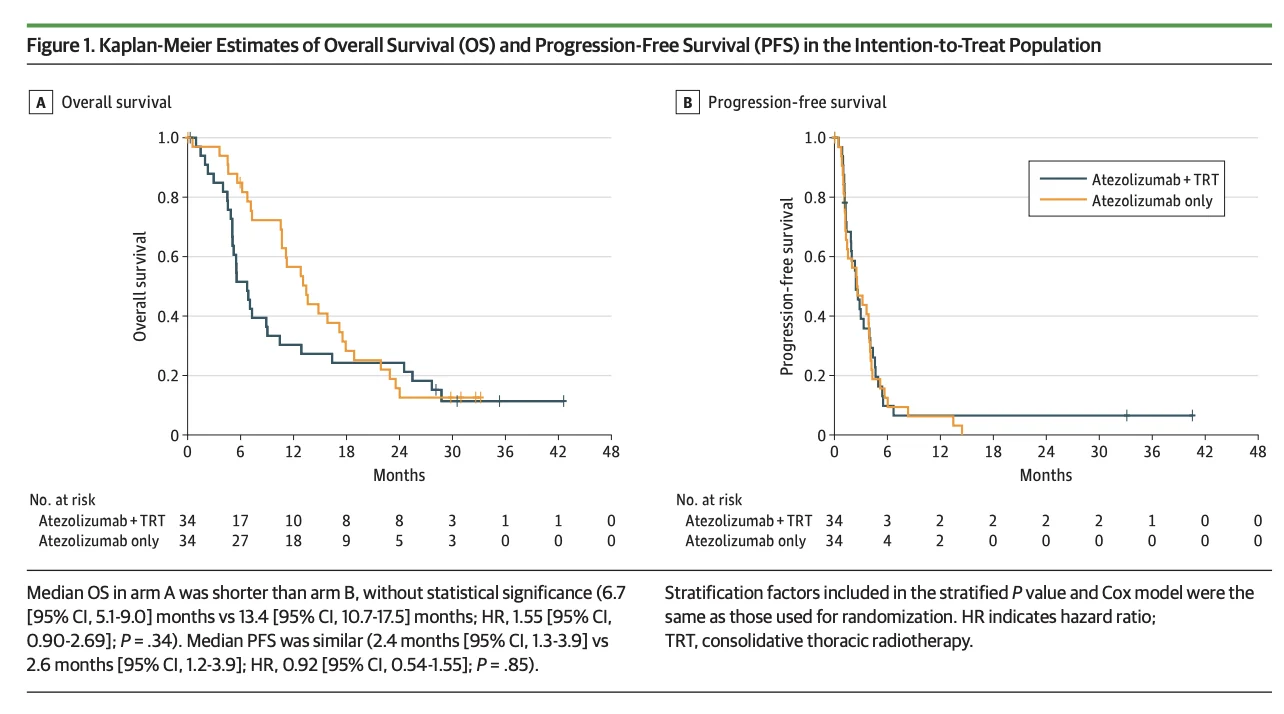
Median overall survival was numerically shorter with thoracic radiotherapy plus atezolizumab, at 6.7 months versus 13.4 months with atezolizumab alone. The difference was not statistically significant, but the combination did not improve progression-free survival and was associated with substantially more serious and fatal adverse events.
The findings, published in JAMA Oncology, argue against routine use of consolidative thoracic radiotherapy with atezolizumab maintenance in unselected patients with extensive-stage small cell lung cancer (Bozorgmehr et al., 2026).
Why Was the TREASURE Trial Conducted?
Carboplatin and etoposide combined with atezolizumab, followed by atezolizumab maintenance, became a standard first-line approach for extensive-stage small cell lung cancer after the IMpower133 trial demonstrated an overall survival benefit.
Thoracic radiotherapy had previously shown clinical value after chemotherapy in the pre-immunotherapy era. This created interest in whether consolidative radiation could further improve disease control when incorporated into modern chemoimmunotherapy pathways.
Radiotherapy can expose tumour-associated antigens and influence immune-cell recruitment, providing a biological rationale for combining it with immune checkpoint inhibition. However, the safety and efficacy of adding consolidative thoracic radiotherapy to atezolizumab maintenance had not been established in a randomized study.
TREASURE was designed to determine whether this combination could improve overall and progression-free survival without producing unacceptable toxicity.
How Was the Study Designed?
TREASURE, also known as AIO-TRK-0320, was a multicentre, open-label, randomized phase 2 trial conducted at 20 sites in Germany and Austria.
Patients were eligible if they had extensive-stage small cell lung cancer and at least stable disease after induction treatment with carboplatin, etoposide, and atezolizumab.
Participants were randomized equally to:
- Atezolizumab maintenance plus consolidative thoracic radiotherapy
- Atezolizumab maintenance alone
Thoracic radiotherapy was delivered at 30 Gy in 10 fractions. Treatment allocation was stratified by the presence of brain metastases, response to induction treatment, and planned prophylactic cranial irradiation.
The primary endpoint was overall survival. Secondary endpoints included progression-free survival and the incidence and severity of adverse events.
The trial initially planned to randomize 104 patients. However, recruitment was stopped after only 68 patients had been enrolled because of safety concerns. Thirty-four patients were assigned to each group.
Why Was Recruitment Stopped Early?
The protocol included predefined safety monitoring for severe pneumonitis.
Among the first 23 patients receiving thoracic radiotherapy, one case of grade 3 or higher pneumonitis was reported, meaning the formal pneumonitis stopping threshold had not been exceeded.
However, the independent Safety Monitoring Committee later identified a broader increase in fatal serious adverse events in the radiotherapy group, including events not initially classified as pneumonitis.
Recruitment was paused in August 2022 and permanently discontinued in December 2022 after a preliminary survival analysis suggested an unfavorable outcome with the combination.
Because enrollment ended early, the trial lost much of its planned statistical power. The efficacy findings are therefore primarily descriptive, but the safety difference between the groups was substantial.
Did Thoracic Radiotherapy Improve Overall Survival?
No overall survival benefit was observed.
Median overall survival was:
- 6.7 months with atezolizumab plus thoracic radiotherapy
- 13.4 months with atezolizumab maintenance alone
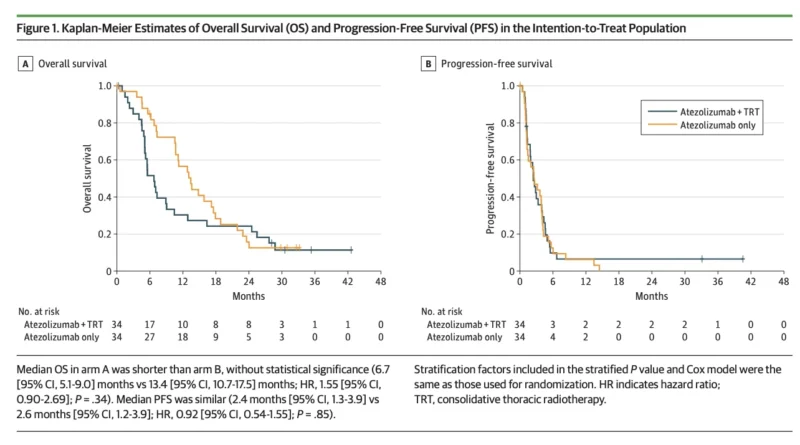
The hazard ratio for death was 1.55, with a 95% confidence interval of 0.90 to 2.69 and a P value of .34.
The difference was not statistically significant. However, the numerical result favored atezolizumab alone rather than the radiotherapy combination.
The estimated one-year overall survival rate was 30.3% with thoracic radiotherapy versus 56.6% without it.
The survival curves crossed after approximately two years, with two-year overall survival numerically higher in the radiotherapy group. The investigators cautioned that very few patients remained at risk at that point, preventing firm conclusions from the late separation.
A post hoc survival analysis conducted after additional follow-up produced results consistent with the primary analysis.
Was Progression-Free Survival Improved?
Progression-free survival was nearly identical between the groups.
Median progression-free survival was:
- 2.4 months with atezolizumab plus thoracic radiotherapy
- 2.6 months with atezolizumab alone
The hazard ratio was 0.92, with a 95% confidence interval of 0.54 to 1.55 and a P value of .85.
The absence of a progression-free survival advantage suggests that consolidative thoracic radiotherapy did not produce meaningful additional disease control in the population studied.
The investigators noted that similar progression-free survival alongside numerically poorer overall survival points toward treatment-related toxicity, rather than more rapid cancer progression, as a possible contributor to the survival pattern.
How Much Did Serious Toxicity Increase?
The safety difference was one of the most important findings.
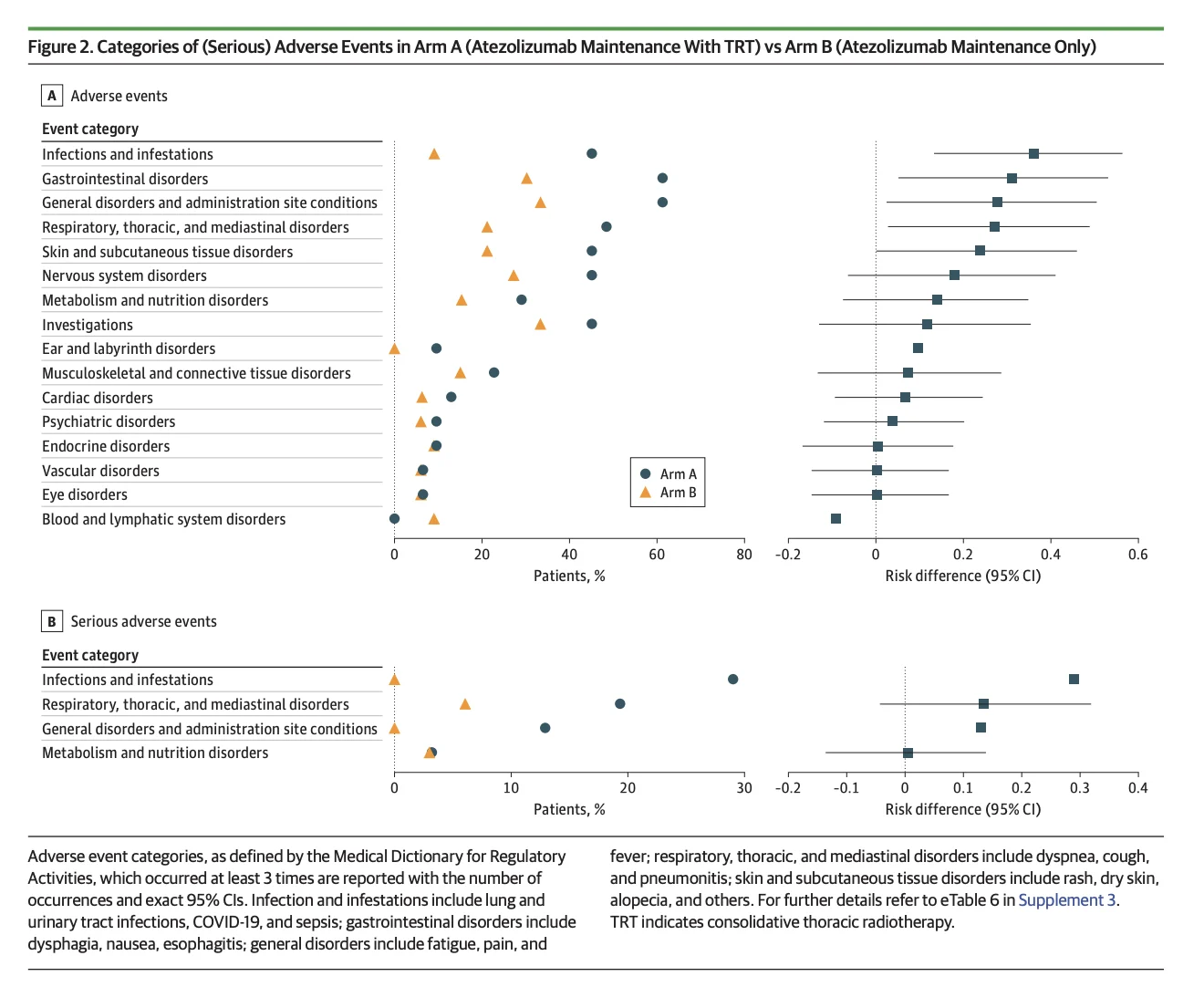
Serious adverse events occurred in:
- 61.3% of patients receiving thoracic radiotherapy plus atezolizumab
- 18.2% receiving atezolizumab alone
This difference was statistically significant, with a P value below .001.
Treatment-related adverse events were also more frequent with the combination:
- 71.0% with radiotherapy and atezolizumab
- 30.3% with atezolizumab alone
Treatment-related serious adverse events occurred in 29.0% and 6.1%, respectively.
Fatal adverse events were reported in:
- 19.4% of patients in the radiotherapy group
- 3.0% in the atezolizumab-alone group
The causal relationship between treatment and individual deaths was not always clear. Treating investigators and the independent safety committee differed in their assessment of several fatal events. Nevertheless, the overall imbalance contributed to the decision to terminate enrollment early.
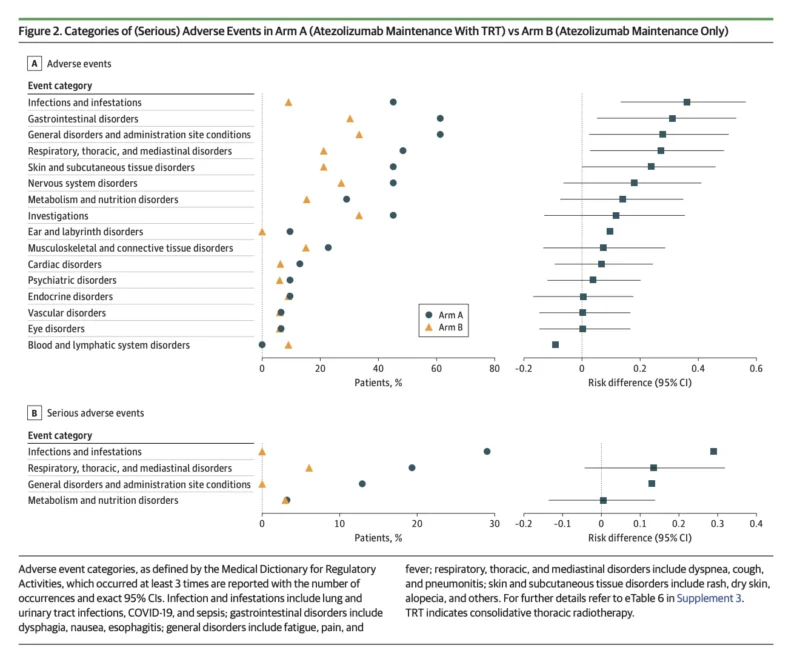
Which Adverse Events Were More Frequent?
Patients who received thoracic radiotherapy experienced more infections, gastrointestinal complications, respiratory disorders, fever, and skin-related adverse events.
Serious adverse events were particularly concentrated in two categories:
- Infections and infestations
- Respiratory, thoracic, and mediastinal disorders
Reported infections included pulmonary and urinary tract infections, COVID-19, and sepsis. Respiratory events included dyspnea, cough, and pneumonitis.
Gastrointestinal events included dysphagia and esophagitis, which are recognized complications of thoracic radiation exposure.
The analysis did not identify major baseline imbalances between the treatment groups that could explain the higher toxicity. Performance status, comorbidity burden, pulmonary function, tumour burden, and thoracic tumour location were generally balanced.
Radiotherapy doses and exposure to organs at risk were also within or below ranges commonly used in clinical practice.
Could Baseline Lung Function Identify Higher-Risk Patients?
Within the radiotherapy group, patients who experienced fatal adverse events had lower baseline single-breath diffusing capacity of the lungs for carbon monoxide.
Mean baseline DLCO was:
- 45.3% among patients with fatal adverse events
- 56.7% among other patients in the radiotherapy group
The difference reached statistical significance, but the number of patients was small.
The investigators described lower baseline DLCO as a possible risk factor rather than a validated method for selecting patients. No other clinical or dosimetric characteristic reliably identified who would experience serious or fatal toxicity.
This finding requires further prospective evaluation before a specific DLCO threshold can be used to guide treatment decisions.
Did Radiotherapy Cause Persistent Lymphocyte Depletion?
Lymphocyte counts were similar between the two groups before maintenance treatment.
After thoracic radiotherapy, patients in the combination group developed pronounced and persistent lymphocyte depletion. Leukocyte and neutrophil counts were not affected in the same way.
The depletion was accompanied by an accumulation of adverse events, particularly infections and respiratory complications.
The authors proposed that radiation-related lymphocyte depletion may have reduced immune defense and contributed to the higher infection rate. However, this remains a mechanistic interpretation rather than definitive proof of causation.
The association is clinically important because the radiation dose and target volumes were not unusually high. It suggests that the interaction between thoracic radiation and ongoing immune checkpoint inhibition may create risks that are not apparent when either treatment is considered separately.
Did the Timing of Radiotherapy and Atezolizumab Matter?
Some patients received atezolizumab during the radiotherapy course, while others received it before or after radiation.
The occurrence of adverse events did not differ significantly between concurrent and sequential administration.
The study therefore did not identify a clearly safer timing strategy.
However, the early termination and small sample size limited the trial’s ability to assess whether different schedules, treatment intervals, or radiation techniques could reduce toxicity.
What Does TREASURE Mean for Clinical Practice?
The results do not support routine consolidative thoracic radiotherapy during atezolizumab maintenance in unselected patients with extensive-stage small cell lung cancer.
Thoracic radiotherapy remains clinically relevant in selected circumstances, but the TREASURE findings indicate that its addition to modern immunotherapy maintenance cannot be assumed to provide the same risk-benefit profile observed in the pre-immunotherapy era.
The study also demonstrates why evidence from chemotherapy-era radiotherapy trials cannot automatically be transferred into contemporary chemoimmunotherapy pathways.
Future trials will need to define which patients, if any, could benefit from thoracic radiotherapy without excessive risk.
Potential areas for investigation include baseline pulmonary function, radiation exposure to highly perfused organs, lymphocyte preservation, radiation timing relative to immunotherapy, and prospectively defined safety stopping rules.
What Are the Main Limitations?
The trial was terminated after 68 patients had been randomized rather than the planned 104.
This substantially reduced its statistical power, particularly for survival comparisons. The lack of statistical significance in overall survival cannot therefore be interpreted as evidence that the treatments were equivalent.
The safety analyses involved relatively small numbers, especially when exploring risk factors for fatal adverse events.
The study was open label, and there was no radiotherapy-only control group. It cannot determine whether the toxicity resulted specifically from radiation, the interaction between radiation and atezolizumab, or other treatment and patient factors.
Despite these limitations, the magnitude of the serious and fatal adverse-event imbalance justified early termination and remains clinically meaningful.
The Bottom Line
In the phase 2 TREASURE trial, consolidative thoracic radiotherapy added to atezolizumab maintenance did not improve outcomes in unselected patients with extensive-stage small cell lung cancer.
Median overall survival was 6.7 months with the combination and 13.4 months with atezolizumab alone, although the difference was not statistically significant.
Median progression-free survival was nearly identical at 2.4 and 2.6 months.
Serious adverse events occurred in 61.3% versus 18.2%, while fatal adverse events occurred in 19.4% versus 3.0%.
Persistent lymphocyte depletion after radiotherapy and lower baseline pulmonary diffusing capacity among patients with fatal adverse events emerged as potential contributors to toxicity.
The results argue against routine use of consolidative thoracic radiotherapy with atezolizumab maintenance outside clinical trials in unselected ES-SCLC populations.
References
- Bozorgmehr F, Chung I, Behnisch R, et al. Consolidative thoracic radiotherapy with atezolizumab maintenance in extensive-stage small cell lung cancer: the phase 2 TREASURE randomized clinical trial. JAMA Oncology. Published online July 9, 2026. doi:10.1001/jamaoncol.2026.2330.
- Horn L, Mansfield AS, Szczęsna A, et al. First-line atezolizumab plus chemotherapy in extensive-stage small-cell lung cancer. New England Journal of Medicine. 2018;379:2220–2229.
- Slotman BJ, van Tinteren H, Praag JO, et al. Use of thoracic radiotherapy for extensive-stage small-cell lung cancer: a randomized phase 3 trial. The Lancet. 2015;385:36–42.