
For years, local consolidative therapy has been considered an important strategy for selected patients with oligometastatic non-small-cell lung cancer. However, the randomized NRG-LU002 trial, published in the Journal of Clinical Oncology on November 23, 2026, challenges the routine addition of radiation or surgery following first-line systemic treatment. Among 215 evaluable patients, local consolidative therapy failed to significantly improve progression-free or overall survival and was associated with increased toxicity, particularly pneumonitis. The findings raise important questions about patient selection, the interaction between radiotherapy and immunotherapy, and the consequences of interrupting effective systemic treatment.
The concept of oligometastatic disease has influenced thoracic oncology for more than three decades. First proposed by Hellman and Weichselbaum in 1995, the oligometastatic hypothesis suggests that some patients with a limited number of metastatic lesions may occupy an intermediate biological state between localized and widely disseminated cancer.
For these patients, eliminating all visible disease through surgery or ablative radiotherapy could potentially delay progression and improve survival. Early prospective studies supported this approach, creating considerable enthusiasm for local consolidative therapy (LCT) in advanced non-small-cell lung cancer (NSCLC).
However, the treatment landscape has changed substantially. Immune checkpoint inhibitors, maintenance strategies, and more effective systemic regimens have improved outcomes for patients with metastatic NSCLC.
This evolution has raised a fundamental question: does treating all remaining visible disease still provide an additional survival advantage when contemporary systemic treatment is already achieving durable control? The NRG-LU002 randomized trial was designed to address this uncertainty.
Led by Puneeth Iyengar, Chen Hu, Daniel Gomez, Robert Timmerman, and colleagues, the international study compared maintenance systemic therapy alone with the addition of local consolidative radiation and/or surgery in patients with limited residual metastatic NSCLC. The results challenge the assumption that adding local treatment necessarily improves survival.
Why Earlier Studies Supported Local Consolidation
Before NRG-LU002, several smaller randomized phase II studies suggested that aggressive local treatment could substantially improve outcomes in oligometastatic NSCLC. One influential trial, led by Daniel Gomez and colleagues, evaluated local consolidative therapy versus maintenance treatment or observation following first-line systemic therapy.
In its long-term analysis, median progression-free survival was 14.2 months with local consolidation compared with 4.4 months in the control group. Median overall survival was also longer, reaching 41.2 versus 17.0 months.
These findings helped establish the rationale for using stereotactic body radiotherapy (SBRT), surgery, or other definitive local approaches in selected patients with limited metastatic disease. However, much of the supporting evidence originated before the widespread integration of immune checkpoint inhibitors into first-line NSCLC treatment.
The control arms of earlier trials therefore differed substantially from contemporary maintenance strategies. NRG-LU002 sought to determine whether the benefit of local consolidation remained evident in this newer therapeutic environment.
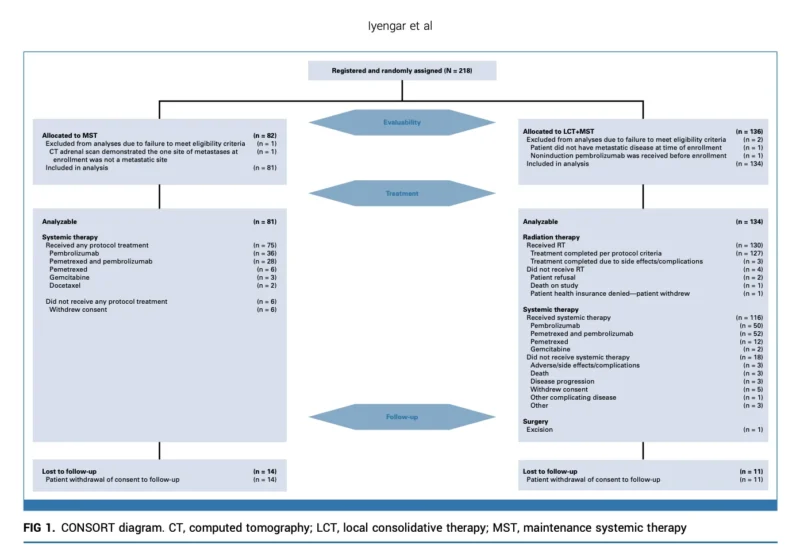
NRG-LU002: A Randomized Trial Across 68 Centers
NRG-LU002 was initially designed as an integrated randomized phase II/III trial. Eligible adults had metastatic NSCLC with no more than three residual extracranial metastatic sites, excluding the primary tumor, after completing approximately four to five cycles of first-line systemic treatment.
Patients were required to have stable disease or a partial response. Previously treated brain metastases were permitted, but uncontrolled intracranial disease was excluded. Patients receiving EGFR- or ALK-directed targeted therapy were not eligible.
Participants were randomized in a 2:1 ratio to receive local consolidative therapy followed by maintenance systemic treatment or maintenance systemic treatment alone. The study included radiotherapy, surgery, or a combination of both as permitted local approaches.
Radiation techniques included SBRT and hypofractionated radiotherapy. Maintenance treatment could involve immunotherapy, chemotherapy, or their combination. Progression-free survival was the primary endpoint, while overall survival, treatment-related toxicity, progression patterns, and quality of life were among the secondary outcomes.
Between April 2017 and November 2021, 218 patients were randomized. Of these, 215 were eligible for the primary analysis: 134 in the local consolidation group and 81 in the maintenance-only group. Patients were enrolled across 68 participating sites. The median age was 65 years, and 78% had nonsquamous NSCLC.
Most participants received immunotherapy-containing systemic treatment, reflecting the substantial changes in first-line NSCLC care during the study period.
The Primary Endpoint Was Not Met
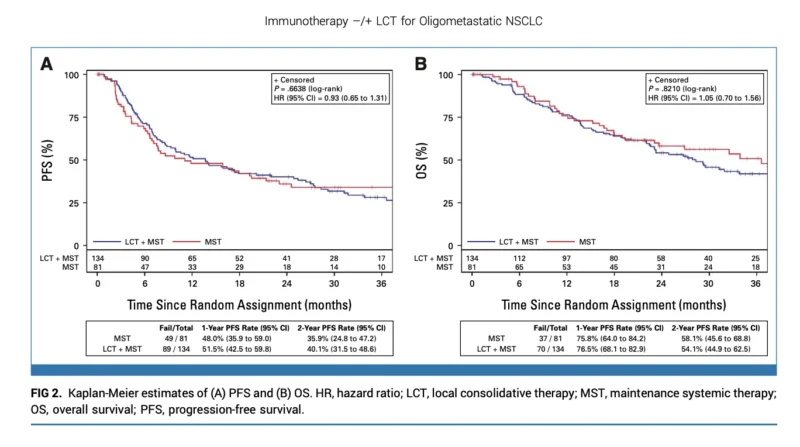
After a median follow-up of 21.9 months, the trial did not demonstrate a statistically significant improvement in progression-free survival. At one year, PFS was 51.5% in the local consolidation group versus 48.0% with maintenance treatment alone. At two years, PFS was 40.1% and 35.9%, respectively. The hazard ratio was 0.93 (95% CI 0.65–1.31; P = 0.66).
Although the numerical PFS estimates slightly favored the local treatment group, the difference was neither statistically significant nor sufficient to meet the trial’s prespecified efficacy threshold. The phase II component required a PFS hazard ratio below 0.83 to support progression into the phase III portion.
With the observed hazard ratio of 0.93, that requirement was not met. Following a planned interim assessment, the trial was closed without proceeding to phase III enrollment. This represents an important negative randomized result.
However, failure to demonstrate superiority is not equivalent to proving that local consolidative therapy can never provide benefit. The findings primarily address the strategy of routinely adding LCT in the population and treatment context studied.
Overall Survival Also Failed to Improve
The absence of a significant PFS benefit was accompanied by no demonstrated overall survival advantage. One-year overall survival was 76.5% in the local consolidation group compared with 75.8% in the maintenance-only group.
At two years, overall survival was 54.1% versus 58.1%, respectively. The overall survival hazard ratio was 1.05 (95% CI 0.70–1.56). The survival curves did not demonstrate a meaningful separation favoring local consolidation. Similar findings were observed among participants receiving immunotherapy-containing regimens.
In this subgroup, the PFS hazard ratio was 0.90, while the OS hazard ratio was 1.05. These results suggest that the absence of a demonstrated benefit was not limited to the small minority receiving chemotherapy-only systemic treatment.
The findings challenge the assumption that elimination of visible residual disease necessarily translates into better outcomes when contemporary immunotherapy-based maintenance treatment is available.
Did Local Consolidation Improve Control of Existing Lesions?
Although the primary clinical outcomes were negative, the investigators also examined where progression occurred. At two years, the cumulative incidence of progression involving existing disease sites was 13.4% in the LCT group compared with 19.8% in the maintenance-only group.
The corresponding Fine–Gray hazard ratio was 0.64, with P = 0.17. The incidence of new or distant disease progression was also numerically lower with LCT. At two years, new-site progression occurred in 30.5% of the local consolidation group versus 41.5% of the control group.
However, this difference was not statistically significant (P = 0.30). These observations are biologically interesting. They suggest that local treatment may influence disease progression patterns in selected patients.
Nevertheless, neither analysis demonstrated a statistically significant improvement, and the observed trends did not translate into better overall PFS or survival. The distinction between local disease control and patient-level survival benefit remains central to interpreting the study.
Pneumonitis Emerges as a Major Safety Concern
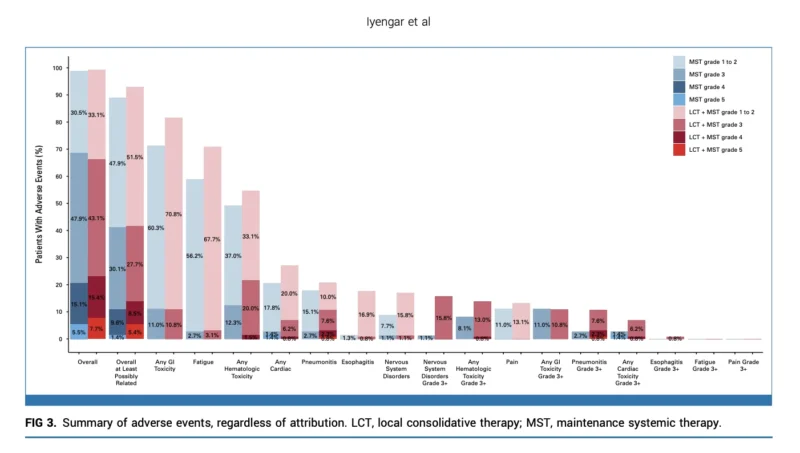
One of the most clinically consequential findings was the increased toxicity associated with local consolidative treatment. Grade 2 or higher adverse events occurred in 84% of patients receiving LCT plus maintenance therapy, compared with 73% receiving maintenance alone (P = 0.05).
The difference was particularly notable for pneumonitis. Grade 3 or higher pneumonitis occurred in 10% of patients receiving local consolidation, compared with 1% in the maintenance-only group (P = 0.02).
This approximately tenfold difference in reported event proportions is important because pneumonitis can substantially affect respiratory function, quality of life, and the ability to continue anticancer therapy.
Patients with metastatic NSCLC may already have compromised pulmonary reserve because of smoking-related lung disease, tumor involvement, previous treatment, or other comorbidities. Combining thoracic radiation with immunotherapy may introduce overlapping pulmonary toxicities.
The investigators’ post-hoc analysis suggested that hypofractionated thoracic radiotherapy delivered at 45 Gy in 15 fractions contributed disproportionately to the higher rate of severe pneumonitis. This observation supports continued investigation of treatment volumes, radiation dose, fractionation, and organ-at-risk constraints when integrating radiotherapy with immunotherapy.
Could Toxicity Have Undermined the Benefit of Local Treatment?
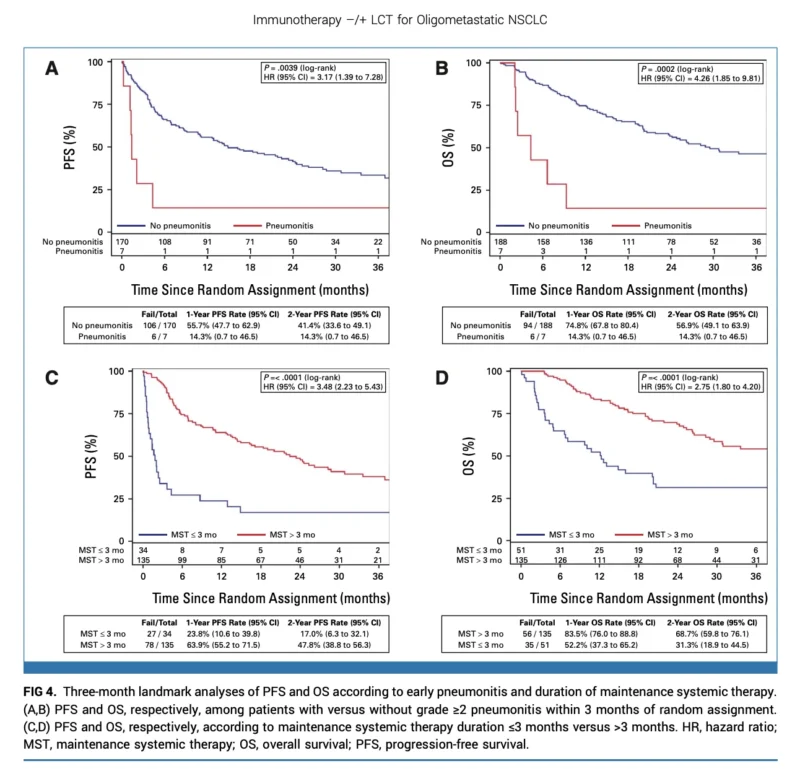
The relationship between pneumonitis and systemic treatment exposure represents one of the study’s most important findings. Investigators conducted landmark analyses to evaluate outcomes among patients who developed early pneumonitis and those who discontinued maintenance treatment relatively early.
Patients experiencing grade 2 or higher pneumonitis within three months of randomization demonstrated substantially worse subsequent progression-free and overall survival. Patients who received shorter courses of maintenance systemic therapy also experienced poorer outcomes.
These associations raise the possibility that the toxicity burden of local treatment may compromise its potential benefit by interfering with systemic treatment delivery. In the local consolidation arm, 18 of 134 patients did not receive maintenance systemic treatment after randomization, compared with six of 81 in the maintenance-only group.
The reasons for noninitiation in the LCT group included adverse effects, disease progression, death, withdrawal, and other circumstances. However, the landmark analyses were post-hoc and observational.
They cannot conclusively demonstrate that pneumonitis caused the worse survival outcomes, or that treatment interruption fully explains the negative trial result. Patients with early toxicity or shorter maintenance exposure may also have had poorer underlying health or more aggressive disease.
Nevertheless, the findings reinforce an essential clinical principle: the benefit of adding local therapy must be considered alongside its potential to interrupt an effective systemic treatment strategy.
Why the Results Differ From Earlier Randomized Trials
NRG-LU002 contrasts with earlier studies reporting substantial benefits from local consolidation. One possible explanation is the improved effectiveness of modern systemic treatment. In previous trials, patients receiving maintenance treatment or observation often experienced relatively rapid progression.
The addition of local therapy therefore had greater potential to delay disease recurrence. In NRG-LU002, immunotherapy-containing maintenance regimens provided relatively durable disease control even without consolidation. This may have reduced the incremental benefit achievable through ablative treatment.
A second explanation involves patient selection. The trial primarily defined oligometastatic disease according to the number of residual visible lesions following initial systemic treatment. However, anatomical disease burden does not necessarily capture the underlying biology of metastatic spread.
Two patients with the same number of lesions may have substantially different risks of microscopic dissemination, treatment resistance, and future recurrence. The investigators suggest that better molecular and biological selection may be necessary to identify patients most likely to benefit.
Importantly, these explanations remain interpretations of the negative trial rather than mechanisms proven by the randomized comparison.
Oligometastatic Disease May Not Be a Single Biological Entity
NRG-LU002 included patients with different patterns of limited metastatic disease. Approximately 89% had oligometastatic disease at diagnosis, whereas the remainder became oligometastatic after systemic treatment reduced their visible disease burden.
These groups may differ biologically. Patients with an initially limited metastatic burden could represent relatively indolent disease, while those who transition from more extensive metastatic involvement after systemic therapy may retain a greater burden of occult disease.
This distinction may influence the effectiveness of local consolidation. However, the trial did not establish a subgroup that clearly benefited from LCT. The investigators also noted that the study did not incorporate molecular biomarkers into eligibility or treatment selection.
Co-occurring genomic alterations, including KRAS and STK11-related biology, may influence both systemic treatment response and metastatic behavior. Future studies integrating molecular profiling, circulating tumor DNA, and longitudinal response assessment may help distinguish patients whose disease remains biologically limited from those with extensive occult dissemination.
Liver Metastases and Performance Status Remain Important Prognostic Factors
Exploratory multivariable analyses identified several clinical factors associated with worse outcomes. The presence of liver metastases was associated with inferior progression-free survival, with a hazard ratio of 3.02, and inferior overall survival, with a hazard ratio of 2.21.
Zubrod performance status 1 or 2, compared with 0, was also associated with poorer PFS and OS. These findings highlight the importance of systemic disease biology and patient fitness. However, only 12 patients in the study had liver metastases.
The associated estimates therefore require cautious interpretation and should not be used alone to determine whether local consolidation should be offered. The more important conclusion is that metastatic lesion count is insufficient as a standalone selection criterion.
Does NRG-LU002 Change the Role of SBRT in Metastatic NSCLC?
The implications are substantial but should not be overstated. The trial challenges routine local consolidation in patients resembling the enrolled population: metastatic NSCLC without EGFR- or ALK-directed treatment, limited residual extracranial disease after initial systemic therapy, and maintenance regimens predominantly involving immunotherapy.
It does not evaluate every situation in which SBRT may be appropriate. For example, local treatment for symptomatic lesions, selected cases of oligoprogression, and disease controlled with molecularly targeted therapy represent distinct clinical scenarios. Patients receiving EGFR- or ALK-directed treatments were excluded.
Therefore, the results cannot be directly extrapolated to patients undergoing local consolidation while receiving osimertinib or ALK inhibitors. The findings also warrant reconsideration of earlier recommendations developed before these results became available.
The 2023 ASTRO/ESTRO clinical practice guideline supported definitive local therapy in appropriately selected oligometastatic NSCLC populations, emphasizing multidisciplinary evaluation, feasibility, and acceptable toxicity.
NRG-LU002 now provides additional randomized evidence that should inform future guideline reassessment. However, an individual negative trial does not automatically invalidate every prior indication or establish a universal recommendation against local treatment.
Important Limitations
Several methodological issues require consideration. First, the study reported the randomized phase II component of a planned phase II/III program. It was closed after the planned interim analysis failed to show sufficient efficacy to justify continuation.
Therefore, it was not completed as a full phase III trial powered to definitively exclude smaller survival benefits. Second, the study included patients with heterogeneous clinical characteristics and patterns of metastatic disease.
Third, local treatment approaches were not identical across patients and included different radiotherapy schedules and occasional surgery. Fourth, molecular biomarkers and more advanced measures of disease biology were not used to select patients.
Fifth, treatment-related toxicity and systemic treatment discontinuation were associated with poorer outcomes, but the post-hoc analyses cannot establish causality. Finally, patient-reported quality-of-life outcomes were designated for separate reporting and were not fully characterized in the primary publication.
These limitations do not undermine the negative primary result, but they define the boundaries within which it should influence practice.
OncoDaily Takeaway
NRG-LU002 represents an important turning point in the debate over local consolidative therapy for oligometastatic NSCLC. In 215 evaluable patients, adding radiation or surgery to maintenance systemic treatment did not significantly improve progression-free survival, with an HR of 0.93, or overall survival, with an HR of 1.05.
The absence of benefit persisted in the subgroup receiving immunotherapy-containing systemic regimens. More importantly, local consolidation increased treatment-related toxicity, with grade 3 or higher pneumonitis reported in 10% versus 1% of patients.
Exploratory analyses suggested that early pulmonary toxicity and reduced maintenance treatment exposure were associated with inferior outcomes, raising concerns that the consequences of treatment intensification may offset its potential benefits.
Nevertheless, the findings should not be interpreted as evidence that all local therapy is ineffective in metastatic NSCLC. The central clinical message is that limited anatomical disease burden alone may not justify routinely adding consolidative treatment when modern systemic therapy is already effective.
Future studies should prioritize molecular and biological selection, better identification of truly oligometastatic disease, optimized radiation techniques, and preservation of systemic treatment delivery.
The next question is not simply whether local consolidation can eliminate visible disease, but which patients can derive a meaningful survival benefit without compromising the overall therapeutic strategy.
Sources
- Iyengar P, Hu C, Gomez D, et al. Multicenter Randomized Phase II Trial of Maintenance Systemic Therapy Versus Local Consolidative Therapy Plus Maintenance Systemic Therapy for Limited Metastatic Non–Small Cell Lung Cancer (NRG-LU002). Journal of Clinical Oncology. Published online November 23, 2026. DOI: 10.1200/JCO-25-02395
- Gomez DR, Tang C, Zhang J, et al. Local Consolidative Therapy Vs. Maintenance Therapy or Observation for Patients With Oligometastatic Non–Small-Cell Lung Cancer: Long-Term Results of a Multi-Institutional, Phase II, Randomized Study. Journal of Clinical Oncology. 2019;37:1558–1565. DOI: 10.1200/JCO.19.00201
- Iyengar P, All S, Berry MF, et al. Treatment of Oligometastatic Non–Small Cell Lung Cancer: An ASTRO/ESTRO Clinical Practice Guideline. Practical Radiation Oncology. 2023;13:393–412. DOI: 10.1016/j.prro.2023.04.004