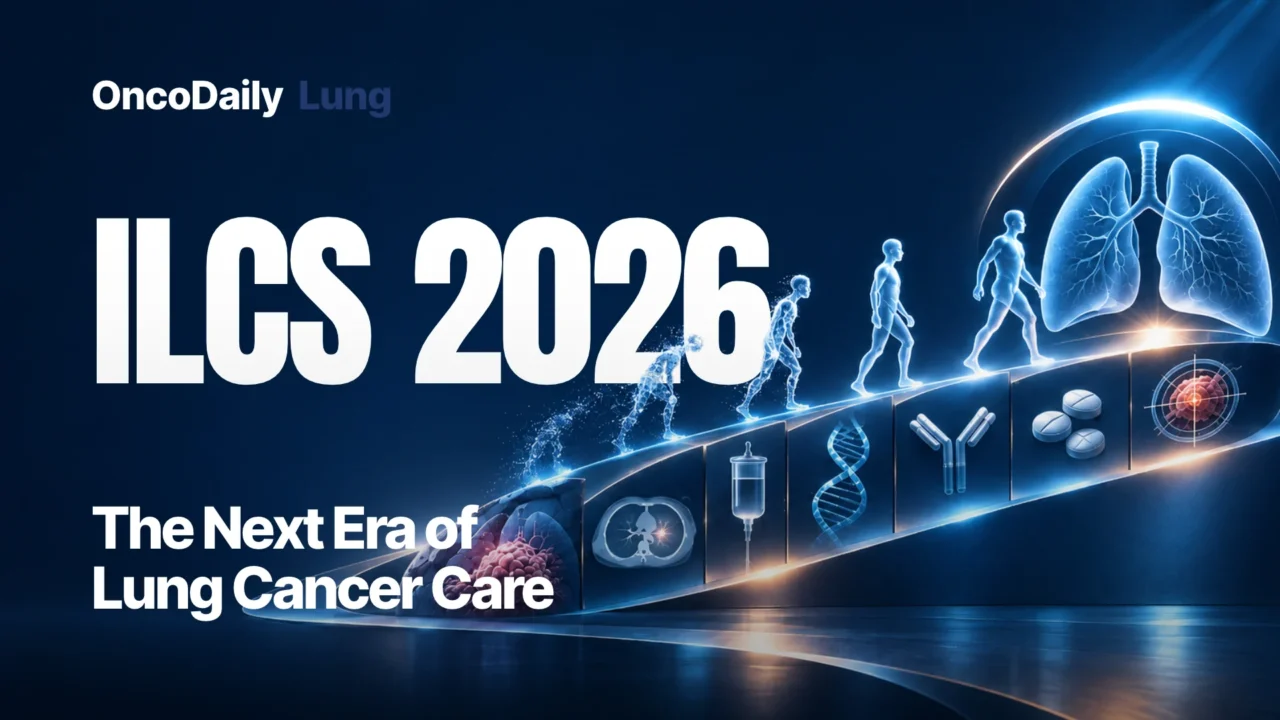
The International Lung Cancer Summit 2026 brought leading thoracic oncology experts to Lausanne, Switzerland, on November 13 for a comprehensive discussion of the treatment decisions reshaping lung cancer care. Co-chaired by Solange Peters and Alfredo Addeo, the meeting examined circulating tumor DNA, evolving molecularly targeted therapies, antibody–drug conjugates, early-stage immunotherapy, and emerging treatment strategies for small-cell lung cancer. Across these topics, one clinical challenge stood out: translating increasingly complex evidence into individualized treatment decisions.
The therapeutic landscape of lung cancer is evolving at an unprecedented pace.
New molecular targets, next-generation tyrosine kinase inhibitors, antibody–drug conjugates, immunotherapy combinations, and immune-engaging strategies are expanding treatment options across multiple disease settings.
However, each advance introduces new clinical questions.
Which treatment should be selected first? When should combination treatment replace monotherapy? Can circulating biomarkers guide escalation or de-escalation? How should toxicity, quality of life, brain metastases, and access influence treatment decisions?
These questions formed the foundation of the International Lung Cancer Summit (ILCS) 2026.
Held at the CHUV Agora building in Lausanne on November 13, the hybrid meeting brought together internationally recognized clinicians and researchers for a full day of scientific presentations, expert debate, and discussion of patient cases.
The summit was co-chaired by Solange Peters, from Lausanne University Hospital (CHUV), and Alfredo Addeo, from Geneva University Hospitals (HUG).
The scientific faculty included Millie Das, Hidehito Horinouchi, Telma Sequeira, Christine Lovly, David Planchard, Sandip Patel, Alessio Cortellini, Nikolaj Frost, Giannis Mountzios, and Anne-Marie Dingemans.
Rather than concentrating on one molecular target or treatment modality, the program followed the full continuum of thoracic oncology, from biomarker development and precision treatment of NSCLC to the rapidly changing therapeutic landscape of small-cell lung cancer.
Circulating Tumor DNA: Is Lung Cancer Ready for Biomarker-Guided Treatment Decisions?
The scientific program opened with Millie Das, who addressed one of the most important emerging questions in precision oncology: whether circulating tumor DNA (ctDNA) is ready to guide clinical decisions in lung cancer.
Liquid biopsy has already become an important component of molecular profiling in advanced NSCLC, particularly when tissue is insufficient or repeat biopsy is difficult.
However, its potential applications extend well beyond the initial identification of actionable genomic alterations.
Serial ctDNA assessment may help characterize molecular response, detect emerging resistance, and identify minimal residual disease following treatment with curative intent.
The potential implications are particularly relevant in early-stage lung cancer.
Patients who remain ctDNA-positive after surgery or systemic treatment may have a higher risk of recurrence, while serially negative findings could help identify populations with more favorable outcomes.
Nevertheless, important questions remain unanswered.
Can ctDNA reliably distinguish patients who require additional therapy from those who could safely avoid it? How should clinicians interpret a negative result in a tumor with low DNA shedding? What is the optimal sampling time, and which assay characteristics are necessary for clinical decision-making?
These uncertainties highlight the distinction between a biomarker associated with prognosis and one prospectively validated to guide treatment.
Although ctDNA-guided treatment represents a promising direction, treatment escalation or omission based solely on investigational minimal residual disease assays remains inappropriate outside validated indications or clinical trials.
EGFR and ALK: New Standards Bring New Sequencing Challenges
Hidehito Horinouchi addressed evolving treatment standards for EGFR- and ALK-positive NSCLC. These molecular subgroups represent some of the most successful examples of precision oncology.
Highly active targeted therapies have substantially improved disease control and expanded treatment opportunities for patients with advanced disease. However, increasing treatment options have complicated first-line decision-making.
For EGFR-mutant NSCLC, the clinical landscape now includes third-generation EGFR inhibitors, EGFR-directed combination strategies, and chemotherapy-containing approaches. Treatment choice increasingly requires consideration of baseline disease burden, CNS involvement, comorbidities, expected toxicity, and patient preferences.
The central question is not simply whether combination therapy can improve efficacy, but which patients experience sufficient absolute benefit to justify additional treatment burden. ALK-positive NSCLC presents a related challenge.
Several potent ALK inhibitors have demonstrated substantial intracranial activity and prolonged disease control, but differences in toxicity, tolerability, and resistance patterns influence the choice of initial therapy.
Long-term management also requires planning for progression. At resistance, molecular reassessment can identify acquired alterations and guide consideration of further targeted treatment or alternative approaches.
The expanding therapeutic landscape makes personalized sequencing increasingly important, particularly when the most effective initial strategy may influence the options available later.
Beyond Common Driver Mutations: HER2, ROS1, and Other Actionable Alterations
The summit continued with Telma Sequeira, whose presentation focused on actionable genomic alterations beyond EGFR and ALK, including HER2 and ROS1.
Molecularly defined subgroups once considered rare or difficult to treat are becoming increasingly relevant as targeted therapies expand. However, their detection remains a major practical challenge. Comprehensive molecular profiling is essential to identify patients who may benefit from targeted treatment.
In particular, alterations such as gene fusions can require testing approaches capable of detecting diverse molecular events, including RNA-based methods when appropriate. HER2-altered NSCLC illustrates the importance of precise molecular classification. HER2 mutations, amplification, and protein overexpression represent distinct biological findings and should not automatically be treated as interchangeable biomarkers.
Similarly, ROS1-positive NSCLC requires consideration of treatment sensitivity, CNS activity, and resistance mechanisms when selecting among available targeted agents. Beyond these molecular subgroups, the growing list of clinically relevant alterations further emphasizes the need for access to comprehensive testing.
The therapeutic advances discussed within this session reinforce an important principle: precision medicine is only possible when the relevant molecular alteration is accurately identified. For healthcare systems with limited molecular diagnostic infrastructure, access to testing remains as important as access to new drugs.
Targeting KRAS: From Historically Undruggable to an Expanding Therapeutic Field
Christine Lovly explored new approaches to targeting KRAS, a pathway that has become an increasingly active area of lung cancer drug development.
For many years, KRAS was considered exceptionally difficult to target pharmacologically. The introduction of KRAS G12C inhibitors established that direct inhibition of selected KRAS alterations was possible.
However, resistance and limited durability remain major challenges. The development of newer inhibitors, combination strategies, and compounds targeting additional KRAS alterations is expanding the field.
Research efforts now extend beyond the G12C mutation to other molecular variants and broader approaches to RAS pathway inhibition.
An important challenge is the diversity of KRAS-mutant tumors. Co-occurring genomic alterations, signaling adaptations, and changes within the tumor microenvironment can influence treatment sensitivity.
Furthermore, the clinical behavior of KRAS-mutant NSCLC is not determined by the KRAS alteration alone. This creates a need for more refined biomarkers and combination strategies capable of identifying patients who may benefit from specific approaches.
The expanding KRAS therapeutic pipeline reflects a broader transition in targeted oncology: successful inhibition of a driver alteration represents the beginning of treatment development, rather than the final solution to acquired resistance.
The Antibody–Drug Conjugate Wave Reaches NSCLC
One of the summit’s major topics was the integration of antibody–drug conjugates into lung cancer treatment.
David Planchard led the session dedicated to this rapidly developing therapeutic class. ADCs combine a tumor-targeting antibody with a cytotoxic payload, connected through a chemical linker.
Their development has created opportunities to deliver potent anticancer treatment to tumors expressing selected surface antigens. In NSCLC, HER2-, TROP2-, and HER3-directed agents have attracted particular attention. However, the clinical success of ADCs depends on more than target expression.
Drug internalization, linker stability, payload characteristics, intracellular trafficking, and bystander effects may all influence treatment response. This creates important questions about biomarker development. Can protein expression alone identify responsive tumors, or are more sophisticated approaches required to assess target biology?
The expanding evidence base also raises questions about treatment sequencing. As ADCs move into earlier treatment lines and combination studies, their optimal placement relative to chemotherapy, immunotherapy, and targeted agents remains increasingly important. Safety is another consideration.
Interstitial lung disease, stomatitis, ocular toxicity, and hematological adverse events may limit treatment tolerability, depending on the ADC platform. Successful clinical integration will therefore require careful patient selection, monitoring, and management of treatment-specific toxicities.
The central challenge is moving from the demonstration of ADC activity toward a more precise understanding of which patients benefit most and when these agents should be used.
Early-Stage NSCLC: Immunotherapy Moves Closer to Curative Treatment
The afternoon program opened with Sandip Patel, who focused on novel immunotherapy approaches in early-stage NSCLC. The introduction of immunotherapy into neoadjuvant and perioperative treatment has significantly altered the management of resectable disease.
Treatment strategies increasingly seek not only to eliminate visible tumors but also to reduce the risk of distant recurrence by addressing micrometastatic disease.
Nevertheless, several unresolved questions remain. Which patients require systemic treatment before surgery? How should pathological response influence postoperative therapy? Can biomarkers identify patients who may safely receive less treatment?
The optimal integration of neoadjuvant, perioperative, and adjuvant immunotherapy also requires careful consideration. Evidence supporting one strategy cannot automatically be extrapolated to every patient with resectable NSCLC.
Clinical stage, tumor biology, molecular driver status, surgical feasibility, and multidisciplinary assessment remain central to treatment selection.
Another important consideration involves patients with borderline resectable disease. For these individuals, the sequencing of systemic therapy and surgery may substantially influence the opportunity to achieve complete resection.
The expanding use of perioperative immunotherapy therefore strengthens the role of coordinated decision-making among medical oncologists, thoracic surgeons, radiation oncologists, radiologists, and pathologists.
Advanced NSCLC Without Actionable Drivers: What Comes After Current Immunotherapy Standards?
Alessio Cortellini examined emerging compounds and combination approaches for advanced NSCLC without actionable genomic alterations. Immunotherapy has transformed the treatment of metastatic NSCLC, but durable clinical benefit remains unevenly distributed.
Treatment selection often depends on PD-L1 expression, disease characteristics, performance status, comorbidities, and the expected balance between efficacy and toxicity. Although immune checkpoint inhibitors have become central to first-line treatment, many patients eventually experience progression.
New treatment strategies are therefore being investigated to address primary and acquired resistance. These include novel immunotherapy combinations, bispecific antibodies, alternative immune targets, and the integration of emerging agents with established treatment backbones. However, increasing regimen complexity introduces additional challenges.
More intensive treatment may improve disease control in selected settings while increasing adverse events, financial toxicity, and treatment burden. Clinical adoption will depend on demonstrating meaningful improvements in outcomes, not simply greater biological activity.
The need for better predictive biomarkers remains particularly important in patients without actionable oncogenic drivers.
Small-Cell Lung Cancer: T-Cell Engagers and ADCs Enter the Discussion
The summit also gave substantial attention to small-cell lung cancer (SCLC), a disease historically characterized by rapid progression, high initial chemotherapy sensitivity, and frequent relapse.
Nikolaj Frost examined the emerging role of T-cell engagers and ADCs in SCLC. DLL3-directed T-cell engagers represent an important development in the treatment landscape.
By engaging T cells against DLL3-expressing tumor cells, these agents introduce an immune-based strategy distinct from conventional chemotherapy and checkpoint inhibition.
However, their integration into clinical care requires consideration of disease setting, eligibility, treatment logistics, and safety.
Cytokine release syndrome, neurological toxicity, and the need for specialized monitoring can present implementation challenges.
Meanwhile, ADC development introduces additional opportunities to target tumor-associated antigens through payload delivery.
The emergence of these treatments creates important questions regarding sequencing, combination therapy, and how best to identify patients likely to benefit.
For SCLC, where therapeutic progress has historically been limited, these developments represent a meaningful expansion of the research agenda. Nevertheless, activity in relapsed disease does not by itself establish the optimal role of an agent in first-line therapy.
The Summit Debate: Which Strategy Should Shape First-Line Extensive-Stage SCLC?
One of the most distinctive sessions was the debate on treatment selection in first-line extensive-stage SCLC. Giannis Mountzios argued for an immunotherapy–chemotherapy strategy incorporating lurbinectedin, while Anne-Marie Dingemans presented the case for immunotherapy combined with DLL3-directed T-cell engager approaches.
The format reflected a major emerging question in SCLC treatment: how should clinicians integrate increasingly active agents into an established first-line treatment framework?
Lurbinectedin-containing strategies offer one approach to intensifying treatment during the first-line continuum, including the maintenance setting. DLL3-targeted immunotherapy introduces a different mechanism, potentially allowing more direct T-cell engagement against SCLC.
These strategies differ in their supporting evidence, toxicity profiles, administration requirements, and stages of clinical development. They should not be treated as universally interchangeable or assumed to be equally established first-line standards.
The debate highlighted the importance of distinguishing promising data from prospectively validated practice-changing evidence. Future clinical trials will be essential to determine which combinations improve overall survival, which patients derive the greatest benefit, and how emerging agents should be sequenced.
From Scientific Evidence to Patient Cases
The summit concluded its scientific program with an interactive panel dedicated to unresolved questions and patient cases. This format reinforced the practical orientation of the meeting. Randomized trials provide essential evidence, but real-world clinical decisions are rarely determined by a single endpoint.
Patients may have comorbidities, CNS metastases, uncommon mutations, limited access to particular agents, or previous treatment exposures not fully represented in clinical trials. For these patients, multidisciplinary discussion becomes essential. The practical challenge is to integrate the strongest available evidence with individual clinical circumstances and patient preferences.
Importantly, the meeting also distinguished its independently accredited scientific program from industry-supported satellite symposia. Separate sessions examined emerging opportunities in KRAS G12C-mutant NSCLC and the role of osimertinib across the EGFR-mutated disease continuum.
International Collaboration and the Challenge of Equitable Access
The participation of experts from multiple countries demonstrated the international scope of contemporary thoracic oncology.
However, scientific progress does not automatically translate into equitable patient access. Comprehensive molecular testing, next-generation treatments, specialized toxicity management, and multidisciplinary infrastructure remain unevenly available.
These disparities can be particularly relevant in healthcare systems where access to broad genomic profiling or newly approved medicines is limited. International educational initiatives such as ILCS provide opportunities for knowledge exchange, but implementation requires more than scientific awareness.
Ensuring that advances reach patients will also depend on diagnostic infrastructure, reimbursement, treatment availability, and clinician education. The summit’s hybrid format and subsequent availability of recorded sessions may help expand access to expert discussion beyond those able to attend in person.
OncoDaily Takeaway
The International Lung Cancer Summit 2026 reflected a field moving rapidly from the identification of effective therapies toward the challenge of choosing and sequencing increasingly complex treatment strategies.
Across EGFR- and ALK-positive NSCLC, rare molecular drivers, KRAS-targeted treatment, ADCs, perioperative immunotherapy, and emerging SCLC therapies, the program emphasized the growing importance of individualized treatment decisions.
ctDNA represents a promising direction for dynamic disease assessment, but its role in guiding treatment escalation and de-escalation requires further validation. ADCs and immune-engaging agents are expanding the therapeutic landscape, although predictive biomarkers, long-term efficacy, and toxicity remain important unresolved questions.
In early-stage NSCLC, integration of systemic therapy and surgery continues to strengthen the need for multidisciplinary decision-making. Meanwhile, SCLC is entering a period of therapeutic diversification, with evolving strategies involving lurbinectedin, DLL3-directed agents, and ADCs.
The central message of ILCS 2026 is that precision oncology is no longer defined only by identifying the correct molecular target. It also requires selecting the appropriate treatment combination, determining its optimal timing, recognizing patients who may benefit from de-escalation, and ensuring that advances can be implemented in everyday practice.
As new therapeutic approaches continue to emerge, collaboration across specialties and international healthcare systems will remain essential to translating scientific progress into better outcomes for patients with lung cancer.
Sources
- International Lung Cancer Summit. ILCS 2026 Official Scientific Programme. Lausanne, Switzerland; November 13, 2026. https://lungsummit.org/
- Geneva University Hospitals (HUG). International Lung Cancer Summit 2026. Official event announcement. https://www.hug.ch/evenement/international-lung-cancer-summit-2026