Dual immune checkpoint inhibition with nivolumab plus ipilimumab, with or without a short course of chemotherapy, has established a role in first-line metastatic non-small-cell lung cancer (NSCLC). However, an important clinical question remains: how do these strategies perform outside randomized trials, particularly among older patients and other populations less frequently represented in pivotal studies?
The 2.5-year update of the LIGHT-NING study provides one of the largest real-world evaluations of nivolumab plus ipilimumab in NSCLC to date.
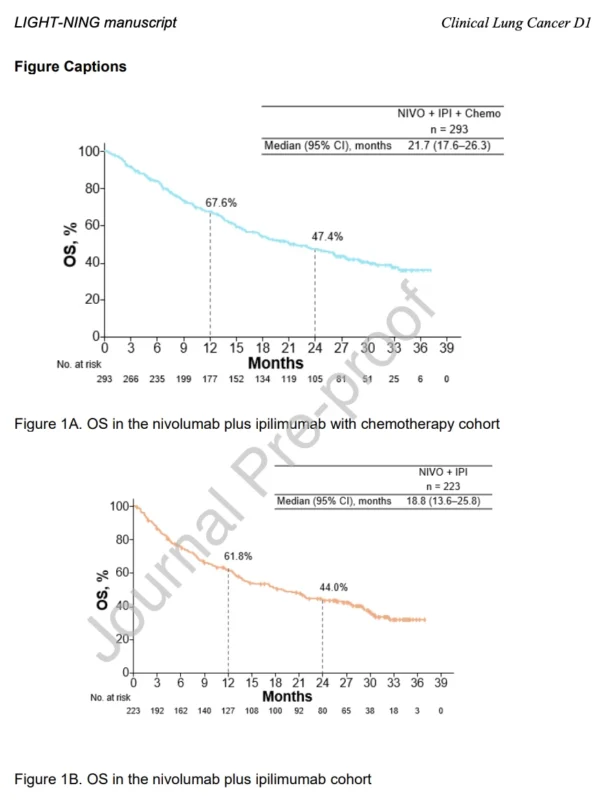
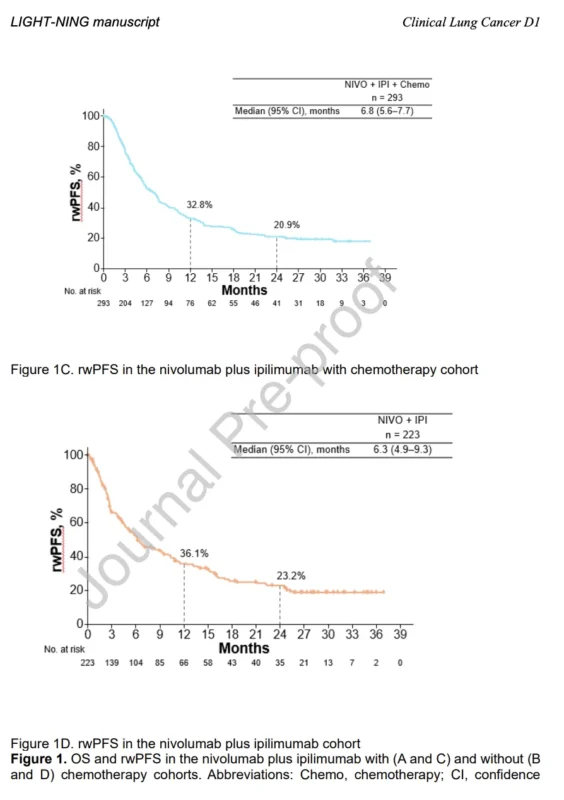
Among 545 Japanese patients with stage IV or recurrent NSCLC, median overall survival reached 21.7 months with nivolumab plus ipilimumab plus chemotherapy and 18.8 months with nivolumab plus ipilimumab without chemotherapy. Median real-world progression-free survival was 6.8 and 6.3 months, respectively.
The study also explored a clinically important problem associated with chemotherapy-free dual immunotherapy: early progressive disease within the first 3 months.
Low body mass index in squamous NSCLC and unfavorable inflammatory or nutritional markers in non-squamous disease emerged as potential risk factors for early progression, although these findings remain exploratory and should not yet guide treatment selection independently. The study was accepted for publication in Clinical Lung Cancer in October 2026.
Why LIGHT-NING Matters
Nivolumab and ipilimumab target different immune checkpoints, PD-1 and CTLA-4, creating complementary mechanisms of antitumor immune activation.
The combination became an established first-line option based largely on CheckMate 227, while CheckMate 9LA incorporated two initial cycles of chemotherapy with nivolumab and ipilimumab to provide more rapid disease control during the period before an effective immune response develops.
Long-term follow-up from both trials has demonstrated durable survival in subsets of patients. However, clinical trials inevitably select patients.
Older individuals, patients with poor performance status, substantial comorbidities and other challenging characteristics are frequently underrepresented. Japanese representation in the pivotal trials was also limited.
LIGHT-NING was designed to address this evidence gap by examining how these regimens perform in routine Japanese clinical practice. Another motivation was the problem of early progression with chemotherapy-free nivolumab plus ipilimumab.
In CheckMate 227, approximately 40% of patients treated with nivolumab plus ipilimumab experienced disease progression within the first 3 months. Identifying patients at greatest risk for this early failure could potentially influence the decision between dual immunotherapy alone and a strategy incorporating chemotherapy.
A Large Multicenter Real-World Cohort
LIGHT-NING is an ongoing multicenter observational study conducted across 48 Japanese institutions. Patients had histologically confirmed stage IV or recurrent NSCLC and received first-line nivolumab plus ipilimumab either with or without chemotherapy.
Patients with sensitizing EGFR mutations or known ALK translocations suitable for targeted therapy were excluded. Treatment selection was made by the treating physician rather than through randomization, an important distinction when interpreting comparisons between the two treatment cohorts.
The current analysis incorporated 2.5 years of study data through June 14, 2024. A total of 551 patients were enrolled, of whom 545 were included in the safety analysis and 516 in the effectiveness analysis.
Among the safety population 319 patients (58.5%) received nivolumab plus ipilimumab with chemotherapy, while 226 patients (41.5%) received nivolumab plus ipilimumab without chemotherapy. Median follow-up was 15.1 months.
The Population Was Older Than Many Registration-Trial Cohorts
Median age was 70 years, with patients ranging from 31 to 89 years. Almost 90% had ECOG performance status 0–1, although patients with ECOG PS 2 were also represented. Only 18.9% were women.
Histologically, 27.5% had squamous NSCLC and 72.5% had non-squamous tumors. PD-L1 expression demonstrated substantial heterogeneity:
- 46.4% had PD-L1 <1%, 34.9% had PD-L1 1%–49%, and 9.4% had PD-L1 ≥50%
This diversity allowed the investigators to examine outcomes across several clinically relevant subgroups rather than limiting analysis to a highly selected immunotherapy-sensitive population.
Median Overall Survival Exceeded 18 Months With Both Strategies
The study reported clinically meaningful survival with both first-line approaches.
Median OS was:
- 21.7 months with nivolumab + ipilimumab + chemotherapy
and
- 18.8 months with nivolumab + ipilimumab alone
Median real-world PFS was:
- 6.8 months with chemotherapy
versus
- 6.3 months without chemotherapy
The investigators concluded that these outcomes were broadly consistent with long-term experience from CheckMate 9LA and CheckMate 227. However, the two LIGHT-NING treatment cohorts should not be interpreted as a randomized head-to-head comparison.
Physicians selected therapy according to clinical judgment, meaning differences in baseline disease burden, perceived aggressiveness, fitness and other factors could have influenced both treatment selection and outcomes. Therefore, the numerically longer OS with chemotherapy cannot establish superiority of one regimen over the other.
Response Rates Were Similar Between the Two Strategies
Among patients with measurable disease, objective response rate was:
- 41.7% with nivolumab + ipilimumab + chemotherapy
versus
- 37.4% with nivolumab + ipilimumab alone
Disease control rates were also similar:
- 62.2% versus 61.3%.
Interestingly, among patients who responded, median duration of response was:
- 9.8 months with chemotherapy
and
- 13.4 months without chemotherapy
At least 12 months of response was achieved in 42.1% and 50.0% of responders, respectively. Again, these numerical differences should not be used to infer comparative superiority because the study was observational. The more important finding is that durable responses were observed in routine clinical practice with both approaches.
PD-L1 Did Not Define a Simple Benefit Pattern
One advantage of nivolumab plus ipilimumab is its potential activity across a wide range of PD-L1 expression. LIGHT-NING broadly supported this concept.
With chemotherapy, median OS was:
- 21.0 months for PD-L1 <1%
- 23.1 months for PD-L1 1%–49%
- 27.7 months for PD-L1 ≥50%
Without chemotherapy, median OS was:
- 17.2 months
- 20.8 months
- 17.3 months, respectively
Median rwPFS showed a generally increasing numerical pattern with higher PD-L1 expression, but patient numbers, particularly in the PD-L1 ≥50% subgroup, were relatively limited. The findings therefore do not establish PD-L1 as a definitive discriminator between the two nivolumab-ipilimumab strategies.
Older Patients Also Derived Clinically Meaningful Outcomes
Patients aged ≥75 years represent another group frequently underrepresented in randomized trials. Median OS among patients aged ≥75 years was:
- 18.4 months with chemotherapy and 18.8 months without chemotherapy
Median rwPFS was approximately 6.0 and 6.5 months, respectively. These results suggest that advanced age alone does not preclude meaningful benefit from nivolumab plus ipilimumab-based therapy.
However, treatment selection in older adults still requires assessment of functional status, comorbidity, frailty, organ function and the increased consequences of immune-related toxicity.
Recurrent Disease Had Better Outcomes Than De Novo Stage IV Disease
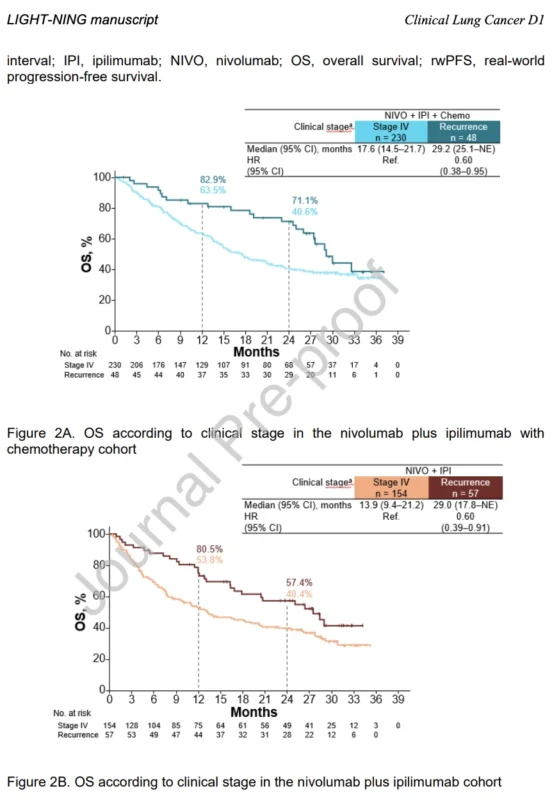
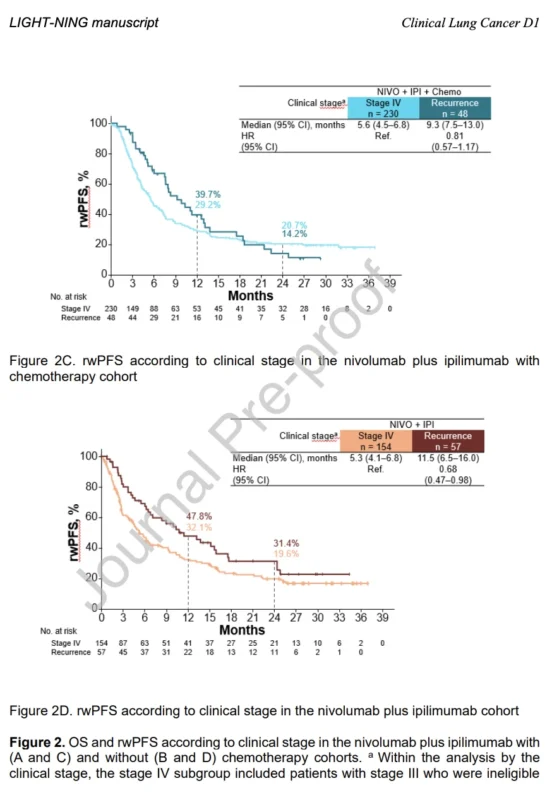
Clinical stage emerged as a potentially important prognostic factor. Patients treated for postoperative recurrent disease experienced substantially longer outcomes than patients presenting with stage IV disease.
Median OS among those with recurrent disease was approximately:
- 29.2 months with chemotherapy
and
- 29.0 months without chemotherapy
For stage IV disease, corresponding median OS was:
- 17.6 months and 13.9 months
The same pattern was observed for rwPFS. Patients with recurrent disease achieved rwPFS of 9.3 and 11.5 months, compared with approximately 5.6 and 5.3 months in stage IV disease. These results likely reflect differences in underlying disease biology, burden and patient characteristics rather than an interaction with treatment itself.
Histology May Also Influence Outcomes
In the cohort receiving nivolumab plus ipilimumab with chemotherapy, non-squamous NSCLC was associated with numerically better outcomes than squamous disease.
Median OS was:
- 26.3 months in non-squamous NSCLC
versus
- 14.5 months in squamous NSCLC
Median rwPFS was 7.3 versus 5.6 months. The difference between histologies appeared less pronounced in the chemotherapy-free cohort.
Because treatment selection was not randomized and the study was not designed for formal cross-histology comparisons, these observations should be considered prognostic rather than evidence that one regimen should automatically be selected according to histology.
Outcomes Were Poor for ECOG PS 2
Patients with ECOG performance status 2 were included, providing evidence in a population usually underrepresented in pivotal immunotherapy trials.
Outcomes were substantially worse. With chemotherapy, median OS was 5.2 months and rwPFS 2.9 months. Without chemotherapy, median OS was 6.2 months and rwPFS 5.3 months.
Patient numbers were small, 12 and 17 respectively, limiting interpretation. Nevertheless, the findings reinforce the importance of performance status as one of the strongest prognostic factors in metastatic NSCLC.
The Central Clinical Problem: Early Progression With Dual Immunotherapy
One of the most interesting components of LIGHT-NING was the exploratory analysis of early progressive disease among patients treated with nivolumab plus ipilimumab without chemotherapy. Early PD was defined as disease progression or disease-related death within 3 months after treatment initiation.
The rationale is clinically important. Immunotherapy can produce durable long-term control, but some patients progress before sufficient immune-mediated antitumor activity develops.
Adding two cycles of chemotherapy, as in CheckMate 9LA, was partly intended to reduce this early vulnerability. LIGHT-NING therefore attempted to identify readily available baseline characteristics associated with early progression during chemotherapy-free dual immunotherapy.
Early Progression Was More Frequent in Non-Squamous Disease
Among patients receiving nivolumab plus ipilimumab alone 19.7% of patients with squamous NSCLC experienced early PD, compared with 36.2% of patients with non-squamous NSCLC. Only approximately one-third of patients who experienced early progression subsequently received second-line treatment.
That observation is particularly important. Rapid progression in metastatic NSCLC can lead to clinical deterioration severe enough that patients never reach another line of systemic therapy. Preventing early progression can therefore have consequences extending beyond first-line PFS.
Low BMI Emerged as a Potential Marker in Squamous NSCLC
Among patients with squamous NSCLC, BMI <18.5 kg/m² was associated with a higher likelihood of early progression. The multivariable odds ratio was 5.57 compared with patients with BMI ≥18.5 kg/m² and <25 kg/m².
Low BMI may reflect nutritional status, cachexia, systemic inflammation or more aggressive cancer biology. Similar associations between underweight status and poorer immunotherapy outcomes have previously been reported.
However, the LIGHT-NING analysis involved relatively few early progression events, and BMI should not currently be used alone to decide whether chemotherapy should be added to nivolumab plus ipilimumab.
Albumin, LDH and LIPI Were Associated With Early PD in Non-Squamous Disease
Different factors emerged in non-squamous NSCLC. Patients with albumin <3.5 g/dL had greater risk of early progression. Elevated LDH ≥222 U/L was also associated with early PD, with an odds ratio of approximately 2.27.
The Lung Immune Prognostic Index (LIPI) was another potential predictor. Patients with intermediate or poor LIPI scores of 1 or 2 had a higher likelihood of early progression than those with a LIPI score of 0, with an odds ratio of approximately 2.83. LIPI incorporates LDH and derived neutrophil-to-lymphocyte ratio and has previously been associated with outcomes during immune checkpoint inhibition.
Together, these findings suggest that the interaction between systemic inflammation, nutritional status and tumor burden may influence the probability of achieving sufficiently rapid disease control with chemotherapy-free dual immunotherapy.
Could These Markers Help Decide Who Needs Chemotherapy?
This is the most clinically provocative question raised by LIGHT-NING. If a patient has a high probability of very early progression with nivolumab plus ipilimumab alone, adding short-course chemotherapy could theoretically provide immediate cytoreduction while immunotherapy develops its effect.
However, LIGHT-NING does not demonstrate that patients with low BMI, low albumin, high LDH or unfavorable LIPI would have better outcomes if chemotherapy were added. The study only identified associations among patients receiving nivolumab plus ipilimumab without chemotherapy.
The early-PD analysis was exploratory, involved relatively small subgroups, and was not externally validated. These biomarkers should therefore be viewed as hypothesis-generating signals for future prospective research, not as established treatment-selection criteria.
Chemotherapy Increased Severe Toxicity
The effectiveness results must also be considered alongside safety. Grade 3–5 treatment-related adverse events occurred in:
- 53.3% with nivolumab + ipilimumab + chemotherapy
versus
- 30.5% with nivolumab + ipilimumab alone
Grade 3–5 immune-related adverse events occurred in 39.8% and 30.5%, respectively. Treatment-related deaths occurred in:
- 4.1% with chemotherapy
and
- 3.1% without chemotherapy
These rates underscore that dual checkpoint blockade is not a low-toxicity strategy, even when chemotherapy is omitted.
Pneumonitis Remains a Major Safety Concern
Pneumonitis was the most important immune-related toxicity leading to treatment discontinuation. Across the overall population, grade 3–5 pneumonitis occurred in approximately 7.5% of patients. In the chemotherapy-containing cohort, frequently reported severe immune-related toxicities included hematotoxicity, rash or dermatitis and pneumonitis.
With nivolumab plus ipilimumab alone, pneumonitis was the most common grade 3–5 immune-related event, followed by endocrine toxicity and hepatitis. The investigators noted that severe pneumonitis occurred more frequently than in the global CheckMate 227 population and discussed a possible greater susceptibility to drug-related lung injury in Japanese patients.
This interpretation remains hypothesis-generating but reinforces the importance of close respiratory monitoring.
Most Severe Immune-Related Events Improved or Resolved
Despite the toxicity burden, approximately 78%–79% of grade 3–5 immune-related adverse events improved or resolved. The timing of immune toxicity also varied substantially.
Some hematologic and dermatologic events occurred relatively early, whereas pneumonitis frequently emerged later. The authors emphasize early recognition and escalation of immunosuppressive treatment when immune-related events are steroid resistant.
Three cases of severe cytokine release syndrome occurred, all among patients receiving chemotherapy with nivolumab plus ipilimumab. Two were fatal, while one patient recovered following treatment that included tocilizumab. Myocarditis was uncommon but clinically serious.
Stopping Treatment for Toxicity Did Not Appear to Eliminate Long-Term Benefit
An interesting finding involved patients who permanently discontinued nivolumab, ipilimumab or both because of treatment-related adverse events.
Median OS was:
- 27.7 months in the chemotherapy-containing cohort
and
- 29.2 months in the chemotherapy-free cohort.
These outcomes were comparable to, or numerically longer than, those of the overall study populations. This observation is consistent with previous immunotherapy experience suggesting that durable immune activation can persist even after treatment discontinuation.
Nevertheless, the analysis is subject to substantial selection and guarantee-time biases and should not be interpreted as evidence that toxicity is beneficial or that early treatment discontinuation is desirable.
Safety Must Also Be Viewed in the Context of NIPPON
The Japanese NIPPON trial previously raised important concerns about nivolumab plus ipilimumab combined with chemotherapy after the study was terminated prematurely because of a relatively high rate of treatment-related deaths.
LIGHT-NING did not identify a new safety signal, and treatment-related mortality was lower than that reported in NIPPON. However, the real-world rates of fatal toxicity in LIGHT-NING, particularly pneumonitis, show that careful patient selection and experienced immune-related adverse event management remain essential.
The study therefore provides reassurance regarding routine use while not minimizing the potential seriousness of dual-checkpoint toxicity.
Important Limitations
The major limitation is the observational design. Treatment was selected by physicians rather than randomly assigned, making direct comparison between nivolumab plus ipilimumab with and without chemotherapy inappropriate. Medical-record-based data may also underestimate adverse events, especially mild or delayed toxicities.
Tumor response and progression were assessed by treating physicians without blinded central review, and imaging intervals were not standardized. The analysis of early progression involved relatively few events and multiple exploratory variables, creating the possibility of model overfitting.
No adjustment for multiplicity was performed. Potential confounders such as tumor mutational burden, antibiotic exposure, microbiome characteristics, geographic differences and institution-specific treatment practices were not captured.
Most importantly, the study was conducted entirely in Japan, limiting the certainty with which these findings can be generalized to other populations.
What LIGHT-NING Adds to Clinical Practice
LIGHT-NING does not redefine the first-line treatment algorithm for metastatic NSCLC. Instead, its value lies in demonstrating that the durable outcomes seen with nivolumab plus ipilimumab-based strategies in pivotal trials can also be observed in a broader real-world population.
It also sharpens an unresolved clinical question. For patients considered for chemotherapy-free nivolumab plus ipilimumab, clinicians would benefit from identifying those whose disease is too aggressive to safely wait for immune-mediated disease control. The associations involving BMI, albumin, LDH and LIPI provide potential clues, but they require prospective validation.
Ultimately, treatment selection should continue to incorporate disease burden, clinical tempo, histology, PD-L1 expression, performance status, comorbidity, toxicity risk and patient preference rather than any single exploratory biomarker.
OncoDaily Takeaway
The LIGHT-NING 2.5-year update provides important real-world support for nivolumab plus ipilimumab-based first-line therapy in metastatic or recurrent NSCLC. Among 545 Japanese patients, median OS was 21.7 months with two-cycle chemotherapy-containing treatment and 18.8 months with chemotherapy-free nivolumab plus ipilimumab, while median rwPFS was 6.8 and 6.3 months, respectively.
These figures should not be compared as though the study were randomized. Instead, they demonstrate that both strategies can produce meaningful and durable outcomes in routine clinical practice.
Perhaps the most clinically interesting finding is the identification of potential markers of early progression during chemotherapy-free dual immunotherapy: low BMI in squamous disease and low albumin, elevated LDH and unfavorable LIPI in non-squamous disease.
For now, these markers are hypothesis-generating. Their real value would be established only if future studies demonstrate that they can identify patients who specifically benefit from adding chemotherapy.
At the same time, safety remains central. Severe toxicity was more frequent with chemotherapy, pneumonitis remained an important immune-related adverse event, and treatment-related deaths occurred with both approaches.
LIGHT-NING therefore reinforces a central principle of modern NSCLC treatment: the choice between dual immunotherapy alone and dual immunotherapy with chemotherapy should be individualized according to the need for early disease control and the patient’s capacity to tolerate treatment intensity.
Source
- Imai H, Yamaguchi T, Azuma K, et al. Real-World Outcomes and Early Progressive Disease Analysis of Nivolumab and Ipilimumab Combination Therapy in Metastatic NSCLC: LIGHT-NING Study 2.5-year update. Clinical Lung Cancer. 2026. DOI: 10.1016/j.cllc.2026.10.001.