
Pembrolizumab (Keytruda) has become one of the defining agents of modern immuno-oncology, shifting cancer treatment beyond directly targeting malignant cells toward therapeutically modifying the interaction between tumors and the immune system. Unlike chemotherapy, which primarily acts through direct cytotoxic effects, immune checkpoint inhibition targets mechanisms that cancers can exploit to escape immune control.
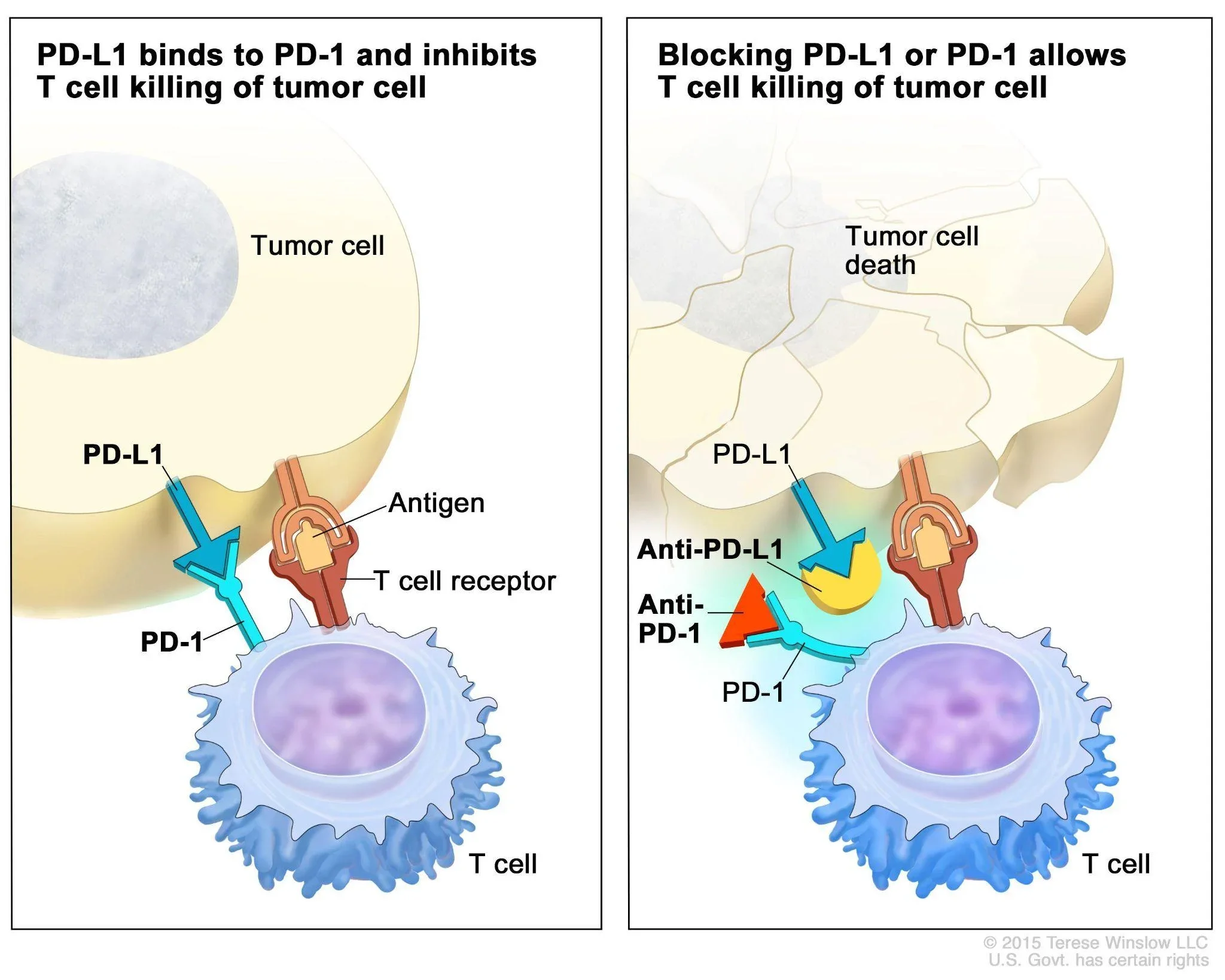
Pembrolizumab is a humanized monoclonal IgG4 antibody targeting programmed cell death protein 1 (PD-1), an inhibitory receptor expressed on activated T cells. By preventing PD-1 from interacting with its ligands, PD-L1 and PD-L2, pembrolizumab reduces inhibitory signaling and can restore antitumor T-cell activity rather than directly killing cancer cells.
The PD-1 pathway regulates T-cell activation, exhaustion, and metabolism while contributing to normal immune tolerance. Blocking this pathway can restore antitumor immunity, but its effectiveness depends on much more than PD-1 or PD-L1 expression alone. Tumor antigenicity, antigen presentation, immune-cell infiltration, the tumor microenvironment, and mechanisms of immune escape can all influence whether checkpoint blockade translates into meaningful clinical benefit.
Which Cancers Are Treated With Pembrolizumab?
The clinical development of pembrolizumab has expanded across numerous malignancies and stages of disease. Its approved uses depend on tumor type, disease stage, biomarker status, previous treatment, and whether it is administered alone or in combination with other therapies.
Its applications include selected settings in melanoma, non-small cell lung cancer (NSCLC), head and neck squamous cell carcinoma, urothelial and renal cancers, gastrointestinal and gynecological malignancies, triple-negative breast cancer, several hematologic malignancies, and other cancers.
Importantly, pembrolizumab also has tissue-agnostic indications, in which treatment eligibility can be determined by molecular characteristics rather than exclusively by the anatomical origin of the tumor. These include selected tumors with microsatellite instability-high (MSI-H), deficient mismatch repair (dMMR), or high tumor mutational burden (TMB-H), according to the relevant treatment criteria.
The phase III KEYNOTE-024 trial provided an early demonstration of how biomarker selection could translate checkpoint biology into clinical practice. In previously untreated advanced NSCLC with PD-L1 expression on at least 50% of tumor cells and without sensitizing EGFR or ALK alterations, pembrolizumab improved progression-free survival (PFS) and overall survival (OS) compared with platinum-based chemotherapy.
The subsequent development of pembrolizumab, however, has also demonstrated that there is no single universal biomarker of sensitivity to PD-1 blockade.
How Do Biomarkers Influence Pembrolizumab Treatment Selection?
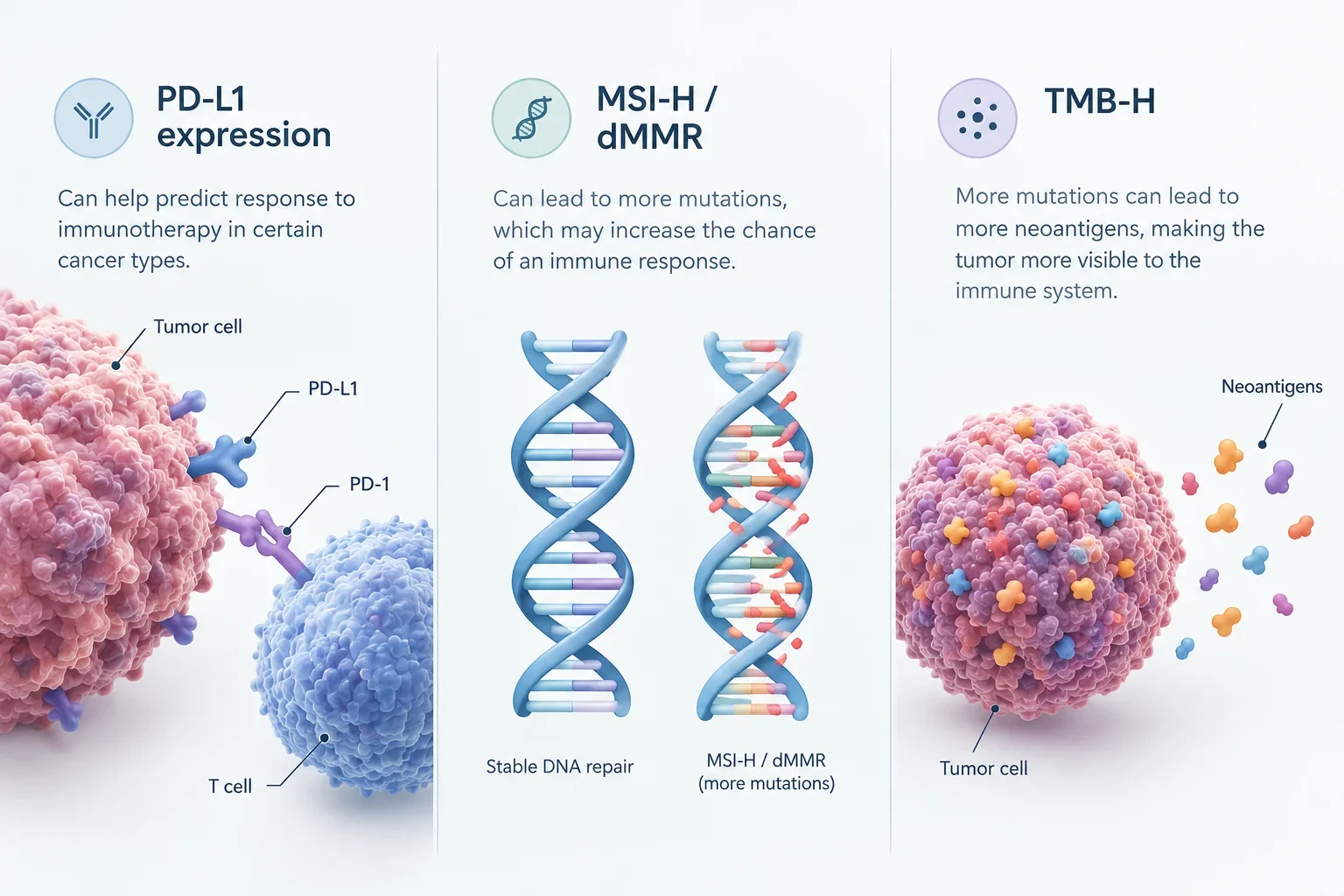
Biomarkers can help identify tumors with biological characteristics associated with sensitivity to immunotherapy and, in some settings, determine treatment eligibility. However, they capture different aspects of tumor–immune biology, and none can guarantee an individual response.
PD-L1 Expression
PD-L1 can bind PD-1 on T cells and suppress their activity, providing one mechanism through which tumors can evade immune control.
PD-L1 testing helps guide pembrolizumab use in cancers including NSCLC and triple-negative breast cancer. Depending on the indication, expression may be reported using measures such as tumor proportion score (TPS) or combined positive score (CPS).
Higher PD-L1 expression can be associated with greater benefit from checkpoint inhibition in specific clinical settings, but PD-L1 is an imperfect biomarker. Some PD-L1-positive tumors do not respond, while benefit can occur despite low or undetectable expression in other treatment contexts, particularly with combination therapy.
PD-L1 should therefore be interpreted within the specific tumor type and treatment setting rather than as a universal measure of immunotherapy sensitivity.
MSI-H and dMMR
MSI-H and dMMR represent a different biological route toward sensitivity to checkpoint blockade.
Defects in DNA mismatch repair allow mutations to accumulate within the tumor. Some of these mutations can generate abnormal proteins and neoantigens capable of immune recognition, providing a biological rationale for the sensitivity of many MSI-H/dMMR tumors to PD-1 inhibition.
The phase III KEYNOTE-177 trial demonstrated the clinical relevance of this biology in metastatic colorectal cancer, establishing the benefit of first-line pembrolizumab compared with chemotherapy in patients with MSI-H/dMMR disease.
This represents an important principle in immuno-oncology: in selected settings, the molecular and immune characteristics of a tumor can become therapeutically relevant across conventional anatomical classifications.
Tumor Mutational Burden
Tumor mutational burden reflects the number of mutations present within a tumor. A greater mutational burden can increase the probability of generating abnormal proteins that may be recognized by the immune system, providing the biological rationale for TMB-H as a biomarker for pembrolizumab in selected settings.
But more mutations do not automatically translate into more effective antitumor immunity.
Potential neoantigens still need to be processed and presented effectively, tumor-reactive T cells must reach the tumor, and those cells must retain sufficient function to mediate tumor killing. TMB is therefore not a universal predictor of response, and its interpretation depends on tumor type, testing methodology, and clinical context.
Taken together, PD-L1, MSI/dMMR, and TMB describe different dimensions of tumor–immune biology. They can guide treatment decisions, but none provides a complete picture of whether an individual tumor will respond to PD-1 blockade.
Recent Clinical Trials: Where Is Pembrolizumab Moving Next?
The development of pembrolizumab has increasingly shifted from establishing the activity of PD-1 blockade itself toward determining how it can be combined with therapies that target complementary aspects of tumor biology.
Several recent phase III studies illustrate this evolution.
LITESPARK-022: Pembrolizumab Plus Belzutifan in Renal Cell Carcinoma
The phase III LITESPARK-022 trial evaluated whether adding belzutifan to adjuvant pembrolizumab could improve outcomes in patients with clear-cell renal cell carcinoma at increased risk of recurrence after surgery.
The combination significantly improved disease-free survival compared with pembrolizumab alone. At the reported interim analysis, however, the difference in OS had not reached statistical significance, making longer follow-up important for determining whether the improvement in disease-free survival ultimately translates into a survival advantage.
The study illustrates a broader direction in immuno-oncology: combining checkpoint inhibition with agents targeting distinct biological pathways rather than relying on immune activation alone.
ASCENT-04/KEYNOTE-D19: Bringing an ADC Into First-Line Immunotherapy for TNBC
The phase III ASCENT-04/KEYNOTE-D19 trial evaluated sacituzumab govitecan plus pembrolizumab in previously untreated, unresectable locally advanced or metastatic triple-negative breast cancer with PD-L1 CPS ≥10.
The combination significantly prolonged PFS compared with chemotherapy plus pembrolizumab, while longer-term follow-up is needed to define the mature OS effect.
Beyond the efficacy result itself, the study reflects an important change in combination strategy. Rather than pairing checkpoint blockade only with conventional chemotherapy, antibody-drug conjugates are increasingly being investigated as partners for immunotherapy, potentially combining targeted cytotoxic delivery with immune-mediated tumor control.

KEYNOTE-B15/EV-304: Moving ADC–Immunotherapy Into the Perioperative Setting
The phase III KEYNOTE-B15/EV-304 trial evaluated perioperative enfortumab vedotin plus pembrolizumab against neoadjuvant gemcitabine/cisplatin in previously untreated muscle-invasive bladder cancer among patients eligible for cisplatin-based chemotherapy and radical cystectomy.
The perioperative combination significantly improved both event-free survival and OS compared with neoadjuvant gemcitabine/cisplatin followed by surgery. Grade ≥3 adverse events were also more frequent with the combination, underscoring the importance of considering the magnitude of benefit alongside treatment burden and toxicity.
The study extends the ADC–checkpoint inhibitor strategy into curative-intent treatment and illustrates how immunotherapy is increasingly being integrated earlier in the cancer treatment pathway.
Why Does Pembrolizumab Not Work for Every Patient?
Despite its broad clinical activity, pembrolizumab does not benefit every patient. Some tumors are resistant from the beginning, while others initially respond and subsequently develop acquired resistance.
The mechanisms can occur at multiple stages of the antitumor immune response. Tumors with low immunogenicity may generate too few recognizable antigens. Defects in antigen processing or presentation can prevent T cells from recognizing malignant cells, while other tumors exclude immune cells from the tumor microenvironment or create immunosuppressive conditions that impair T-cell function.
This explains a central limitation of checkpoint inhibition: removing one inhibitory signal does not correct every defect in antitumor immunity.
It also provides the rationale for many contemporary combination strategies. Chemotherapy, targeted therapies, antibody-drug conjugates, and other treatments may complement PD-1 blockade by acting on different components of tumor biology. The relevant mechanism and clinical benefit, however, remain disease- and regimen-specific.
The Other Side of Checkpoint Blockade: Immune-Related Toxicity
The biology responsible for pembrolizumab’s antitumor activity also helps explain its characteristic toxicity.
PD-1 is not simply a pathway exploited by cancer; it is part of normal immune regulation. Blocking it can disturb immune tolerance and allow inflammatory responses against healthy tissues, resulting in immune-related adverse events (irAEs).
These toxicities can affect multiple organs, including the skin, gastrointestinal tract, lungs, liver, kidneys, thyroid, and pituitary gland. Recognized manifestations include colitis, pneumonitis, hepatitis, nephritis, and endocrine dysfunction. Their timing can be unpredictable, and some events can occur even after checkpoint inhibitor therapy has ended.
Management depends on the affected organ and severity and can involve treatment interruption, corticosteroids or other immunosuppressive therapies, and permanent discontinuation in selected severe cases. Some endocrine toxicities can result in persistent loss of gland function requiring long-term hormone replacement.
Antitumor activity and immune-related toxicity therefore originate from the same fundamental intervention: altering the regulatory balance of the immune system.
Written by Mane Sayian, PharmD