The introduction of immunotherapy-based combinations has transformed the treatment landscape of advanced hepatocellular carcinoma (HCC). Regimens such as atezolizumab plus bevacizumab, durvalumab plus tremelimumab, and nivolumab plus ipilimumab have demonstrated superior survival compared with tyrosine kinase inhibitors and are now considered standard first-line options for many patients with unresectable disease.
However, a major challenge remains: most pivotal trials enrolled only patients with preserved liver function, typically Child-Pugh A cirrhosis. In routine clinical practice, a substantial proportion of patients present with Child-Pugh B liver dysfunction, yet evidence guiding treatment decisions in this population remains limited.
In a large international multicenter study, Anne Victoire Odent and colleagues sought to address this gap by evaluating outcomes of atezolizumab plus bevacizumab in patients with Child-Pugh B cirrhosis and identifying clinical factors that could distinguish patients likely to benefit from treatment.
Study Design
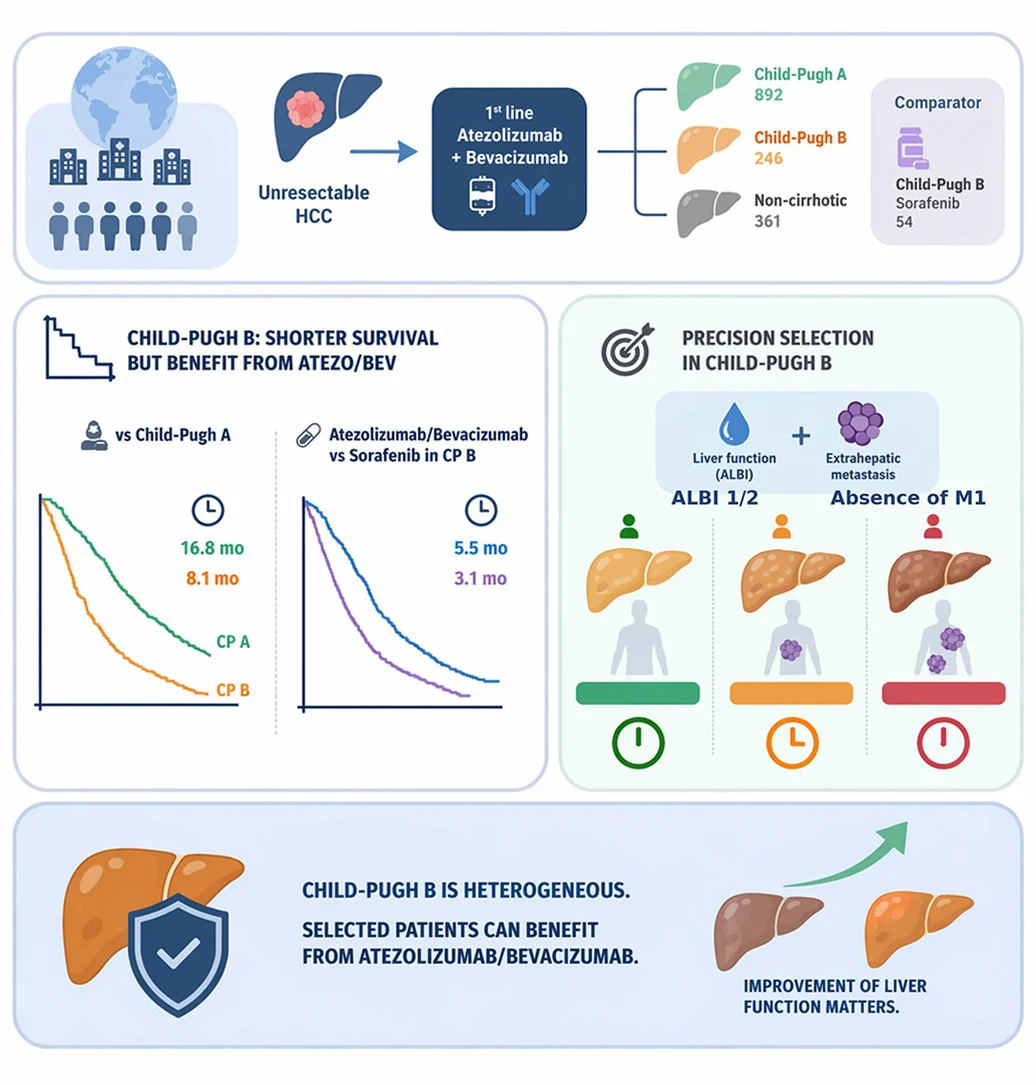
The investigators analyzed 1,499 patients with unresectable HCC treated with first-line atezolizumab plus bevacizumab across 12 academic centers in Europe and South Korea between 2020 and 2024.
Among the entire cohort, 246 patients (16.4%) had Child-Pugh B cirrhosis. This represented one of the largest real-world analyses of immunotherapy in this traditionally underrepresented population.
The study also included a separate cohort of Child-Pugh B patients treated with sorafenib, allowing comparative assessment of outcomes between the two systemic approaches.
Child-Pugh B Patients Had Inferior Outcomes, But Not All Performed Equally
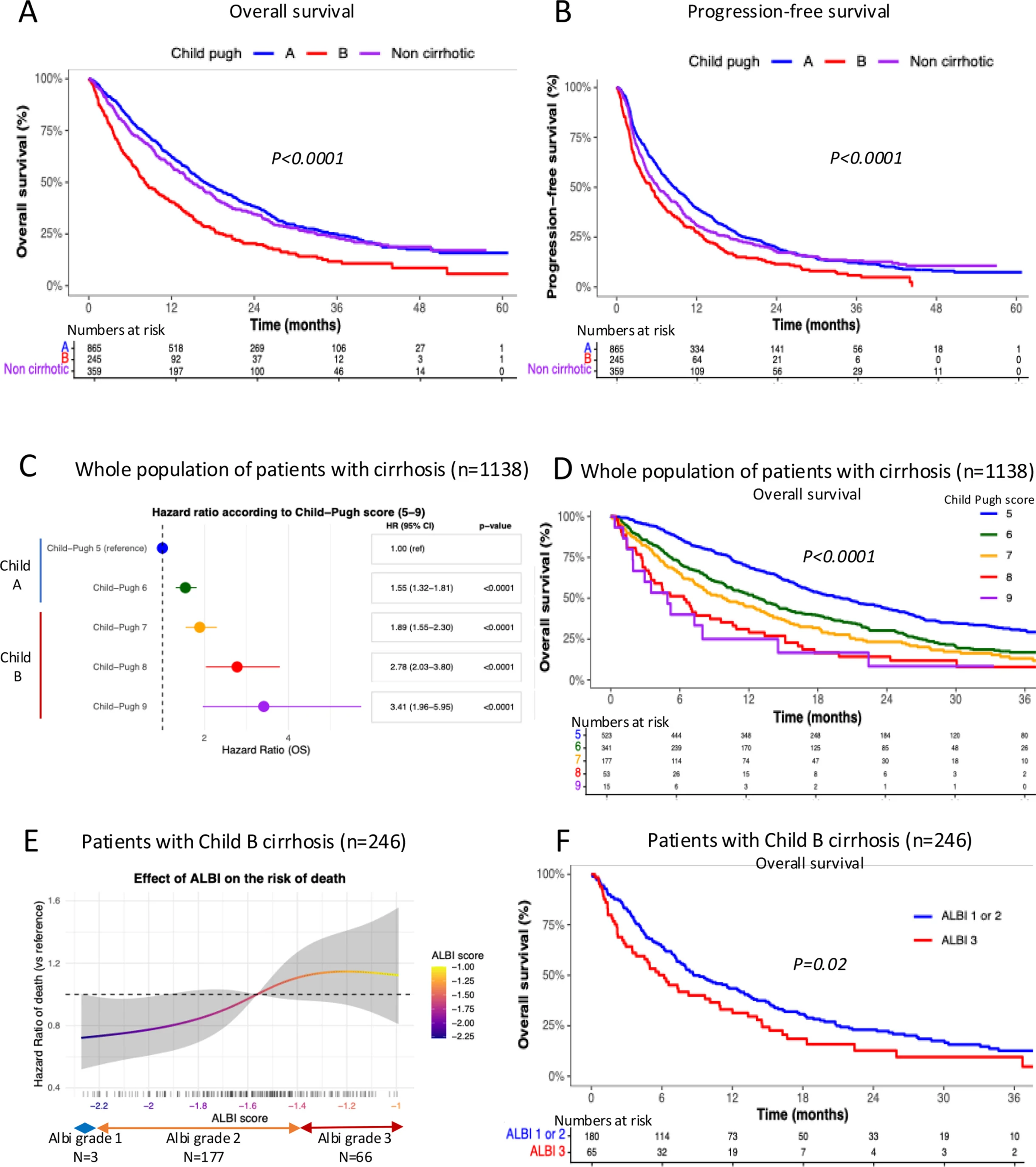
As expected, patients with impaired liver function experienced poorer outcomes than those with Child-Pugh A cirrhosis.
Median overall survival was approximately half that observed in Child-Pugh A patients, highlighting the major impact of underlying liver dysfunction on prognosis. Nevertheless, the data also demonstrated that Child-Pugh B disease is far from homogeneous. Some patients achieved durable benefit and survived for years after treatment initiation.
Key Survival Outcomes
- Median OS: 8.1 months in Child-Pugh B vs 16.8 months in Child-Pugh A
- Median PFS: 5.2 months vs 8.6 months
- Two-year OS: 20.4% vs 38.4%
- Three-year OS: 11.7% vs 25%
These findings indicate that although prognosis is generally worse in Child-Pugh B cirrhosis, meaningful long-term benefit remains possible for selected patients.
Not All Child-Pugh B Patients Are the Same
One of the most important findings of the study was the recognition that liver function alone does not fully determine prognosis.
The investigators found that the ALBI grade, a more objective measure of liver reserve based on albumin and bilirubin levels, provided important prognostic information. The presence of extrahepatic metastases further refined risk stratification.
Patients with preserved ALBI scores and no extrahepatic disease consistently achieved the most favorable outcomes, whereas those with severe hepatic dysfunction and metastatic spread experienced very poor survival.
This observation led investigators to develop a practical clinical tool known as the ALBEX score, which combines ALBI grade with metastatic status.
The ALBEX Score Identified Distinct Prognostic Groups
Using only two readily available clinical variables, the authors were able to separate Child-Pugh B patients into three prognostic categories.
Patients with ALBI grade 1–2 and no extrahepatic metastases formed a favorable-risk group. Those with either ALBI grade 3 or metastatic disease were classified as intermediate risk, while patients with both adverse factors represented a poor-prognosis population.
Overall Survival According to ALBEX Classification
- Favorable group: 10.3 months
- Intermediate group: 7.9 months
- Poor-risk group: 4.2 months
Notably, all patients in the poor-risk category had either progressed or died within one year, suggesting that systemic treatment may offer limited value in this subgroup.
Atezolizumab Plus Bevacizumab Outperformed Sorafenib
The investigators also compared outcomes with a historical cohort of Child-Pugh B patients treated with sorafenib.
After adjustment for baseline differences using inverse probability weighting, atezolizumab plus bevacizumab demonstrated superior efficacy across multiple endpoints.
Comparison With Sorafenib
- Median OS: 8.3 months vs 6.4 months
- Median PFS: 5.5 months vs 3.1 months
- Higher radiologic response rate with atezolizumab plus bevacizumab
Although the analysis was retrospective and non-randomized, the findings suggest that immunotherapy-based treatment may provide greater clinical benefit than sorafenib even in selected patients with impaired liver function.
Liver Function Is Dynamic, Not Static
A particularly interesting aspect of the study was the evaluation of liver function over time.
Traditionally, Child-Pugh class is viewed as a baseline characteristic used to determine treatment eligibility. However, the investigators demonstrated that liver function can improve during therapy.
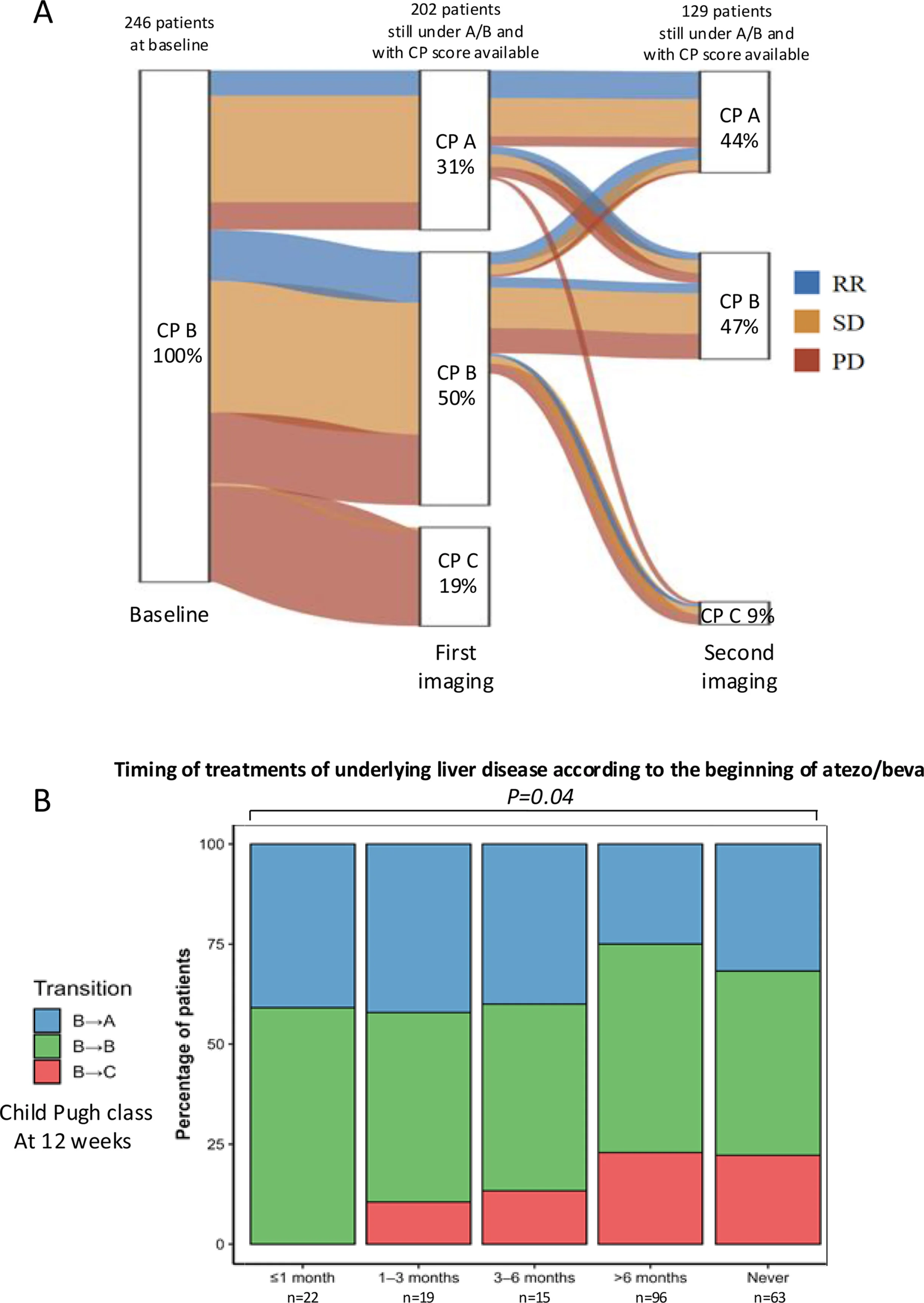
Among evaluable patients, nearly one-third improved from Child-Pugh B to Child-Pugh A during treatment. Patients whose liver function improved subsequently experienced substantially better survival than those whose liver function remained unchanged or deteriorated.
Changes in Liver Function
- 31% improved from Child-Pugh B to Child-Pugh A
- 50% remained Child-Pugh B
- 19% worsened to Child-Pugh C
Improvement in liver function was independently associated with reduced mortality.
Impact on Survival
- HR for death with Child-Pugh improvement: 0.59
- HR for death with progressive disease: 2.38
These findings emphasize that liver reserve should be viewed as a dynamic clinical parameter rather than a fixed baseline characteristic.
Treating the Underlying Liver Disease Matters
Another important observation was the association between management of chronic liver disease and subsequent improvement in hepatic function.
Patients who had recently initiated antiviral therapy for hepatitis B or hepatitis C, or who had achieved alcohol abstinence, were more likely to demonstrate improvements in Child-Pugh status during treatment. Although these analyses were exploratory and limited by sample size, they suggest that optimization of the underlying liver disease may enhance outcomes alongside systemic anticancer therapy.
The findings reinforce the concept that successful management of advanced HCC requires simultaneous treatment of both the tumor and the cirrhotic liver in which it arises.
Safety Findings
Despite poorer baseline liver function, the safety profile of atezolizumab plus bevacizumab was generally comparable between Child-Pugh A and Child-Pugh B patients.
The incidence of grade 3–4 adverse events was not significantly increased among Child-Pugh B patients. However, treatment duration was considerably shorter, and early discontinuation occurred more frequently in this population.
Treatment Exposure
- Median treatment duration: 70 days in Child-Pugh B
- Median treatment duration: 187 days in Child-Pugh A
- Early discontinuation: 54% vs 31%
These findings likely reflect both disease progression and liver-related complications rather than excessive treatment toxicity alone.
Clinical Implications
This study provides some of the strongest real-world evidence to date supporting the use of atezolizumab plus bevacizumab in carefully selected patients with Child-Pugh B cirrhosis.
The data suggest that Child-Pugh B status alone should not automatically exclude patients from immunotherapy. Instead, a more nuanced approach incorporating liver reserve and tumor burden appears warranted.
Patients with ALBI grade 1–2 disease and no extrahepatic metastases may still derive clinically meaningful benefit, whereas those with severe hepatic dysfunction and metastatic spread represent a population with extremely poor outcomes despite treatment.
Conclusion
Odent and colleagues demonstrate that although Child-Pugh B cirrhosis is associated with substantially worse outcomes than Child-Pugh A disease, a meaningful subset of patients can still benefit from first-line atezolizumab plus bevacizumab. The ALBEX score, combining ALBI grade and metastatic status, provides a simple and practical method for identifying those most likely to benefit.
Perhaps most importantly, the study highlights that liver function is not static. Improvements in hepatic reserve during treatment were associated with better survival, emphasizing the importance of actively managing the underlying liver disease alongside systemic therapy. These findings move the field beyond a simple Child-Pugh classification and toward a more individualized approach to immunotherapy selection in advanced HCC.
Read Full Article Here