This week in OncoDaily Immuno-Oncology, CAR-T cell therapy continues to expand across clinical, translational, and global frontiers — from the growing CAR-T ecosystem in China and next-generation IL-18–armored CAR-T cells for immunologically cold solid tumors, to intracranial B7-H3 CAR-T delivery for recurrent glioblastoma.
Highlights also explore the rapidly growing global CAR-T market and an even broader shift beyond oncology, with engineered CAR-T cells being investigated for autoimmune diseases, viral reservoirs, fibrosis, transplantation, and age-related disorders. Together, these developments reflect a field moving toward smarter engineering, improved delivery, broader disease applications, and increasingly accessible cellular immunotherapy.
This Week’s Expert Highlights in CAR-T Cell Therapy
Stanley Niu, Founder and Managing Director of Gene Medical.
“I’m pleased to share our latest post about CAR-T cell therapy in China.
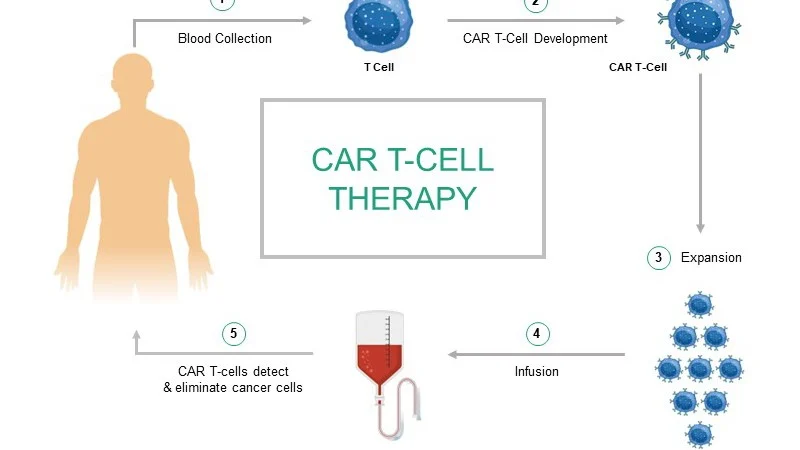
CAR-T therapy is one of the most promising advances in cancer treatment, offering new possibilities for patients with certain advanced blood cancers and solid tumors, including lymphoma, leukemia, multiple myeloma, stomach cancer and GEJ cancer.
China is a major center for CAR-T research and clinical application, with approved therapies, experienced medical teams, and continued innovation in next-generation cell therapies.
Through Gene Medical, we help international patients better understand their treatment options in China and provide support throughout the medical journey — from initial evaluation and expert consultation to treatment coordination and follow-up care.
If you are interested in learning more about CAR-T therapy in China, feel free to connect or reach out.”
Moustafa Gabr, Associate Professor and Director at Columbia University Irving Medical Center.
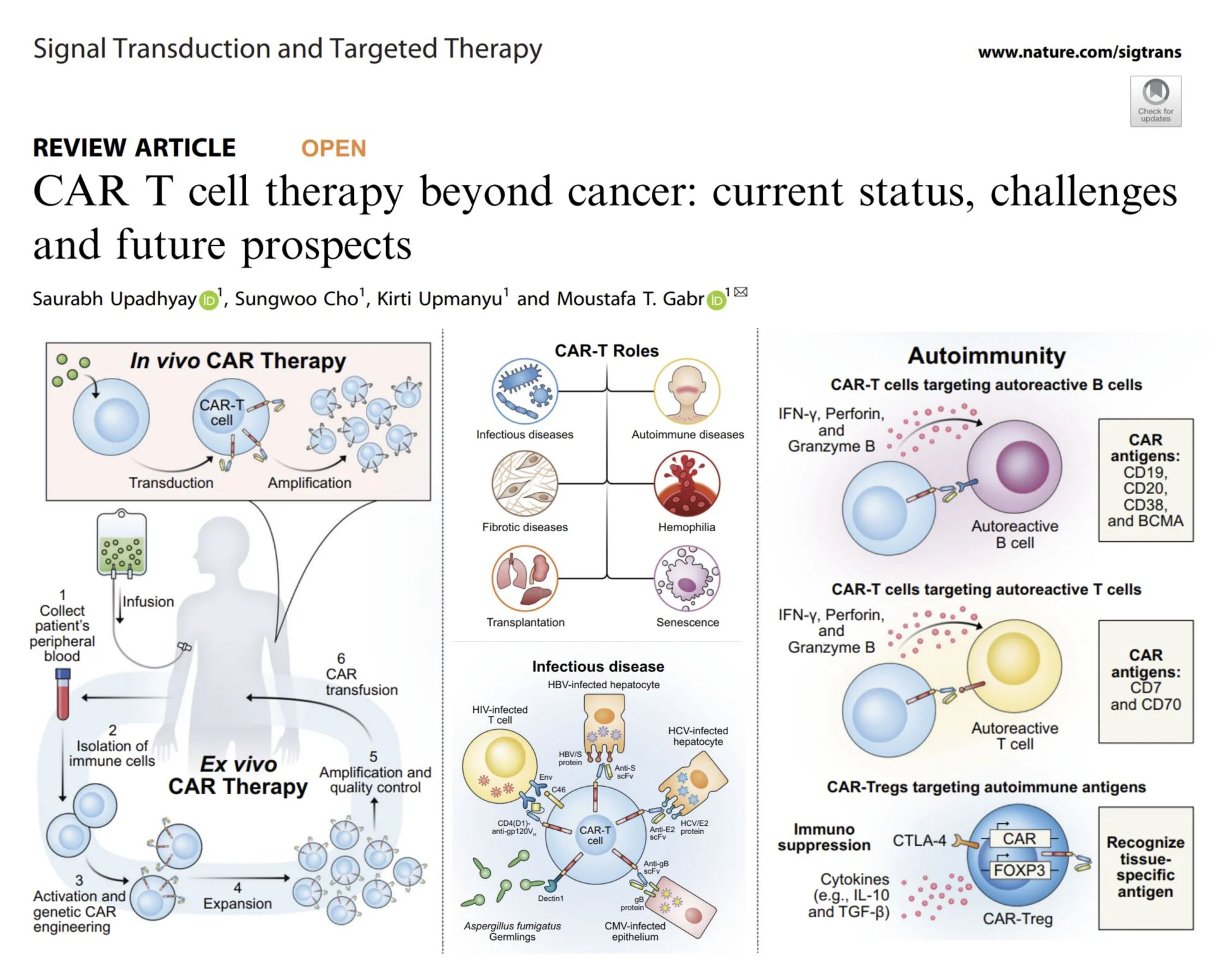
“Published today in Signal Transduction and Targeted Therapy:
CAR T cells are no longer just a cancer therapy. They may become a programmable way to eliminate the cells that keep chronic diseases alive.
In our new paper, we explore CAR-T strategies beyond oncology, targeting:
Viral reservoirs in HIV and EBV
Autoreactive B cells in lupus, myositis, and multiple sclerosis
Activated fibroblasts in fibrosis
Alloimmune cells in transplantation
Senescent cells that drive age-related tissue dysfunction
Rather than repeatedly suppressing disease, the goal is to target its cellular source. A timely and exciting area at the intersection of immunology, cell engineering, and translational medicine.
Read the open access paper: ”
Muhammad Shahid Mehmood, Microbiologist and Researcher at Nibras Research Academy.
” A new publication to share!
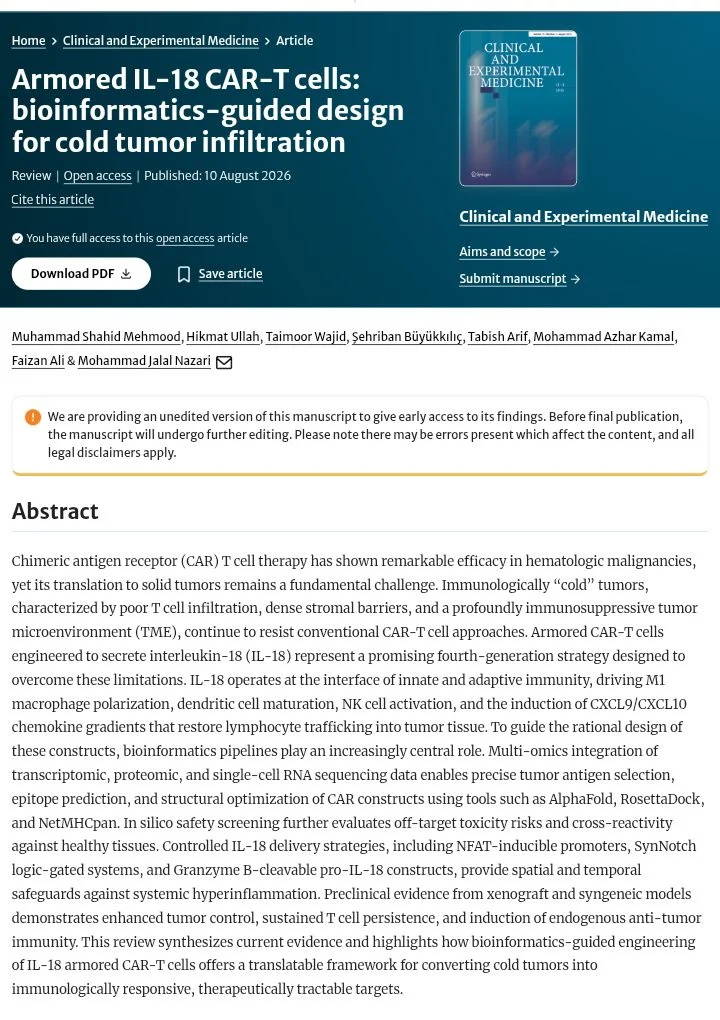
Our review “Armored IL-18 CAR-T Cells: Bioinformatics-Guided Design for Cold Tumor Infiltration” has now been published in Clinical and Experimental Medicine (Springer Nature).
The article explores the potential of IL-18–armored CAR-T cells and bioinformatics-guided design to improve T-cell infiltration and therapeutic responses in immunologically cold solid tumors.Many thanks to all my co-authors for their valuable contributions, collaboration, and commitment throughout this work. It was a pleasure to be part of this research journey together.”
 Snehal Gupta, Business Consultant at MarketsandMarkets, focused on sustainable business growth.
“𝐂𝐀𝐑 𝐓-𝐂𝐞𝐥𝐥 𝐓𝐡𝐞𝐫𝐚𝐩𝐲 𝐌𝐚𝐫𝐤𝐞𝐭 : 𝐀 𝐂𝐨𝐦𝐩𝐫𝐞𝐡𝐞𝐧𝐬𝐢𝐯𝐞 𝐎𝐯𝐞𝐫𝐯𝐢𝐞𝐰
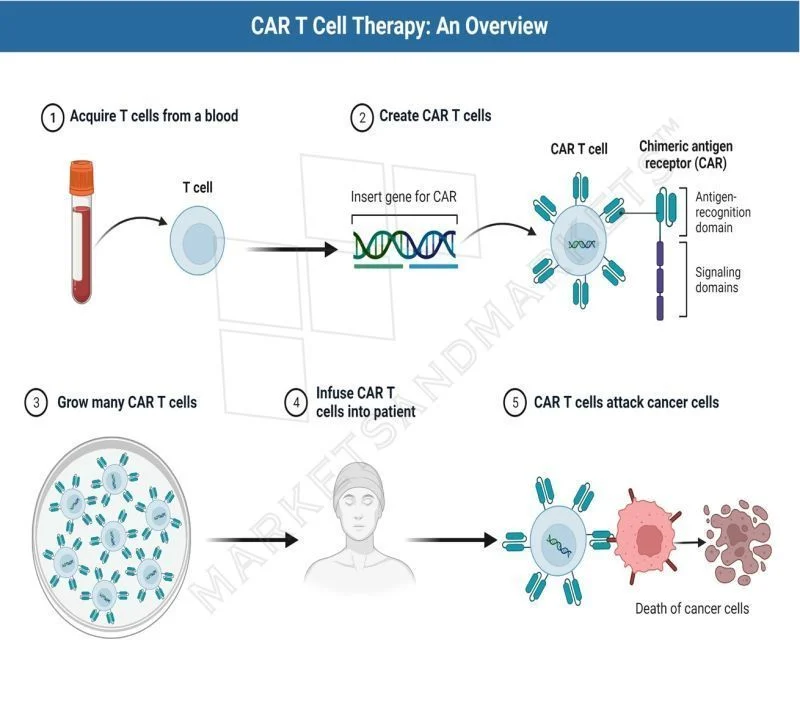
𝐃𝐨𝐰𝐧𝐥𝐨𝐚𝐝 𝐏𝐃𝐅 𝐁𝐫𝐨𝐜𝐡𝐮𝐫𝐞:CAR T-cell therapy is a treatment method wherein a patient’s T-cells (a type of immune system cell) undergo modification in a laboratory to target and attack cancer cells effectively.
The global CAR T-cell therapy market, valued at USD 5.98 billion in 2025, stood at USD 6.78 billion in 2026 and is projected to advance at a resilient CAGR of 14.9% from 2026 to 2031, culminating in a forecasted valuation of USD 13.56 billion by the end of the period.
The global CAR T-cell therapy market is growing due to rapid technological advances alongside rising investments from large pharma and well-funded biotechs. These shifts are improving product consistency, vein-to-vein reliability and center throughput, and enabling broader clinical adoption, supported by label expansions and earlier-line movement in key hematologic malignancies. However, market scaling is still constrained by high total cost and reimbursement friction.
The global CAR T-cell therapy market features key market players actively competing for market share, such as Bristol Myers Squibb Squibb Company (US), Gilead Sciences, Inc. (US), Novartis AG (Switzerland), Johnson & Johnson (US), and ImmunoACT (India)”
Fengqian Chen, PhD, Antibody Licensing and Discovery Leader at Biocytogen, leading U.S. East Coast Business Development.
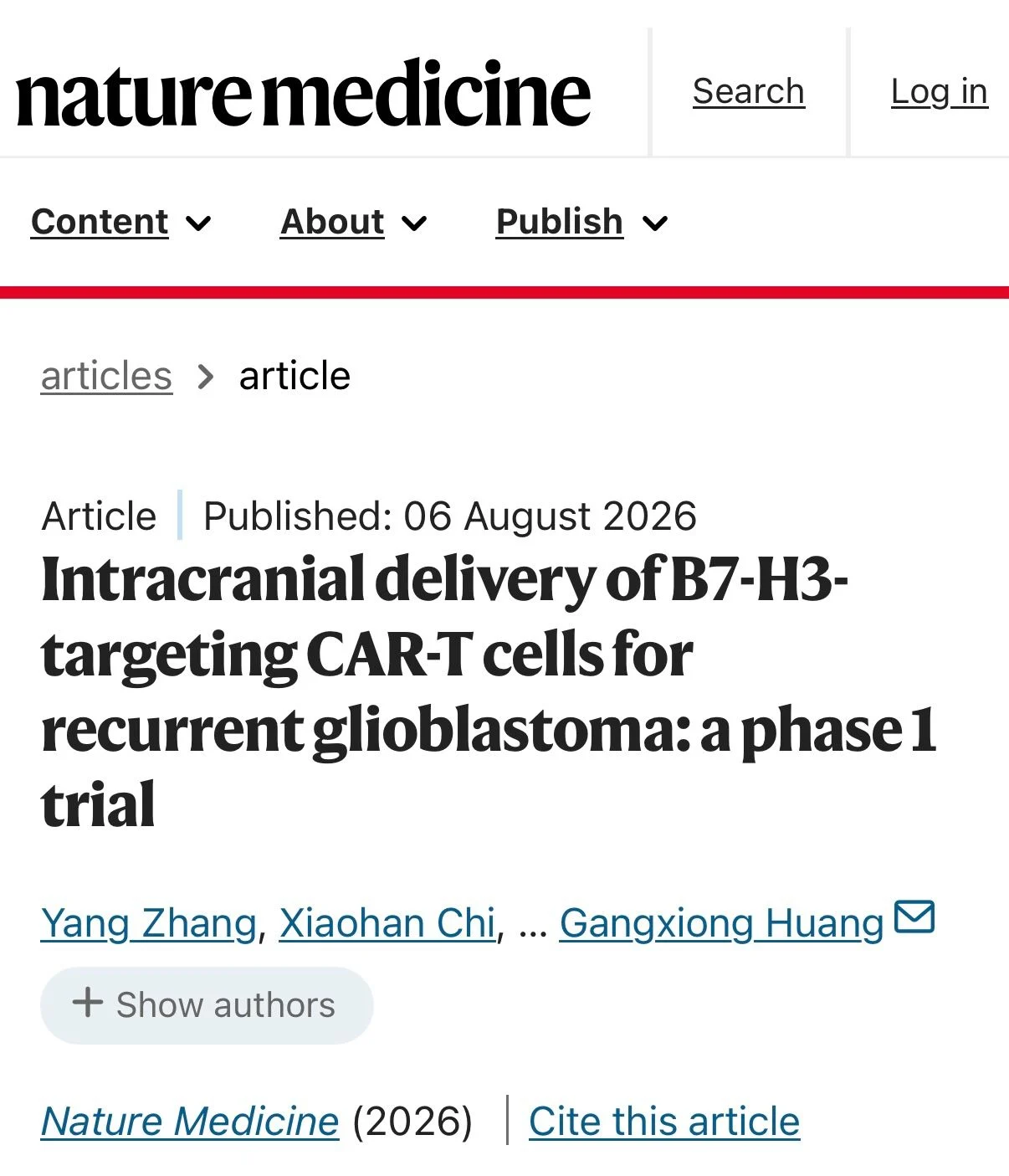
“For CAR-T therapy in glioblastoma, the route of delivery may be as important as the target itself.
A phase 1 study published in Nature Medicine reports results from TX103, an autologous B7-H3-targeting CAR-T therapy delivered directly into the intracranial compartment for recurrent glioblastoma (rGBM). The strategy addresses one of the fundamental challenges of cell therapy for brain tumors:
How do we achieve sufficient CAR-T exposure and activity within the CNS while limiting unnecessary systemic exposure?
Fifteen patients with B7-H3-positive recurrent GBM received a total of 72 intracranial CAR-T infusions, with 13 patients undergoing repeated dosing.
Importantly, no dose-limiting toxicities were observed and a maximum tolerated dose was not reached. Most cytokine release syndrome was low grade, although neurological and intracranial toxicities—including elevated intracranial pressure, epilepsy, and depressed consciousness—remain important considerations for local CAR-T therapy.
The early clinical signals are notable:
12-month overall survival: 66.7%
Median overall survival: 19.1 months from first infusion
Disease control: 8 of 14 evaluable patients, including one complete response sustained through the latest follow-up.
But perhaps the most interesting biology came from the pharmacokinetic and immune analyses.
Following intracranial administration, investigators observed a marked increase in CAR transgene copies and cytokine activity in cerebrospinal fluid, while peripheral activity remained minimal.
Repeated infusions were also feasible without evidence of cumulative toxicity.
This suggests an important principle for solid-tumor cell therapy:
CAR-T engineering is only one part of the equation. Spatial delivery, local pharmacology, and the tumor microenvironment may be equally important determinants of therapeutic activity.
For brain tumors in particular, intracranial delivery creates the possibility of treating CAR-T cells almost as a locoregional living therapy—concentrating immune activity where it is needed while minimizing systemic exposure.
The results remain early and come from a small phase 1 study, so efficacy will need to be validated in larger trials.
But the broader direction is compelling: The future of solid-tumor CAR-T may depend not only on finding better targets, but on engineering better cells, better delivery, and better control of where those cells function.”